Armenia in Cairo: Egypt's Forgotten Christian Diaspora Guide
At its peak, Cairo's Armenian community numbered 40,000 people. Today fewer than 5,000 remain. The churches, schools, and cemeteries they left behind tell a story most Egyptians have never heard.

Quick Facts
- Best time to visit
- October to April for comfortable walking temperatures. January 6th for Armenian Christmas liturgy at Saint Gregory's Cathedral in Heliopolis.
- Entrance fee
- Free at all Armenian churches and the Patriarchate. Donation of EGP 50 to 100 appropriate. Baron Empain Palace nearby: EGP 100 (approx $2 USD).
- Opening hours
- Sunday liturgy at Saint Gregory's Cathedral from approximately 9am. Armenian Patriarchate offices open weekdays 9am to 3pm approximately. Always call ahead to confirm.
- How to get there
- Metro Line 3 to El-Ahram station for Heliopolis, then 12-minute walk to the cathedral. Taxi or Careem from Downtown Cairo to Heliopolis: EGP 80 to 120. To Bab al-Wazir cemetery: Careem from Downtown EGP 40 to 60.
- Time needed
- Half day for Heliopolis sites. Full day to combine with Bab al-Wazir cemetery and Ramses Street Patriarchate.
- Cost range
- EGP 200 to 400 for a full day using public transport and taxis, excluding food. Budget an additional EGP 200 to 300 for lunch in Heliopolis.
At its peak in the 1950s, Cairo's Armenian community numbered roughly 40,000 people. Today the estimate runs somewhere below 5,000, and even that number is probably generous. The community did not leave because Egypt failed them. Many left because Nasser's nationalization decrees of 1961 dismantled the commercial infrastructure that Armenian families had spent three generations building. Jewelers, photographers, pharmacists, textile merchants: the businesses closed, the families packed, and a 500-year chapter of Cairo's life began quietly closing.
What remains is not a ruin. It is a living, breathing, shrinking community concentrated in a few Cairo neighborhoods, anchored by churches that smell of beeswax and incense, served by schools that still teach Armenian to children who may never visit Yerevan, and documented in a cemetery in Bab al-Wazir that is one of the most overlooked historical spaces in the entire city.
This is your guide to finding it, understanding it, and not walking through it as though it were a museum.
Quick Facts
Best time to visit: October through April, when Cairo temperatures are bearable for walking between sites. The Armenian Christmas (January 6th by the Armenian Apostolic calendar) offers a rare opportunity to attend liturgy at the Cathedral of Saint Gregory the Illuminator in Heliopolis.
Entrance fees: The Armenian churches are free to enter with respectful dress, though a donation of EGP 50 to 100 is appropriate and genuinely useful to communities running on minimal budgets. The Armenian cemetery in Bab al-Wazir requires a request through the Armenian Patriarchate; admission is free but unaccompanied wandering is not standard practice.
Opening hours: Saint Gregory's Cathedral in Heliopolis holds Sunday liturgy beginning around 9am and lasting approximately two hours. The Armenian Patriarchate on Ramses Street operates loosely between 9am and 3pm on weekdays. Always call ahead: EGP 0 entry means nothing if the door is locked.
How to get there: For Heliopolis, take the Cairo Metro Line 3 to Heliopolis (El-Ahram station) and walk 12 minutes, or take a taxi from central Cairo for roughly EGP 80 to 120. For Bab al-Wazir, the cemetery sits a short walk from Al-Azhar Park; a Uber or Careem from Downtown runs EGP 40 to 60.
Time needed: A half-day covers the Heliopolis sites; a full day allows you to connect Heliopolis to the Bab al-Wazir cemetery and the old Armenian quarter near Ramses Street.
Cost range: EGP 200 to 400 for the day, excluding food, if you are walking and using public transport.
Why This Place Matters
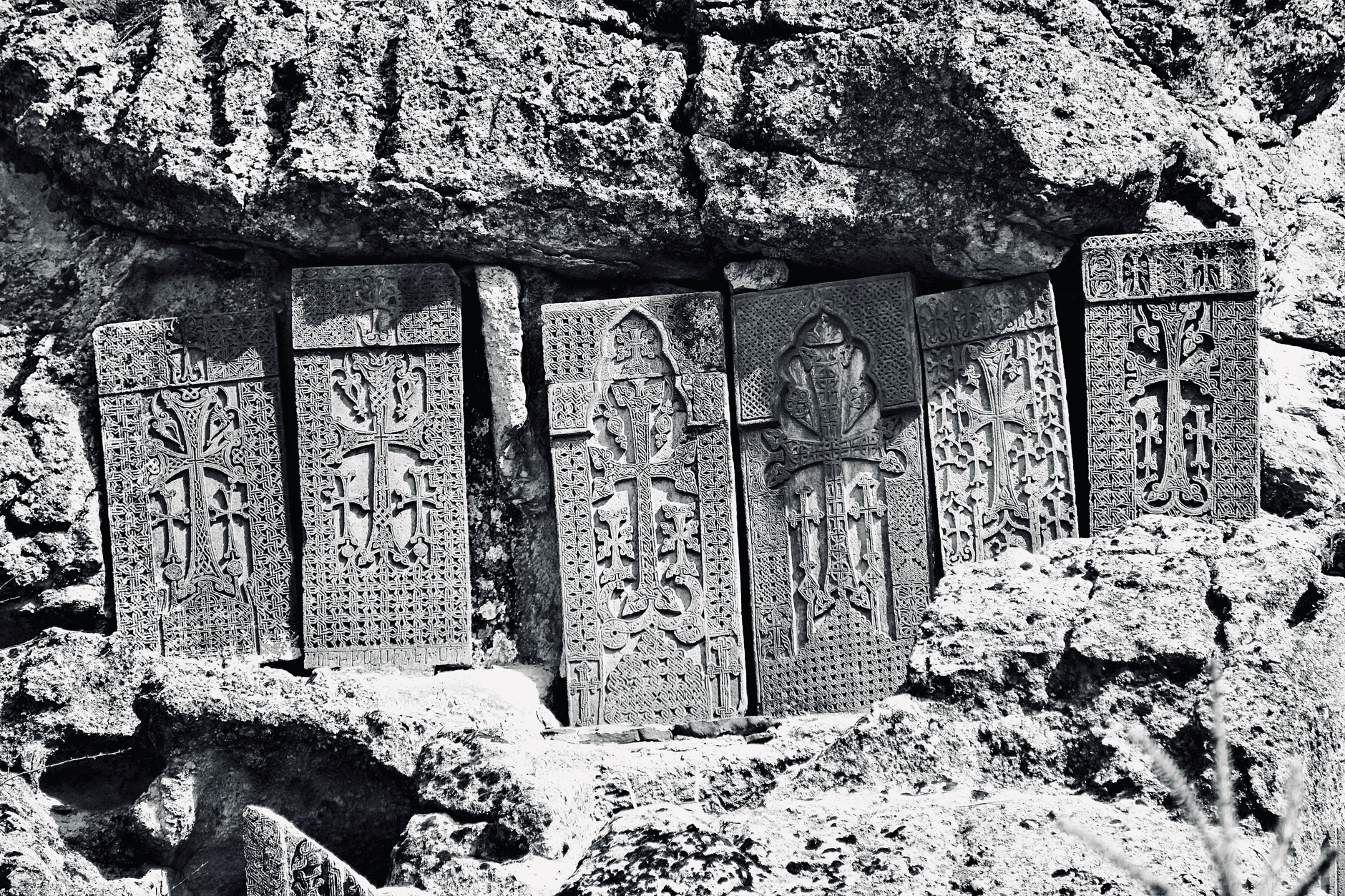
The Armenian presence in Egypt is not a footnote to the genocide of 1915. It predates that catastrophe by several centuries. Armenians first arrived in Egypt under the Fatimid Caliphate in the 10th and 11th centuries, and by the time the Mamluk sultans were commissioning the mosques that now define Islamic Cairo, there were Armenian craftsmen working in Cairo's markets. Badr al-Jamali, the Fatimid vizier who rebuilt Cairo's northern walls between 1087 and 1092, the walls you can still walk along today near Bab al-Futuh, was himself of Armenian origin. The gates he built are among the oldest standing Islamic military architecture in the world, and their architect was working within an Armenian administrative tradition that the Fatimids had imported deliberately.
This is the connection most visitors to Islamic Cairo miss entirely: those perfectly cut limestone towers at Bab al-Nasr were designed under the supervision of a man from Armenia, using Armenian construction techniques, at the order of a caliph who understood that the Armenians of that era were among the finest military engineers in the Mediterranean world.
The second wave came with the Ottoman Empire. Armenians served as architects, jewelers, accountants, and physicians throughout Ottoman-controlled Egypt from the 16th century onward. When Muhammad Ali modernized Egypt in the early 19th century, he brought Armenian advisors with him, and several Armenian families became foundational to Egyptian commerce in Alexandria and Cairo.
The genocide of 1915 to 1923, in which the Ottoman government killed between 600,000 and 1.5 million Armenians, transformed the community in Egypt from a prosperous diaspora into a refugee population. Survivors arrived in Alexandria and Cairo through the 1920s, carrying almost nothing. Within two decades, they had rebuilt schools, churches, newspapers, athletic clubs, and political organizations. The Cairo Armenian community published its own newspaper, Arev (meaning "Sun"), from 1915 until 1993.
The Neighborhoods and What Survives
Heliopolis: The Church at the Center
Heliopolis was designed by the Belgian industrialist Édouard Empain beginning in 1905 as a planned suburb on the desert edge of Cairo. What is less known is that the Armenian community was among the earliest and most commercially active populations to establish themselves there. The Cathedral of Saint Gregory the Illuminator, the main Armenian Apostolic church in Cairo, sits in Heliopolis and has served the community continuously since the 1920s.
Saint Gregory the Illuminator is the figure who converted Armenia to Christianity in 301 AD, making Armenia the first nation in the world to adopt Christianity as a state religion, twelve years before the Edict of Milan made it legal throughout the Roman Empire. When you walk into this church on a Sunday morning and hear the liturgy sung in Classical Armenian, a liturgical language that has not changed significantly since the 5th century, you are hearing something older than the Arabic language itself.
The interior is modest by the standards of grand religious architecture, but the iconography rewards attention. Armenian crosses, called khachkars, appear throughout: these intricately carved stone crosses with their distinctive lace-like geometric patterns are a specifically Armenian art form with no direct equivalent in any other Christian tradition. No two traditional khachkars are identical.
The Armenian Cemetery at Bab al-Wazir
If you visit only one Armenian site in Cairo, make it this one, and arrange access before you arrive. The cemetery is enclosed within the dense medieval fabric of Islamic Cairo, a few minutes walk from the Mosque of Sultan Hasan and the Al-Rifa'i Mosque, and it contains the graves of Armenians who lived in Cairo from the early 19th century through the mid-20th.
The tombstones are an education in themselves. Many are bilingual, Armenian script on one face and Arabic or French on the other. The dates document the community's history with brutal precision: you can trace the arrival of genocide survivors in the 1920s, the deaths of the generation that rebuilt, and the gradual thinning of names through the 1960s and 1970s as emigration accelerated. Several prominent Egyptian-Armenian figures are buried here, including members of families who ran photographic studios that documented Cairo life for decades. The Garabed family's photography archive, portions of which have been preserved, represents some of the earliest professional photography in Egypt.
The cemetery sits on ground that was in active use as a Christian burial site from at least the Mamluk period. The layering here is characteristic of Cairo: medieval Islamic city above, Fatimid infrastructure below, and a Christian community inserting itself into the surviving gaps and continuing to use them for 200 years.
The Ramses Street Quarter and the Patriarchate
The Armenian Patriarchate of Egypt is located near Ramses Street, in a building that also houses community offices and a small library. This is the administrative heart of what remains. The Patriarchate oversees the community's churches, schools, and properties, and it has been doing so since the Egyptian government recognized the Armenian Apostolic Church as an official religious community in the 19th century under the Ottoman millet system, a recognition that Egypt continued under its own constitutional frameworks.
The Armenian Evangelical Church and the Armenian Catholic Church also maintain presences in Cairo, reflecting the doctrinal divisions that exist within the global Armenian diaspora, divisions that sometimes mapped onto political affiliations during the Cold War, when Armenian communities worldwide were split between those aligned with Soviet Armenia and those aligned with diaspora nationalist organizations.
The Connections
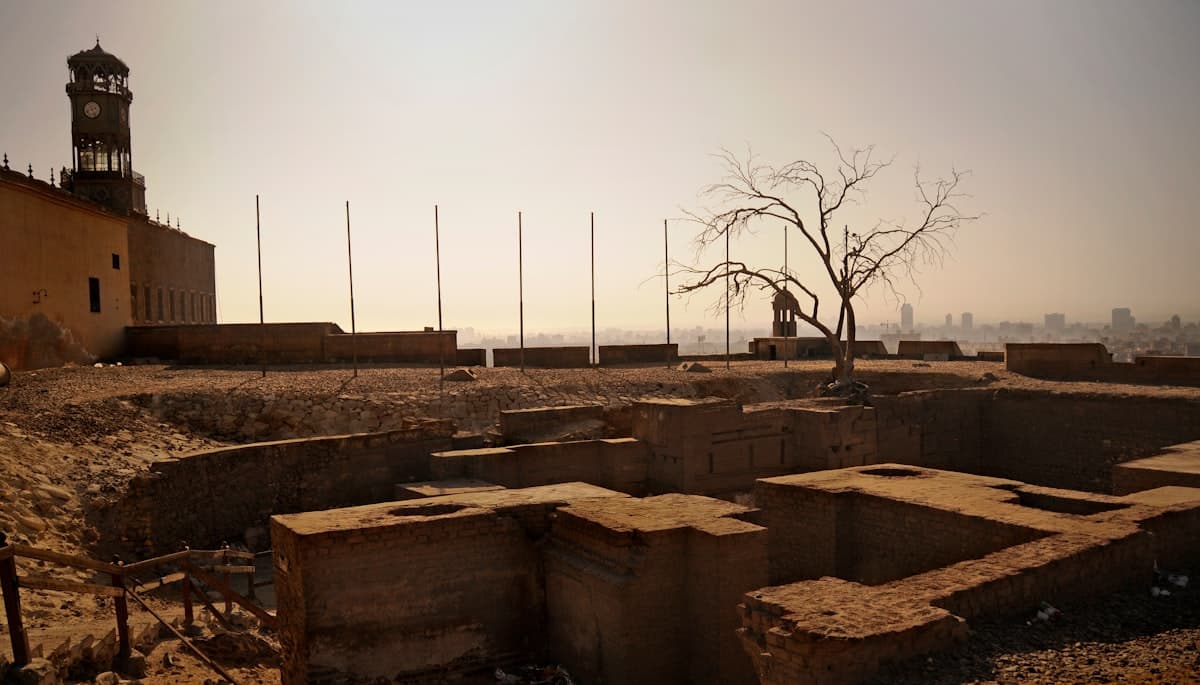
The Armenian story in Egypt cannot be separated from the broader history of Cairo's non-Muslim minorities. Walk from the Armenian cemetery at Bab al-Wazir toward the Coptic quarter of Old Cairo and you are tracing a geography of Christian persistence in a Muslim-majority city across fifteen centuries. The Copts have been here since the 1st century AD. The Armenians arrived in serious numbers in the 10th century. The Greek Orthodox community, which at its peak in the mid-20th century numbered around 100,000 in Egypt, occupied similar social and commercial spaces.
All three communities experienced the same rupture: Nasser's nationalization programs and the 1956 Suez Crisis, which triggered the expulsion or departure of most of Egypt's Jewish and Greek communities, also accelerated Armenian emigration, though Armenians, having no foreign government to claim them, left more slowly and less visibly.
The Armenian Apostolic Church's relationship with the Coptic Orthodox Church is theologically close: both are Oriental Orthodox churches that rejected the Council of Chalcedon in 451 AD. In Cairo, the two communities have historically maintained warm relations, shared certain feast days, and occasionally shared facilities. This is a connection that most visitors to Coptic Cairo are never told.
The Badr al-Jamali walls at Bab al-Futuh and Bab al-Nasr, visible and walkable on any trip through Islamic Cairo, remain the most accessible physical monument to Armenian influence in Egypt, even though they are never labeled as such. The tour guides at those gates rarely mention Armenia.
Common Mistakes
Visiting without contact. The Armenian community is small and the sites are not tourist infrastructure. Arriving at the Patriarchate without calling ahead, or showing up at the cemetery and expecting entry, will get you a closed gate. Email or call the Patriarchate office at least two days before your visit.
Treating this as genocide tourism. The community has a history in Egypt that begins 500 years before 1915. If your only frame is tragedy, you will miss the achievement: a diaspora that built schools, newspapers, athletic clubs, and commercial networks in a foreign country and maintained a distinct cultural identity for a century. Ask about the football club, the choir, the community picnics in the Delta in the 1940s.
Skipping Heliopolis because it feels modern. Heliopolis is one of the most historically layered suburbs in Cairo, combining early 20th-century Belgian urban planning, Armenian commercial history, and the Fatimid-era Basilica of Our Lady of the same era. The Baron Empain Palace nearby is currently open to the public after restoration and costs EGP 100 to enter. It is worth an hour.
Taking a tour that combines this with the Pyramids. No operator running a day trip to Giza is going to give you time to sit in a Sunday liturgy, walk the cemetery slowly, or have a conversation with a community member. This is a half-day or full-day commitment on its own terms.
The sound and light show at the Citadel costs EGP 300 and tells you nothing about the non-Muslim communities who lived in its shadow for centuries. Skip it and spend the money on a meal at one of the remaining Armenian-owned restaurants in Heliopolis, where the food is better and the conversation is irreplaceable.
Assuming the community welcomes photography without asking. Inside churches and in the cemetery, ask before you photograph anything. The community is proud but also aware that they are being documented by outsiders who may not return. Respect that.
Relying on Wikipedia for names and facts before your visit. The English-language documentation of the Egyptian Armenian community is thin and sometimes wrong. The Armenian Patriarchate has published materials in Armenian and Arabic that are far more reliable. If you read Arabic, the community's own publications are accessible through the Dar al-Kutub national library.
Practical Tips
Dress conservatively for all church visits: covered shoulders and no shorts. This is an Apostolic Christian community, not a tourist attraction, and the standards are similar to Coptic churches.
If you are visiting during Lent or Holy Week by the Armenian calendar, which differs from both the Roman Catholic and Coptic calculations, you may find additional liturgies and community events. These are genuinely open to respectful outsiders and are musically extraordinary.
The Armenian community in Cairo has several cultural organizations that periodically host events: film screenings, music concerts, and community dinners. Following the Armenian Community of Egypt on social media is the most reliable way to know what is happening in any given month.
For food, the Armenian diaspora cuisine that survives in Cairo is largely home cooking, but a few older restaurants in Heliopolis serve dishes that reflect the community's Anatolian origins: lamb preparations, specific spice combinations, pastries with walnut and honey that have no Arabic equivalent. Ask community members for current recommendations, as the restaurant landscape shifts.
The best single introduction to the community's history before you visit is the work of Avedis Sanjian, whose scholarship on Armenian communities in the Arab world provides historical depth that no guidebook can replicate. His writing is available in academic libraries and sometimes digitally.
Finally: come with questions, not conclusions. The people who remain in this community have chosen to stay in Egypt when leaving was easier. That choice is its own kind of testimony, and it is worth understanding on its own terms.
Frequently Asked Questions
The Weekly Dispatch
More on Egypt, every Friday.
Cultural depth and places most guides never mention.
No spam. Unsubscribe anytime.