Armenian Community Egypt: Cairo's Forgotten Quarter Guide
At its peak, Egypt's Armenian community numbered 100,000. Today fewer than 6,000 remain. Their churches, schools, and cemeteries are still standing. Most visitors never find them.

Quick Facts
- Best time to visit
- October through April for bearable walking weather. April 24 (Armenian Martyrs' Day) and January 6 (Armenian Christmas) offer the most meaningful community access.
- Entrance fee
- Free at all Armenian churches and the cemetery. Donations appropriate at churches (EGP 20 to 50 is standard). Armenian Club Heliopolis has a nominal weekend entry fee of approximately EGP 50.
- Opening hours
- Zeitoun Cathedral daily 8am to 5pm. Downtown Armenian Catholic Church weekdays before noon (irregular). Armenian Evangelical Church Qasr el-Nil: Sunday services 10am, weekday visits by request.
- How to get there
- Metro to Sadat Station (EGP 10) for Downtown sites. Metro Line 1 to Ain Shams then tuk-tuk (EGP 15 to 20) for Zeitoun. Taxi from Downtown to Zeitoun approximately EGP 80 to 120.
- Time needed
- Half day for Downtown cluster. Full day for Downtown plus Zeitoun Cathedral plus Shubra Cemetery. Add 2 hours for Armenian Club Heliopolis.
- Cost range
- Budget EGP 300 to 500 per day including transport and food near sites. Mid-range EGP 800 to 1,200 with private driver.
At its peak in the 1950s, Egypt's Armenian community numbered roughly 100,000 people. Today the estimate sits somewhere between 5,000 and 6,000, most of them elderly, concentrated in a few Cairo neighborhoods, holding on to churches and community clubs that were built for a population twenty times larger. This is not a story about ruins. The churches still hold Mass. The cemetery still accepts burials. The community club still serves Armenian food on weekends. What disappeared was not the community itself, but the critical mass that made it visible.
Quick Facts
Best time to visit: October through April, when Cairo temperatures are bearable for long walks between sites. The Armenian Apostolic Cathedral holds its most attended services around Armenian Christmas (January 6 by the Armenian calendar) and Armenian Martyrs' Day (April 24), both worth timing a visit around if you can.
Entrance fees: The Armenian Apostolic Cathedral of Saint Gregory the Illuminator in Zeitoun is free to enter during opening hours, with a donation box at the door. The Armenian Catholic Church of Our Lady in Downtown Cairo is free. The Armenian Cemetery in Shubra charges no entrance fee but visits are best arranged through the Armenian community club.
Opening hours: The Apostolic Cathedral in Zeitoun is open daily 8am to 5pm. The Downtown Armenian Catholic Church keeps irregular hours; arrive before noon on weekdays for the best chance of entry. The Armenian Evangelical Church on Qasr el-Nil Street holds Sunday services at 10am and is generally open to visitors who ask at the door.
How to get there: The Downtown Armenian quarter around Qasr el-Nil and Adly Streets is a 10-minute walk from Sadat Metro Station (Line 1 and Line 2, EGP 10 per ride). For Zeitoun, take the Metro to Ain Shams Station on Line 1 and then a tuk-tuk or minibus for roughly EGP 15 to 20. Taxis from Downtown Cairo to Zeitoun cost approximately EGP 80 to 120 depending on traffic.
Time needed: Half a day covers the Downtown cluster of sites. A full day is needed if you combine Downtown with the Zeitoun Cathedral and the Shubra Cemetery. Add another two hours if you plan to visit the Armenian Club in Heliopolis.
Cost range: Budget EGP 300 to 500 per day for transport, donations, and lunch at a local spot near the community. Mid-range EGP 800 to 1,200 if you hire a private guide or driver.
Why This Place Matters
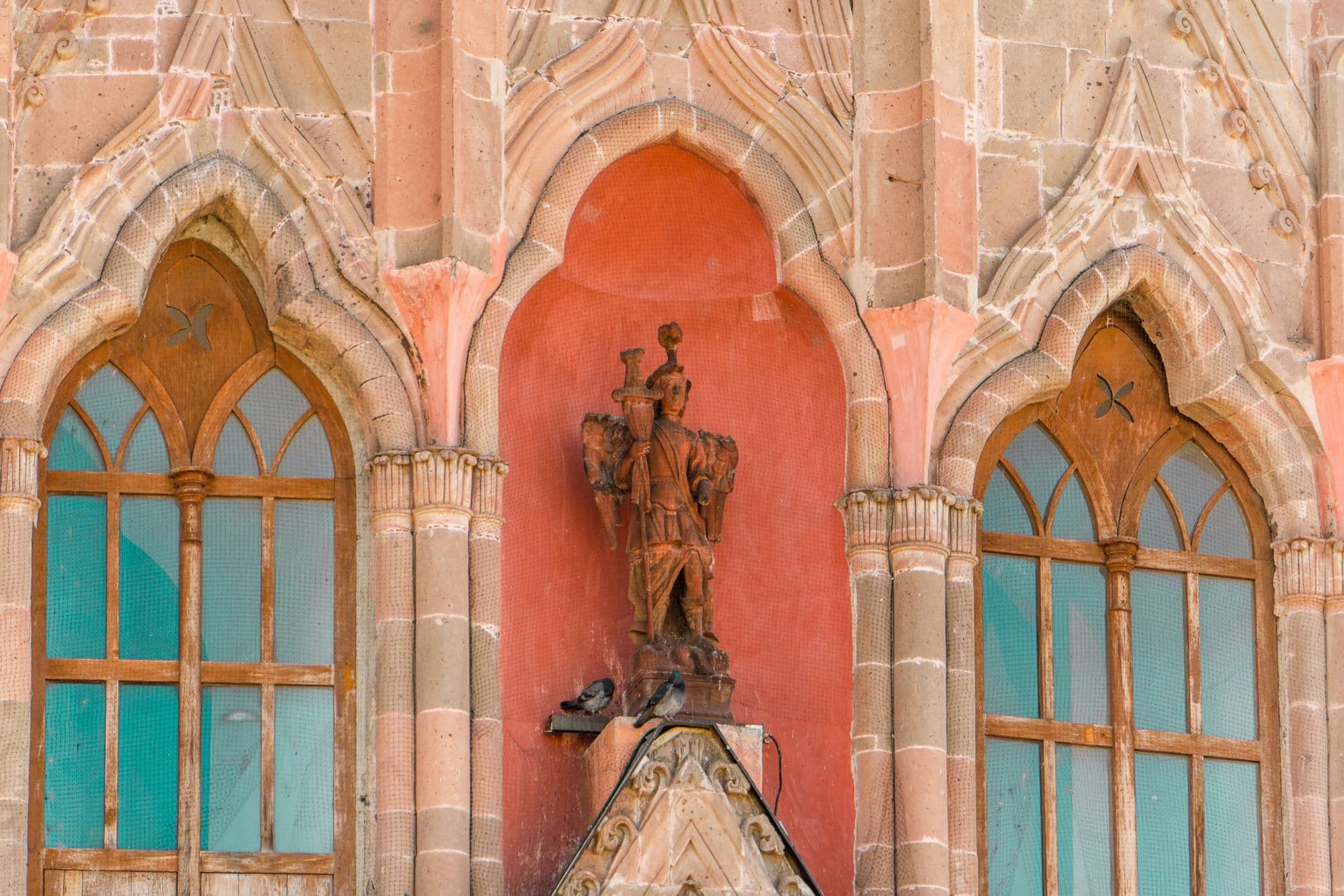
Armenians have been in Egypt for far longer than most Cairenes realize. The first significant Armenian presence dates to the Fatimid period in the eleventh century, when Armenian soldiers and administrators served at the Fatimid court. Badr al-Jamali, the powerful vizier who rebuilt Cairo's iconic northern gates (Bab al-Futuh, Bab al-Nasr, and Bab Zuweila) between 1087 and 1092, was Armenian by origin. The gates you walk through today in Islamic Cairo were designed and constructed under the supervision of an Armenian commander who had converted to Islam and risen to become the most powerful man in Egypt after the caliph. This is the kind of detail that reframes everything about Cairo's medieval history.
The modern Armenian community arrived in two waves that had nothing to do with ancient viziers. The first wave came in the late nineteenth and early twentieth centuries, skilled craftsmen and merchants from Ottoman Anatolia who settled in Alexandria and Cairo and built a middle-class presence in trade, photography, jewelry, and the professions. The second and larger wave arrived after 1915, survivors and descendants of the Armenian Genocide who found in Egypt a relatively stable refuge under British protection. Egypt at that point had a cosmopolitan urban culture that accommodated Greeks, Italians, Syrian Christians, and Jews alongside Armenians, all coexisting in a Cairo that no longer exists.
What ended this community was not persecution but economics and politics: the 1952 revolution, Nasser's nationalization programs in the late 1950s and early 1960s, and the general exodus of Egypt's minorities that accelerated after the 1956 Suez Crisis. Armenians who had built department stores, photography studios, and printing presses saw their assets nationalized and their economic reason for staying evaporate. Most left for Beirut, Paris, Los Angeles, or Yerevan. The ones who stayed did so for reasons that were personal, not rational.
What You Will Actually See
The Downtown Triangle
Start on Adly Street, which in the early twentieth century was so densely populated by Armenians and other Levantine Christians that it was informally called the street of the minorities. The Shaar Hashamayim Synagogue, built in 1905 and still standing in various states of restoration, sits near where the Armenian Catholic Church has operated since the nineteenth century. Walk this street slowly. The buildings above the current shopfronts still show their early twentieth century facades: ornate ironwork balconies, carved stone lintels, the architecture of a Cairo that was simultaneously Ottoman, European, and something else entirely.
The Armenian Evangelical Church on Qasr el-Nil Street was established in 1856, making it one of the oldest Armenian Protestant congregations in the Arab world. Its library, which is not publicly accessible but can sometimes be visited by arrangement with the pastor, contains nineteenth century Armenian-language newspapers printed in Cairo, a reminder that this city once sustained an Armenian-language press.
The most significant Downtown site is the Armenian Catholic Church, tucked behind a metal gate that most people walk past without pausing. Inside, the iconography is a hybrid that tells the whole story: Armenian cross-stones (khachkars) carved in the traditional style alongside Catholic devotional images, the visual record of a community that maintained its ethnic identity while accepting Rome's authority in the nineteenth century. The church holds a small archive of baptismal and marriage records going back to the 1880s that Armenian diaspora families still contact when tracing genealogy.
The Zeitoun Cathedral and What It Replaced
The Armenian Apostolic Cathedral of Saint Gregory the Illuminator in Zeitoun is the formal center of the community and the seat of the Armenian Diocese of Egypt, which covers not just Egypt but also Sudan and Ethiopia. The current building dates to the 1950s, but the congregation itself is older, and the site holds a significance that goes beyond architecture.
Saint Gregory the Illuminator is the fourth-century bishop who converted Armenia to Christianity in 301 AD, making Armenia the first nation in history to adopt Christianity as a state religion, twelve years before Constantine issued the Edict of Milan. Armenians carry this fact with a certain quiet intensity. The cathedral is named not just for a saint but for the founding act of Armenian national identity.
The cathedral's interior contains khachkars brought from communities that no longer exist: stones carved in styles specific to regions of eastern Anatolia that were depopulated in 1915. They are memorial objects in the most literal sense. If you visit during a Sunday liturgy, the Armenian language as it sounds in prayer has a quality that is unlike anything else in Cairo: ancient, guttural, completely distinct from Arabic or Coptic Geez or any of the other liturgical languages you encounter in this city's churches.
The Cemetery in Shubra
The Armenian Cemetery in Shubra is the least visited and most honest of the sites. It is large enough that walking its full perimeter takes twenty minutes, and the inscriptions on the stones move backward through the catastrophe with terrible clarity. Graves from the 1920s and 1930s carry the names of people born in towns that no longer exist in Turkey: Hadjin, Marash, Aintab, Urfa. The Cairo-born generations buried alongside them have Arabic first names alongside Armenian surnames, the phonetic record of assimilation. Some graves from the 1960s onward carry American or French addresses on the memorial plaques, families who had already emigrated and were shipping their dead home to be buried with the community.
Bring water. The cemetery is not well maintained in the way of a tourist site, which is precisely why it is worth visiting. It is a working cemetery, not a monument. A caretaker is usually present on weekday mornings.
The Connections
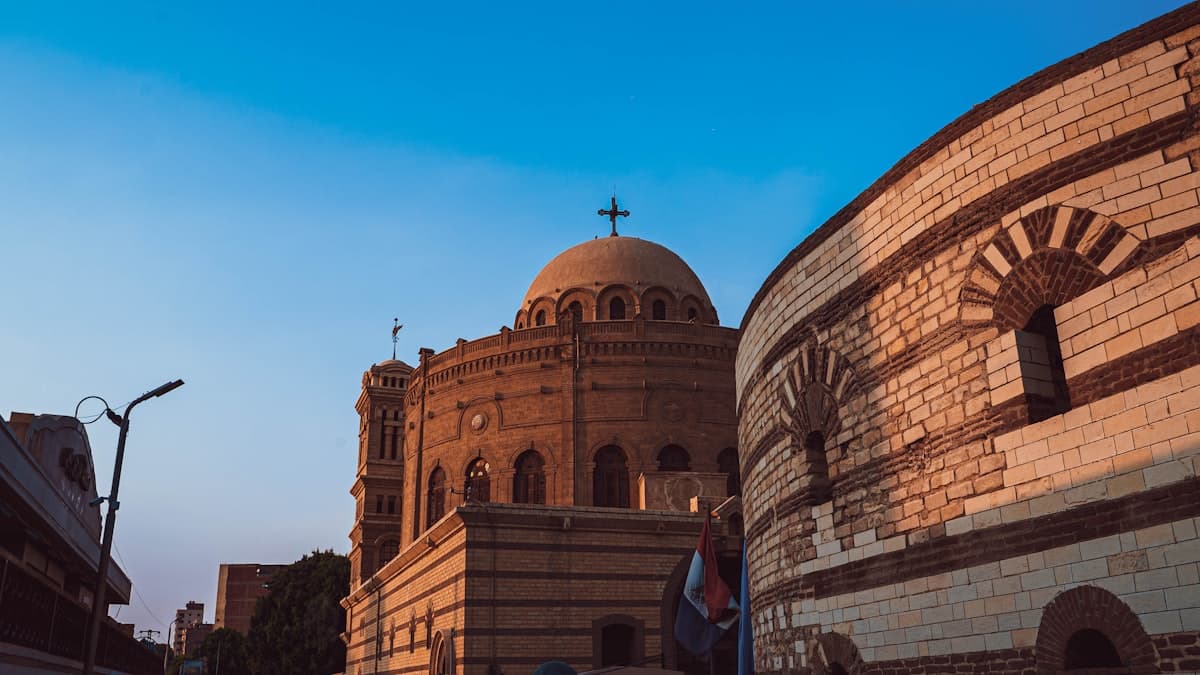
The Armenian presence in Egypt cannot be understood without understanding the Ottoman and then British imperial context. Egypt under Muhammad Ali in the nineteenth century actively recruited skilled Armenians for administration, medicine, and the military. Nubar Pasha, who served three times as Egypt's Prime Minister between 1878 and 1895, was Armenian by descent and negotiated the legal framework for Egypt's mixed courts, the system by which European and Levantine residents had separate legal jurisdiction. His influence on modern Egyptian legal structures outlasted any individual building he might have commissioned.
The community's concentration in certain Cairo neighborhoods also maps onto older patterns. Shubra was a mixed working-class quarter where Copts, Greeks, Armenians, and Egyptian Muslims lived in proximity. The Coptic churches and the Armenian church in Shubra sit within a ten-minute walk of each other, representing two of the oldest Christian communities in the world operating in the same neighborhood with almost no institutional connection. Heliopolis, the planned garden suburb built by Belgian industrialist Edouard Empain between 1905 and 1910, attracted Armenian professionals and merchants who could afford its middle-class villas. The Armenian Club in Heliopolis, still operating, serves as the social center of what remains of the community.
The Mamluk connection that Badr al-Jamali represents is also not isolated. Cairo's old city contains multiple layers of Armenian influence embedded in structures that no longer announce their origins. The Armenian Quarter of medieval Cairo, documented in Fatimid-era sources, occupied streets near what is now the Khan el-Khalili area, erased by centuries of rebuilding but present in historical records that Egyptian archaeologists have only partially excavated and interpreted.
Common Mistakes
Treating this as a museum itinerary. The Armenian sites in Cairo are active community spaces, not heritage attractions. The cathedral in Zeitoun holds regular services. The club in Heliopolis has members who will talk to you if you approach with genuine curiosity rather than a camera first. Ask before you photograph anything inside a church or at the cemetery.
Going only to the Downtown sites. The churches in Downtown Cairo are the easiest to find and the least representative of the community's depth. The Zeitoun Cathedral and the Shubra Cemetery require more effort and repay it substantially.
Visiting on a Friday afternoon. Downtown Cairo around Adly Street is closed or difficult to navigate on Friday afternoons when surrounding mosques discharge large crowds. Wednesday or Thursday mornings are the most practical for the Downtown cluster.
Hiring a standard Cairo tour guide. Most general-purpose guides in Cairo have no specific knowledge of the Armenian community and will fill silences with inaccurate information. The Armenian Diocese of Egypt at the Zeitoun Cathedral can sometimes arrange a community member to guide serious visitors. Contact them by phone or through the cathedral's Facebook page at least a week in advance.
Booking the Coptic Cairo plus Armenian sites combo tour. Several tour operators sell combined Coptic and Armenian church tours as a single product. These tours allocate about fifteen minutes to Armenian sites and spend the rest of the time in well-trodden Coptic Cairo. The Armenian community deserves its own day, not a footnote.
Skipping the cemetery in favor of the churches. The cemetery in Shubra is where the history becomes specific and human in a way that church architecture cannot replicate. This is the contrarian recommendation: if you have time for only one Armenian site outside the Downtown cluster, skip the Zeitoun Cathedral and go to the cemetery. It is less beautiful and more true.
Expecting English-language signage or printed materials. Bring a notebook and be prepared to ask questions in Arabic if you have any, or to communicate through gestures and genuine interest. The community is not oriented toward tourism and does not need to be. This is an advantage, not an obstacle.
Practical Tips
April 24 is Armenian Martyrs' Day, commemorating the 1915 Genocide, and the community holds a memorial service at the Zeitoun Cathedral that is open to outsiders who attend respectfully. If you are in Cairo around this date, this is the single most meaningful event to attend for understanding what this community has carried and continues to carry.
The Armenian Club in Heliopolis (Nadi al-Arman) serves food on weekends, including dishes that are harder to find in Cairo's restaurants: manti (small meat dumplings in yogurt sauce), soujouk (spiced dried sausage), and various pastries. The food alone is not a reason to visit, but it is a reason to stay longer after you have walked the sites.
Dress conservatively for all church visits. Cover shoulders and knees. The Armenian churches are not strict about this in the way some mosques are, but it is a mark of respect that the community notices and appreciates.
If you read any Armenian history before arriving, even a single chapter of Ronald Grigor Suny's work on the Genocide, the visit will be qualitatively different. The specific names on the cemetery stones will mean something. The khachkars in the cathedral will carry their actual weight.
Frequently Asked Questions
The Weekly Dispatch
More on Egypt, every Friday.
Cultural depth and places most guides never mention.
No spam. Unsubscribe anytime.