Armenian Community Egypt: Cairo's Forgotten Urban History
At its peak, Egypt's Armenian community numbered 100,000. Today fewer than 5,000 remain. What they left behind is hiding in plain sight across Cairo.

Quick Facts
- Best time to visit
- October to April for comfortable walking temperatures. Sunday mornings add the dimension of active church communities.
- Entrance fee
- Free at all Armenian churches. Voluntary donations of EGP 20 to 50 appreciated. Some cultural events EGP 20 to 50 (under $2 USD).
- Opening hours
- Churches open for Sunday services 8am to 12pm. Community centers by appointment via AGBU Cairo. Cemeteries daily sunrise to sunset.
- How to get there
- Metro Line 1 to Mubarak (Ramses) for central churches. Uber or taxi to Heliopolis Cathedral: EGP 60 to 120 from downtown depending on traffic.
- Time needed
- Half day for central Cairo churches and Ataba quarter. Full day including Heliopolis Cathedral and cemetery.
- Cost range
- Budget EGP 300 to 500 (transport, coffee, donations). Mid-range with community guide EGP 800 to 1,200.
Quick Facts
Best time to visit: October to April, when Cairo's heat won't exhaust you between walking districts. The Armenian Evangelical Church in Boulaq and the Cathedral of Saint Gregory the Illuminator in Heliopolis both hold Sunday services worth attending, so a weekend visit adds a living dimension.
Entrance fees: The Armenian Apostolic Cathedral of Saint Gregory, Heliopolis: free entry (donations welcome). The Armenian Catholic Church on Ramses Street: free. The old Midan Ataba area and the associated shops and historic buildings: free and public. Some affiliated cultural spaces request a nominal EGP 20 to 50 (under $2 USD) for exhibitions when they occur.
Opening hours: Churches generally open for morning services from 8am to 12pm on Sundays; some open Thursday evenings for community events. Visiting outside service hours requires calling ahead, which community contacts listed through the Armenian General Benevolent Union (AGBU) Cairo chapter can facilitate.
How to get there: Metro Line 1 to Mubarak (Ramses) station for the central district churches. Taxi from downtown to Heliopolis Cathedral: roughly EGP 80 to 120 (under $4 USD) depending on traffic. Uber is reliable and typically EGP 60 to 90 for the same route.
Time needed: A focused half-day covers the downtown churches, the old Midan Ataba quarter, and a walk through the Boulaq edge. A full day adding Heliopolis and a visit to the Armenian section of the Old Cairo cemeteries is deeply worth it.
Cost range: This is largely a free cultural trail. Budget EGP 300 to 500 for transport, coffee, and lunch in a working-class café near Ataba. Mid-range travelers adding a guided community tour through AGBU Cairo spend EGP 800 to 1,200.
---
Why This Place Matters
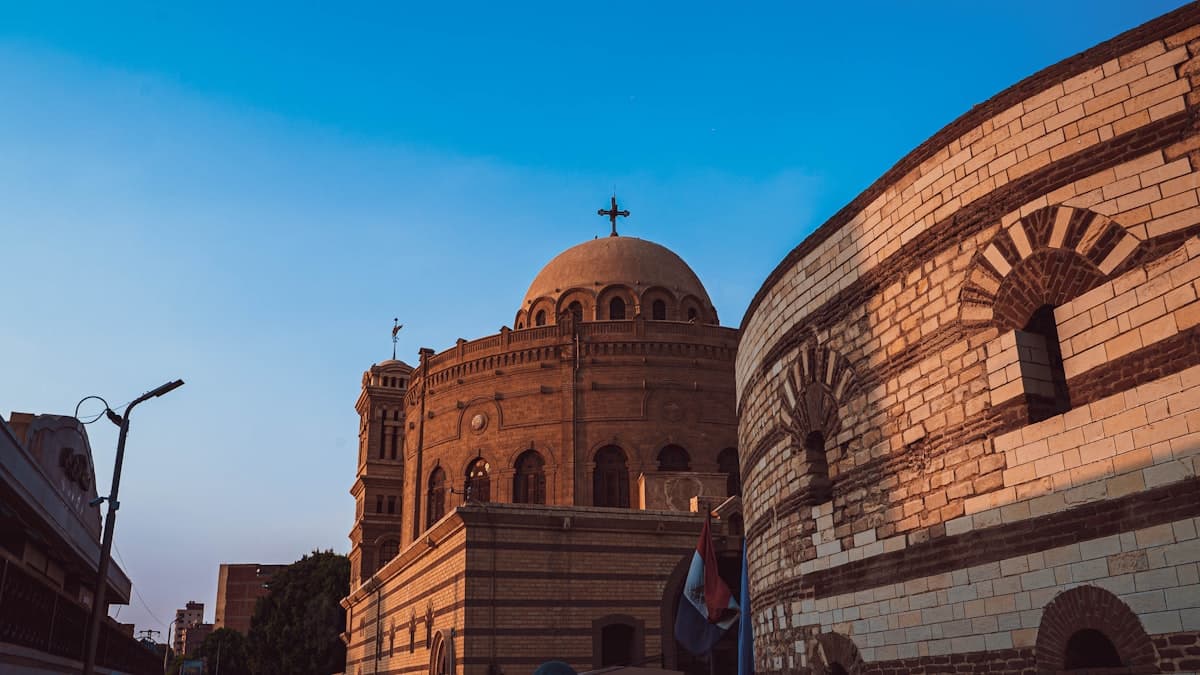
At the height of Egypt's cosmopolitan era, roughly the 1920s through the late 1950s, Cairo was a city of minorities who ran it. Greeks owned the department stores. Italians built the apartment blocks. Jews dominated the cotton brokerage. And Armenians, smaller in absolute number than any of these groups but wildly disproportionate in cultural output, produced some of the most recognizable names in Egyptian popular culture, design, and commerce.
The singer who effectively invented modern Egyptian pop music, or at least shaped its twentieth-century sound, was not Egyptian by ethnic origin. Hasmik Agha Babikian, born in Cairo to Armenian parents, performed under the name Hasmik and had a career that predated Umm Kulthum's ascent. The artist Edgar Chahine, who exhibited at the Paris Salon before returning to sketch Cairo's street life, was Armenian-Egyptian. The photographer Van Leo, born Levon Boyadjian, created the defining portrait archive of Cairo's Golden Age, photographing Umm Kulthum, King Farouk's court, and hundreds of ordinary Egyptians who wanted to look, for once, like movie stars.
And then, in a span of about fifteen years, almost all of them left. Nasser's nationalization decrees of 1956 and 1961 did not target Armenians specifically. They targeted property. But Armenian families, who had rebuilt their lives in Egypt after escaping the 1915 genocide and had invested everything into businesses and apartments they legally owned, found themselves dispossessed twice in a single lifetime.
What survived is a community of fewer than 5,000 people, three functioning churches, a school, a sports club, and a set of neighborhood traces that most Cairenes walk past without recognition. This guide exists to make those traces visible.
---
The Genocide and the Boats: How Armenians Came to Egypt
The Armenian presence in Egypt is not ancient in the way the Coptic or Jewish presence is. There were small communities of Armenian merchants in Alexandria from the medieval period, some as early as the fourteenth century trading with Mamluk sultans who found Armenian middlemen useful precisely because they belonged to no local power structure. But the community that shaped modern Cairo arrived in a specific historical window: the years immediately following the Armenian Genocide of 1915, when the Ottoman state systematically killed between 600,000 and 1.5 million Armenians and expelled survivors from Anatolia and the Levant.
Egypt, then under British administration, accepted refugees. The British had their reasons: controlling the narrative of Ottoman collapse, demonstrating humanitarian governance, and staffing the clerical and commercial infrastructure of a colony that needed educated middle-class workers. Armenians, many of whom arrived literate, multilingual, and professionally skilled, were exactly what that system needed. Survivors settled first in Alexandria, then moved to Cairo's Boulaq district, then spread across the city as the decades passed and their fortunes improved.
By the 1940s, Cairo had Armenian-owned photography studios, tailors who dressed the Egyptian aristocracy, pharmacies, jewelry workshops, and printing houses. The Armenian Apostolic Church on Ramses Street, dedicated in 1928, was built not as a humble refugee chapel but as a confident civic statement: a stone building with a bell tower, surrounded by community offices, a school, and a garden. It still stands. The bell still works.
The Armenian community in Egypt was also internally divided in a way outsiders rarely understand. There were Apostolic Armenians (followers of the oldest branch of Christianity, predating Rome's adoption of the faith by at least a decade by some scholarly accounts, and certainly predating the Council of Chalcedon of 451 AD which split the Apostolic church from Byzantine Christianity). There were Armenian Catholics, who entered communion with Rome during the seventeenth century. And there were Armenian Evangelicals, Protestants whose faith came through American and Swiss missionary work in Anatolia during the nineteenth century. Three denominations, three churches, three community centers, sometimes three competing newspapers, all within one square kilometer of each other in central Cairo.
---
What You Will Actually Find: Walking the Armenian Cairo Trail
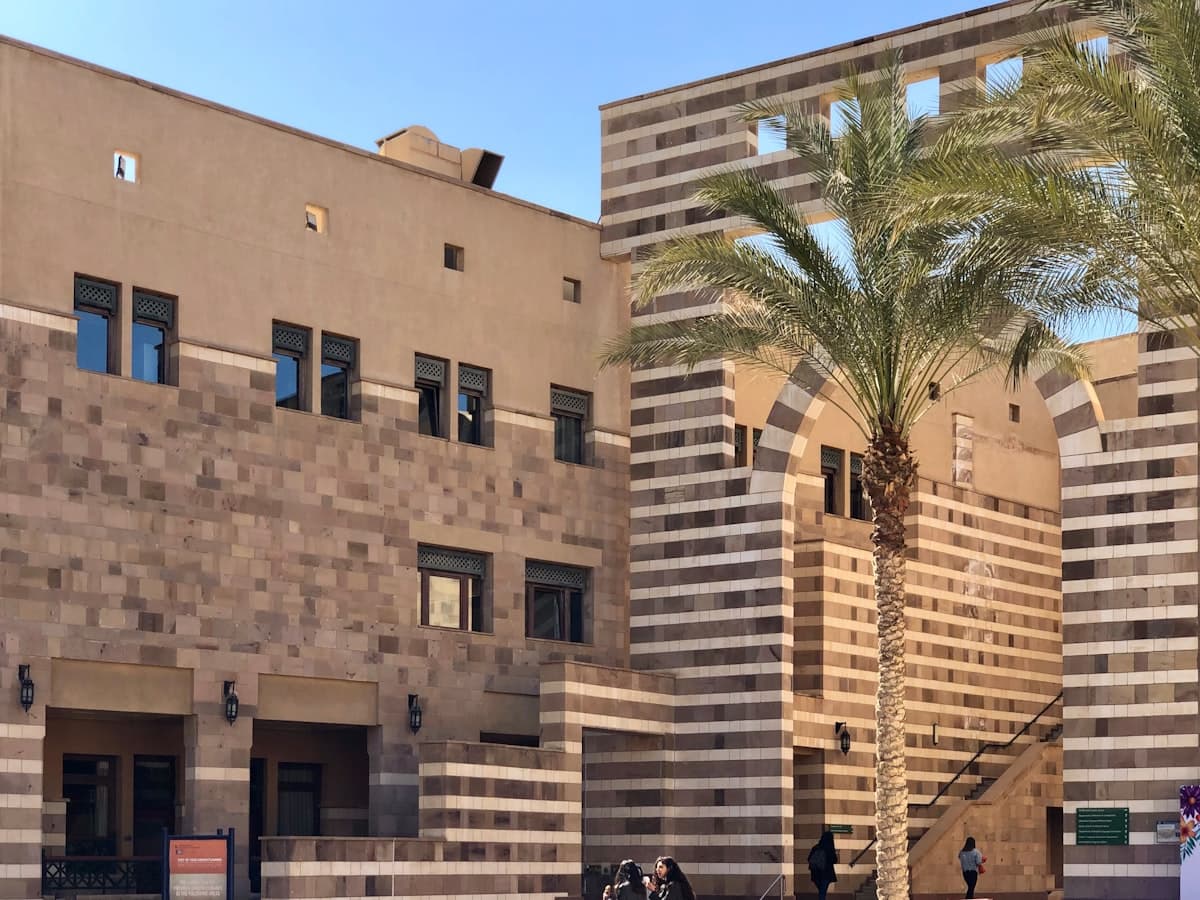
Start at the Armenian Apostolic Cathedral of Saint Gregory the Illuminator in Heliopolis. This is not the oldest Armenian building in Cairo but it is the most architecturally complete. Completed in 1936, it was designed in a style that deliberately evokes medieval Armenian church architecture from Van and Ani, the ruined Armenian capital in eastern Anatolia. The stone exterior uses carved geometric patterns that look, to the untrained eye, like Islamic arabesque. They are not. They are specifically Armenian Christian interlace patterns that predate the Islamic conquest of the Caucasus. You are looking at a very old visual language that survived genocide and exile and arrived, intact, on a side street in a Cairo suburb built by a Belgian real estate company.
The interior holds khachkars, the Armenian stone crosses that are themselves a UNESCO-recognized form of intangible cultural heritage. No two khachkars are ever identical. The cathedral has three. They were carved in Lebanon and transported to Cairo in pieces.
From Heliopolis, take a taxi to the Ramses Street area and find the Armenian Apostolic Church and community center there. The building's exterior is partly obscured now by a wall of phone accessory shops that have colonized the street-level retail in the block. This is Cairo: every historic building eventually gets a mobile phone case vendor at its feet. Push through. The courtyard behind the gate is quiet and well-maintained. The school attached to the complex, the Kalousdian-Nubar Armenian School, was founded in 1925 and still operates, though its student body is now largely non-Armenian Cairenes who enrolled because the academic standards were reliable.
The third essential stop is the old Ataba quarter, specifically the streets between Midan Ataba and the old Boulaq edge, where Armenian-owned printing houses and textile workshops operated from the 1930s onward. Most of the buildings are now generic commercial Cairo, their Armenian ownership replaced by successive waves of Egyptian enterprise. But if you look at the carved lintels above the older buildings, at the ironwork on the upper-floor balconies, at the tile patterns in surviving ground-floor entrances, the cosmopolitan Cairo of the 1940s becomes briefly, specifically visible.
Finally, if your interest goes deep, the Armenian section of Cairo's major cemeteries in the Imam El-Shafi'i area holds some of the most poignant surviving memorials. Families who were themselves survivors of the genocide buried their Cairo dead with Armenian inscriptions, photographs embedded in ceramic ovals, and the date of death written in both Armenian and Arabic. Many stones carry dual dates: the Armenian calendar date and the Gregorian date. It is a small, specific detail that encodes the entire experience of diaspora: you count time in two systems because you belong, fully, to neither.
---
The Connections: How Armenian Cairo Links to Everything Else
The Nubar family, whose name appears on the Armenian school on Ramses Street, is not incidental to Egyptian history. Boghos Nubar Pasha, son of Nubar Pasha who served as Egypt's first Prime Minister under Khedive Ismail in 1878, was the founder of the Armenian General Benevolent Union, the organization that coordinated refugee assistance after the genocide. Egypt's Armenian community effectively had a direct line to Egyptian state power through a family that had been governing Egypt since the 1860s. Nubar Pasha, the Prime Minister, arrived in Egypt from Smyrna and became one of the most powerful men in the country before the Armenian Genocide even occurred. He is buried in Alexandria. His grave is Armenian Orthodox. He governed a Muslim-majority country as a Christian of Armenian descent and died, apparently, comfortable with all of that.
The photographic studio of Van Leo, operating in downtown Cairo from the 1940s until the photographer's death in 2002, sits at the junction of Armenian diasporic culture and Cairo's own image of itself. His archive, now held partly by the Rare Books and Special Collections Library at the American University in Cairo, contains over 12,000 negatives. He photographed Egyptians who wanted to see themselves as glamorous, modern, and world-connected. He, an Armenian-Egyptian, gave them that image. The archive is accessible by appointment and is genuinely worth the effort if you have a research or journalistic purpose for the visit.
The Ottoman connections are uncomfortable but real. Many Armenians who settled in Egypt had survived an empire that tried to kill them. Egypt, at that moment, was administered by the British as a Protectorate, having just removed itself from nominal Ottoman sovereignty. The two communities, Egyptian and Armenian, shared an Ottoman history from opposite sides of the violence. Egyptian intellectuals in the 1920s were aware of the genocide. Several wrote about it. The newspaper Al-Ahram covered the deportations in real time in 1915. This is not widely remembered.
---
Common Mistakes

Treating this as a church tour rather than a neighborhood history. The churches are the anchors, but the community's traces are in the streets, the schools, the cemeteries, and the surviving commercial buildings. If you only visit the interiors of the churches, you miss most of the story.
Arriving without any contact within the community. The AGBU Cairo chapter is reachable through their regional website and responds to email. Making contact before you arrive means someone can open doors, literally and figuratively, that would otherwise stay closed. Showing up cold at a community center that is trying to maintain itself with dwindling membership gets you politeness and very little access.
Skipping Alexandria. Cairo has more surviving Armenian structures, but Alexandria has the graves, including Nubar Pasha's tomb, and the older layering of Armenian merchant presence going back to the Mamluk era. If you are genuinely interested in the Armenian community Egypt history, the Cairo guide is incomplete without at least one day in Alexandria.
The Van Leo Studio as a tourist attraction. It no longer operates as a studio and is not a formal museum. Do not go looking for a walk-in experience. What survives is an archive and a reputation. Engage with the archive through the AUC library, not by looking for a storefront.
Reading the Nubar name as merely decorative. Every institution in Cairo's Armenian community with the Nubar name attached carries the full weight of that family's political history. Understanding who Nubar Pasha was, and what his career says about Egypt's nineteenth-century openness to minority governance, reframes everything about how and why this community became so embedded in Egyptian public life.
Skipping the community-organized tours in favor of a general Cairo guide. General Cairo guides know the churches exist. They do not know the khachkar iconography, the denominational divisions, the specific families, or the businesses that mattered. Pay the extra cost for a community-connected guide. The AGBU Cairo chapter can recommend one.
Expecting a museum. There is no dedicated Armenian museum in Cairo. The community considered building one and could not sustain the effort. What exists is distributed: across the churches, the school, the cemetery, the AUC archive, and the memories of the remaining community members. This is actually more interesting than a museum, but it requires more of you.
---
Practical Tips
Dress conservatively for all church visits, which means covered shoulders and no shorts for both men and women. This is less about enforcement and more about respect for a community that is small, observant, and aware of being watched.
Sunday morning services at the Apostolic Cathedral in Heliopolis run from approximately 9am to 11am and are conducted in Armenian with some Arabic. You do not need to understand the liturgy to find it moving. The choral tradition in Armenian Apostolic worship is one of the oldest continuously practiced forms of Christian liturgical music, codified in the fifth century by Saint Mesrop Mashtots, who also invented the Armenian alphabet.
For the Ataba neighborhood walk, go on a weekday morning between 9am and 11am when the commercial streets are active but not gridlocked. Friday afternoon and Saturday in the market streets near Ataba are dense to the point of being unnavigable for anyone trying to look at building details.
Carry cash. Nothing in this community trail accepts cards. Bring enough for transport, any donations, coffee, and lunch.
If you photograph inside the churches, ask first. The communities are welcoming of genuine interest and resistant to feeling like a curiosity. The distinction matters and you can express it simply by asking permission and explaining that you are writing about, or researching, the community specifically.
Frequently Asked Questions
The Weekly Dispatch
More on Egypt, every Friday.
Cultural depth and places most guides never mention.
No spam. Unsubscribe anytime.