Armenian Community Egypt History Guide: Cairo's Forgotten Quarter
At its peak, Egypt's Armenian community numbered 100,000. Today fewer than 6,000 remain. The churches, schools, and clubs they left behind tell a story Cairo rarely advertises.

Quick Facts
- Best time to visit
- October to April for comfortable walking weather. Armenian Easter weekend for maximum community access and atmosphere.
- Entrance fee
- Free entry to all churches. Suggested donation EGP 50 to 100 (approx $1 to $3 USD) per site.
- Opening hours
- Saint Gregory Cathedral downtown: Saturday and Sunday 9am to 1pm. Surp Krikor Lusavorich Heliopolis: Sunday from 10am. Armenian Cemetery: daily dawn to dusk. Patriarchate by appointment.
- How to get there
- Metro Line 1 to Mubarak for downtown sites (EGP 8). Metro Line 3 to El Ahram for Heliopolis (EGP 10). Uber or taxi for cemetery in Khalifa (EGP 60 to 80 from downtown).
- Time needed
- Half-day for downtown sites only. Full day (7 to 8 hours) to cover downtown, Heliopolis, and the cemetery comfortably.
- Cost range
- Budget EGP 200 to 400 for transport and donations. Add EGP 150 to 300 for lunch in Heliopolis. Total full-day budget EGP 400 to 700 (approx $13 to $23 USD).
Quick Facts
Best time to visit: October to April, when walking between sites in downtown Cairo and Heliopolis is bearable. Armenian Easter (date shifts annually) brings the community together at Saint Gregory's in a way you will not see any other time of year.
Entrance fees: The Armenian churches are free to enter, though a donation of EGP 50 to 100 is appropriate and genuinely useful to communities maintaining buildings on minimal budgets. The Armenian Cemetery in Old Cairo charges no entry fee.
Opening hours: Saint Gregory the Illuminator Cathedral (Ramses Street, downtown) is open for visits Saturday and Sunday 9am to 1pm, and by appointment through the Armenian Patriarchate of Egypt (+20 2 2574 5693). The Surp Krikor Lusavorich Church in Heliopolis opens for Sunday mass at 10am and is generally accessible to respectful visitors before and after the service.
How to get there: For downtown sites, Metro Line 1 to Mubarak (Ramses) station, then a 10-minute walk. For Heliopolis, Metro Line 3 to El Ahram station, then a microbus or Uber (approximately EGP 30 to 50 from the station). The Armenian Cemetery in Khalifa district requires a taxi or Uber from downtown (EGP 60 to 80).
Time needed: A serious half-day covers the downtown church and Midan Ataba area. A full day connects downtown, Heliopolis, and the cemetery.
Cost range: This is primarily a walking and community history itinerary. Budget EGP 200 to 400 for transport, donations, and coffee. Lunch in Heliopolis adds another EGP 150 to 300.
---
Why This Place Matters
Armenia is approximately 2,700 kilometers from Cairo. And yet, when the Egyptian government nationalized foreign-owned businesses in 1961, more than 40 percent of the assets seized belonged to Armenians. That single number tells you everything about how deeply this community had embedded itself in Egyptian commercial and civic life over roughly 500 years.
Armenians began arriving in Egypt in meaningful numbers during the Mamluk Sultanate, when Cairo was the most important city between Constantinople and Delhi. The Mamluks, themselves a ruling class assembled from enslaved soldiers brought from across Eurasia, had no particular interest in ethnic homogeneity. Cairo under their rule (1250 to 1517) absorbed Armenian merchants, craftsmen, and clergy with the casual pluralism that characterized the medieval Islamic city at its most functional. The Armenian Quarter that existed near Bab Zuweila in the fourteenth and fifteenth centuries has dissolved into the urban fabric of Islamic Cairo, but the bones of that presence remain if you know how to look.
The Ottoman conquest of Egypt in 1517 did not end Armenian influence. It redirected it. Several of Muhammad Ali's most trusted advisors in the early nineteenth century were Armenians, and Boghos Bey Youssef, the man Muhammad Ali appointed to oversee Egypt's foreign trade from 1816 to 1833, was Armenian. When Muhammad Ali wanted to modernize Egypt's economy and negotiate with European powers, he largely did it through an Armenian intermediary. The cotton trade that financed the construction of the Suez Canal passed partly through Armenian hands.
The genocide of 1915 to 1923 transformed the community's character. Survivors who escaped Ottoman killing squads arrived in Egypt traumatized, often with nothing. Egypt under British rule accepted them with relative ease, and the existing Armenian community funded schools, churches, and welfare organizations to absorb the newcomers. By the 1940s, Egyptian Armenians had rebuilt with a ferocity that produced newspapers, theatrical companies, sporting clubs, and political organizations. The Armenian community in Egypt was publishing two separate Armenian-language newspapers simultaneously in Cairo during the 1930s.
Nasser's nationalization decrees of 1956 to 1963 ended that world. Not through violence, but through economic erasure. Factories, shops, and landholdings that Armenian families had accumulated over generations became state property. Most left. The ones who stayed are an extraordinary and quietly stubborn remnant.
---
What You Will Actually See: Downtown Cairo
The spiritual and administrative center of the Armenian community in Egypt is the Cathedral of Saint Gregory the Illuminator on Ramses Street, a short walk from Ramses Square. The building you see today dates primarily from a 1928 reconstruction, but there has been an Armenian church on or near this site since the early nineteenth century. Saint Gregory the Illuminator was the apostle who converted Armenia to Christianity in 301 AD, making Armenia the first nation in history to adopt Christianity as a state religion, twelve years before Constantine issued the Edict of Milan in Rome.
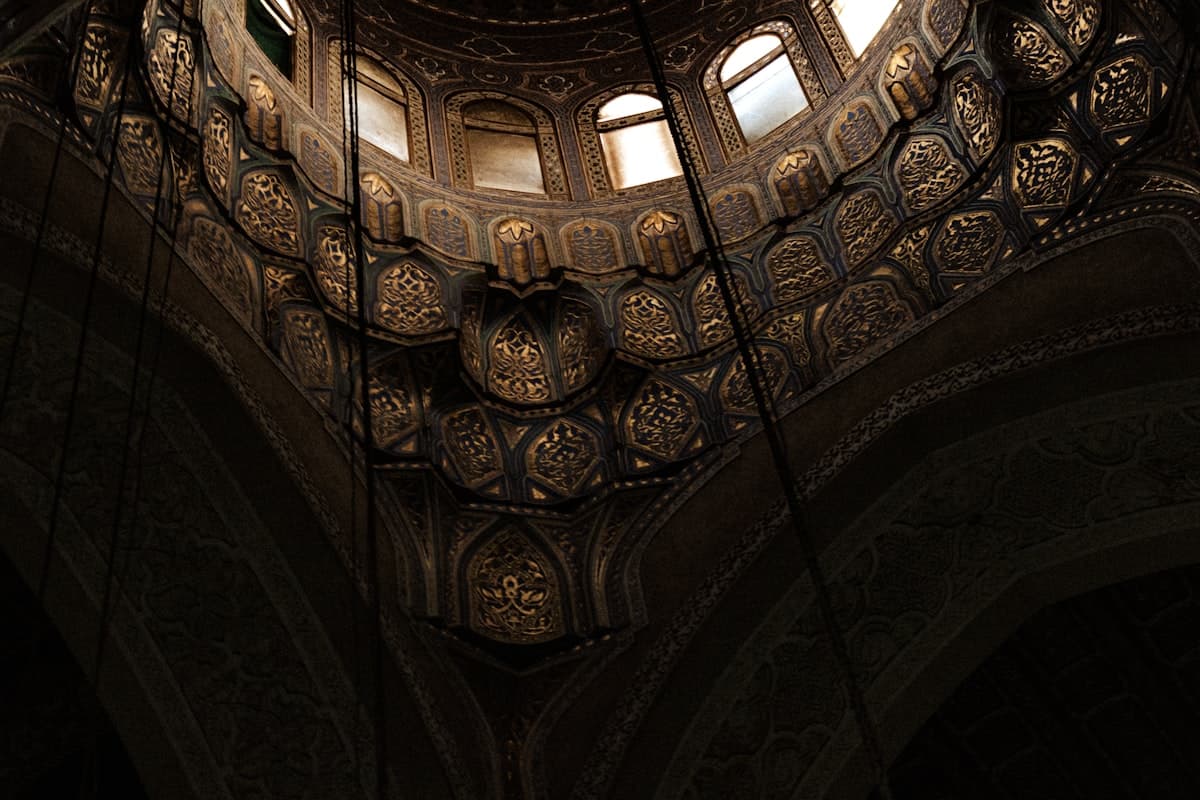
The interior of Saint Gregory's operates on a different visual logic than either the Coptic or the Catholic churches you may have visited in Egypt. Armenian Christianity developed its own distinct liturgical aesthetic: the khachkars, or cross-stones, carved in intricate interlaced patterns that have no direct parallel in any other Christian tradition. The khachkars inside the Cairo cathedral were brought from Armenia or carved by craftsmen who trained in the Armenian tradition, and they repay close attention. The patterns look almost Islamic in their geometric complexity, which is not coincidental. Armenian and Islamic decorative arts cross-pollinated across centuries of contact in Anatolia and the Levant.
Near the cathedral, on the surrounding streets of what was once a denser Armenian commercial district, you will find the offices of the Armenian Patriarchate of Egypt, which maintains authority over all Armenian Apostolic affairs in the country. The Patriarch's residence and the attached administrative buildings contain archives that scholars have only partially examined, documenting Armenian life in Egypt across several centuries. These are not open to casual visitors, but the Patriarchate staff are generally willing to speak with serious researchers or journalists.
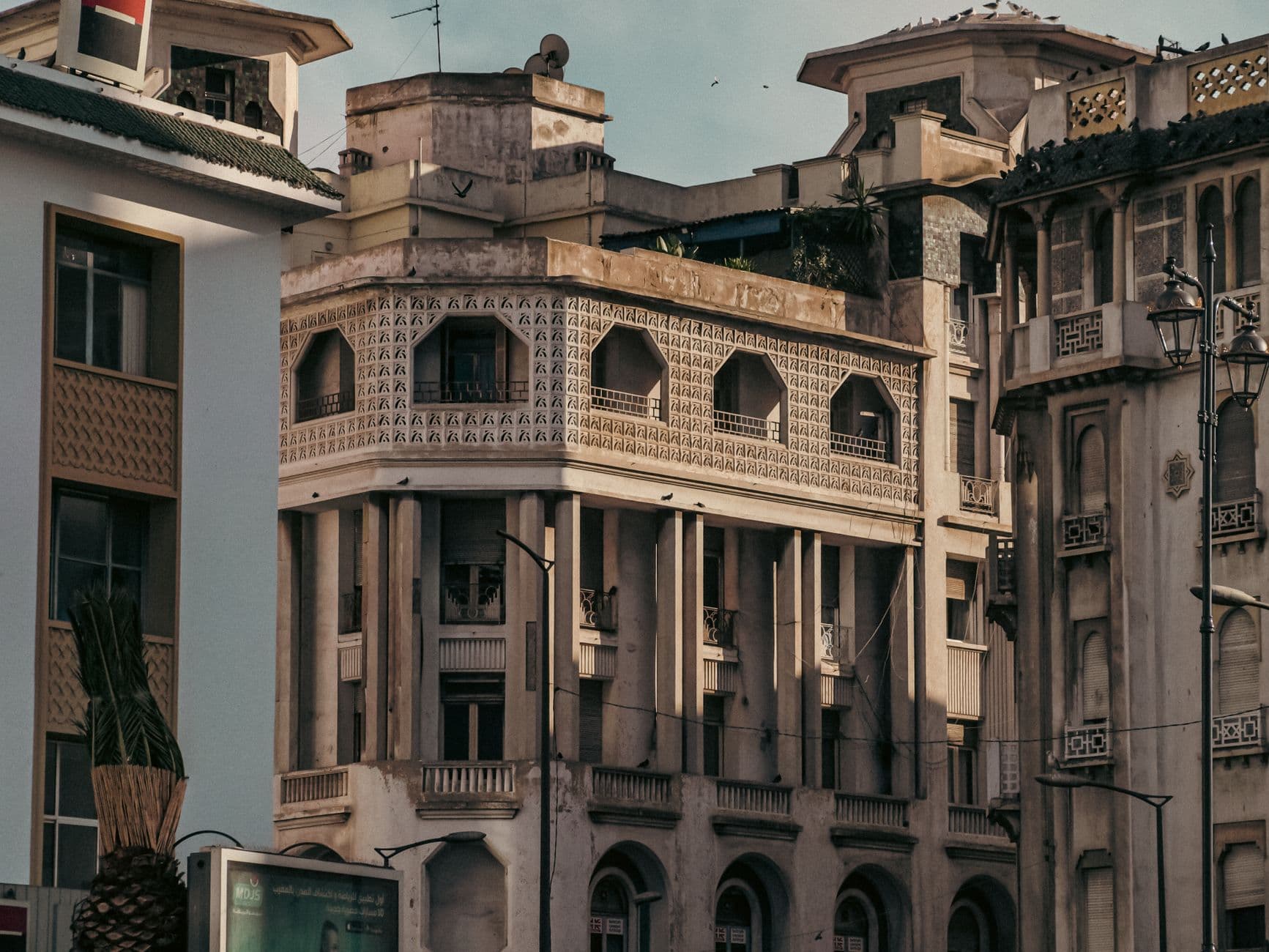
Along Fouad Street and the surrounding blocks, look for buildings with Armenian family names still carved into their facades. Several early twentieth century apartment buildings and commercial properties in downtown Cairo bear Armenian surnames in Arabic lettering, a geographic remnant of the pre-Nasser city.
---
Heliopolis: The Suburb Armenians Built
Heliopolis is a strange place. It was constructed from essentially nothing beginning in 1905 by a Belgian entrepreneur named Edouard Empain, who envisioned a garden suburb northeast of Cairo and hired European architects to build it. The labor force that constructed Heliopolis and then populated its shops, workshops, and small factories included a substantial number of Armenians, and by the 1920s and 1930s Heliopolis had become the residential center of Egyptian Armenian life.
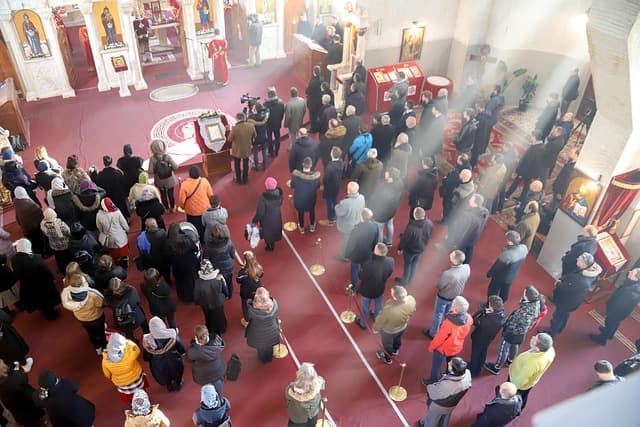
The Church of Surp Krikor Lusavorich (Saint Gregory the Illuminator, again, since he is the founding saint of the Armenian church) in Heliopolis is architecturally more intimate than the downtown cathedral and holds Sunday services that draw most of the community's Heliopolis-based families. Attending the liturgy, which is conducted in classical Armenian (Grabar), a liturgical language not spoken conversationally since the medieval period, is an experience with no equivalent anywhere else in Cairo. The sound of a congregation praying in a language that has been frozen since the twelfth century, inside a church in a Belgian-designed Egyptian suburb, is the kind of layered unreality that Cairo specializes in.
Along Ibrahim Laqany Street and the adjacent blocks in Heliopolis, the Armenian Club (Nadi al-Arman) operated for decades as a social and cultural hub. The building still stands, though the club's activities have contracted significantly as the community has shrunk. Walk the commercial streets of Heliopolis and you will find elderly Egyptians who remember when half the shops on certain blocks were Armenian-owned, and will tell you so unprompted if you show any interest.
The Tekeyan Cultural Association, named after the Armenian poet Vahan Tekeyan who spent significant time in Egypt and wrote some of his most important work here, maintained a library and cultural center in Heliopolis. Tekeyan is not widely known outside the Armenian world, but within it he occupies a position similar to what Cavafy holds in Greek literature, an exile who made the country of his displacement into his subject. His Cairo-period poems, written in classical Armenian and deeply marked by the genocide he had survived, are worth seeking out in translation.
---
The Connections: Armenia, Egypt, and the Long History of Refuge
The Armenian experience in Egypt is inseparable from a broader pattern: Egypt as a place where communities driven out of somewhere else rebuild. The Copts retreated into Upper Egypt when Arab armies arrived in the seventh century. The Jews of medieval Cairo, documented in extraordinary detail in the Cairo Geniza (a collection of 400,000 manuscript fragments found in a Ben Ezra Synagogue storeroom in Fustat), were largely refugees or descendants of refugees from elsewhere in the Mediterranean. The Greek community that dominated Alexandrian commercial life until Nasser was itself a post-1821 migration of Greeks fleeing the Ottoman suppression of the Greek independence movement.
The Armenian community fits this pattern precisely. They arrived in waves, each wave driven by violence somewhere else: Mamluk-era trade, Ottoman disruptions in the sixteenth and seventeenth centuries, the catastrophic genocide of the early twentieth century. Egypt absorbed them each time, not out of idealism but because Cairo was a city that had always needed skilled intermediaries, merchants, and administrators, and Armenians reliably were all three.
The Coptic and Armenian churches have a specific theological connection that most visitors to both miss. Both are Oriental Orthodox churches, meaning they rejected the Council of Chalcedon in 451 AD and its definition of Christ's dual nature. The Coptic Pope and the Armenian Catholicos maintain a formal ecumenical relationship, and there are documented instances of Coptic and Armenian clergy sharing church buildings in Egypt during periods when one community lacked its own space. At a structural level, the Armenian and Coptic churches in Cairo represent a continuous non-Chalcedonian Christian presence in the Nile Valley that predates Islam by centuries.
---
Common Mistakes
Arriving without contact. The Armenian community in Egypt is small and, frankly, somewhat wary of outsiders who treat them as a tourist attraction. Contact the Armenian Patriarchate or the Tekeyan Cultural Association before you visit. A five-minute phone call transforms your access from an outsider peering through windows to a guest who has been expected.
Visiting only the downtown cathedral. The cathedral is the official face. Heliopolis is where the community actually lives. If you only see Saint Gregory's on Ramses Street, you have seen the monument without the people.
Skipping the Armenian Cemetery. The cemetery in the Khalifa district, near the City of the Dead, contains graves dating to the nineteenth century and serves as an outdoor archive of Egyptian Armenian family history. The surnames on the stones connect directly to buildings, businesses, and historical events. It is rarely visited and genuinely worth an hour.
The Cairo Tower observation deck detour. Every standard downtown itinerary suggests combining Armenian sites with the Cairo Tower. The tower costs EGP 200 (approximately $7 USD), the view is hazy on most days, and the elevator queue in tourist season is not short. Skip it entirely. Use the time and the money for lunch in Heliopolis instead.
Expecting a museum. There is no dedicated Armenian museum in Egypt. The history lives in churches, cemeteries, community buildings, and people. If you need everything labeled and interpreted for you, this itinerary will frustrate you. If you are comfortable with active engagement, asking questions, and reading buildings as documents, it will reward you significantly.
Going on a Friday. Downtown Cairo empties in some respects on Friday but the church offices are closed, community buildings are locked, and the streets near Midan Ataba become dense with market crowds that make navigation slow. Saturday morning is the optimal time for the downtown portion.
Photographing without asking. In a community this small, photographing congregation members, elderly residents, or community events without explicit permission is intrusive in a way that would be less fraught at a large public monument. Ask. People generally say yes and are often pleased that someone outside the community is paying attention.
---
Practical Tips
Wear comfortable shoes. The itinerary described here covers approximately six to eight kilometers of walking if you do the full downtown-to-Heliopolis day. Heliopolis streets are wide and relatively easy to navigate on foot, but the downtown portion involves the usual Cairo pedestrian experience: improvised crossings, uneven surfaces, and motorcycle traffic.
The best single point of contact for arranging a more structured visit is the Tekeyan Cultural Association. They occasionally organize community events and cultural programs that outside visitors can attend with advance notice. Their availability fluctuates, so persistence is necessary.
Bring cash. Nothing in this itinerary accepts cards. ATMs are available near Mubarak Metro station and throughout central Heliopolis.
If you read Arabic, the Egyptian newspaper archives at the Dar al-Kutub National Library contain coverage of the Armenian community in Egypt from the early twentieth century onward that is largely untranslated and gives a sense of how Egyptians perceived their Armenian neighbors across different political periods. This is a research trip addition, not a casual one, but it exists.
For food, Heliopolis has several good Lebanese and Egyptian restaurants along Ibrahim Laqany Street. There is no specifically Armenian restaurant currently operating in Cairo, which is itself a measure of how much the community has contracted. The last Armenian restaurant in the city closed in the 1980s according to community elders, though informal Armenian cooking still appears at community events.
Frequently Asked Questions
The Weekly Dispatch
More on Egypt, every Friday.
Cultural depth and places most guides never mention.
No spam. Unsubscribe anytime.