Armenian Community Egypt History Guide: Cairo's Hidden Quarter
At its peak, Egypt's Armenian community numbered 40,000. Today it is under 6,000. The churches, schools, and cemeteries they left behind tell a story most Cairo visitors never find.

Quick Facts
- Best time to visit
- October to March. Cairo in summer (June to August) makes the Heliopolis walking circuit genuinely unpleasant, and most community contacts are harder to reach in the summer months when families travel.
- Entrance fee
- Free for both Armenian churches. Donation of EGP 50 to 100 (approx $1 to $3) is customary. Cemetery visit requires prior arrangement through the church office, no fee.
- Opening hours
- Armenian Apostolic Church: Saturday and Sunday 9am to 1pm and during services. Armenian Catholic Cathedral: weekday mornings approximately 9am to 12pm. Hours vary. Always call ahead.
- How to get there
- Metro to Mubarak Station (EGP 8) for Ramses Street churches, 10-minute walk north. Uber or taxi to Heliopolis from downtown EGP 80 to 120. Microbus No. 356 from Abdel Moneim Riad to Heliopolis EGP 5.
- Time needed
- 2 to 3 hours for downtown Armenian circuit. Additional 2 to 3 hours for Heliopolis. Full day recommended if combining both with the Fatimid Cairo connections.
- Cost range
- Very low cost day. EGP 300 to 500 total including transport, lunch, and donations. Informal community guide EGP 600 to 900.
At its peak in the 1950s, Egypt's Armenian community numbered close to 40,000 people. Today the figure sits somewhere below 6,000, possibly far less. The departure was not slow. It happened in a single political convulsion: Nasser's nationalizations of 1956 and 1961 dismantled the commercial world that Armenians had spent a century building in Cairo and Alexandria, and most of them left within a decade. What remains is a Cairo that still carries their fingerprints everywhere, in neighborhoods, in surnames, in the particular wrought-iron balconies of downtown buildings, in a church on Ramses Street that almost nobody visits, and in a cemetery in Heliopolis that contains, among other things, the grave of the man who may have introduced photography to the Ottoman Middle East.
Quick Facts
Best time to visit: October through March, when Cairo temperatures are tolerable for walking the downtown and Heliopolis circuits on foot.
Entrance fees: The Armenian Catholic Cathedral on Ramses Street and the Armenian Apostolic Church of St. Gregory the Illuminator are both free to enter, though a small donation (EGP 50 to 100, roughly $1 to $3) is customary and genuinely appreciated by the skeleton staff that maintains them. The Armenian cemetery in Heliopolis is accessible with permission from the Armenian church office, which you can reach by calling ahead.
Opening hours: The Apostolic church is typically open Saturday and Sunday mornings from 9am to 1pm and during religious services. The Catholic cathedral on Ramses keeps irregular hours but is generally accessible weekday mornings. Always call ahead. These are living institutions, not tourist sites, and their schedules shift around services and community events.
How to get there: For the Ramses Street churches, take the Cairo Metro to Mubarak Station (Line 1 or 2, approximately EGP 8). Walk north on Ramses Street for about 10 minutes. For Heliopolis, take a taxi or Uber from central Cairo, roughly EGP 80 to 120 depending on traffic. The No. 356 microbus runs from Abdel Moneim Riad terminal to Heliopolis for EGP 5 but adds significant time. For serious exploration, budget a full day and combine both neighborhoods.
Time needed: Downtown Armenian Cairo takes 2 to 3 hours on foot. The Heliopolis circuit, including the cemetery and former Armenian Club, requires another 2 to 3 hours. A full day covering both, with lunch in between, is the right rhythm.
Cost range: This is one of Cairo's least expensive cultural circuits. Budget EGP 300 to 500 for a full day including transport, lunch, and donations. Guided tours with an Armenian community contact cost around EGP 600 to 900 and are worth it for access.
Why This Place Matters
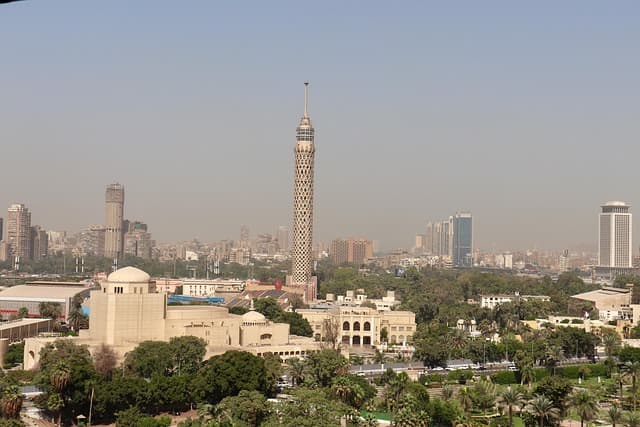
Armenians arrived in Egypt in several distinct waves, and each wave brought a different set of skills, traumas, and ambitions. The first significant community established itself in Cairo and Alexandria during the 19th century, when Mohamed Ali's modernization project drew merchants, craftsmen, and professionals from across the Ottoman Empire. Armenians arrived as jewelers, photographers, architects, and textile merchants. They built schools and churches, founded newspapers, and wove themselves into the cosmopolitan fabric of a city that was, for a brief period, genuinely international in its self-conception.
The second and largest wave arrived between 1915 and 1923, survivors of the Armenian Genocide perpetrated by the Ottoman state. Egypt, still nominally Ottoman but functionally under British control, became a refuge. The Egyptian government under British administration was relatively open to Armenian refugees, and a community that had been small and commercially focused suddenly became something else: a displaced nation in miniature, with its own schools, orphanages, cultural clubs, and a determined effort to preserve a language and identity that had nearly been exterminated.
This is the part of the story that connects Armenian Cairo to global history in a way that most visitors do not consider. When you stand in the nave of St. Gregory the Illuminator on Ramses Street, you are standing in a space built largely by genocide survivors. The church was reconstructed and expanded in the 1930s by a community still processing an event that the world would not officially name for decades. The iconography inside, the particular saints depicted, the memorial plaques on the walls, these are not decorative. They are documentary.
What You Will Actually See
The Ramses Street Churches
The two Armenian churches on and near Ramses Street are separated by less than a kilometer and represent the oldest theological schism in Christian history. The Armenian Apostolic Church follows the tradition established at the Council of Chalcedon in 451 AD, which the Armenian Church rejected, making it one of the Oriental Orthodox churches rather than Eastern Orthodox or Catholic. The Armenian Catholic Church, by contrast, entered into communion with Rome in the 18th century, a split that mirrored similar divisions in Coptic and Syrian Christian communities across the region.
This matters architecturally as well as theologically. The Apostolic church retains interior features and iconographic conventions that would be unfamiliar to visitors accustomed to Byzantine or Latin Christian art. The khachkars, the elaborately carved stone cross-monuments, are specifically Armenian and appear nowhere else in Egyptian religious art. Several in the Ramses Street church date to the 1920s and were carved by craftsmen who brought the tradition from Anatolia as refugees. Look at the upper register of carvings near the altar: the interlaced geometric patterns are not ornamental filler. They encode specific theological statements about the nature of Christ that the Armenian Church has maintained, unchanged, since the 5th century.
The Catholic cathedral is larger and more formally imposing, with a neoclassical facade that reads as vaguely Roman from the street. Inside, the synthesis of Armenian iconographic tradition with Latin liturgical space produces something genuinely unusual: khachkar motifs appearing in stained glass windows that otherwise could belong to a French provincial church. The community that worshipped here in the 1940s was small enough to know every face in every pew. Today, services draw perhaps 30 to 50 people. The priest will speak to you after the service if you ask, and he will tell you things about the neighborhood's history that are not written anywhere.
The Heliopolis Connection
Heliopolis, the planned garden suburb built northeast of Cairo by the Belgian industrialist Edouard Empain beginning in 1905, was designed as a cosmopolitan residential district from its inception. Armenians moved there in significant numbers during the 1920s and 1930s, and the suburb's Armenian Club on Ibrahim Laqany Street became one of the social centers of the community. The building still stands, though its function has changed. The facade retains its original proportions and some decorative details that an attentive eye can read as distinctly Armenian in influence, a hybrid of art nouveau and the kind of decorative stonework that Armenian craftsmen had refined over centuries in Anatolia.
The Armenian cemetery in Heliopolis is the most concentrated archive of community history in Cairo. Among the graves is that of Abdullah Frasheri, but the one that stops serious researchers is that of Carabit Abdullahian, believed by several historians of Middle Eastern photography to be among the earliest professional photographers operating in Cairo and Alexandria, active from the 1860s onward. Whether the claim holds up to full scholarly scrutiny is debated, but the grave itself, and the careers it gestures toward, are real. Photography studios run by Armenian proprietors were among the most important visual archives of 19th and early 20th century Egyptian street and studio life. The images they produced, many of them now in European and American collections, constitute a significant portion of what we know about what pre-revolutionary Cairo looked like at ground level.
The Connections
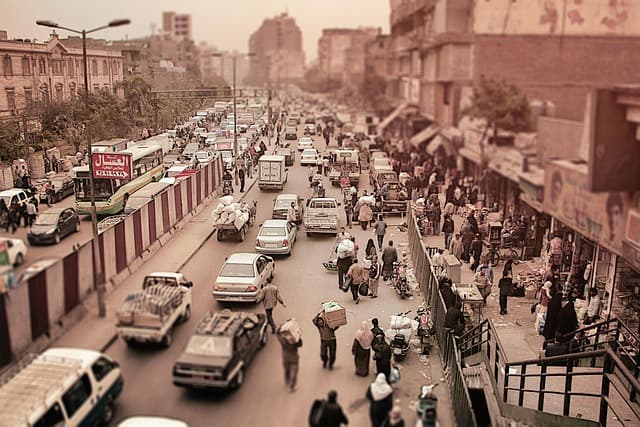
Armenian Cairo cannot be understood in isolation from Coptic Cairo, and not only because both communities are Eastern Christian minorities in a predominantly Muslim country. The relationship is older and stranger than that. When Armenian artisans began arriving in Egypt in the 19th century, they found a Coptic community that had already been navigating Christian minority status under successive Islamic dynasties for over 1,200 years. The two communities developed parallel institutional structures: minority schools, community clubs, endogamous marriage patterns, and a relationship with the Egyptian state that oscillated between tolerance and marginalization.
The Fatimid caliphate, which ruled Egypt from 969 to 1171, actually employed Armenians in significant state roles. The Fatimid vizier Badr al-Jamali, who effectively ran Egypt from 1074 to 1094, was an Armenian slave-soldier who became the most powerful man in the country. He built the three stone gates of Fatimid Cairo, Bab al-Futuh, Bab al-Nasr, and Bab Zuweila, which still stand. The architects he brought from Edessa, in what is now southeastern Turkey, were also Armenian, and their fingerprints are in the stonework of those gates in specific technical details of voussoir cutting that specialists in medieval Islamic architecture have identified as distinctly Armenian in origin. This is not a footnote. The oldest surviving monumental architecture of Islamic Cairo was built by Armenian craftsmen under an Armenian commander.
That history, connecting the Fatimid gates to the genocide survivors who rebuilt St. Gregory's in the 1930s, is the thread that the Armenian community Egypt history runs on. It is not a story of guests in someone else's country. It is a story of a people who built parts of the country itself.
Common Mistakes
Treating this as a Sunday morning errand. The churches are not museum annexes. Services, community gatherings, and administrative work happen on schedules that do not accommodate drop-in visitors. Call ahead, explain your interest, and you will be welcomed. Arrive unannounced and you may find locked doors.
Skipping the cemetery in favor of the churches. Most visitors, if they engage with Armenian Cairo at all, see the Ramses Street churches and consider the job done. The Heliopolis cemetery is harder to access and requires a phone call, but it is the denser archive. The inscriptions alone, in Armenian, Arabic, French, and occasionally English, are a compressed history of the community's multiple identities.
Assuming the community is purely a genocide story. The post-1915 refugee wave is the most dramatic chapter, but the 19th century mercantile community, the Fatimid-era architectural contribution, and the post-revolution diaspora are equally distinct. Collapsing all of this into genocide memory alone does the history a disservice and will produce confused conversations with community members who identify primarily with the pre-1952 cosmopolitan Cairo period.
Paying for a generic Cairo tour that includes an Armenian church as a checkbox stop. These tours spend 20 minutes at the church, tell you it was built by Armenians, and move on. The community office can connect you with Armenian Cairenes willing to share their family histories informally, which is worth infinitely more.
The sound and light show at the nearby Citadel, if you are combining sites. It costs EGP 350 and tells you nothing about Islamic Cairo that walking the Citadel's interior in daylight will not tell you better, in silence, for half the price. Skip it.
Ignoring the downtown buildings. Between Talaat Harb Square and Ramses Street, several early 20th century apartment buildings were designed by Armenian architects or built by Armenian developers. The names on the cornerstones are there if you look. This is a walking city, and the Armenian contribution to its built fabric is readable from the street if you know to look up.
Expecting English language signage or printed materials at community sites. Bring your phone, download Google Translate with Armenian offline capability, and accept that this part of Cairo has not been packaged for visitors. That is precisely why it is worth visiting.
Practical Tips
The single most useful thing you can do before visiting is contact the Apostolic Church office by phone and ask if there is anyone who might speak with you about the community's history. Cairo's Armenian community is small enough that individuals with deep family memories are not hard to find, and most of them are generous with their time when someone arrives with genuine curiosity rather than a checklist.
Dress conservatively for both churches: covered shoulders, no shorts. This is less about strict enforcement and more about basic respect for spaces that function as active places of worship rather than heritage attractions.
If you read French, the Institut français d'Égypte has published several monographs on the non-Egyptian communities of Cairo that include detailed chapters on Armenian history in Egypt. These are better background reading than most English-language sources, which tend to be thin on the pre-genocide period.
Heliopolis repays walking. The suburb's street grid is navigable and the architectural fabric, though eroded in places, still reads as the planned cosmopolitan district it was intended to be. An Uber or taxi from downtown costs roughly EGP 80 to 120 and drops you near the old Armenian Club. Walk from there to the cemetery, then north through the residential streets, and you will understand why the community chose this neighborhood before the metro existed to connect it to the rest of Cairo.
Finally: photograph the graves with care, and ask permission before photographing people. This is not a tourist site. It is someone's family history, and the people who maintain it are not paid to receive visitors. They are there because the community it represents has not yet finished grieving.
Frequently Asked Questions
The Weekly Dispatch
More on Egypt, every Friday.
Cultural depth and places most guides never mention.
No spam. Unsubscribe anytime.