British Colonial Egypt: A Guide to the Sites That Built an Empire
Britain occupied Egypt for 72 years but never formally colonized it. That legal fiction shaped every building, battle site, and boulevard they left behind.

Quick Facts
- Best time to visit
- October through February. Cooler temperatures make the outdoor cemetery sites and Delta locations manageable. Alexandria in October has lower crowds and the specific low-angle light that makes its Corniche architecture readable.
- Entrance fee
- Commonwealth cemeteries: free. Egyptian Museum: EGP 450 (approx. $9 USD), students EGP 225. Abdeen Palace Museum: EGP 200 (approx. $4 USD). Baron Empain Palace, Heliopolis: EGP 100 (approx. $2 USD). Downtown walking circuit: free.
- Opening hours
- Commonwealth cemeteries daily 7am to 5pm. Egyptian Museum daily 9am to 7pm (summer), 9am to 5pm (winter). Abdeen Palace Museum Saturday through Thursday 9am to 5pm. Baron Empain Palace daily 9am to 5pm.
- How to get there
- Downtown Cairo: metro to Sadat station (Line 1 or 2), EGP 10. Heliopolis: Careem or Uber from downtown, EGP 80 to EGP 120. Alexandria: express train from Ramses Station, EGP 120 to EGP 200 second class, two hours. Tel el-Kebir: private driver from Cairo, EGP 400 to EGP 600 half-day.
- Time needed
- Cairo colonial circuit: one full day. Adding Alexandria requires a second full day. Tel el-Kebir as a standalone half-day trip. Combining all three is a serious three-day itinerary.
- Cost range
- Budget EGP 600 to EGP 1,000 per day covering admissions, metro, and street food. Mid-range EGP 2,000 to EGP 3,500 per day with a private specialist guide and sit-down meals.
Britain occupied Egypt for 72 years without ever calling it a colony. From 1882 to 1954, Egypt was officially an autonomous Ottoman province, then a protectorate, then a nominally independent kingdom, all while British soldiers garrisoned the Nile Delta, British engineers redirected the country's cotton revenues, and British architects rebuilt downtown Cairo in a style one consul-general called "Oriental but orderly." That legal sleight of hand shaped everything. The sites the British left behind are not monuments to conquest in the way a Roman triumphal arch is. They are subtler: a barracks that became a university, a train station that outlasted an empire, a cemetery where the dead from Tel el-Kebir share ground with the dead from the Western Desert campaign, forty years apart, same flag, same mistake.
This guide covers the principal sites associated with British Egypt, most of them in Cairo, some in Alexandria, one in a cotton town on the Delta that almost nobody visits. It does not celebrate empire. It reads the buildings as evidence.
Quick Facts
Best time to visit: October through February. The buildings are urban and can be visited year-round, but the cemetery sites and Delta locations are brutal from June through September. October also brings lower crowds to Alexandria.
Entrance fees: Most colonial-era buildings are either free to enter (as functioning civic buildings) or inaccessible without prior arrangement. The Commonwealth War Graves Commission cemeteries are free and open daily. The Egyptian Museum, which houses artifacts from the colonial excavation era, costs EGP 450 (approx. $9 USD). The Abdeen Palace Museum costs EGP 200 (approx. $4 USD).
Opening hours: Commonwealth cemeteries are generally open daily from 7am to 5pm. Abdeen Palace Museum opens Saturday through Thursday, 9am to 5pm. The Egyptian Museum opens daily from 9am to 7pm in summer, 9am to 5pm in winter.
Getting there: All Cairo sites are accessible by metro, ride-hail (Uber/Careem), or taxi. The Heliopolis suburb, the most intact colonial residential district, is served by the airport road and costs roughly EGP 80 to EGP 120 from downtown by Careem. The Tel el-Kebir battlefield area requires a private car or a hired driver from Cairo, approximately EGP 400 to EGP 600 for a half-day round trip.
Time needed: Cairo colonial circuit: one full day minimum. Add Alexandria for a second day. Tel el-Kebir requires a dedicated half-day.
Cost range: Budget EGP 600 to EGP 1,000 per day covering admissions, transport, and food. Mid-range EGP 2,000 to EGP 3,500 per day including a private guide.
Why This Place Matters
The British arrived at Tel el-Kebir on September 13, 1882, and defeated Ahmed Urabi's nationalist army in forty-five minutes. It was one of the fastest decisive battles in Victorian military history, and it triggered seventy-two years of occupation that transformed Egypt's cities, economy, agriculture, and legal system. What most visitors do not know is that Urabi's revolt was not, as British propaganda insisted, a military coup. It was Egypt's first constitutional movement, demanding parliamentary governance and limits on foreign debt. The Khedive Tewfik called in the British to suppress it precisely because it threatened his own power, not because it threatened European civilians.
That context matters when you stand in front of the buildings the British built. The Qasr el-Nil barracks, demolished in 1947, once occupied the site of what is now the Cairo Hilton and the Arab League headquarters. The irony is not accidental. The Shepheard's Hotel, burned by Egyptian nationalists in the Cairo Fire of January 1952, stood on the site where Napoleon had placed his headquarters in 1798. The British replaced the French, then the Egyptians replaced the British, and each time the address changed hands it did so violently.
This is what British colonial history sites in Egypt actually are: layers. Nothing was built on empty ground.
Downtown Cairo: The Architecture of Control
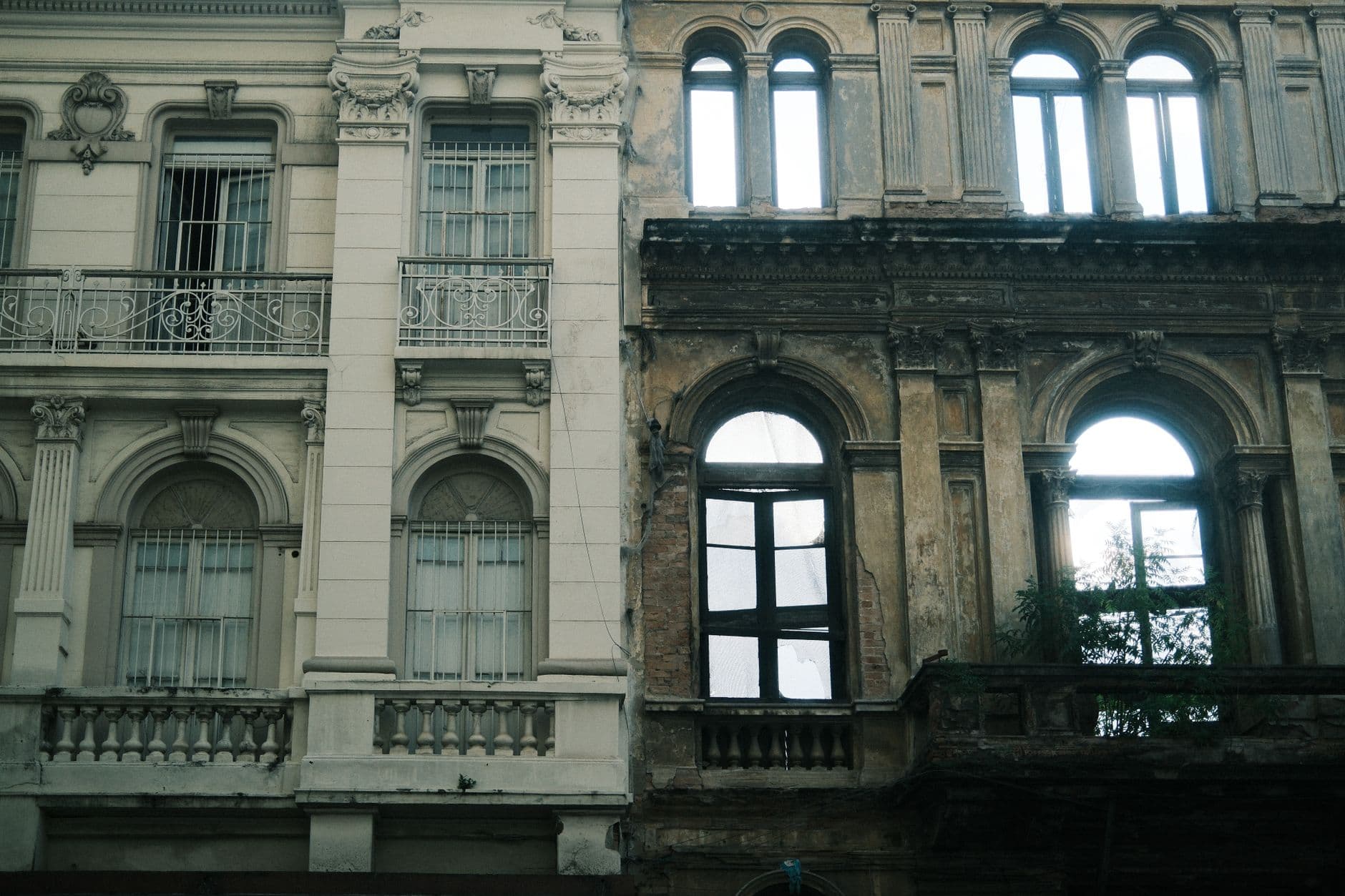
Khedive Ismail began rebuilding central Cairo in the 1860s on a Haussmann model, but it was under British financial oversight, beginning in 1882, that the project hardened into something more systematic. The area called Khedival Cairo or Downtown Cairo today contains the densest concentration of late Victorian and Edwardian architecture outside London, and almost none of it is properly labeled or interpreted for visitors.
Start at Midan Talaat Harb, the square centered on the statue of economist Talaat Harb, who founded Bank Misr in 1920 specifically to redirect Egyptian capital away from European control. The buildings surrounding him were built by the Europeans he was resisting. The Cicurel department store building, the Egyptian stock exchange, the former Barclays branch on Qasr el-Nil Street: all date from the period between 1890 and 1930 and were built by or for foreign commercial interests operating under the Capitulations, a legal system that exempted foreign nationals from Egyptian courts and taxes.
The Capitulations were not abolished until 1949. For sixty-seven years, a British subject who defrauded an Egyptian could not be tried by an Egyptian judge. That fact is embedded in every neoclassical facade on Qasr el-Nil Street.
Walk north to the Egyptian Museum. The building itself, opened in 1902 and designed by French architect Marcel Dourgnon, was the British administration's response to a problem they had created: seventy years of uncontrolled excavation by European archaeologists had stripped Egypt's antiquities into the museums of Paris, London, Berlin, and Turin. The founding of the Egyptian Antiquities Service under Auguste Mariette in 1858 and its later operation under British oversight standardized what was kept and what was exported. Rooms 43 through 46 of the current museum contain artifacts from excavations funded by British institutions. The objects that did not stay are in the British Museum.
Heliopolis: A Suburb That Was Designed to Be Separate
Heliopolis, now a busy Cairo district near the airport, was founded in 1905 by Belgian industrialist Edouard Empain as a private city for Europeans. The concession he obtained from the Egyptian government gave him sovereignty over an area of desert northeast of Cairo. He built a tramway, a palace modeled on a Hindu temple (it still stands on the airport road, privately owned and deteriorating), a basilica, and residential streets zoned explicitly to exclude Egyptians except as domestic workers.
By the 1930s, Heliopolis had become the preferred residential address for senior British officials and military officers. The streetscape today, if you walk the older blocks around Ibrahim al-Laqqani Street, is remarkably intact: arcaded ground floors, loggia apartments, wrought iron balconies in a style that reads as simultaneously Italian, French, and trying very hard not to be Egyptian. The Heliopolis Sporting Club, founded in 1921, still operates. The original membership rules, which restricted Egyptian members to a separate enclosure, were not changed until 1952.
Alexandria: The City Britain Nearly Shelled Into Submission
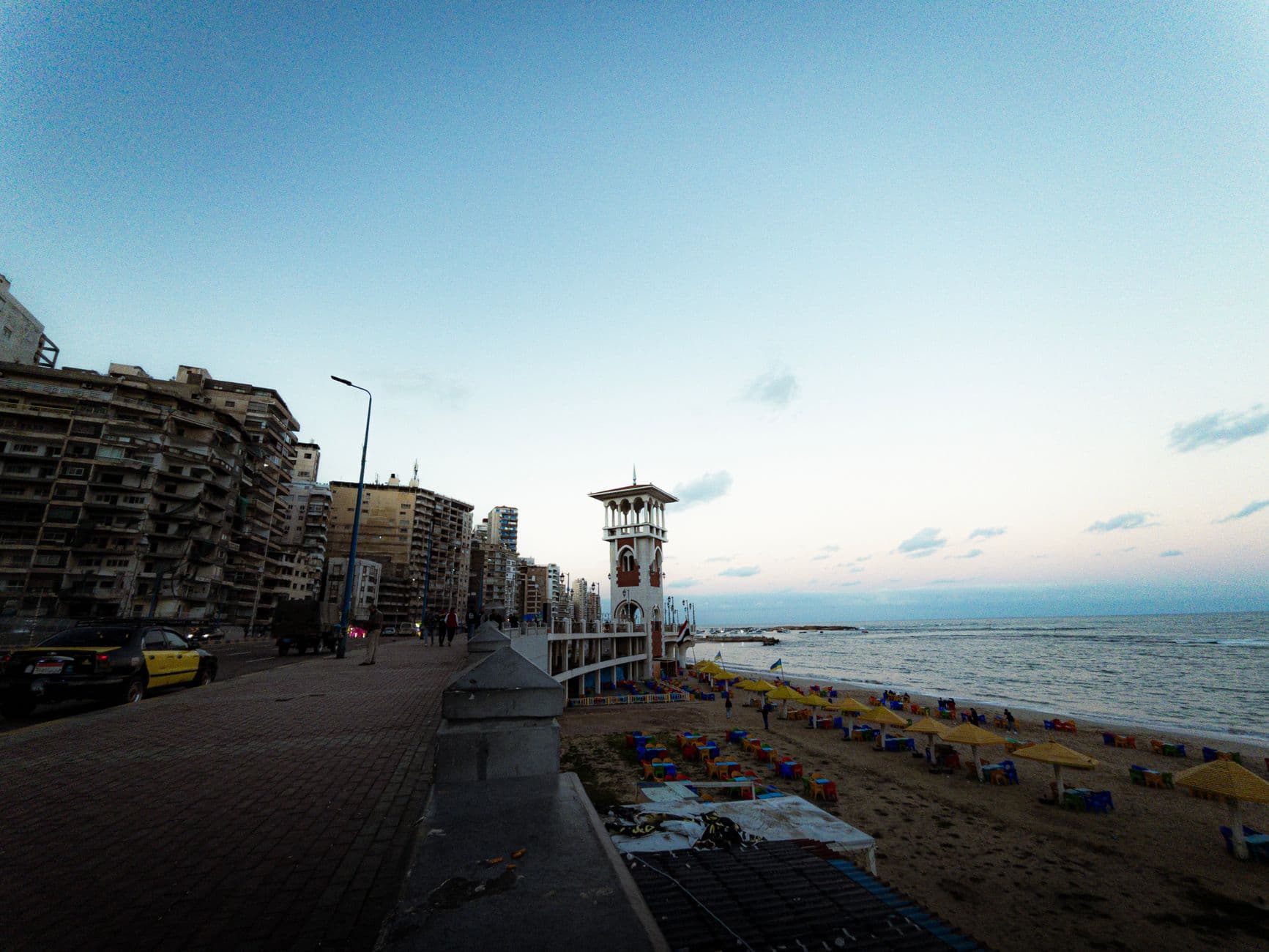
On July 11, 1882, the Royal Navy bombarded Alexandria for ten and a half hours. The stated justification was the fortification of the harbor by Urabi's forces. The practical consequence was the destruction of roughly a third of the city and the deaths of an unknown number of Egyptian civilians, with estimates ranging from 2,000 to over 5,000. The British parliament debated the bombardment. Gladstone's government defended it. John Bright, Gladstone's closest ally, resigned from the cabinet in protest.
Modern Alexandria has largely absorbed or demolished the buildings from the colonial period, but several sites survive. The Cecil Hotel, opened in 1929 on the Corniche, was used as British military intelligence headquarters during the Second World War. Somerset Maugham, Noel Coward, and Winston Churchill all stayed there. Its lobby bar, now renovated to within an inch of its soul, still has the proportions of a room designed for men who considered themselves permanent.
The Alexandria Commonwealth War Graves cemetery on Hadra Street contains 2,138 graves from both World Wars, including casualties from the 1882 bombardment and the 1915 Gallipoli campaign routed through Egypt. It is free, quiet, well-maintained by the Commonwealth War Graves Commission, and almost entirely unvisited by tourists. The inscriptions are specific: regiment, date, age. The youngest grave belongs to a boy soldier who was sixteen.
The Connections: What the British Built On
The British did not arrive in an empty country, and they did not build on empty ground. The Qasr el-Nil barracks, their primary Cairo garrison, occupied a site on the Nile bank that had been a Mamluk waterfront fortification. The road system they paved over the Nile Delta largely followed irrigation canal routes that dated to the Ptolemaic period. The Egyptian railway network, whose main Cairo terminus at Ramses Station opened in 1856 under Khedive Abbas I with British engineering assistance, ran on an alignment partly determined by the ancient route between Memphis and the Delta cities.
The relationship between British colonial history sites and the deeper layers of Egyptian history is most visible at Luxor, where the Winter Palace Hotel, opened in 1907, became the base of operations for Howard Carter's excavations. Carter discovered Tutankhamun's tomb in 1922 while working under the patronage of Lord Carnarvon, a British aristocrat who had come to Egypt initially for his health. The objects Carter found, nearly 5,400 of them, remained in Egypt because of a 1912 law that ended the partage system under which excavating nations had kept half of whatever they found. The British had benefited from partage for fifty years before the law changed. The Tutankhamun collection is in the Grand Egyptian Museum in Giza. The tools Carter used to open the tomb are in Oxford.
Common Mistakes
Treating this as a single-site itinerary. There is no one colonial-era building in Egypt that tells the whole story. The history is distributed across an entire urban fabric. Block out two days minimum and treat it as a walking and reading exercise, not a monument visit.
Going to the Gezira Sporting Club and calling it research. The club, founded in 1882 on Zamalek island for British officers, is still operating and still exclusive. Visiting it as a historical curiosity requires either membership or a very specific invitation. The architecture is not remarkable enough to justify the effort of gaining access. The Mohamed Ali Club on Qasr el-Nil Street, which was the elite Egyptian nationalist answer to the Gezira Club, is more historically interesting and more accessible.
Paying for a colonial history tour from the major hotels. Most of these are three-hour bus tours that stop at the Egyptian Museum and Abdeen Palace and describe them in Edwardian travel-writing language. You will learn more from spending EGP 150 on two used books from the secondhand stalls on Mohamed Farid Street before you start walking.
Skipping the Tel el-Kebir battlefield. Almost no one goes. The site in Sharqia Governorate, roughly 100km northeast of Cairo, has a small military cemetery and a landscape that has changed very little since 1882. If you are seriously interested in British colonial history sites in Egypt, standing where the occupation began is not optional. It is the point of origin for everything else on this list.
The Abdeen Palace sound and light presentation costs EGP 150 and covers history you will have already read. The palace museum itself is worth EGP 200 for the weapons collection and the diplomatic gift rooms, which contain a specific and slightly absurd record of what foreign governments sent Egyptian rulers between 1860 and 1950. The presentation adds nothing.
Ignoring the cotton towns. Mahalla al-Kubra in the Delta was the center of Egypt's cotton economy, which the British restructured entirely to serve Lancashire's textile mills. By 1910, cotton occupied 25 percent of Egypt's cultivated land, up from 5 percent in 1821, at the direct cost of food crop production. The industrial architecture of Mahalla, including the Misr Spinning and Weaving Company complex built in 1927, is a physical record of that extraction. It is also where the 2008 labor strikes began that many historians identify as a direct precursor to the 2011 revolution. The building is hard to visit independently but worth the effort.
Practical Tips
Hire a private guide who specializes in modern Egyptian history rather than pharaonic history. The difference is significant. Most licensed Cairo guides are trained primarily in ancient Egypt, and colonial-era buildings are often treated as footnotes. Ask specifically for a guide with knowledge of the nineteenth and twentieth century urban history of Cairo. Expect to pay EGP 1,000 to EGP 1,800 for a full day.
For the Alexandria visit, take the morning train from Ramses Station, which is itself a colonial-era infrastructure site. The two-hour journey on the express costs EGP 120 to EGP 200 in second class and passes through the Delta cotton fields. Come back the same evening. Alexandria's colonial sites are concentrated enough to cover in six hours on foot.
Bring a copy of Khaled Fahmy's "In Quest of Justice" or Robert Tignor's "Modernization and British Colonial Rule in Egypt" if you read academic history. For narrative, Piers Brendon's chapter on Egypt in "The Decline and Fall of the British Empire" provides the context that no site interpretation board will give you. The interpretation at most sites is minimal or nonexistent. Reading before you go is not supplementary. It is required.
Dress as you would for any urban Cairo day: covered shoulders and knees for cemetery visits and any buildings that double as functioning offices. The Commonwealth cemeteries are operated by a British organization and have no dress requirements, but the surrounding neighborhoods do.
Do not photograph military infrastructure, even colonial-era buildings now in military use. Several barracks and administrative buildings from the British period are still in active service and photography near them draws attention you do not want.
Frequently Asked Questions
The Weekly Dispatch
More on Egypt, every Friday.
Cultural depth and places most guides never mention.
No spam. Unsubscribe anytime.