British Colonial Egypt: A History Sites Guide Worth Taking
Britain occupied Egypt for 72 years but never officially colonized it. That legal fiction shaped everything you will see, and most visitors never notice it.

Quick Facts
- Best time to visit
- October to March: cooler temperatures make walking between sites feasible. July and August exceed 38C regularly and outdoor colonial district walks become punishing.
- Entrance fee
- Baron Empain Palace EGP 100 (approx $2 USD). Egyptian Museum EGP 450 (approx $9 USD). Abdeen Palace Museum EGP 100 (approx $2 USD). Beit al-Umma EGP 30 (approx $0.60 USD). Garden City and Zamalek walks are free.
- Opening hours
- Egyptian Museum daily 9am to 5pm. Baron Empain Palace daily 9am to 5pm. Abdeen Palace Museum Tuesday to Sunday 9am to 3pm. Beit al-Umma Tuesday to Sunday 9am to 4pm, closed Mondays.
- How to get there
- Cairo Metro Lines 1 and 2 serve Tahrir Square, the central hub for most sites. Heliopolis (Baron Palace) is best reached by Uber or Careem at EGP 80 to 120 from downtown. Garden City is a 10-minute walk from Tahrir.
- Time needed
- A colonial Cairo day requires 6 to 7 hours minimum. Split across two days if combining with the Egyptian Museum as a full visit.
- Cost range
- Budget EGP 600 to 900 per day including transport and all entry fees. Mid-range EGP 1,500 to 2,500 with lunch in Garden City or Zamalek.
Quick Facts
Best time to visit: October through March, when Cairo's heat does not punish outdoor walking between sites.
Key sites and entrance fees: Baron Empain Palace, Heliopolis: EGP 100 (approx $2 USD), open daily 9am to 5pm Egyptian Museum, Tahrir Square: EGP 450 (approx $9 USD), open daily 9am to 5pm Abdeen Palace Museum: EGP 100 (approx $2 USD), open Tuesday to Sunday 9am to 3pm Qasr al-Nil Barracks site (now the Nile Hilton and Ramses Hilton area): free to walk, no official hours Cairo's Garden City district: free, explore on foot at any time
How to get there: All Cairo colonial sites are accessible by metro. Tahrir Square is on Lines 1 and 2. Heliopolis (Baron Palace) is 30 minutes from downtown by taxi, roughly EGP 80 to 120. A ride-hailing app like Uber or Careem will cost the same and removes the negotiation.
Time needed: A focused colonial Cairo day requires six to seven hours. Spreading across two days is more honest.
Cost range: Budget EGP 600 to 900 per day including transport and entry. Mid-range EGP 1,500 to 2,500 if you add lunch in a Garden City or Zamalek restaurant.
---
Why This Place Matters
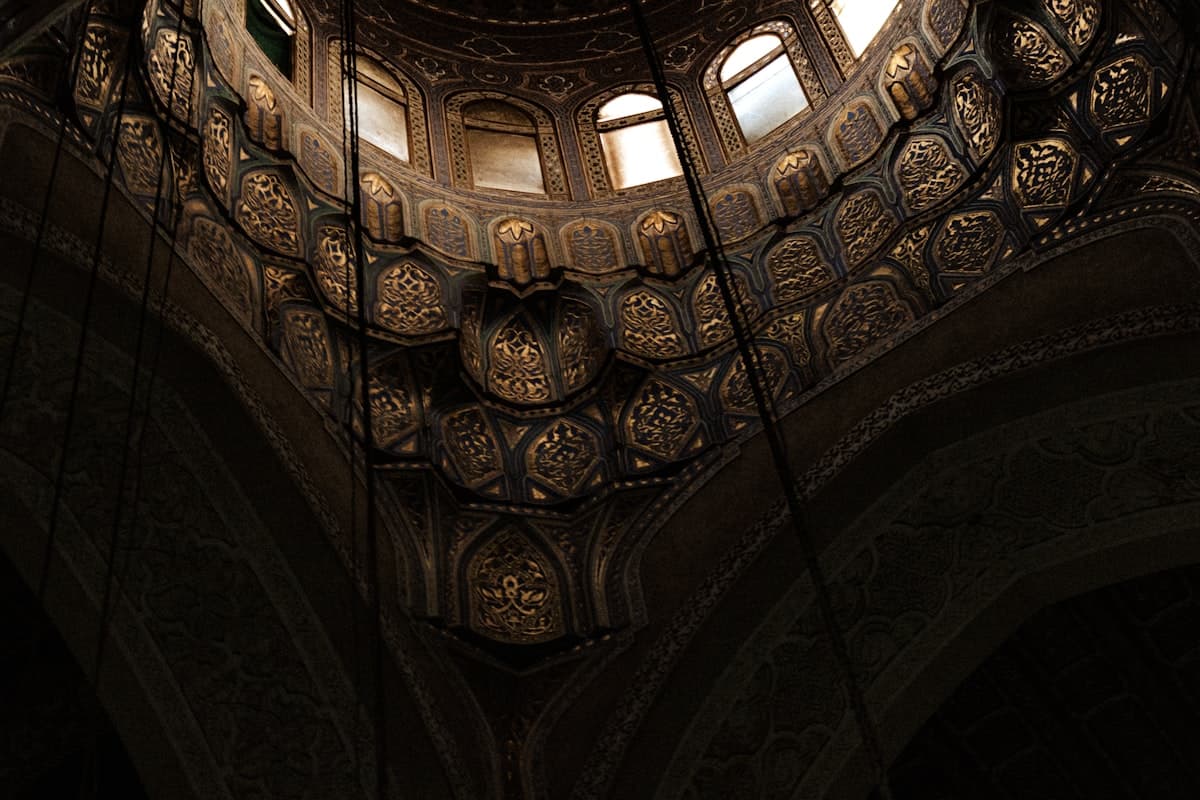
Britain occupied Egypt in 1882 after bombarding Alexandria from the sea. For the next 72 years, it administered a country it legally did not own. Egypt remained nominally under Ottoman suzerainty until 1914, then became a British Protectorate, then a nominally independent kingdom after 1922, all while British soldiers, bureaucrats, and Consul-Generals held the actual power. Lord Cromer, who ran Egypt from 1883 to 1907, once described his role as that of a reformer reluctantly in charge of an inferior civilization. He wrote this down. Egyptians read it. The nationalist movement that eventually expelled the British in 1952 was partly fueled by the particular fury of people who had been told, in print, that their civilization required external management.
This layered, legally ambiguous occupation is what makes the British colonial history sites in Egypt so interesting to trace. Unlike British India or Kenya, where the administrative apparatus was openly imperial, Egypt's colonialism was performed through a kind of polite fiction. The British built their barracks next to the Nile, their garden suburbs in Heliopolis and Maadi, their clubs in Zamalek, and their consular residences in Garden City, all while insisting, formally, that they were guests. The architecture tells a different story.
For travelers who know where to look, Cairo contains one of the most intact records of late colonial urbanism in the Arab world. The buildings survive. Many are still in use. The Cairo that Naguib Mahfouz wrote about, the Cairo of Midan Tahrir before it was Midan Tahrir, the Cairo of the 1919 Revolution in which Egyptians of every religion marched together against British rule, is still physically present if you know how to read it.
---
The Geography of Control: Garden City, Zamalek, and Heliopolis
The British did not build Cairo's colonial districts randomly. Each one served a specific function in the logic of occupation.
Garden City, the leafy wedge of curved streets between the Nile and central Cairo, was designed in 1906 on what had been Khedive Ismail's private gardens. Its curved roads were not an aesthetic choice: they were deliberately difficult to navigate, a standard colonial urban planning technique meant to slow any crowd moving toward the British Residency, which sat at its heart. The British Residency is now the British Embassy and still occupies the same address on Ahmed Ragheb Street. Stand outside it and you are standing at the administrative center of 72 years of occupation.
Zamalek, the northern half of Gezira Island, was developed as a residential enclave for British officers and officials. The Gezira Sporting Club, founded in 1882, the same year as the occupation, began as a British military recreation ground. Its polo fields and tennis courts were designed to transplant English leisure onto Egyptian soil. Today the club is a beloved institution for Cairo's upper-middle class, its membership fees high and its lawns immaculate. The colonizers left. The club remained.
Heliopolis is the strangest of the three. It was not a British project at all. It was built from 1905 onward by Édouard Louis Joseph Empain, a Belgian industrialist who obtained a 99-year land concession from the Egyptian government and built an entire city in the desert northeast of Cairo. The Baron Empain Palace, completed in 1911 in a style that combined Hindu temple architecture with Art Nouveau interiors, was his private residence. The building is extraordinary and deliberately disorienting: an Egyptian millionaire's fantasy of the exotic, built by a Belgian in Egypt, drawing on Indian temples, and furnished in European style. It sat derelict for decades and reopened after restoration in 2020. Entry costs EGP 100. Almost no foreign tourists visit. This is a mistake.
---
What the Egyptian Museum Doesn't Tell You About the British
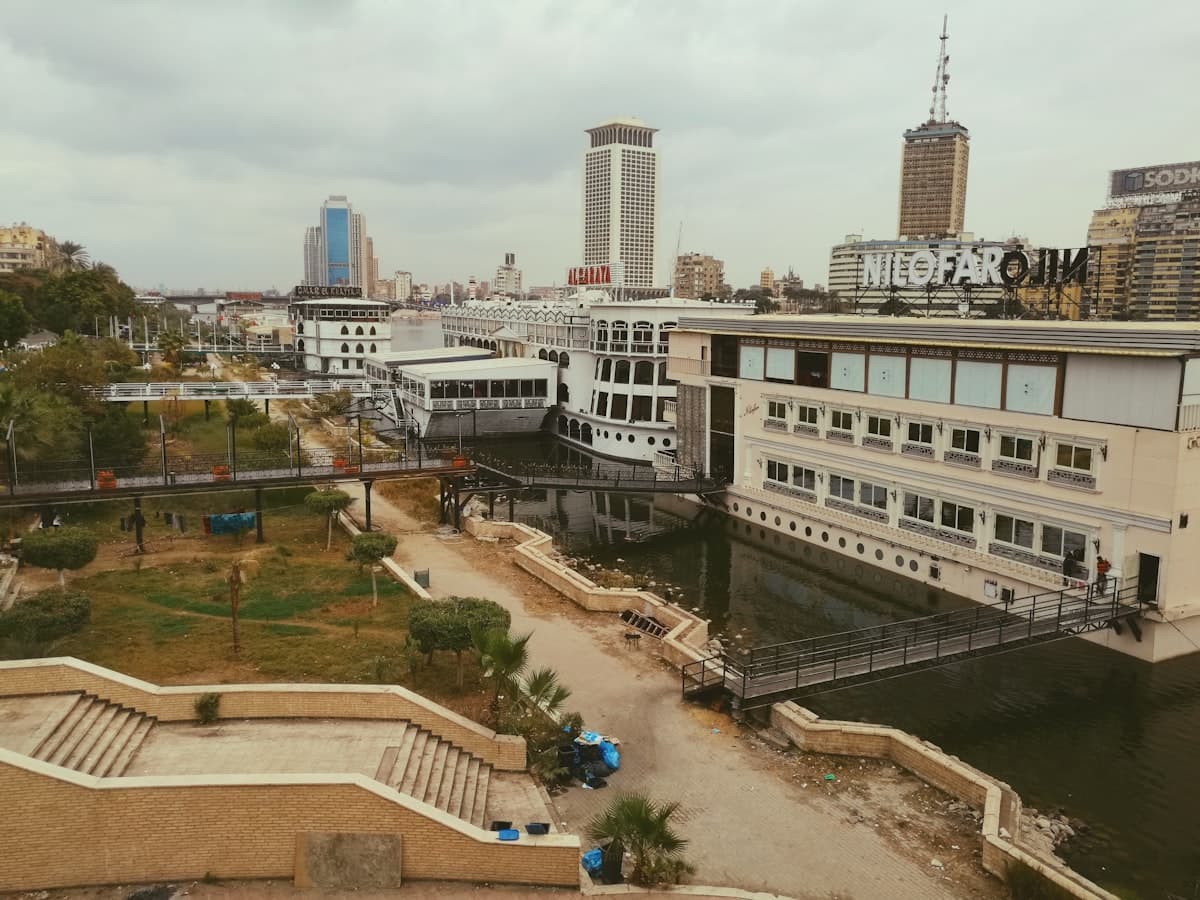
The Egyptian Museum on Tahrir Square opened in 1902. Most visitors know it as the home of Tutankhamun's treasures. Fewer know that its founding was itself a colonial story.
Auguste Mariette, a French Egyptologist, established the Egyptian Antiquities Service in 1858 and made it illegal to export antiquities without permission. The context for this law matters: European collectors and archaeologists had been systematically removing objects from Egypt for decades. The Rosetta Stone, found by French soldiers in 1799, ended up in the British Museum after the British defeated Napoleon in Egypt. It is still there. When the Egyptian Museum was finally built to house the national collection, it was designed by French architect Marcel Dourgnon, funded partly by the Egyptian government under British financial supervision, and its first director was a Frenchman. The collection is Egyptian. The institutional history of who controlled access to it is considerably more complicated.
Inside the museum, Room 43 contains objects from the Amarna period, the reign of the pharaoh Akhenaten, who abandoned Egypt's traditional religion and built an entirely new capital city in a decade. British archaeologist Flinders Petrie excavated Amarna in 1891 and 1892. His field notes survive. His methods, meticulous by the standards of his era, were still those of a man who believed that Egyptian civilization required European scholarship to properly understand. The objects he documented are now in Cairo, London, and Berlin. The story of who got what, and why, is one of the more instructive texts on colonial knowledge extraction that exists.
The museum is genuinely worth four hours of your time. Ignore the sound-and-light shows offered outside: they cost EGP 350, run 45 minutes, and tell you nothing the museum's labels, which are imperfect but improving, do not already cover.
---
The 1919 Revolution and the Streets That Contain It
The British colonial history of Egypt is inseparable from the story of Egyptian resistance to it, and no event is more important than the 1919 Revolution, which most Western travelers have never heard of.
In 1919, British authorities arrested and exiled Saad Zaghloul, the leader of the nationalist Wafd party, and three of his colleagues. Within days, Egypt erupted. Lawyers, students, civil servants, peasants, Coptic Christians, and Muslim clerics marched together. Women, including women from elite families who had never appeared in public without veils, marched in the streets of Cairo and Alexandria. British troops fired on crowds. Approximately 800 Egyptians were killed in the following weeks. The British eventually released Zaghloul and allowed a Wafd delegation to attend the Paris Peace Conference, though the conference declined to take up Egypt's case.
Saad Zaghloul's house, Beit al-Umma (House of the Nation), is in the Munira district of Cairo, not far from the Egyptian Museum. It is now a museum. Entry is EGP 30. The house contains his personal effects, his meeting rooms, the garden where he received delegations, and a record of the political movement he led. It receives a fraction of the visitors that Tutankhamun's gold does, which is a measure of how the British colonial history sites guide most travelers have followed has tended to treat Egyptian agency as backdrop rather than subject.
---
The Connections
The colonial layer of Cairo sits directly on top of the Ottoman layer, which sits on top of the Mamluk layer, which sits on top of the Fatimid layer. This is not metaphor. It is geology.
The Qasr al-Nil Barracks, where British troops were garrisoned from 1882 until their removal in 1946, stood on the Nile's east bank where the Nile Ritz-Carlton now stands. Before the British, the barracks had been built by Muhammad Ali, the Albanian-born Ottoman viceroy who effectively founded modern Egypt in the early 19th century. Before Muhammad Ali, the same riverbank had been a point of Mamluk military organization. The Nile Hilton, built in 1959 on an adjacent plot, was the first international hotel in Africa. It is now the Ritz-Carlton. The ground beneath it has held soldiers from a dozen civilizations.
Maadi, the quiet southern suburb that became home to many British expatriates and later to a large American community, was developed from 1904 onward by the Delta Land Company, a British-registered firm. Its tree-lined streets and large garden villas were modeled on English garden suburb ideals. Today Maadi is home to Cairo's largest expat community and a substantial number of Egyptian families who simply want a quiet street. The British are gone. The urban form they imposed has proved remarkably durable.
---
Common Mistakes
Treating colonial history as a separate itinerary. The British colonial sites are not a detour from Cairo: they are woven into the same streets as the Fatimid mosques and the Ottoman houses. Walk from Beit al-Umma to the Egyptian Museum and you are covering ground that connects 1919 nationalism to 1902 institutional history to pharaonic antiquity in a single twenty-minute walk.
Skipping Heliopolis. Most Cairo itineraries do not include Heliopolis. Baron Empain Palace alone justifies the taxi ride. Add the Basilica of Notre Dame de la Paix, built in 1925 in a style that combines Fatimid architecture with European Catholicism, and you have two hours that most Cairo visitors never find.
Paying for a colonial history tour from a hotel concierge. Several operators sell walking tours of Garden City and Zamalek for EGP 500 to 800 per person. The same ground, covered with a good map and this article, costs nothing. The buildings are visible from the street.
Visiting Abdeen Palace for the wrong reasons. Abdeen Palace, the Khedivial and later royal palace that the British effectively controlled after 1882, has a museum that includes a weapons collection and a collection of royal gifts. The architecture is the real reason to go: the palace was built between 1863 and 1874 and its scale communicates exactly how the Egyptian monarchy imagined itself before British oversight redefined its actual power. The museum rooms are less interesting than the building.
Missing the Alexandria connection. The 1882 occupation began with the British bombardment of Alexandria, not Cairo. Alexandria's colonial architecture, including the Cecil Hotel where Winston Churchill stayed, the Greek and Italian merchant buildings of the Corniche, and the Cotton Exchange, is a parallel text to Cairo's. If you are routing through Alexandria, it deserves its own half-day of colonial reading.
Expecting explanatory signage. Egyptian historical sites vary enormously in the quality of their English-language explanations. At colonial-era sites specifically, the interpretation tends to be thin. Download the Wikipedia articles for each site before you go and read them the night before. This is not a romantic suggestion but it will double what you get from the visit.
The Nile cruise on a colonial-themed boat. Several operators now offer dinner cruises marketed around Agatha Christie and colonial-era glamour. They cost EGP 1,200 to 1,800 per person, the food is generic, and the connection to actual history is decorative. Read Christie's "Death on the Nile" instead. It is better and cheaper.
---
Practical Tips
Come to Garden City on a weekday morning. Weekend traffic makes the walk unpleasant and the residential streets are quieter during the working week when you can actually hear the neighborhood.
For Baron Empain Palace in Heliopolis, arrive when it opens at 9am. The light on the exterior stone is best in the morning and the palace fills with school groups by 11am.
Beit al-Umma (Saad Zaghloul House Museum) is closed on Mondays. Check before you go.
The Egyptian Museum's new neighbor, the Grand Egyptian Museum near Giza, does not contain colonial-era material. It is the ancient Egypt museum. The Tahrir museum remains the right address for the context described in this article.
Cairo's ride-hailing apps (Uber and Careem) work reliably between all sites mentioned here. Budget EGP 50 to 120 per ride depending on distance and traffic. Taxis are fine but agree on a price before departure.
If you read Arabic, the Mohamed Farid House Museum in downtown Cairo, dedicated to another major nationalist figure of the early 20th century, adds a further layer to the resistance story. If you do not read Arabic, the building itself still tells you something.
Frequently Asked Questions
The Weekly Dispatch
More on Egypt, every Friday.
Cultural depth and places most guides never mention.
No spam. Unsubscribe anytime.