British Colonial Egypt: History Sites Guide You Need
Britain occupied Egypt for 72 years but never officially colonized it. That legal fiction shaped every building, institution, and wound still visible in Cairo today.

Quick Facts
- Best time to visit
- October to March. Lower heat makes outdoor walking viable, and the winter light in Alexandria is distinctly different from summer haze.
- Entrance fee
- Abdeen Palace: EGP 200 (approx $4 USD). Baron Empain Palace: EGP 100 (approx $2 USD). Egyptian Museum: EGP 450 (approx $9 USD). Montazah Gardens: EGP 35 (approx $0.70 USD).
- Opening hours
- Abdeen Palace: Tuesday to Sunday, 9am to 5pm. Baron Empain Palace: Daily 9am to 5pm. Egyptian Museum: Daily 9am to 7pm. Montazah Gardens: Daily dawn to dusk.
- How to get there
- Metro to Sadat station (Line 1/2, EGP 10) for Abdeen and downtown. Uber or taxi to Heliopolis EGP 60 to 80 from central Cairo. Train from Ramses to Alexandria EGP 55 to 120 depending on class.
- Time needed
- Two full days for Cairo colonial circuit minimum. Alexandria deserves a separate overnight stay.
- Cost range
- Budget EGP 600 to 900 per day covering transport, entry fees, and local meals. Mid-range EGP 1,800 to 3,000 per day if including a private guide and sit-down restaurants.
Quick Facts
Best time to visit: October to March, when Cairo's heat is manageable and the light is low enough to read architecture properly.
Key sites and entrance fees: Abdeen Palace Museum: EGP 200 (approx $4 USD), students EGP 100. Open Tuesday to Sunday, 9am to 5pm. The Gezira Palace (now the Cairo Marriott heritage wing): Free to walk the public areas; budget EGP 150 for a coffee that earns you an hour with the interior. Egyptian Museum, Tahrir: EGP 450 (approx $9 USD). The colonial-era building itself is the artifact. Open daily 9am to 7pm. Baron Empain Palace, Heliopolis: EGP 100 (approx $2 USD). Open daily 9am to 5pm. Montazah Palace Gardens, Alexandria: EGP 35 (approx $0.70 USD) for the grounds. Interiors closed to the public.
Getting there: Cairo's metro reaches Abdeen (nearest stop: Sadat, Line 1/2 intersection, EGP 10). Heliopolis requires a taxi or Uber; budget EGP 60 to 80 from central Cairo. For Alexandria, the train from Ramses Station costs EGP 55 to 120 depending on class; journey is two hours.
Time needed: Two full days for Cairo's colonial circuit. Alexandria deserves a separate overnight.
---
Britain occupied Egypt in 1882 after bombarding Alexandria from the sea. It did not leave until 1956, when Nasser seized the Suez Canal and made continued presence politically impossible. In those 74 years, Britain never formally annexed Egypt. It remained, on paper, an Ottoman province, then a nominally independent kingdom. The British Agent and Consul-General, Lord Cromer, who ran the country from 1883 to 1907, had no official title that acknowledged his actual power. He was, in his own words, the "de facto ruler of Egypt" while maintaining the legal fiction of Egyptian sovereignty. This ambiguity is not a historical footnote. It is the key to understanding every building, institution, and urban plan the British left behind, because structures built under a regime that officially did not exist tend to tell complicated stories.
This guide covers how to read those stories, site by site, in Cairo and Alexandria.
---
Why This Place Matters
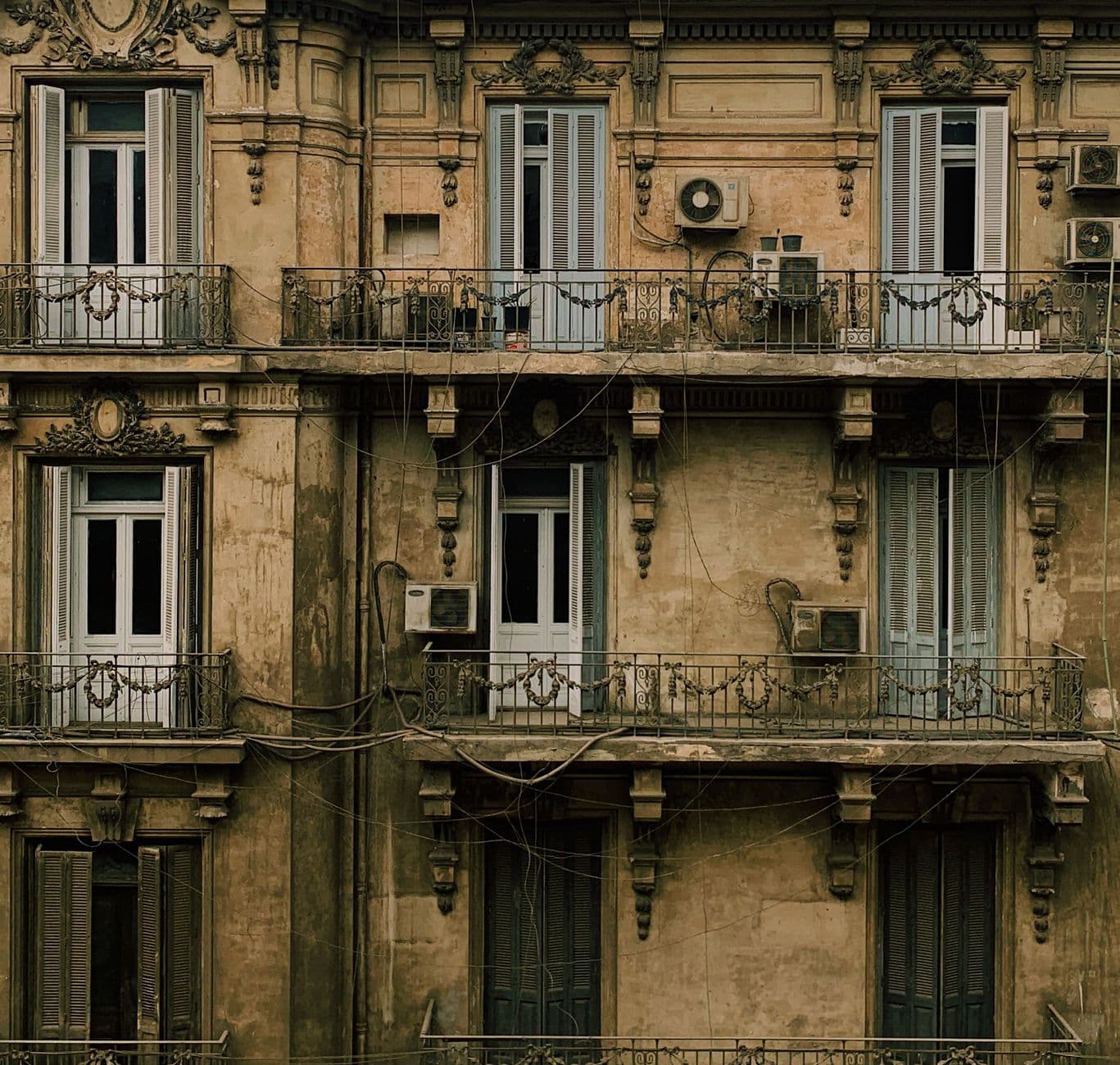
Most visitors experience British Egypt as an atmospheric accident: the colonial-era buildings on Qasr el-Nil Street, the grand hotels, the Gezira Sporting Club with its polo lawn and its dress code that still, in spirit, sorts people by class. What is harder to see without context is the system those buildings housed.
Cromer's administration reduced Egypt's national debt and built irrigation works, and it did so by cutting education spending to almost nothing. In 1900, Egypt spent less per capita on schools than any comparable country in the region. This was not negligence. Cromer believed, and wrote explicitly, that Egyptians were not suited to govern themselves. Keeping the population undereducated was, in his view, a form of order. The effect lasted for generations.
At the same time, the British occupation produced a specific Cairo: wider boulevards, new bridges, a European-style downtown quarter built on reclaimed Nile floodplain, and an entire suburb, Heliopolis, constructed by a Belgian entrepreneur named Édouard Empain on a concession from the Khedive. Heliopolis was explicitly designed to be a city where Egyptians would not live, at least not the Egyptians Empain was building for. The architecture tells you this if you know how to read it: Moorish facades with European proportions, streets wide enough for carriages, churches and a Hindu-Gothic palace for the founder himself.
The colonial layer sits directly on the Khedival layer, which sits on the Mamluk layer, which sits on the Fatimid layer. Cairo is a sedimentary city. The British did not replace what came before. They added to it, and the additions are still load-bearing.
---
Cairo: Reading the Colonial City
Downtown and the Corniche
Khedive Ismail, who ruled Egypt from 1863 to 1879, commissioned the downtown district as an Egyptian Paris. He hired Haussmann's associates and cleared medieval quarters to build it. What the British inherited in 1882 was a half-finished European fantasy with an empty treasury: Ismail had borrowed so heavily from French and British banks to fund his modernization projects that Egypt defaulted on its debt in 1876. The British occupation was, at root, a debt collection operation that became a 74-year project.
Walk Talaat Harb Street from Tahrir Square toward Talaat Harb Square and you are walking through the consequence of that default. The buildings on either side, built between 1890 and 1950, are a compressed history of architectural ambition: Italian neo-Renaissance next to Art Deco next to Beaux-Arts, all of them built by or for a cosmopolitan class of Greeks, Italians, Levantine Jews, and Armenians who thrived under the stable, if oppressive, conditions the British guaranteed. The Egyptian Museum at the top of Tahrir Square, opened in 1902, was designed by a French architect, Marcel Dourgnon, who won an international competition. Its collection of Pharaonic artifacts was assembled under British administration, and many of the most significant objects were removed to London and Paris during this period. The museum building itself is worth a separate hour: the cast-iron staircases, the barrel-vaulted ceilings, the particular yellow-pink of the exterior facade. It is a colonial institution that has become, through time and Nasser's nationalism, something else entirely.
Abdeen Palace and the Khedival Court
Abdeen Palace was not built by the British. It was built by Khedive Ismail between 1863 and 1874, at a cost that contributed directly to Egypt's bankruptcy. The British moved into it symbolically in 1882 and used it throughout the occupation as the site of the formal relationship between the Consul-General and the Egyptian royal court. The moment that defined the palace in the colonial period happened here on February 4, 1942, when British tanks surrounded the building and the British Ambassador delivered an ultimatum to King Farouk: appoint a pro-British government or abdicate. Farouk complied. The incident is known in Egypt as the Abdin Palace Incident and is considered one of the foundational humiliations of the monarchy, contributing directly to the Free Officers' coup that removed Farouk ten years later.
The palace museum today contains a weapons collection, a collection of royal orders and medals, and a series of ceremonial rooms preserved largely as they were under the last kings. The scale is useful: these rooms were designed to make a point about power, and they still do, even though the power they reference is gone.
---
Heliopolis: The Colonial Suburb That Became Cairo
Édouard Empain broke ground on Heliopolis in 1905 on desert land northeast of Cairo. He had a tramway concession, a land grant, and a vision of a self-contained city for Europeans and wealthy Egyptians who wanted distance from the older, denser city. By 1910, the tram connected Heliopolis to downtown Cairo in forty minutes, and the suburb had its own hotel, a basilica, and a racetrack.
Empain built his own residence on a separate plot: a palace in the Hindu-Gothic style, designed by the French architect Alexandre Marcel, who had also built a Buddhist pagoda for a Paris exhibition. The Baron Empain Palace, now partially restored and open to visitors, is one of the most architecturally specific buildings in Egypt, a structure that quotes Cambodian temple architecture in reinforced concrete, built by a Belgian industrialist in a desert suburb outside Cairo. It was abandoned after Empain's death, squatted, stripped of fittings, and sealed. It reopened for limited public access after a long restoration.
The neighborhood around it repays slow walking. The streets Empain laid out in a geometric grid are now fully absorbed into greater Cairo, the European residents long gone, the villas housing Egyptian middle-class families, embassies, and schools. The mosque to the east of the Uruba Palace, the tram route that still roughly follows Empain's original line, the Basilica of Notre-Dame de Heliopolis: the colonial city is still there, just occupied by different people doing different things with it. This is not a museum district. It is a lived neighborhood that happens to contain a very specific history.
---
Alexandria: The City That Was Bombarded Into Submission
On July 11, 1882, the British fleet bombarded Alexandria for ten and a half hours. At least 2,000 Egyptians died. The bombardment destroyed significant portions of the city and was the military event that made the occupation possible. Modern Alexandria was built on and around the ruins left by that day, which means that the elegant Corniche, the Cecil Hotel, the Foreign Ministry buildings, and the Greek and Italian neighborhoods that gave the city its cosmopolitan character in the early twentieth century all rose from an act of military destruction.
The Montazah Palace complex, built by Khedive Abbas II in 1892 and expanded by King Fuad, sits on the eastern edge of the city. The palace itself is now a presidential rest house and closed to visitors, but the grounds, 150 acres of pine forest and gardens on a Mediterranean headland, are open for a token entry fee. Walk them in the early morning, when Alexandria's particular salt-and-exhaust air is at its most legible, and you are inside a set of choices made by men who expected their dynasty to last indefinitely. It did not. Farouk was the last king to use Montazah before his abdication in 1952.
The Villa of the Birds in Alexandria's Kom el-Dikka district is not a colonial site but it is a necessary counterpoint: a Roman mosaic floor excavated from directly beneath a colonial-era building. The layers in Alexandria compress even faster than in Cairo.
---
The Connections
The British Egypt colonial history sites do not exist in isolation from the rest of Egyptian history, and tracking the connections is the most intellectually satisfying part of this circuit.
The Egyptian Museum in Tahrir was built on the site of the Qasr el-Nil barracks, the primary British military installation in Cairo. When the British finally withdrew in 1954, the barracks were demolished and the site became the beginning of the larger Tahrir development. The square where demonstrators gathered in 2011 to end Mubarak's presidency was named Liberation Square by Nasser after the British departure. The name and the square both carry the colonial period inside them.
Heliopolis, designed as a European enclave, became after 1952 the address of the Egyptian Air Force headquarters and later of the presidential palace. Nasser, Sadat, and Mubarak all used the Uruba Palace, Empain's original hotel converted to a presidential residence, as their primary Cairo home. The suburb built to exclude Egyptians from power became the seat of Egyptian executive power.
The Suez Canal Zone, which this guide does not cover in detail because it deserves its own article, is the site where British withdrawal actually happened, and where the legal and military consequences of the occupation were finally settled. Visiting Ismailia, the canal's administrative city, gives you another layer: a company town built by Ferdinand de Lesseps for the Suez Canal Company workforce, with French colonial architecture and a museum that contains de Lesseps's personal effects and the construction records of the canal.
---
Common Mistakes
1. Treating the colonial sites as separate from Islamic Cairo. The same streets that contain Mamluk mosques contain British-era administrative buildings. Walk between them; the adjacency is the point.
2. Skipping the Heliopolis tram ride. Line 2 of Cairo's tram still runs roughly along Empain's original route. It costs EGP 5, takes forty minutes from Abdeen to Heliopolis, and gives you an unfiltered view of how the colonial suburb was absorbed into the city. No tour operator will suggest this.
3. Paying for the Gezira Sporting Club tour. Various operators offer "colonial Cairo" tours that include a brief visit. The club is still a private members' institution with restricted access for non-members, and the tour does not get you into the interesting spaces. Order coffee at the Cairo Marriott's garden cafe instead. The building is the original Gezira Palace, built for Empress Eugenie's visit to the Suez Canal opening in 1869, and you can walk the ground floor freely.
4. The colonial walking tour from most operators: most commercial colonial Cairo tours concentrate on five or six Talaat Harb facades and call it done. Skip the group tour and use this guide. The sites are spread across the city; a guide who is not walking you between Heliopolis and Abdeen is not showing you the city.
5. Going to Baron Empain Palace after 3pm. The restoration is incomplete and the signage is minimal. Without good light and at least an hour, the building reads as a ruin rather than the specific object it is. Go at 10am.
6. Assuming Alexandria's colonial architecture is well-preserved. It is not. The buildings along the Corniche and in the old European quarters are in serious decay, many of them split into apartments, facades crumbling. This is honest. It is also part of what the city is now. Come with adjusted expectations and you will find it more interesting, not less.
7. Reading the occupation as a story with clean heroes. The nationalist movement that resisted the British was real and produced genuine martyrs. It also, in several of its factions, collaborated with the British against other Egyptians. The Wafd Party, Egypt's dominant nationalist party during the occupation, signed the 1936 Anglo-Egyptian Treaty that legitimized the British military presence for another twenty years. The complications are part of the history, and sites like Abdeen Palace hold several versions of the story simultaneously.
---
Practical Tips
Dress conservatively in Heliopolis, which is a conservative residential neighborhood, especially around the basilica area. You will not be turned away, but you will be more comfortable and less conspicuous.
For Alexandria, go on a weekday. The Corniche on a Friday is a full Cairo-scale crowd. The city is more itself on a Tuesday morning in November.
Carry cash. None of these sites have reliable card payment. ATMs in Cairo's downtown are abundant; Heliopolis has fewer.
The light in Alexandria does something specific between 7am and 9am that it does not do at any other time. The Mediterranean haze filters the sun into something almost blue-gray. If you care about seeing the city at its most photographically honest, the early morning is not optional.
For the colonial circuit specifically, a background read of Khaled Fahmy's "In Quest of Justice" or Jason Thompson's "A History of Egypt" will make every building you enter more legible. The architecture is a text. The books are the grammar.
Frequently Asked Questions
The Weekly Dispatch
More on Egypt, every Friday.
Cultural depth and places most guides never mention.
No spam. Unsubscribe anytime.