British Colonial Egypt: The History Sites Most Guides Ignore
Britain occupied Egypt for 72 years but left almost no museums about it. The sites exist. You just have to know where to look.

Quick Facts
- Best time to visit
- October through March, when Cairo temperatures are below 25°C and outdoor colonial-era sites in both Cairo and Alexandria are walkable without heat exhaustion
- Entrance fee
- Baron Empain Palace Heliopolis: EGP 100 (approx $2 USD). Abdeen Palace Museum: EGP 100 (approx $2 USD). British War Cemetery Heliopolis: free. Egyptian Museum Tahrir: EGP 400 (approx $8 USD). Montaza Palace gardens Alexandria: EGP 35 (approx $0.70 USD)
- Opening hours
- Most colonial-era sites open daily 9am to 5pm. Abdeen Palace closed Fridays. British War Cemetery accessible most daylight hours. Baron Empain Palace hours vary, confirm before visiting
- How to get there
- Cairo Metro to Sadat station for Tahrir area (EGP 8). Taxis from central Cairo to Heliopolis EGP 60 to 100. Cairo to Alexandria by train from Ramses Station: EGP 150 to 350 second class, 2 to 2.5 hours
- Time needed
- Cairo colonial sites alone: 6 hours minimum. Full Cairo plus Alexandria itinerary: 2 full days, with Alexandria requiring at least one overnight
- Cost range
- Budget EGP 800 to 1,200 per day including transport and entry fees. Mid-range EGP 2,000 to 3,500 per day including a specialist guide
Britain occupied Egypt from 1882 until 1954. It built a railroad network, a dam, and a cotton economy that extracted wealth with extraordinary efficiency. It stationed troops in the Delta, redesigned Cairo's street grid, and buried its dead in cemeteries that still exist but appear on almost no tourist map. And yet if you walk into any Egyptian museum today and ask where the British colonial history is displayed, the staff will look at you with a polite blankness that tells you everything. The occupation happened. The evidence is everywhere. Almost nobody talks about it.
This guide is for travelers who want to read Egypt whole, not just the parts that end at Cleopatra.
Quick Facts
Best time to visit: October through March, when Cairo temperatures stay below 25°C and outdoor sites are walkable without the crushing heat of summer.
Entrance fees: Cairo Citadel area (includes nearby sites): EGP 450 (approx $9 USD). The British War Cemetery in Heliopolis: free, open daily. The Egyptian Museum in Tahrir (which holds colonial-era artifacts): EGP 400 (approx $8 USD). Abdeen Palace Museum (which contains a weapons hall with colonial-period materials): EGP 100 (approx $2 USD). Baron Empain Palace, Heliopolis: EGP 100 (approx $2 USD), recently restored.
Opening hours: Most colonial-era sites in Cairo open daily from 9am to 5pm. The British War Cemetery in Heliopolis is accessible most daylight hours. Abdeen Palace Museum closes on Fridays.
How to get there: The Cairo Metro Line 1 stops at Sadat station (Tahrir), Heliopolis is served by buses from Ramses Square (roughly EGP 5 to 10). Taxis from central Cairo to Heliopolis run EGP 60 to 100. For sites in Alexandria, the train from Cairo Ramses costs EGP 150 to 350 depending on class, taking 2 to 2.5 hours.
Time needed: A focused Cairo colonial history day requires at least 6 hours. Adding Alexandria makes it a two-day itinerary.
Cost range: Budget EGP 800 to 1,200 per day including transport and entry. Mid-range EGP 2,000 to 3,500 including a guide.
Why This Place Matters
The standard framing of the British occupation of Egypt treats it as a diplomatic footnote: Evelyn Baring, 1st Earl of Cromer, administered Egypt as Consul-General for 24 years without ever having the word "colonial" attached to his official title, because Britain technically occupied a country that was technically still part of the Ottoman Empire. This legal fiction suited everyone. It allowed Britain to run the Suez Canal, control Egypt's cotton revenues, and station the largest army in Africa without ever formally declaring a colony.
The consequences were specific and measurable. By 1900, Egyptian cotton supplied 30 percent of the raw material for British textile mills. The Aswan Low Dam, completed in 1902, was built not to help Egyptian farmers but to extend the cotton-growing season and increase export yields. It flooded much of ancient Nubia in the process, submerging temples that had stood for three thousand years. The dam's designer, William Willcocks, later admitted that the irrigation system he built for British commercial interests caused the spread of bilharzia, the parasitic disease, among Egyptian fellahin farmers. He wrote about it himself. It did not change policy.
Understanding this is not optional background. It is the reason every colonial-era site in Egypt carries a particular weight that sites from earlier periods do not.
Cairo: Where the Colonial Layer Sits Deepest
Garden City and the Embassy Quarter
Garden City, the neighborhood south of Tahrir Square, was designed in 1905 by a Belgian company working under British direction. The curved streets were a deliberate departure from Cairo's organic medieval grid, meant to evoke an English garden suburb transported to the Nile. The British Embassy still occupies a substantial portion of the neighborhood's riverfront. Walk these streets now and you move through a strange zone where art nouveau villas from the early twentieth century sit beside concrete apartment blocks from the 1970s, and the trees are large enough that you can briefly forget that a city of twenty million people surrounds you.
What most visitors do not know: Garden City was built on land that had been a royal garden since the Mamluk period. Before that, the area sat on the edge of the Khalij al-Masri, a canal originally dug by the Pharaohs and later maintained by the Arabs as Cairo's freshwater artery. The British filled the canal in 1897, partly for sanitation reasons and partly to build Port Said Street, now called July 26 Street. The canal that had served Cairo for perhaps three thousand years was gone in a single administrative decision.
Abdeen Palace and the Colonial Weapons Hall
Khedive Ismail built Abdeen Palace between 1863 and 1874, spending so extravagantly on it that the debt contributed directly to Egypt's financial collapse and the British takeover that followed. The palace became the administrative center of the occupation. Lord Cromer held meetings here. The khedives who followed Ismail signed documents here that progressively surrendered Egyptian sovereignty.
The weapons museum within the palace complex holds a collection that spans Pharaonic through colonial periods, and the colonial section is genuinely interesting: British military equipment, medals, and documents from the 1882 campaign sit alongside the personal effects of Egyptian nationalist officers. Urabi Pasha, who led the resistance to the British invasion and was exiled to Ceylon after his defeat at Tel el-Kebir, has a small display here. The Battle of Tel el-Kebir, fought on September 13, 1882, lasted less than an hour. Britain lost 57 men. Egypt lost approximately 2,000. The speed of the defeat ended organized resistance and handed Britain the country.
Heliopolis: A Suburb Built on a Colonial Fantasy
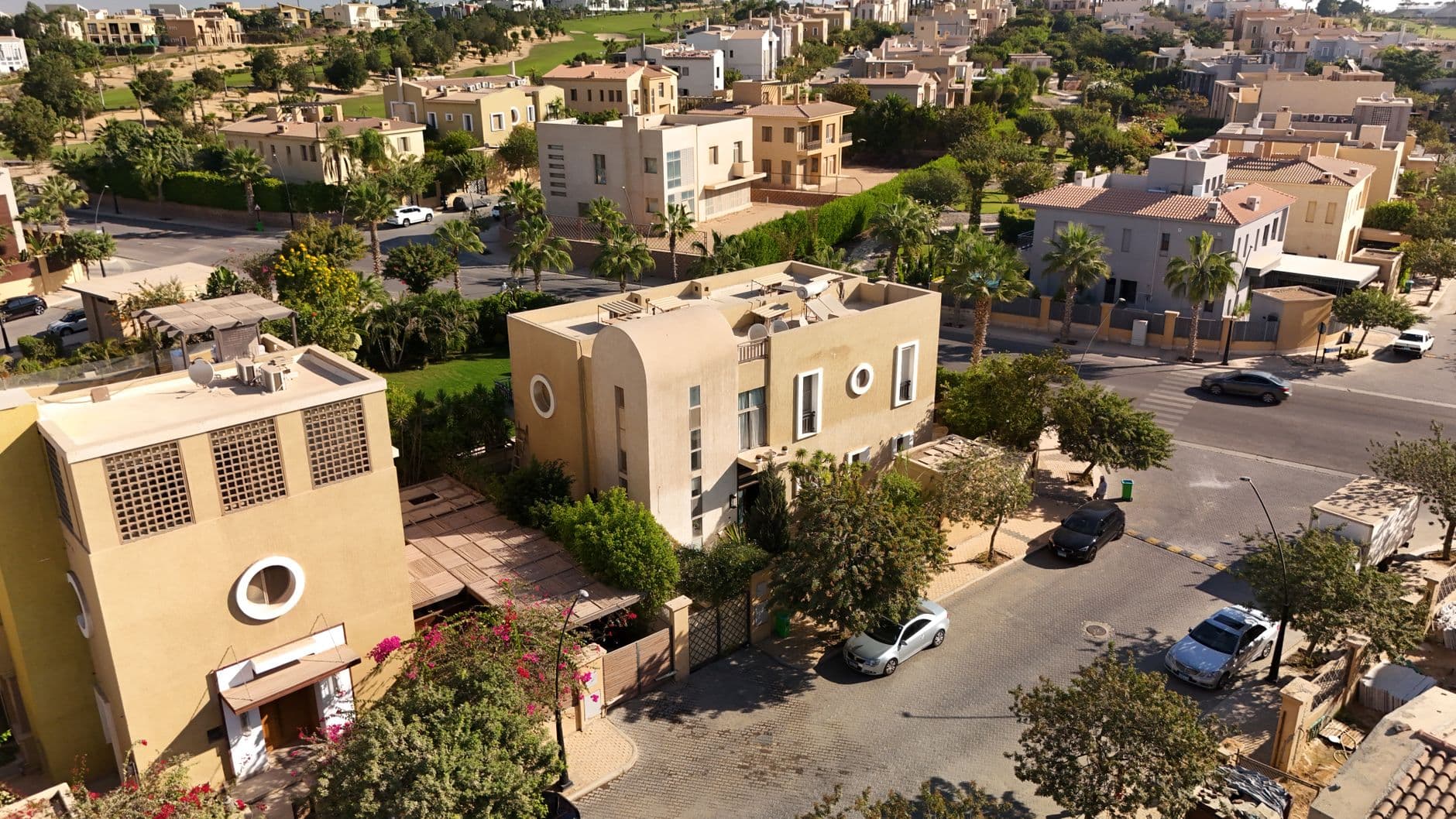
Heliopolis deserves more time than most Egypt itineraries give it. The suburb was built from 1905 onward by Baron Édouard Empain, a Belgian industrialist who essentially purchased a tract of desert northeast of Cairo from the Egyptian government and constructed an entire city on it, including a tram system that still partially operates today.
Empain's own palace, a Hindu-Flemish-Moorish hybrid that looks like nothing else in Africa, still stands on Orouba Street. It was restored and opened to the public in recent years after decades of abandonment. Inside, the decorative program mixes European art nouveau tilework with Indian temple motifs, because Empain had visited Cambodia and was fascinated by Angkor Wat. The building makes no coherent cultural sense, which is arguably the most honest thing about it: it is the physical expression of a man with unlimited money and no obligation to anyone else's traditions.
The British War Cemetery in Heliopolis holds the graves of soldiers who died in Egypt between 1914 and 1921. There are 1,742 graves here. The Commonwealth War Graves Commission maintains the site in a condition of immaculate and slightly unreal tidiness, the grass improbably green against the beige of surrounding Cairo. Walk slowly. The headstones include men from Australia, New Zealand, India, Canada, and South Africa, which tells you something about the scale of the empire's labor demands that a simple headcount of British graves would not.
Alexandria: The Other Colonial Capital
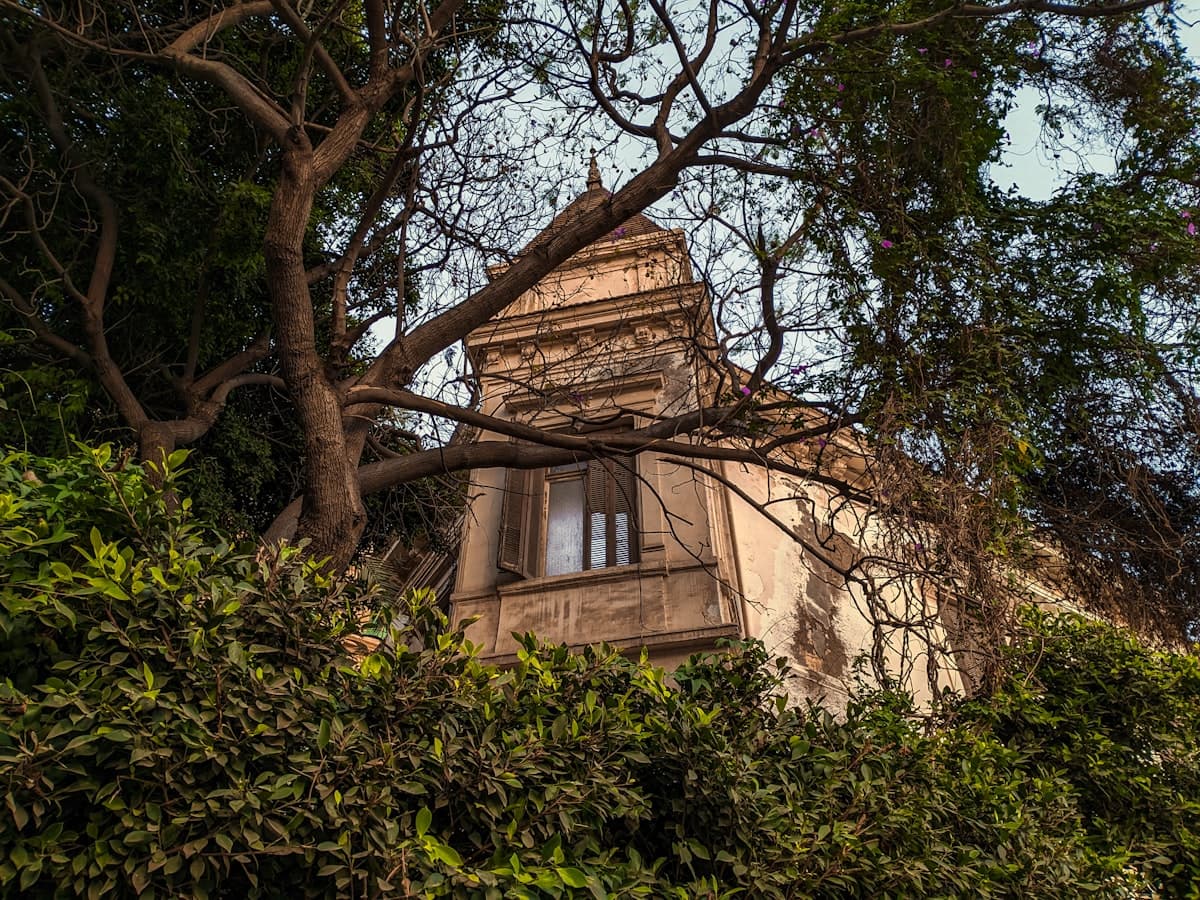
Alexandria was, in many ways, more European than Cairo during the occupation. In 1900, roughly 100,000 of Alexandria's 320,000 residents were foreign nationals: Greeks, Italians, French, British, Syrians. The city had its own stock exchange, four foreign-language daily newspapers, and a legal system that exempted Europeans from Egyptian courts under the Capitulations treaties.
The Montaza Palace complex, built by Khedive Abbas II in 1892 and expanded by King Fuad I in the 1920s, sits on a headland east of the city center. It was the royal family's summer residence, and its architecture self-consciously blends Ottoman and Florentine styles, which tells you something about how Egypt's rulers performed their identity under British pressure: not quite European enough to be taken seriously, not quite Ottoman enough to command loyalty. The gardens are open to the public and the view of the Mediterranean from the headland is genuinely worth the journey.
The city's cemeteries are more revealing than its palaces. The Latin Cemetery near Chatby holds graves going back to the early nineteenth century. The inscriptions move through Greek, Italian, French, and English. Alexandria always belonged to everyone and no one.
The Connections: What the Colonial Period Built On
Britain did not arrive in Egypt to a blank landscape. It arrived to a civilization that had already been Pharaonic, Persian, Greek, Roman, Arab, Fatimid, Ayyubid, Mamluk, and Ottoman. Each colonizer used the infrastructure of the previous one.
The British widened the road from Cairo to the Pyramids specifically to bring tourists by carriage. That road had been a track since the Arab period. It followed, roughly, a Pharaonic processional route. The Mena House hotel at the end of it was originally a royal hunting lodge built by Khedive Ismail, purchased by British entrepreneurs in 1885, and converted into the first luxury hotel to use the Pyramids as a marketing tool. Thomas Cook ran tours there from 1884. The same Thomas Cook who had been given the contract to transport British troops up the Nile to relieve Khartoum during the Gordon campaign of 1884 to 1885. Tourism and military logistics, in Egypt, have always been more connected than they appear.
The Egyptian Museum on Tahrir Square, which opened in 1902, was funded partly by European subscriptions and designed by a French architect, Marcel Dourgnon, who won the commission in an international competition. The first curator was French. The second was French. Egyptian archaeologists did not direct the institution until well into the twentieth century. The artifacts in the museum were, many of them, found by European excavations operating under licenses that allowed significant quantities of material to be exported. The legal mechanisms that ended this practice were not fully in place until 1983.
Common Mistakes
Treating colonial sites as a separate itinerary. The most common error is approaching British colonial history as a specialist interest disconnected from the rest of Egypt. It is not. The Aswan Dam you visit is the direct descendant of the 1902 dam built for British cotton interests. The Tahrir Square you walk through was redesigned in the colonial period. Everything connects.
Going to the Sound and Light Show at the Pyramids. This costs EGP 350 and tells a story of ancient Egypt that stops approximately three thousand years before the British arrived. It is also technically mediocre. Skip it and spend the money on a guided walk through Heliopolis instead.
Assuming the Egyptian Museum has a colonial history section. It does not. The museum's collection ends conceptually at Greco-Roman Egypt. If you want to understand the colonial period through objects, Abdeen Palace's weapons and documents hall is the only state institution that attempts it, imperfectly.
Not hiring a specialist guide. Cairo has a small number of guides who focus specifically on the colonial and modern periods rather than Pharaonic sites. They charge EGP 800 to 1,500 for a half-day. This is not optional luxury for this itinerary. The sites do not explain themselves.
Skipping Alexandria because it's a day trip. Alexandria requires at least one overnight stay to do its colonial layer properly. The city's texture changes completely after the day-trippers leave.
Expecting signage. Egyptian state signage at colonial-era sites is minimal to nonexistent. The British War Cemetery is not listed on most tourist maps. Baron Empain's palace recently acquired signs but the surrounding Heliopolis architecture has none. Come with research already done.
Reading only British sources. The Egyptian nationalist historiography of this period is different, specific, and essential. Ahmed Shawqi, the poet laureate who was exiled by British order in 1915, wrote about the occupation in ways that the Cromer memoirs do not. Both are available in translation. Read both.
Practical Tips
The best single day for a British colonial history sites guide itinerary in Cairo runs from Garden City in the morning through Abdeen Palace before lunch, then north to Heliopolis for the Baron's Palace and the War Cemetery in the afternoon. This requires a car or a series of taxis. Budget EGP 200 to 300 for transport across the day.
For Heliopolis specifically, arrive before 10am. The neighborhood gets hot and the streets, though interesting, are not shaded. The Baron Empain Palace sells tickets at the door and rarely has a queue on weekday mornings.
The British War Cemetery is free but requires a brief sign-in at the gate. The caretakers are knowledgeable and often willing to talk. Bring water. Bring more water than you think you need.
For Alexandria, the train from Ramses Station is more reliable than the bus and faster than driving in traffic. Book second-class air-conditioned seats, which cost EGP 150 to 200 and are perfectly comfortable. The Montaza Palace gardens cost EGP 35 to enter and are open daily.
If you read Arabic, the archives of the Egyptian National Archives in Cairo hold colonial-period documents that are accessible to researchers with proper credentials. This is not a casual visit but it is an extraordinary resource.
One final note: Egyptians generally discuss the colonial period with a specificity and directness that can surprise visitors expecting diplomatic vagueness. Ask your guide, your taxi driver, your hotel receptionist what they think of Cromer, of the occupation, of what was taken. You will get answers. Listen to them.
Frequently Asked Questions
The Weekly Dispatch
More on Egypt, every Friday.
Cultural depth and places most guides never mention.
No spam. Unsubscribe anytime.