British Colonial Egypt: The Sites That Still Tell the Story
Britain occupied Egypt for 72 years but never called it a colony. The architecture they left behind is hiding in plain sight across Cairo, Alexandria, and the Canal Zone.

Quick Facts
- Best time to visit
- October to March. Cairo and Alexandria are comfortable for walking; Ismailia and the Canal Zone are accessible year-round but reach brutal heat from June through August.
- Entrance fee
- Most colonial sites are public space and free. Egyptian Museum: EGP 450 (approx $9 USD), students EGP 225. Abdeen Palace Museum: EGP 100 (approx $2 USD). Ismailia Museum: EGP 60 (approx $1.25 USD). Commonwealth War Graves cemeteries: free.
- Opening hours
- Egyptian Museum: daily 9am-5pm. Abdeen Palace Museum: Saturday to Thursday 9am-3pm. Ismailia Museum: Tuesday to Sunday 9am-4pm. Cemeteries: generally open during daylight hours.
- How to get there
- Cairo colonial sites: metro to Sadat station (EGP 10). Alexandria: train from Ramses Station, EGP 80-150 depending on class. Ismailia: bus from Turgoman Station EGP 70-90, or private car EGP 1,200 return. Tel el-Kebir: private car only, approx EGP 1,000-1,500 return from Cairo.
- Time needed
- Minimum two full days for Cairo colonial layer, one day for Alexandria, one day for Ismailia and Canal Zone. Tel el-Kebir adds a separate full day.
- Cost range
- Budget EGP 600-1,000 per day in Cairo including transport and entry fees. Mid-range EGP 1,800-3,000 per day including accommodation in relevant neighborhoods. Private guide: EGP 1,000-1,500 per day.
Britain occupied Egypt from 1882 until 1954, and for most of that time, Whitehall insisted Egypt was not a colony. It was a "veiled protectorate", then a "protectorate", then a "sovereign kingdom" with a British garrison permanently stationed on its soil. The legal fiction changed every decade or so. The Nile stayed British. This is the peculiar imperial double-think you are walking into when you trace the British Egypt colonial history sites across this country, and understanding that contradiction makes everything you see more interesting.
Quick Facts
Best time to visit: October to March. Cairo and Alexandria are tolerable; the Canal Zone sites around Ismailia are accessible year-round but brutally hot from June to August.
Entrance fees: Most sites are free to enter or charge no specific admission. The Egyptian Museum in Tahrir, where a significant portion of British-era Egyptological looting is now documented: EGP 450 (approx $9 USD), students EGP 225. The Qasr Al-Nil Barracks site (now the grounds around the Nile Hilton) is public space. The Abdeen Palace Museum charges EGP 100 (approx $2 USD). Ismailia Museum charges EGP 60 (approx $1.25 USD).
Opening hours: Abdeen Palace Museum, Saturday to Thursday, 9am to 3pm. Egyptian Museum, daily 9am to 5pm. Ismailia Museum, Tuesday to Sunday, 9am to 4pm.
How to get there: Cairo sites are reachable by metro (Sadat station for Tahrir and Abdeen), cost EGP 10 per journey. Ismailia is 120km from Cairo; take a bus from Turgoman Station for around EGP 70-90, or hire a private car for roughly EGP 1,200 return. Alexandria's colonial-era downtown is walkable from Misr Station.
Time needed: Two full days minimum to cover Cairo's colonial layer seriously. Add one day for Alexandria, one for Ismailia.
Cost range: Budget EGP 600-1,000 per day in Cairo, mid-range EGP 1,800-3,000 per day including accommodation in the relevant neighborhoods.
Why This Place Matters
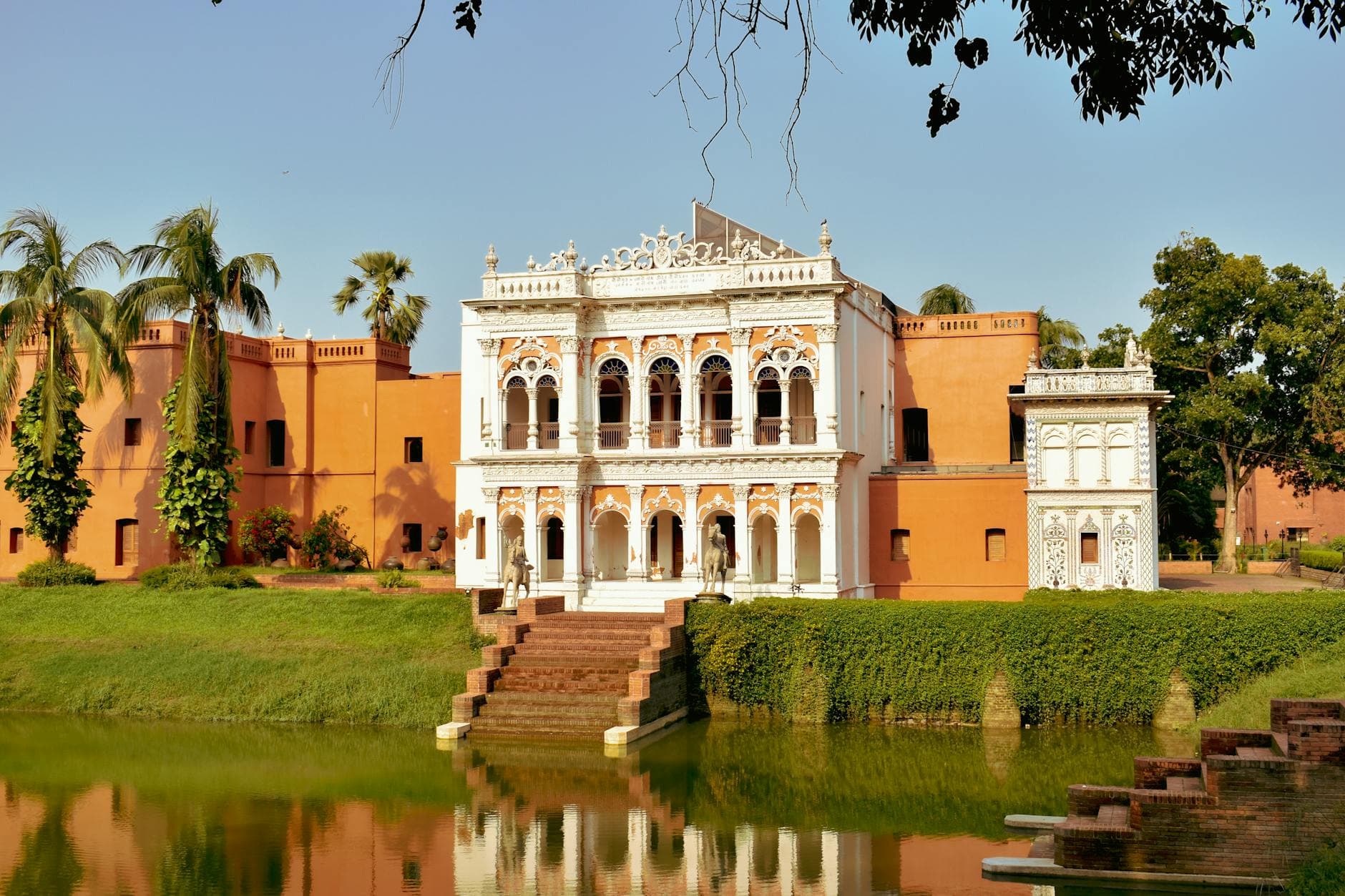
Most visitors come to Egypt for what came before: the Pharaohs, the Ptolemies, the Arabs, the Ottomans. The British period sits awkwardly in the tourist imagination, filed somewhere between "too recent to feel archaeological" and "too uncomfortable to romanticize". This is exactly why it rewards careful attention.
Britain's occupation was triggered by a financial crisis Egypt did not entirely cause. Khedive Ismail had borrowed heavily from European banks to fund the Suez Canal and modernize Cairo, building Opera Square and the boulevard that is now 26th of July Street on a Haussmann-inspired grid. When Egypt could not repay, Britain and France imposed a Dual Control over Egyptian finances in 1876. A nationalist military revolt under Ahmed Urabi in 1882 gave Britain the pretext to bombard Alexandria and land troops. Urabi was defeated at the Battle of Tel el-Kebir, 90km northeast of Cairo, in a pre-dawn assault that lasted 35 minutes. That battle, which most Egyptians know and most foreign visitors have never heard of, ended Egyptian autonomy for seven decades.
What followed was an empire administered through a consul-general who wielded more power than any minister or khedive. Lord Cromer held that role from 1883 to 1907 and ran Egypt as a personal fiscal project. He suppressed Egyptian cotton manufacturing to protect Lancashire mills, kept education underfunded to maintain a compliant labor force, and reduced the national debt from £98 million to £29 million. The infrastructure built during his tenure, irrigation systems, railways, telegraph lines, served British strategic interests first and Egyptian development second. The cities he shaped are the ones you walk through today.
Cairo: The Colonial Layer in the Urban Grid
The most honest way to experience British colonial Cairo is to stand in Tahrir Square and ignore the Egyptian Museum for a moment. Look instead at the street layout around you. The wide arterial roads radiating out from the square were not Pharaonic or Ottoman design; they followed the grid Ismail and his European planners laid, which the British then institutionalized as the administrative nervous system of the occupation. The Qasr Al-Nil Barracks, demolished in 1962, once stood on the Nile bank where the Nile Hilton and the Arab League headquarters now sit. It was one of the largest British military installations in Africa, housing up to 4,000 troops, and its demolition by Nasser was a deliberate symbolic act of erasure.
Abdeen Palace, 15 minutes' walk east of Tahrir, is where the colonial contradiction becomes architecturally visible. Built by Ismail between 1863 and 1874 and designed by the French architect Leon Rousseau, the palace was the official royal residence that British consuls-general would visit to instruct Egyptian monarchs on policy. The museum inside contains a weapons collection and royal memorabilia, but its real value is the spatial experience of a palace built to impress European visitors, then used by European administrators to manage a nominally sovereign king. Entry costs EGP 100 and the crowds are thin, which makes the visit feel appropriately melancholy.
The Shepheard's Hotel, destroyed by fire during the 1952 Black Saturday riots when anti-British sentiment ignited central Cairo, once stood on what is now the western edge of the Ezbekiyya garden area near Ataba. The original site is occupied by an unremarkable building. But the name survived: a later Shepheard's Hotel was built on the Corniche and operates today. The original Shepheard's was for 100 years the center of British Egypt's social world, where officers on leave from Sudan met journalists covering the Eastern Question and archaeologists reported their latest finds to wealthy patrons. Agatha Christie stayed there. Kitchener breakfasted there after Omdurman. Its destruction in 1952 was not incidental; it was a precise symbolic target.
Alexandria: Where the Empire Had Its Face
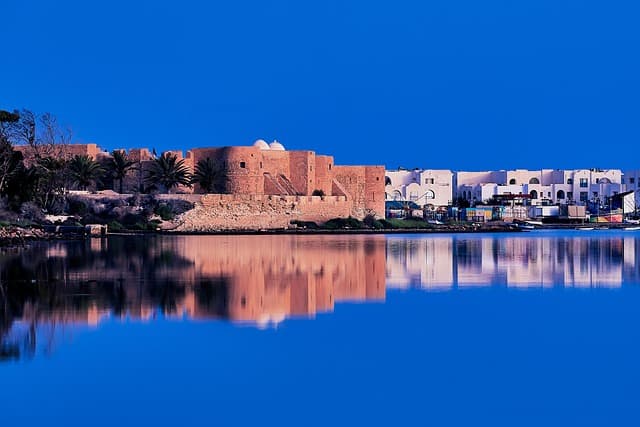
Alexandria is where British Egypt colonial history is most physically concentrated and most honestly readable. The 1882 bombardment by British naval ships devastated the waterfront and killed an estimated 2,000 civilians, a figure that British accounts of the period consistently minimized. Walking the Corniche today, you are walking the rebuilt waterfront of a city that was shelled into compliance.
The colonial architecture that replaced what the bombardment damaged is extraordinary. The area around Saad Zaghloul Square and the streets running south toward Raml Station contains some of the finest early 20th-century European urban architecture in Africa: Italian neo-baroque banks, French-inflected apartment blocks, British colonial civic buildings with their sash windows and ground-floor colonnades. Most of it is crumbling, much of it is occupied by informal businesses, and very little of it is formally protected. The Graeco-Roman Museum (closed for restoration for over a decade, partially reopened in recent years) is the best institutional anchor for understanding what the city looked like before British administrators redrew it.
The most important and least-visited colonial site in Alexandria is the Chatby Military Cemetery, maintained by the Commonwealth War Graves Commission and containing the graves of soldiers from the First World War campaigns in Egypt and Palestine. It is free to enter, kept in austere order, and almost entirely empty of visitors. Walking the rows, you read the regiment names: Worcestershire, Highland Light Infantry, Australian Light Horse. The Egyptian labor battalions who served alongside them, and whose mortality rates were comparable, are not buried here. Their deaths were recorded differently, when they were recorded at all.
Ismailia: The Canal Zone and the Architecture of Control
Ismailia is 120km from Cairo and almost nobody on the standard tourist circuit goes there. This is a mistake, specifically for anyone tracing the British Egypt colonial history sites with any seriousness.
The city was built by Ferdinand de Lesseps as the administrative headquarters of the Suez Canal Company, and the British occupied it as the core of their Canal Zone garrison from 1882 to 1956. The Garden City district of Ismailia, the area of colonial villas along the lake shore, is one of the most intact examples of British colonial residential planning in the Middle East. The villas were built for Canal Company officials and British officers, set in wide lots with established trees, and they retain a disorienting quality, quiet, green, European, set against the desert light of the Canal Zone.
The Ismailia Museum, small and underfunded, contains artifacts from the region including objects from Tell el-Maskhuta, an ancient site nearby that the British archaeologist Édouard Naville excavated in the 1880s under conditions that modern archaeological ethics would not permit. The objects he removed are now distributed across European collections. What remains in Ismailia is a fraction, but the museum's honesty about what was taken, when you ask the staff directly, is more candid than you might expect.
The final act of British occupation in the Canal Zone involved a guerrilla campaign by Egyptian fedayeen fighters and culminated in the Ismailia Massacre of January 1952, when British troops surrounded the Egyptian police headquarters and killed 50 officers who refused to disarm. The event triggered the Black Saturday riots in Cairo two days later. A memorial to the police officers stands in the city; it receives no mention in most travel guides covering this region.
The Connections
Nothing in British colonial Egypt exists in isolation. The Qasr Al-Nil Barracks site on the Nile was built over what had been an Ottoman military installation, which had itself replaced a Mamluk-era structure on the riverbank. The administrative district the British codified in Cairo's downtown sits on land that Ismail reclaimed from marshes that had been a secondary branch of the Nile in the medieval period. The canals that Cromer's irrigation engineers rebuilt in the Delta followed routes that Ptolemaic and Pharaonic engineers had dug two thousand years before.
The Suez Canal, the physical object around which British strategic interest organized itself, was dug between 1859 and 1869 using a labor system that began as outright corvée conscription of Egyptian peasants before international pressure forced a switch to paid labor. The workers who died during construction, estimated between 20,000 and 125,000 depending on the source, are not commemorated anywhere along the Canal's length. Britain did not build the Canal; it simply purchased a controlling share in the Company in 1875, on behalf of a British government that had publicly opposed the Canal's construction for 15 years because it threatened British overland trade routes through Egypt.
The 1956 Suez Crisis, when Nasser nationalized the Canal and Britain, France, and Israel launched a military attack that the United States forced them to abandon, is the punctuation mark on the British Egypt story. It is also 70 years ago and within living memory of Egyptians in their 80s. Ask the right people.
Common Mistakes
Expecting labeled colonial heritage. Egypt does not officially curate the British period as heritage in the way it curates Pharaonic or Islamic sites. There are no brown heritage signs pointing to the site of the Qasr Al-Nil Barracks. You need a map, some research, and the willingness to stand on a spot and reconstruct what was there from photographs.
Skipping Alexandria. Cairo gets all the attention, but Alexandria's built colonial fabric is denser, more varied, and more honestly visible than Cairo's. If you have one day for colonial history and you spend it in Cairo, you have made the wrong choice.
Paying for a colonial history tour without checking the guide's sources. Several tour operators in Cairo offer "British Empire walking tours" that are essentially Khedivial Cairo architecture tours with British names attached. Ask specifically whether the guide covers the 1882 bombardment, the Ismailia Massacre, and the Dinshaway Incident of 1906 (in which British courts sentenced Egyptian villagers to flogging and hanging for defending themselves against British officers who had fired on their village). If they haven't heard of Dinshaway, find another guide.
The Egyptian Museum as a colonial history site. The museum is worth visiting, but treating it primarily as a colonial history site rather than an Egyptological one is a category error. The more honest colonial artifact story is in the gaps: the objects Petrie, Naville, and Maspero excavated and sent to London, Paris, and Boston, which are not in the Cairo museum at all.
Visiting the Suez Canal in Port Said instead of Ismailia. Port Said is more accessible and more visited, but Ismailia's Garden City district and its direct relationship to the British garrison is the more specific and more instructive colonial landscape.
The Sound and Light Show at the Pyramids costs EGP 350 and contains no colonial history whatsoever. If someone sells it to you as part of a British Egypt tour package, they are padding the itinerary. Skip it.
Rushing the cemeteries. The Commonwealth War Graves cemeteries at Chatby in Alexandria and at Tel el-Kebir (near the 1882 battlefield) are maintained, free, and carry more direct information about the human cost of British Egypt than any museum. They are also almost always empty. Spend an hour at one.
Practical Tips
Bring a copy of Roger Owen's "Lord Cromer: Victorian Imperialist, Edwardian Proconsul" or Khaled Fahmy's "In Quest of Justice" if you want serious historical grounding before you arrive. Both are available in Cairo bookshops, particularly Diwan on Bahgat Ali Street in Zamalek.
The best fixers for this specific itinerary are history graduates from Cairo University or the American University in Cairo. Several work as freelance guides and will take you to the Dinshaway village, the Tel el-Kebir battlefield site, and the Ismailia police memorial for a negotiated daily rate of roughly EGP 800-1,500, far more valuable than a group tour.
For Alexandria, stay in the Raml Station or Ibrahimiyya neighborhoods to be within walking distance of the colonial downtown. The Cecil Hotel, where British intelligence maintained a wartime presence and where Somerset Maugham reportedly stayed, is now a Sofitel property on Saad Zaghloul Square and is worth a coffee in the lobby even if you are not staying there.
The Canal Zone sites require a car and a full day. The Tel el-Kebir battlefield has no formal visitor infrastructure; it is agricultural land with a small memorial. Go with someone who knows the location. Google Maps will not reliably navigate you to the right field.
Photography of government buildings, military sites, and the Suez Canal infrastructure is technically restricted in Egypt. In practice, photographing colonial-era residential streets and cemeteries raises no issues. Photograph anything that looks like active infrastructure and you will attract attention you do not want.
Frequently Asked Questions
The Weekly Dispatch
More on Egypt, every Friday.
Cultural depth and places most guides never mention.
No spam. Unsubscribe anytime.