British Egypt Colonial History Sites: A Field Guide
Britain occupied Egypt for 72 years but never formally annexed it. The architecture they left behind tells that contradiction in stone. Here is where to find it.

Quick Facts
- Best time to visit
- October through March. Heat makes walking the outdoor colonial streetscapes of Cairo, Alexandria, and Port Said genuinely uncomfortable from June through September.
- Entrance fee
- Most sites are free exterior visits. Egyptian Museum: EGP 450 (approx $9 USD). Port Said National Museum: EGP 100 (approx $2 USD). Commonwealth War Cemetery Cairo: free. Montaza Palace grounds: EGP 50 (approx $1 USD).
- Opening hours
- Commonwealth War Cemetery: daily 7am to 3:30pm. Egyptian Museum: daily 9am to 5pm. Port Said National Museum: daily 9am to 4pm. Montaza grounds: daily 8am to 6pm.
- How to get there
- Cairo sites: metro to Sadat station (EGP 8) or ride-share EGP 30 to 60. Alexandria: train from Cairo Ramses station EGP 150 to 300 second class. Port Said: East Delta bus from Turgoman terminal EGP 80 to 120, three hours.
- Time needed
- Cairo colonial circuit: one full day. Alexandria: one full day. Port Said: four to five hours. Full three-city coverage: four days minimum.
- Cost range
- Budget EGP 600 to 900 per day in Cairo including hostel, metro, and key museum entries. Mid-range EGP 2,000 to 3,500 per day with a Zamalek or Downtown hotel and private guide or driver.
Britain occupied Egypt for 72 years and never once called it a colony. The legal fiction was elaborate: Egypt remained nominally Ottoman, then nominally independent, while British officials ran the army, the finances, the cotton trade, and the Suez Canal. Lord Cromer, who effectively ruled Egypt from 1883 to 1907, held the title of British Agent and Consul-General. Not Governor. Not Viceroy. Agent. The buildings, barracks, clubs, and cemeteries scattered across Cairo, Alexandria, and the Canal Zone tell this story better than any textbook, because they had to encode power without ever quite admitting to it.
This guide is for people who want to read that architecture. Not as nostalgia, not as imperial tourism, but as a way of understanding how Egypt was reshaped, economically and physically and culturally, during a period that still shapes its politics today. The British Egypt colonial history sites scattered from Alexandria's waterfront to Port Said's harbor require no entrance fee in most cases, just the willingness to look up.
Quick Facts
Best time to visit: October through March. Cairo and Alexandria sites are walkable in this period without losing an hour of your life to heat. Port Said in August is genuinely punishing.
Entrance fees: Most colonial-era buildings are exterior visits only and free. The Egyptian Museum (which houses artifacts collected partly under British-supervised excavations) costs EGP 450 (approx $9 USD). The Commonwealth War Cemetery in Cairo charges no entrance fee. Montaza Palace grounds in Alexandria cost EGP 50 (approx $1 USD).
Opening hours: Commonwealth War Cemetery, Cairo: daily 7am to 3:30pm. Egyptian Museum: daily 9am to 5pm. Montaza grounds: daily 8am to 6pm. Most colonial-era streetscapes are permanent, outdoor, and always accessible.
How to get there: Cairo sites cluster around Garden City, Zamalek, and downtown Khedival Cairo, all reachable by metro to Sadat station (EGP 8) or ride-share for EGP 30 to 60 depending on origin. Alexandria requires a train from Cairo Ramses station: roughly EGP 150 to 300 for air-conditioned second class. Port Said is three hours from Cairo by bus (EGP 80 to 120 from Turgoman station).
Time needed: Cairo colonial circuit: one full day minimum. Alexandria: one full day. Port Said: four to five hours. Combining all three requires at least four days and genuine commitment.
Cost range: Budget EGP 600 to 900 per day in Cairo (hostel, local transport, museum entry). Mid-range EGP 2,000 to 3,500 per day with a hotel in Zamalek or Downtown and a private driver for the day.
Why This Place Matters
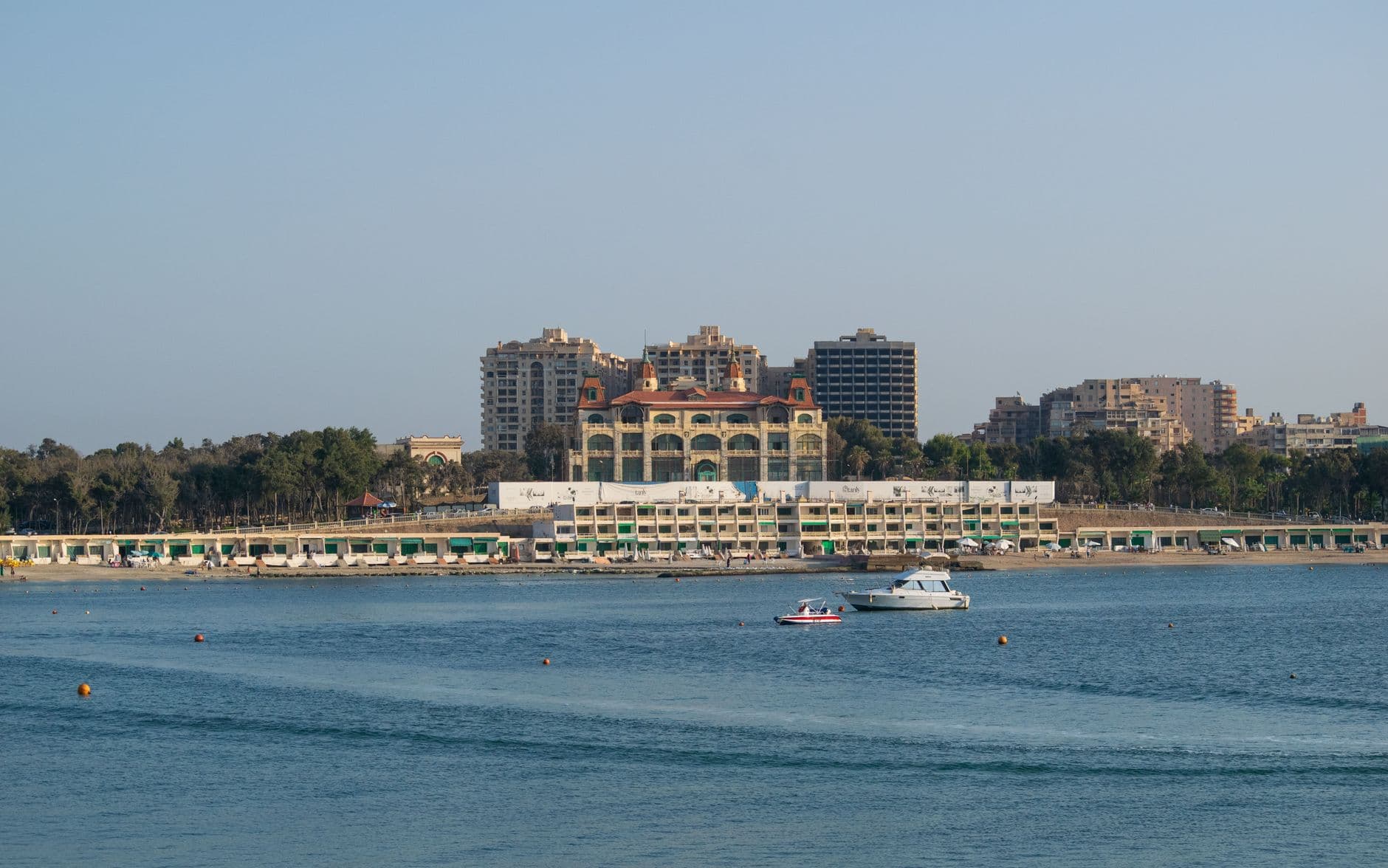
The British arrived in Egypt in September 1882, ostensibly to suppress a nationalist uprising led by Colonel Ahmed Urabi. They stayed until 1954. In those 72 years, they did not build an empire in the traditional architectural sense because to do so would have required admitting they were there permanently. What they built instead was infrastructure: the Aswan Dam (completed 1902), the railway networks, the telegraph system, and the barrage system along the Nile. They also built for themselves: residences, clubs, churches, and cemeteries.
The Khedival Cairo that tourists walk through today, the grid of downtown streets between Tahrir Square and Ramses Square, was actually designed by Khedive Ismail in the 1860s with Haussmann's Paris explicitly in mind. The British inherited it, adapted it, and populated it with their own institutions. This is a distinction most visitors miss: the Europeanized downtown they photograph is Egyptian-commissioned, not British-imposed. What the British imposed was less visible: the cotton monoculture that made Egyptian farmers dependent on a single export crop, the debt structures that justified the occupation in the first place, and the bureaucratic architecture of a state within a state.
Understanding the difference between what Egypt built for itself and what was built upon it is the whole project of a colonial history sites guide.
Cairo: Garden City, Zamalek, and the Khedival Grid
Garden City, the neighborhood curving along the Nile's east bank just south of Tahrir Square, was designed in 1905 by the Egyptian government under British pressure. Its curved streets, so disorienting after the Khedival grid, were modeled on English garden suburbs and intended to house the foreign diplomatic and commercial community. The British Embassy still sits here, on Corniche el-Nil, in a building that occupies one of the most valuable parcels of riverfront land in the city. It has been there, in various configurations, since 1894. The current building, fortress-like and set back behind concrete barriers, replaced an earlier structure that Egyptian nationalists found symbolically intolerable.
Walk north along the Nile to the Qasr el-Nil Bridge and cross to Zamalek, the island district that became the address of choice for British officers, diplomats, and the Egyptian upper class that orbited them. The Gezira Sporting Club, founded in 1882 by the British Army on land requisitioned from the Khedive, covers 175 acres of central Cairo real estate and still operates today as a members club. Its polo grounds, tennis courts, and race track were the social infrastructure of the occupation. Membership was restricted to Europeans until Egyptian pressure forced integration in the 1940s. Today it is one of the most sought-after memberships in Cairo, a remarkable afterlife for a colonial institution.
Downtown, the Baron Empain Palace in Heliopolis (not strictly British but part of the same colonial economic moment) illustrates how European capital functioned. Baron Édouard Empain was Belgian, but the Heliopolis Oasis Company he founded in 1905 operated within the framework of capitulations, the treaty system that exempted foreigners from Egyptian law and taxes. The capitulations, finally abolished in 1937, were the legal backbone of the entire colonial economy. Without understanding them, the prosperity of Cairo's foreign communities is inexplicable.
Alexandria: The Waterfront the British Shelled
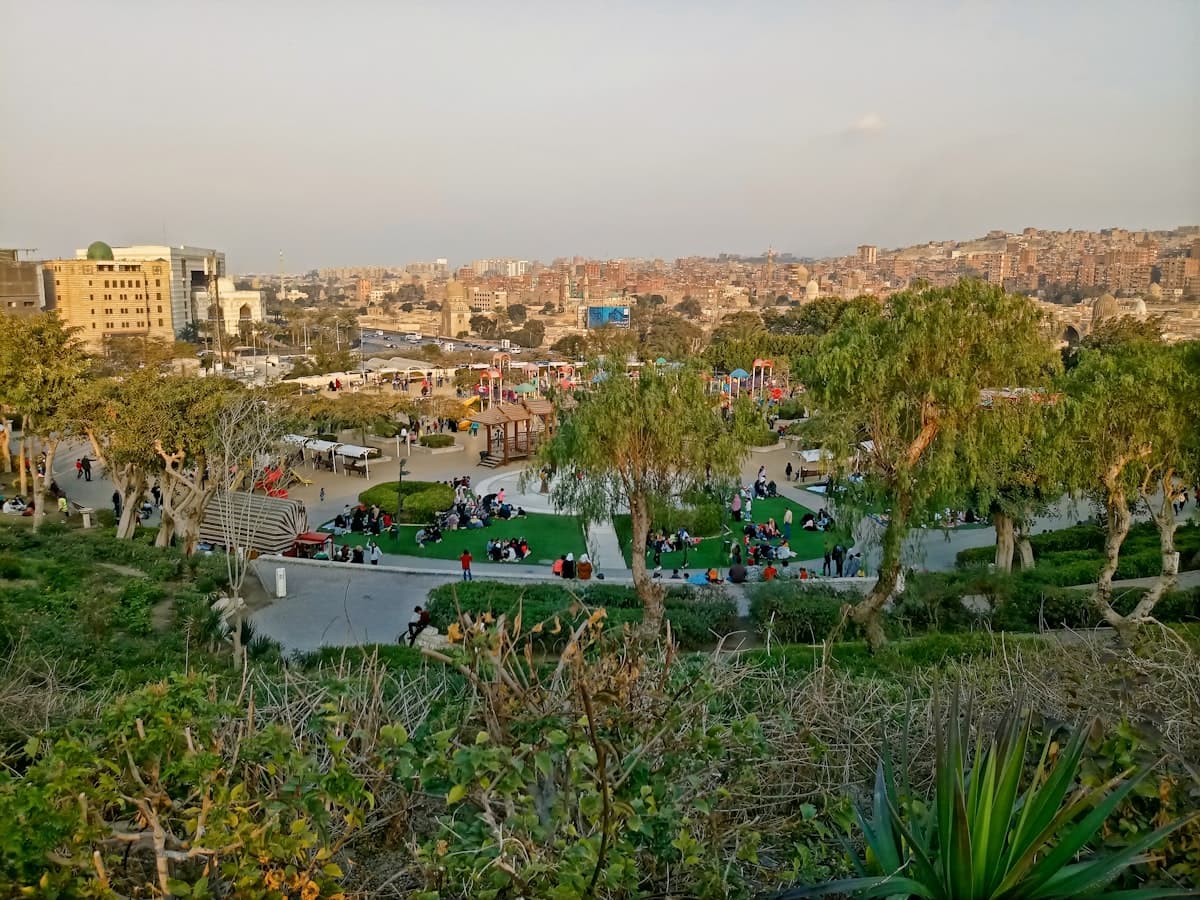
In July 1882, the British Navy bombarded Alexandria for ten and a half hours, destroying large sections of the city and killing several hundred civilians. This is the fact that reframes every elegant building you will see on Alexandria's Corniche. The city you walk through today was rebuilt after that bombardment, partly with Egyptian labor and funds, under conditions that the British occupation made financially unavoidable.
The Cecil Hotel on Midan Saad Zaghloul opened in 1929 and became the address of British intelligence operations during World War II. Somerset Maugham stayed here. Noel Coward stayed here. More consequentially, it was where British officers coordinated operations across the North Africa campaign while Alexandria served as the Royal Navy's main Mediterranean base. The Cecil has since been absorbed into the Sofitel chain and renovated past most of its operational character, but the building itself, its proportions, its position facing the Eastern Harbor, still reads as a structure built by people who assumed they would be staying.
Montaza Palace, twelve kilometers east of the city center, was built by Khedive Abbas II in 1892 and expanded by King Fouad in the 1930s. The British exile of Abbas II in 1914, when they unilaterally declared Egypt a protectorate and deposed him in the same announcement, is the moment when the legal fiction of Egyptian sovereignty finally collapsed even in its own terms. The palace grounds are now public gardens worth the EGP 50 entrance for their waterfront position and the odd architectural hybrid of the palace itself, Turkish and Florentine in approximately equal measure.
The Chatby Military Cemetery on the eastern edge of Alexandria contains the graves of Commonwealth soldiers from both World Wars. It is one of the oldest Commonwealth cemeteries in Egypt, established in 1915. The particular quiet of these cemeteries, the identical white headstones, the obsessive record-keeping of the Commonwealth War Graves Commission, is its own kind of document. The Commission maintains records of 240,000 Commonwealth war dead buried in Egypt and the surrounding region.
Port Said and the Canal: Infrastructure as Ideology
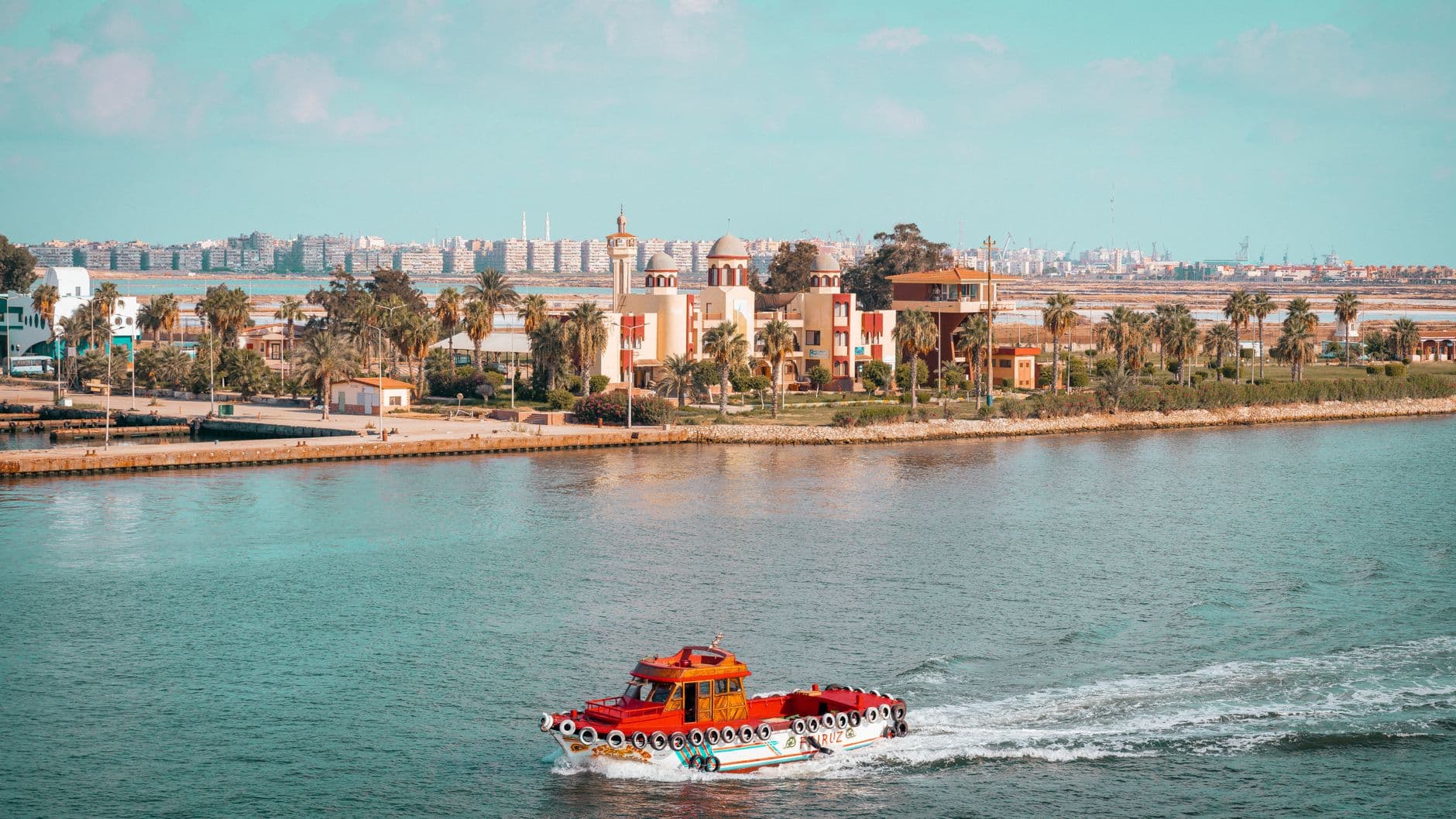
The Suez Canal opened in 1869 under French engineering and Egyptian forced labor. Britain bought a 44 percent stake in the Suez Canal Company in 1875, using a loan from the Rothschild banking house, when Khedive Ismail sold his shares to cover Egypt's catastrophic debts. This purchase is the proximate cause of the British occupation seven years later. The Canal was, and Britain intended it to remain, the strategic hinge of the empire's route to India.
Port Said at the Canal's northern entrance carries this history on its streetscape. The Port Said National Museum (EGP 100, approx $2 USD, hours 9am to 4pm) is undervisited and genuinely useful, with a section dedicated to the 1956 Suez Crisis that provides context unavailable in most tourist itineraries. The crisis, in which Britain, France, and Israel invaded Egypt after Nasser nationalized the Canal, and were then forced to withdraw under American and Soviet pressure, is the moment the British Egypt colonial history formally ends. Port Said was bombed again in 1956, and the city remembers it.
The De Lesseps statue that stood at the Canal entrance for decades was pulled down by Egyptian crowds in 1956. The empty plinth stood for years as its own monument. This is the kind of site that does not appear in most colonial history guides, because it is an absence, but absences are exactly what this history is made of.
The Connections
The Egyptian Museum in Tahrir Square, opened in 1902, was built under Gaston Maspero, a French Egyptologist who served as Director-General of the Antiquities Service. The Antiquities Service itself was a French-run institution operating within the British occupation, another layer of the competing European interests that the capitulations system enabled. The artifacts inside were excavated largely under rules that allowed European institutions and wealthy collectors to export significant finds. The Rosetta Stone, discovered in 1799 during Napoleon's expedition, is in the British Museum. Egypt has been requesting its return since 1821.
The Qasr el-Aini Hospital in Cairo, Egypt's oldest and largest public hospital, was reorganized under British military medical administration after 1882. Its medical school, founded by Muhammad Ali in 1827 with French advisors, was restructured around British curriculum. The medical degree I hold, from Cairo University's faculty that grew from this institution, carries that entire history in its academic genealogy. When I chose not to practice medicine and chose instead to write about Egypt, I was, in a small way, rejecting an institutional inheritance.
The Nile Barrages north of Cairo, the Delta Barrages built by French engineers under Muhammad Ali and extended by British engineers under the occupation, are today a popular Egyptian picnic destination on public holidays. Families spread out on the grass between the Victorian-era lock gates with grilled corn and karkade. This seems right to me. The infrastructure of extraction repurposed for leisure by the people it extracted from.
Common Mistakes
Skipping the colonial period entirely in favor of pharaonic sites. Most Egypt itineraries jump from ancient temples to Islamic Cairo and treat the nineteenth and twentieth centuries as an embarrassing gap. The British period shaped modern Egypt's political DNA. Understanding it is not optional if you want to understand why things are the way they are now.
Doing the Heliopolis Baron Empain Palace as a standalone excursion. The palace is architecturally interesting (Hindu temple exterior, French interior, built for a Belgian industrialist) but the neighborhood around it, with its arcaded streets and tram infrastructure now collapsed, tells the story better than the palace alone. Walk the streets of Korba before or after.
The Cairo Citadel Mohamed Ali Mosque as the only stop. The Citadel itself is where the British established a military garrison and where, in 1952, the officers who launched the revolution that ended the monarchy had their organizational networks. The Citadel is simultaneously Saladin's fortress, Napoleon's observation point, Mohamed Ali's mausoleum project, and the British Army's headquarters. None of the site's signage connects these layers.
The Nile cruise as an alternative to Port Said. These are different things that serve different interests. If British Egypt colonial history is your subject, Port Said is non-negotiable. The Nile cruise is magnificent for pharaonic and Islamic sites. It will not show you the Canal Zone.
Paying for a guided colonial history tour without checking credentials first. Several Cairo operators advertise colonial history walks that are essentially downtown architecture tours with dates attached. Ask specifically whether the guide can explain the capitulations system, the 1882 bombardment, and the 1956 Suez Crisis. If they cannot, you are paying for aesthetics, not history.
The Cairo Tower as a colonial history site. This appears occasionally in colonial history contexts because Nasser built it in 1961 with money the CIA gave him as a bribe, which he pointedly spent on a tower overlooking the former British Embassy. The story is good. The tower itself costs EGP 200 (approx $4 USD) to ascend and offers a view of Cairo that you can get better and cheaper from the rooftop bar of the Grand Nile Tower hotel. Skip the ascent, keep the story.
Assuming all colonial-era buildings are preserved. Many are not. Downtown Cairo's Khedival-era building stock has been degraded by decades of neglect, informal additions, and occasional demolition. What survives is genuinely fragile. The Egyptian government has accelerated some preservation work, but it is uneven. Some buildings you research in advance will be behind scaffolding, some will be in active use by government ministries (and therefore inaccessible), and some will simply be gone.
Practical Tips
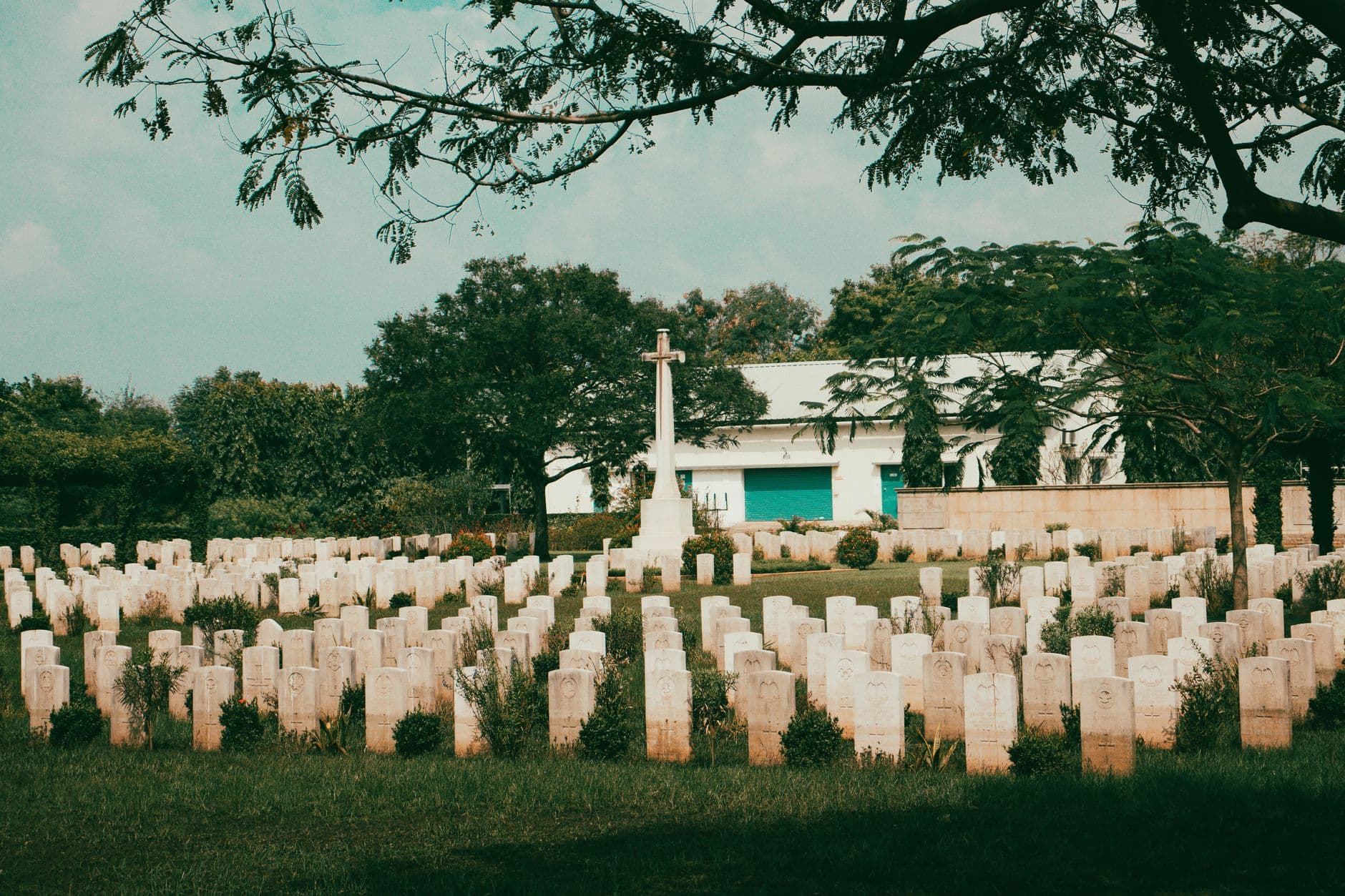
The best single day for a Cairo colonial circuit begins at the Commonwealth War Cemetery in Heliopolis (open from 7am, bring your passport for entry, no cost), continues to the Baron Empain Palace in the same neighborhood, then takes the metro to Sadat for the Egyptian Museum and the downtown Khedival grid. End in Garden City with a walk past the British Embassy to the Nile Corniche. This covers four distinct registers of the British presence in roughly eight hours.
In Alexandria, base yourself near Midan Saad Zaghloul and walk. The Cecil Hotel serves coffee in its lobby even to non-guests. The view from the terrace toward the Eastern Harbor is the view British officers had during the war years and it has not changed in its essentials. Chatby Cemetery requires a taxi from the center, roughly EGP 60 to 80 each way.
Port Said rewards an overnight rather than a day trip. The city has a particular atmosphere at dusk, when the Canal traffic, container ships moving silently through a city's main street, is visible from the waterfront promenade. The ships have been moving through this same channel since 1869 and the scale of them, relative to the low-rise city, never becomes ordinary.
For reading before you go: Khaled Fahmy's "In Quest of Justice" for Ottoman-Egyptian legal history, Robert Tignor's "Modernization and British Colonial Rule in Egypt" for the economic mechanics, and Max Rodenbeck's "Cairo: The City Victorious" for the most honest and readable account of how the city actually works across all its historical layers.
Frequently Asked Questions
The Weekly Dispatch
More on Egypt, every Friday.
Cultural depth and places most guides never mention.
No spam. Unsubscribe anytime.