British Egypt Colonial History Sites: The Complete Guide
Britain occupied Egypt for 72 years but never officially called it a colony. The architecture, prisons, and railway lines they left behind tell that story better than any treaty.

Quick Facts
- Best time to visit
- October to April. Cairo and Alexandria are both urban itineraries, so heat matters more than crowds. November and March are ideal: cooler temperatures, manageable tourist volumes.
- Entrance fee
- Egyptian Museum EGP 450 (approx $9 USD), students EGP 225. Abdeen Palace Museum EGP 100 (approx $2 USD). The Citadel EGP 450 (approx $9 USD). Commonwealth War Cemetery Alexandria: free. Suez Canal Museum Ismailia EGP 50 (approx $1 USD).
- Opening hours
- Egyptian Museum daily 9am to 5pm, last entry 4pm. Abdeen Palace Saturday to Thursday 9am to 3pm. The Citadel daily 8am to 4pm (winter) or 5pm (summer). Commonwealth War Cemetery daily 7am to 3:30pm.
- How to get there
- Cairo Metro Line 1 to Sadat Station for Tahrir Square and Egyptian Museum. Taxi from Tahrir to Abdeen Palace EGP 30 to 40. Taxi from Tahrir to the Citadel EGP 60 to 80. Cairo to Alexandria by air-conditioned train from Ramses Station: EGP 90 to 150 first class, approximately 2.5 to 3 hours.
- Time needed
- Two days minimum for central Cairo colonial sites. One additional day for Alexandria. Ismailia adds another half day if the Suez Canal dimension is part of your itinerary.
- Cost range
- Budget EGP 600 to 900 per day including entrance fees and local transport. Mid-range with specialist guide EGP 2,500 to 3,500 per day.
Britain occupied Egypt for 72 years and never once called it a colony. Officially, Egypt was a 'Protectorate', then a 'nominally independent' state under a king Britain had personally selected. This legal fiction was maintained even as British soldiers garrisoned Cairo, British advisors ran every ministry, and the Egyptian economy was restructured around cotton production for Lancashire mills. The sites that survive from this period are not the clean-columned neoclassical buildings of a confident empire. They are the awkward, layered remnants of a relationship Egypt never consented to and Britain never fully admitted to having.
If you want to understand modern Egypt, including the 1952 revolution, the Suez Crisis of 1956, and the particular bitterness that still surfaces in Egyptian conversations about foreign interference, these sites are not optional background. They are the actual subject.
Quick Facts
Best time to visit: October to April, when Cairo temperatures sit between 15°C and 25°C. Most colonial-era sites are in urban Cairo and Alexandria, so heat matters less than at open desert sites, but summer in Cairo is genuinely punishing at 38°C plus.
Entrance fees: Varies by site. The Egyptian Museum (where colonial-era acquisitions are a story in themselves): EGP 450 (approx $9 USD), students EGP 225. The Abdeen Palace Museum: EGP 100 (approx $2 USD). The Citadel complex (where British forces were garrisoned): EGP 450 (approx $9 USD). Many colonial-era buildings like the old Barclays Bank headquarters and the Shepheard's Hotel site are exterior visits only, no fee.
Opening hours: Egyptian Museum daily 9am to 5pm, last entry 4pm. Abdeen Palace Museum Saturday to Thursday 9am to 3pm, closed Friday. The Citadel daily 8am to 4pm in winter, 8am to 5pm in summer.
How to get there: Cairo Metro Line 1 stops at Sadat Station (Tahrir Square, Egyptian Museum, 5 minute walk). Abdeen Palace is a 15 minute walk from Sadat Station or a short taxi ride, roughly EGP 30 to 40. The Citadel is not metro-accessible; a taxi from Tahrir costs approximately EGP 60 to 80, or take a minibus from Ataba Square for EGP 5.
Time needed: A focused two-day itinerary covers central Cairo colonial sites thoroughly. Alexandria warrants a separate day or overnight.
Cost range: Budget EGP 600 to 900 per day including entrance fees and transport. Mid-range EGP 1,800 to 2,800 per day.
Why This Period of Egyptian History Actually Matters
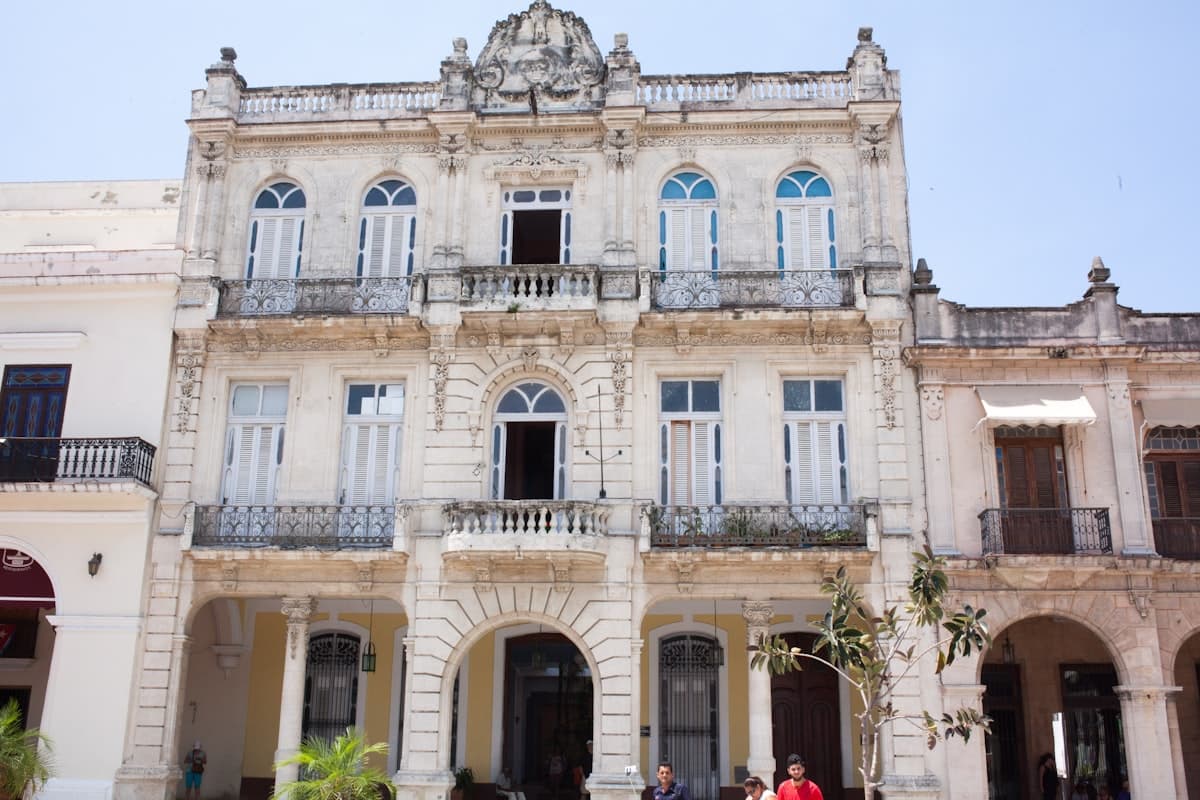
The British arrival in Egypt was not planned as an occupation. In September 1882, a British naval bombardment of Alexandria killed an estimated 2,000 Egyptians and destroyed nearly a third of the city. The stated purpose was to suppress a nationalist uprising led by Colonel Ahmed Urabi, who had the alarming idea that Egypt should be governed by Egyptians. The bombardment was supposed to be a quick intervention. Britain stayed until 1956.
What makes tracing British colonial history sites in Egypt genuinely interesting is the compression of layers. Egypt had already been through Arab conquest, Fatimid rule, Mamluk sultanates, Ottoman administration, and Napoleon's brief invasion before Britain arrived. The British did not impose themselves on an empty slate. They layered themselves over everything that came before, and the sites reflect exactly that: a neo-baroque railway station built atop a medieval street grid, a neoclassical bank built on land that had been a Fatimid cemetery.
The occupation also created the conditions for the Egyptian nationalist movement, which in turn shaped the entire Arab world's relationship with European power in the twentieth century. The sites of British Egypt are, in this sense, the origin story of modern Middle Eastern politics.
Cairo: Reading the Colonial City
Tahrir Square and the Egyptian Museum
The Egyptian Museum was not built by Egyptians for Egyptian history. It was built in 1902 under Gaston Maspero, a French Egyptologist who served as Director General of the Antiquities Service, a department created by European powers and run by Europeans from 1858 until 1952. The building itself is in the neoclassical European style, designed by Marcel Dourgnon, a French architect who won an international competition in which no Egyptian architects were invited to compete.
This matters when you walk through it. The organizational logic of the collection reflects what nineteenth-century European scholars found interesting. Objects were acquired during a period when the Antiquities Service openly issued export licenses, a practice that sent an estimated 300,000 objects to European and American collections before stricter laws were enacted. The museum is a physical record of what colonial administration decided was worth keeping in Egypt and what was permissible to send elsewhere.
Tahrir Square itself was redesigned in the 1950s, but its name, which means Liberation Square, replaced the colonial-era name Ismailia Square, a deliberate act of renaming after the 1952 revolution that is easy to miss unless someone tells you.
The Abdin Palace and the 4 February Incident
Abdeen Palace, the royal residence of the khedives and kings, is where British colonial power expressed itself most nakedly. On 4 February 1942, British Ambassador Sir Miles Lampson surrounded the palace with tanks and armored cars, entered the building personally, and presented King Farouk with a pre-written letter of abdication. The demand: appoint a pro-British prime minister or lose your throne. Farouk capitulated.
This event is barely mentioned in most travel guides to the palace, which focus on the decorative arts collections. But the 4 February incident is considered by Egyptian historians to be among the primary causes of the 1952 revolution. The young military officers who overthrew the monarchy ten years later had been junior lieutenants in 1942. Several of them cited the humiliation of that day as the moment they committed to ending the British-backed monarchy. The palace is worth visiting, but not for the chandeliers. Walk into the state rooms and remember what was forced to happen here.
The Cairo Railway Station and Ramses Square
Ramses Station, opened in 1892 and expanded under British administration, was the operational hub of the Egyptian State Railways, a system that Britain built primarily to move cotton from the Delta to Alexandria for export. By 1914, Egypt had over 4,500 kilometers of track, more per capita than most of Europe, but built entirely to serve commodity export, not Egyptian connectivity. Passengers were a secondary consideration. The main line followed the Nile not because the Nile Valley needed connecting, but because that was where the cotton grew.
The station building is ornate and worth looking at. More interesting is the relief map inside the original hall that shows the rail network as it was designed: lines running from agricultural regions directly to ports, with very little lateral connection between Egyptian cities.
Alexandria: The Colonial City in Miniature
The Corniche and What Was Burned
Alexandria's current built fabric is substantially the product of the late nineteenth and early twentieth centuries, when a cosmopolitan merchant class of Greeks, Italians, Jews, Armenians, and Levantine Arabs built the city alongside British administrative infrastructure. This is the Alexandria of Lawrence Durrell's novels and Constantine Cavafy's poems, and it is largely gone.
The original Shepheard's Hotel in Cairo, the most famous address of the British colonial period, was burned to the ground on 26 January 1952 during what is now called Black Saturday. Seventeen other establishments frequented by British and foreign residents were destroyed in a single day. The message was unambiguous. A rebuilt Shepheard's Hotel now stands on the same site on the Corniche in Cairo, and it is fine. But staying there without knowing you are standing on the ruins of a building that was deliberately destroyed as a political act is to miss the entire point.
The British War Cemetery, Alexandria
The Commonwealth War Cemetery in Alexandria contains 2,141 graves from both World Wars, and it is one of the most carefully maintained sites in Egypt, managed by the Commonwealth War Graves Commission. This is also, quietly, a colonial history site. The majority of those buried here were soldiers from Britain, Australia, New Zealand, South Africa, and India who died defending Egypt as part of the British imperial project, in a country that had not chosen to be part of that project.
Entrance is free. It is open daily from 7am to 3:30pm. You are unlikely to be the only visitor, but you will probably be close to it. This is not overrun. It is the opposite of overrun, and the contrast with the crowded sites of ancient Egypt makes the silence feel pointed.
The Connections: From Pharaonic to Colonial
The Suez Canal, completed in 1869 by the Suez Canal Company under French engineer Ferdinand de Lesseps, was partially funded by Khedive Ismail of Egypt. When Ismail's debts forced him to sell his shares in 1875, it was the British government under Disraeli that bought them for £4 million, giving Britain a 44 percent stake in a waterway cutting through Egyptian territory. This is the transaction that made Egypt strategically vital to Britain and made British occupation, seven years later, feel, to British planners, like a defensive necessity.
The canal itself follows a route that ancient Egyptians had already connected by canal between the Nile and the Red Sea. The first such canal was completed under Pharaoh Necho II around 600 BCE. The Romans rebuilt it. The Arab general Amr ibn al-As reopened it in the seventh century CE to ship grain to Medina during a famine. The Ottoman administration let it silt up in the eighteenth century. The French proposed rebuilding it under Napoleon. When de Lesseps finally dug the modern version, he was following a path that Egyptians had cut and re-cut for 2,600 years. The colonial canal was built on a Pharaonic idea.
Common Mistakes When Exploring Colonial Cairo and Alexandria
Visiting only the ancient sites. This is the most common and most limiting approach to Egypt. If you skip the colonial period entirely, you will not understand why the Egyptian Museum looks the way it does, why Tahrir Square is called Tahrir, or why Egyptians have the particular relationship with foreign interest in their country that they do.
Booking a Nile cruise without knowing what you are floating past. Several sugar processing facilities along the Nile were built or expanded under British administration as part of the cotton and agricultural restructuring. They are not labeled on cruise itineraries. You float past the physical evidence of the colonial economy without knowing it.
Taking the sound and light show at the Citadel. It costs EGP 300, runs about 45 minutes, and covers the Mamluk history of the Citadel while saying almost nothing about its role as a British military garrison from 1882 to 1946. Skip it and hire a local guide for EGP 200 to 250 who can walk you through all of it.
Skipping Alexandria. Most organized tours from Cairo do not include Alexandria. This means most tourists never see the seafront architecture that defines the cosmopolitan colonial city, the war cemetery, or the ruins of the buildings burned in 1952. Alexandria is three hours by train from Cairo Ramses Station (EGP 90 to 150 for air-conditioned first class), and it makes the colonial history legible in ways Cairo alone cannot.
Treating Abdeen Palace as a decorative arts museum. The presidential guards are photogenic and the rooms are ornate. But if you walk through it without knowing what happened there in February 1942, you are looking at furniture.
Expecting interpretive signage. Egypt's colonial history is not curated for foreign tourists in the way ancient history is. There are very few English-language signs explaining the political context of colonial-era buildings. You need to read before you arrive, or hire a specialist guide. The Egyptian Center for Documentation of Cultural and Natural Heritage publishes useful materials, available online before your trip.
Practical Tips
The most useful thing you can do before visiting colonial-era sites is read Khaled Fahmy's 'In Quest of Justice', which is about nineteenth-century Egyptian legal history, or Anthony Sattin's 'Lifting the Veil', which covers the British experience in Egypt from both sides. Both are available internationally before arrival.
For guided tours specifically focused on British Egypt colonial history sites, several Cairo-based specialist operators run half-day and full-day itineraries. Expect to pay EGP 1,500 to 2,500 for a private guide with genuine knowledge of the period. General tour guides will often gloss over the political content.
Alexandria's colonial architecture is concentrated in the Mansheya and Raml Station areas. Walking these streets costs nothing and takes about two hours. Many buildings are in poor repair and closed to the public, but the exteriors alone make the city's cosmopolitan past legible.
Photography is permitted at most exterior colonial sites. Inside Abdeen Palace, cameras are technically restricted in some rooms. Ask before shooting.
The best time to visit the Egyptian Museum is when it opens at 9am, specifically on weekdays between October and December, before European and American school holiday groups arrive. By 11am it is crowded. By 1pm it is genuinely difficult to move in the popular galleries.
Frequently Asked Questions
The Weekly Dispatch
More on Egypt, every Friday.
Cultural depth and places most guides never mention.
No spam. Unsubscribe anytime.