Cairo Geniza: A Jewish Heritage Guide to Egypt's Most Overlooked Archive
A room in a Cairo synagogue held 400,000 medieval documents for a thousand years. Most are now in Cambridge. What stayed behind is stranger than what left.

Audio Guide: Cairo Geniza: A Jewish Heritage Guide to Egypt's Most Overlooked Archive
Quick Facts
- Best time to visit
- October to April. Cairo heat from May through September makes the walk between sites genuinely punishing by midday, and the Coptic Cairo compound offers limited shade.
- Entrance fee
- Old Cairo compound approx EGP 100 (under $2 USD). Ben Ezra Synagogue additional EGP 60 (approx $1.25 USD). Coptic Museum EGP 200 (approx $4 USD). All fees subject to change; carry cash.
- Opening hours
- Daily 9am to 4pm. Closed on Jewish holidays and occasionally for private events without advance notice. Confirm by phone before visiting: +20 2 2363 1676.
- How to get there
- Metro Line 1 to Mar Girgis station (EGP 7, approx $0.14 USD), five-minute walk to compound entrance. Uber from Downtown Cairo EGP 50 to 90. Standard taxi EGP 60 to 120.
- Time needed
- Two hours minimum for Ben Ezra alone. Full morning or afternoon (4 to 5 hours) if combining with Coptic Museum, Abu Serga Church, and Hanging Church.
- Cost range
- Budget day EGP 400 to 600 covering transport, all admissions, local lunch. Mid-range EGP 1,000 to 1,800 with a private guide.
Quick Facts
Best time to visit: October to April, when Cairo temperatures allow comfortable walking between Old Cairo sites without losing an hour to the heat.
Ben Ezra Synagogue entrance fee: Included within the Old Cairo (Coptic Cairo) complex. The general compound admission is approximately EGP 100 (roughly $2 USD) for non-Egyptian visitors. The synagogue itself charges a separate entrance of EGP 60 (approx $1.25 USD) at time of writing, though fees are updated periodically. Bring cash.
Opening hours: Daily 9am to 4pm. Closed on Jewish holidays and occasionally without notice for private events or maintenance. Always call ahead if you are making a special journey: +20 2 2363 1676.
How to get there: Metro Line 1 to Mar Girgis station (EGP 7, approximately $0.14 USD), then a five-minute walk into the Coptic Cairo compound. Taxis from Downtown Cairo will cost EGP 60 to 120 depending on traffic and your negotiating stamina. Ubers run EGP 50 to 90.
Time needed: Two hours minimum for Ben Ezra alone if you come prepared. A full morning or afternoon if you combine it with the Coptic Museum (admission EGP 200, approx $4 USD) and the Hanging Church, which share the same walled compound.
Cost range: Budget EGP 400 to 600 for the day covering transport, all admissions, and a meal in the area. Mid-range EGP 1,000 to 1,800 if you add a guide.
---
Why This Place Matters
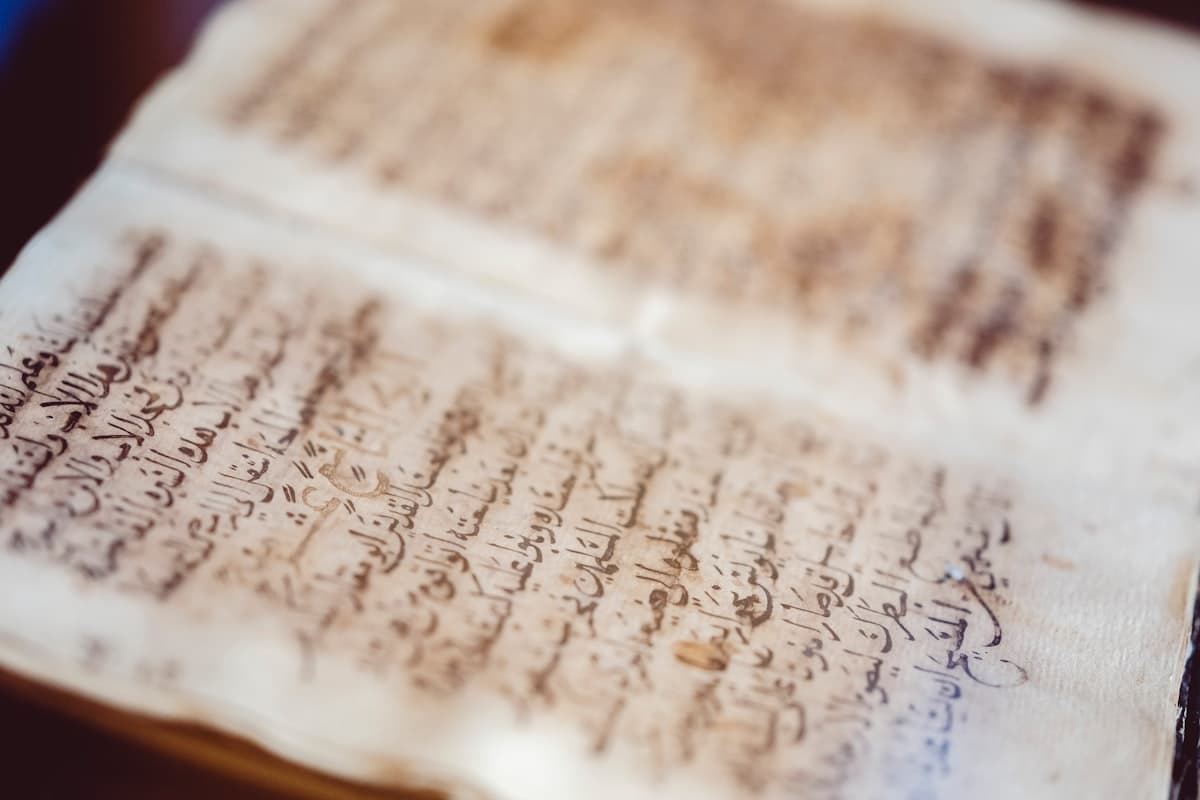
In 1896, two Scottish sisters named Agnes Smith Lewis and Margaret Dunlop Gibson arrived in Cairo carrying a fragment of Hebrew text they wanted identified. They brought it to Solomon Schechter, a Romanian-born Cambridge scholar of rabbinics. Schechter looked at it and recognized, with some controlled academic panic, that it was a page from the original Hebrew version of the Book of Ben Sira, a text known only from a Greek translation for over a thousand years. He booked the next available passage to Cairo.
What he found inside a storeroom above the Ben Ezra Synagogue in Old Cairo was approximately 400,000 documents: letters, contracts, marriage certificates, medical prescriptions, children's schoolwork, shopping lists, poetry, philosophical debates, and the most detailed archive of medieval Mediterranean trade ever assembled. The Jewish legal concept of geniza holds that any document containing the name of God must not be destroyed. Over roughly a millennium, the Cairo community used this sealed room as a sacred discard pile. The result was an accidental civilization snapshot spanning the 9th to 19th centuries.
Schechter negotiated permission and shipped roughly 193,000 of those fragments to Cambridge, where they remain in the Taylor-Schechter Genizah Collection. Additional materials went to New York, Budapest, Paris, and Saint Petersburg. Fewer than 10 percent of the Cairo Geniza documents have been fully catalogued, and active scholarly work continues. The Princeton Geniza Project and the Friedberg Genizah Project are still digitizing and translating materials more than 125 years after Schechter's visit.
What this means for a visitor to Cairo is specific: you are standing at the origin point of one of the most consequential archival discoveries in modern history, and almost nobody on the tourist circuit is paying attention to it.
---
What the Ben Ezra Synagogue Actually Is
The building you enter today was restored in the 1980s and again in the 2000s, which creates a slightly clinical feeling that can be disorienting if you expect atmospheric decay. The restoration work was funded by Jewish diaspora communities and the Egyptian government, and it preserved the structure while stripping some of its texture.
The synagogue occupies a site with layers that most visitors walk through without registering. The current structure dates primarily to the 12th century, but it was built on the remains of a Coptic church, the Church of Saint Michael, which the Jewish community of Fustat purchased in 882 CE for 20,000 dinars, according to documents later found in the geniza itself. Below those foundations, archaeological work has identified Roman-era construction, probably part of the fortress of Babylon, the Roman military installation around which the entire district of Coptic Cairo grew. One building, four civilizations using the same ground in sequence.
The geniza room is not publicly accessible in its original form. What you can see is a commemorative space and explanatory panels that describe the discovery. The actual chamber where Schechter worked is sealed. This disappoints some visitors; it should not. The building itself, its wooden ark for Torah scrolls, the women's gallery above, and the courtyard outside are worth sustained attention. The wood carving on the ark is Fatimid-era work, 11th century, made in the same workshops that produced screens for mosques across Old Cairo during the same period.
---
The Documents That Changed What We Know About the Medieval World
The scholar Shelomo Dov Goitein spent forty years working through the Cairo Geniza and published a five-volume social history of the medieval Mediterranean called "A Mediterranean Society" between 1967 and 1988. His conclusion was that the documents revealed a society of extraordinary commercial and intellectual sophistication, one in which Jewish, Muslim, and Christian merchants operated across the same trade networks from Spain to India with a pragmatism that later religious historiography tends to obscure.
One letter in the collection, sent from a trader in India to his business partner in Fustat sometime in the 12th century, describes a sea voyage, a financial dispute, and a homesick longing for his family in language that would not feel alien to a modern reader. Another document records the daily expenses of a middle-class Jewish household in Fustat in the 11th century, including prices for bread, oil, pepper, and linen cloth. Medieval economic historians use these accounts the way archaeologists use pottery sequences: as a precise calibration tool for everything else.
The Cairo Geniza also contained one of the oldest surviving Haggadah manuscripts, liturgical texts, letters from Moses Maimonides (who lived in Fustat from approximately 1168 until his death in 1204), and the only known copy of certain Talmudic texts that had been considered lost. Maimonides served as the official head of the Jewish community in Egypt, the Nagid, and his letters in the geniza show him adjudicating disputes, recommending medical treatments, and corresponding with Jewish communities from Yemen to Provence.
What you cannot see at Ben Ezra, but what frames the entire visit: all of this intellectual and commercial life happened in a Jewish quarter of a city governed by the Fatimid Caliphate, then the Ayyubids, then the Mamluks. Medieval Cairo was not a city of neat religious separations. The geniza records show Jewish traders financing Muslim merchants, Coptic scribes copying documents for Jewish clients, and a level of daily integration that complicates the cleaner narratives taught in most schools.
---
The Connections: From Fustat to the Modern City
Ben Ezra sits inside Old Cairo, which is itself built on and around Fustat, Egypt's first Islamic capital, founded in 641 CE by the Arab general Amr ibn al-As within a year of the conquest. Fustat was not a new city planted on empty ground. Amr built around the existing Roman fortress of Babylon, incorporated the Coptic churches that were already there, and established a garrison settlement that would become the template for Cairo's layered development.
The Jewish community of Fustat predated the Islamic conquest. There is evidence of Jewish settlement in the area going back to the Persian period, 6th century BCE, though the community that produced the geniza was established and expanded under the early Islamic caliphates, which offered Jews a protected but taxed status as dhimmis. The Fatimid caliphs, who founded Cairo proper in 969 CE just north of Fustat, were notably tolerant by the standards of medieval governance. The Caliph al-Hakim was the exception: he destroyed churches and synagogues during his reign from 996 to 1021, including the original Ben Ezra structure, which was rebuilt afterward.
Walking from Ben Ezra north through Old Cairo and into Islamic Cairo is a walk through that administrative sequence in physical form. The Ibn Tulun Mosque, fifteen minutes on foot from the Coptic compound, was built in 876 CE, partly contemporary with the purchase of the Ben Ezra site by the Jewish community. The two communities were building and worshipping and trading simultaneously, within walking distance, under the same Abbasid-era governance.
Modern Egypt's Jewish community has essentially dissolved. At its peak in the 1920s and 1930s, Egypt's Jewish population was approximately 80,000, concentrated in Cairo and Alexandria. Following the 1948 Arab-Israeli War and especially after the 1956 Suez Crisis, most Egyptian Jews emigrated under a combination of economic pressure, legal restriction, and fear. By 1979, fewer than 400 Jews remained in Egypt. Today the figure is under a hundred, most of them elderly women in Cairo.
---
Common Mistakes
Coming without context. Ben Ezra without preparation is a pleasant old building. Ben Ezra with even a basic understanding of the geniza discovery is a site that stops you mid-sentence. Read at least the Wikipedia article on the Cairo Geniza before you arrive. Better: find Mark Cohen's "Poverty and Charity in the Jewish Community of Medieval Egypt" or Adina Hoffman and Peter Cole's "Sacred Trash," which is the most readable general account of the geniza and its scholars.
Treating this as a single stop. The Coptic Museum 200 meters away holds the oldest known copy of the Gospel of Thomas, the Nag Hammadi texts, and Coptic textiles from the 4th century. Most visitors spend thirty minutes in the museum. It deserves three hours.
Skipping the compound's less-visited churches. The Church of Saints Sergius and Bacchus (Abu Serga) inside the same compound claims, with some archaeological basis, to sit over the crypt where the Holy Family sheltered during the flight into Egypt. Whether or not you accept that tradition, the church is 5th century in its oldest sections and entirely uncrowded.
Taking the Nile Corniche route by taxi and assuming the driver knows the entrance. Many drivers unfamiliar with the area will deposit you at the wrong gate or circle the district. Tell your driver Mar Girgis metro station and walk from there. It is faster and you will not be stranded outside the wrong wall.
The Jewish history tour packages offered near the Egyptian Museum. Most run EGP 800 to 1,400 per person for a half-day, and several cover only Ben Ezra with a guide who recites the Schechter story without any additional insight into the geniza documents, medieval trade networks, or the Maimonides connection. The same knowledge is available in twenty minutes of reading. Spend the money on a private Egyptologist who covers all of Old Cairo rather than on a specialist tour that delivers surface content at a premium price.
Missing the Maimonides Synagogue. Most Cairo Jewish heritage guides focus entirely on Ben Ezra. There is a second active synagogue, the Sha'ar Hashamayim in Downtown Cairo's Adly Street, built in 1905 in a full neoclassical style that seats 700 and is now used by Cairo's tiny remaining Jewish community for high holidays only. It is open to visitors by appointment through the Egyptian Jewish Community organization. The architecture alone justifies the effort, and the building tells the story of Cairo's early 20th century Jewish bourgeoisie in a way that the medieval Ben Ezra cannot.
---
Practical Tips
Arrive when the compound opens at 9am. By 11am, tour groups from Nile cruise ships and Cairo hotels begin arriving at the Hanging Church and the Coptic Museum, and the narrow lanes inside the compound become congested. The synagogue itself stays quieter than the churches, but the approach routes fill up.
Dress conservatively. The compound contains active religious sites across three traditions, and shoulders and knees should be covered regardless of the season. Scarves are available at the entrance for a small fee if you forget.
Photography is permitted inside Ben Ezra, though flash photography near the wooden ark and the older carved panels is discouraged. Ask before photographing anything that looks like an active ritual object.
The compound has no reliable cafe inside. There is a small coffee kiosk near the main entrance that is occasionally open. A better option is to walk the ten minutes to the area around the Amr ibn al-As Mosque and eat at one of the local fuul and ta'ameya spots for EGP 30 to 60 per person. Fustat Restaurant near the Mar Girgis metro exit does sit-down Egyptian food at mid-range prices and is reliably clean.
If you have a serious research interest in the Cairo Geniza, the Friedberg Genizah Project website (genizah.org) has digitized a significant portion of the collection and is free to access. The Taylor-Schechter collection at Cambridge is partially viewable online through Cambridge Digital Library. You do not need to go to Cambridge to look at the documents that left Cairo.
Finally: the Ben Ezra Synagogue is not a museum in the conventional sense. There is no permanent interpretive exhibition of the geniza's contents or their significance. What you are visiting is the building and the site of the discovery. The documents themselves are scattered across six countries. This is not a failure of Egyptian heritage management so much as a consequence of how the 19th century treated archival finds from colonized places. Coming to terms with that absence, standing in the room where it all was, is part of what the visit means.
Frequently Asked Questions
The Weekly Dispatch
More on Egypt, every Friday.
Cultural depth and places most guides never mention.
No spam. Unsubscribe anytime.