Cairo Geniza Jewish Heritage Egypt Guide: Ben Ezra and Beyond
A single storeroom in a Cairo synagogue held 400,000 medieval documents that rewrote our understanding of the ancient world. Most visitors walk past it.

Quick Facts
- Best time to visit
- October through April. Cairo's winter light is good and temperatures in Old Cairo, which sits near the Nile, are comfortable. Avoid July and August when heat makes extended walking in the compound exhausting.
- Entrance fee
- EGP 300 adults (approx $6 USD), EGP 150 students. Ben Ezra is free once inside the compound. Roman Tower at Babylon Fortress: EGP 60 extra.
- Opening hours
- Daily 9am to 5pm. Ben Ezra may occasionally close for private events or restoration; confirm with the Egyptian Ministry of Tourism or your hotel concierge before visiting.
- How to get there
- Cairo Metro Line 1 (red line) to Mar Girgis station, EGP 10 from Tahrir Square. Taxi from downtown Cairo costs EGP 80 to 120. The compound entrance is a two-minute walk from the metro exit.
- Time needed
- 2 hours minimum for Ben Ezra and the immediate compound. Add 90 minutes for the Coptic Museum. A full half-day (4 to 5 hours) covers the compound, museum, and Hanging Church properly.
- Cost range
- Full Coptic Cairo visit including museum, Ben Ezra, and lunch at a nearby fuul stall: EGP 500 to 700 per person. Budget EGP 350 to 500 if skipping the museum.
Quick Facts
Best time to visit: October through April, when Cairo's heat is manageable and the light in Old Cairo is softer and more forgiving in the late afternoon.
Entrance to the Coptic Museum compound (which includes access to Ben Ezra Synagogue): EGP 300 for adults (approximately $6 USD), EGP 150 for students. Ben Ezra itself is free once inside the compound. The Roman Tower at Babylon Fortress requires a separate EGP 60 ticket.
Opening hours: Daily 9am to 5pm. The synagogue is occasionally closed for private events or restoration work, so confirm with the Egyptian Ministry of Tourism before visiting.
Getting there: From downtown Cairo, take the Cairo Metro Line 1 (the red line) to Mar Girgis station. The station exit deposits you directly in front of the Coptic Cairo compound. The metro ride from Tahrir Square costs EGP 10. Taxis from central Cairo run EGP 80 to 120 depending on traffic. The tuk-tuks outside Mar Girgis are not necessary; everything is walkable once you arrive.
Time needed: Two hours minimum for Ben Ezra and the immediate compound. Add another ninety minutes if you plan to visit the Coptic Museum seriously, which you should.
Cost range: The full Coptic Cairo experience including the museum, Ben Ezra, the Hanging Church, and lunch at one of the nearby fuul stalls runs EGP 500 to 700 per person.
---
Why This Place Matters
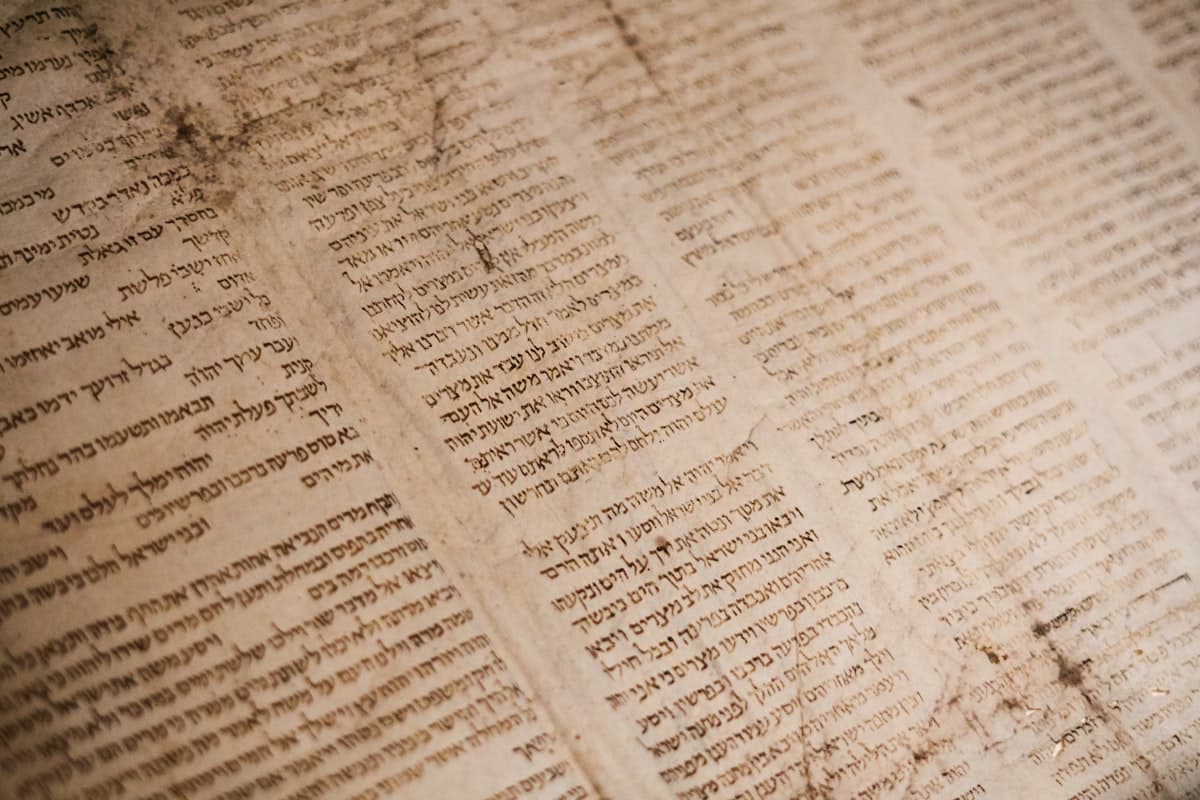
In 1896, a Scottish scholar named Solomon Schechter climbed into a sealed storage chamber above the women's gallery of Ben Ezra Synagogue and found something that changed the field of medieval history permanently. The chamber, called a geniza, was a repository where Jewish communities stored worn-out texts containing the name of God, which Jewish law forbids from being destroyed. What Schechter found inside had been accumulating for nearly a thousand years: roughly 400,000 documents in Hebrew, Judaeo-Arabic, Aramaic, and Arabic, covering personal letters, legal contracts, medical recipes, marriage documents, and merchant correspondence from the 10th through the 13th centuries.
The Cairo Geniza, as the collection became known, is the single most important source of information about daily life in the medieval Islamic world. It documented a Jewish merchant class operating across a network stretching from Spain to India, buying and selling flax, spices, and silk. It contained letters from a Jewish physician in Alexandria complaining about his patients. It held court documents from the Fatimid caliphate, business records from traders in Sicily, and a letter from the philosopher Maimonides discussing a legal question. The documents are now distributed between Cambridge University (which holds the largest share), the Jewish Theological Seminary in New York, and institutions in Oxford, Paris, and St. Petersburg. Almost nothing remains in Cairo. What you are visiting, in other words, is not the archive. It is the room that held it.
That room matters more than it sounds.
---
The Synagogue Itself: What You Are Actually Looking At
Ben Ezra Synagogue is not ancient in the way the Pharaonic sites are ancient. The current structure dates to the 12th century, though it was rebuilt substantially in the 19th century, and what you see today reflects that 1892 restoration more than any medieval original. The building follows the basilica plan: a central nave flanked by columns, a wooden ark at the eastern end, a raised bimah in the center. The decoration is restrained by Egyptian standards, the carved wooden screens elegant rather than ornate.
The deeper history is more interesting than the architecture. The site is traditionally held to be where the infant Moses was found among the bulrushes, a claim that cannot be verified and almost certainly compresses geography in the service of theology. More historically traceable: the synagogue stands on ground that was previously occupied by a Coptic church, which was sold to the Jewish community in 882 CE during the reign of the Tulunid governor Ahmad ibn Tulun, the same ruler who built the great mosque that still bears his name six kilometers north. The Jewish community paid 20,000 dinars for the site, a figure preserved in historical records.
The geniza chamber itself, now empty, sits above the women's gallery. It is accessible by a narrow stair and looks exactly like what it is: a small, plain room with good ventilation and poor light. Standing inside it, knowing what accumulated here across a millennium, is one of those moments where the weight of the specific pushes through the ordinary.
The synagogue is currently maintained by the Egyptian government. There is no permanent Jewish community in this neighborhood anymore. The last congregation that prayed here regularly dwindled through the second half of the twentieth century as Egypt's Jewish population, which numbered around 80,000 in 1948, contracted to a few hundred by the 1970s. The caretakers you will meet are Egyptian Muslims, courteous and often genuinely curious about the visitors who come from around the world to see this place.
---
The Documents Themselves: What the Geniza Revealed
The historian Shlomo Goitein spent thirty years working through the Cairo Geniza documents and produced a six-volume study, "A Mediterranean Society," that remains the definitive portrait of medieval Jewish life in the Islamic world. Some of what he found is purely mundane: shopping lists, complaints about business partners, a father writing to his son about a debt. Some of it is extraordinary.
The geniza contains the oldest known copy of the Hebrew text of the book of Ecclesiasticus, a book accepted as scripture by Catholics and Eastern Orthodox Christians but not by Jews or Protestants, which had been known only through Greek and Syriac translations for nearly 1,500 years. It contains letters that document the India trade in extraordinary detail, revealing that Jewish merchants from Fustat (the city immediately south of where Cairo now stands) were active participants in a global commercial network that connected the Mediterranean to the Malabar Coast of India centuries before European contact with those routes.
One document, dated to 1027 CE, records a commercial partnership between a Jewish merchant in Fustat and his business partner in Aden, specifying exact shares of profit from a cargo of pepper. This is not a footnote. This is evidence that the world was already deeply, commercially interconnected long before the standard historical narrative suggests.
The geniza also contains documents in the hand of Maimonides, the 12th-century philosopher and physician born in Cordoba who spent much of his life in Fustat and served as a physician to Saladin's court. His presence in these documents is a reminder that the medieval world was less compartmentalized than we tend to imagine: a Jewish philosopher wrote the foundational texts of medieval rationalist thought while employed by the sultan who retook Jerusalem from the Crusaders.
---
The Connections: Coptic Cairo as a Layered World
You cannot understand Ben Ezra without understanding the neighborhood it sits inside. Old Cairo, or Misr al-Qadima, occupies the site of the Roman fortress of Babylon, built under Emperor Diocletian around 300 CE to guard the crossing of the Nile. The fortress walls are still partially standing; the towers are visible from the metro station. Inside those Roman walls, the Coptic Christian community built churches as early as the 3rd century, creating a neighborhood that became one of the oldest continuously inhabited Christian sites in Africa.
The Jewish community settled here sometime in the early Islamic period, drawn by the same practical logic that governed where minority communities could live safely in medieval Cairo: proximity to the Nile, proximity to established infrastructure, proximity to other protected communities. The result is a geography that layers Roman military architecture, Coptic Christianity, and Cairene Judaism into a space about the size of three city blocks.
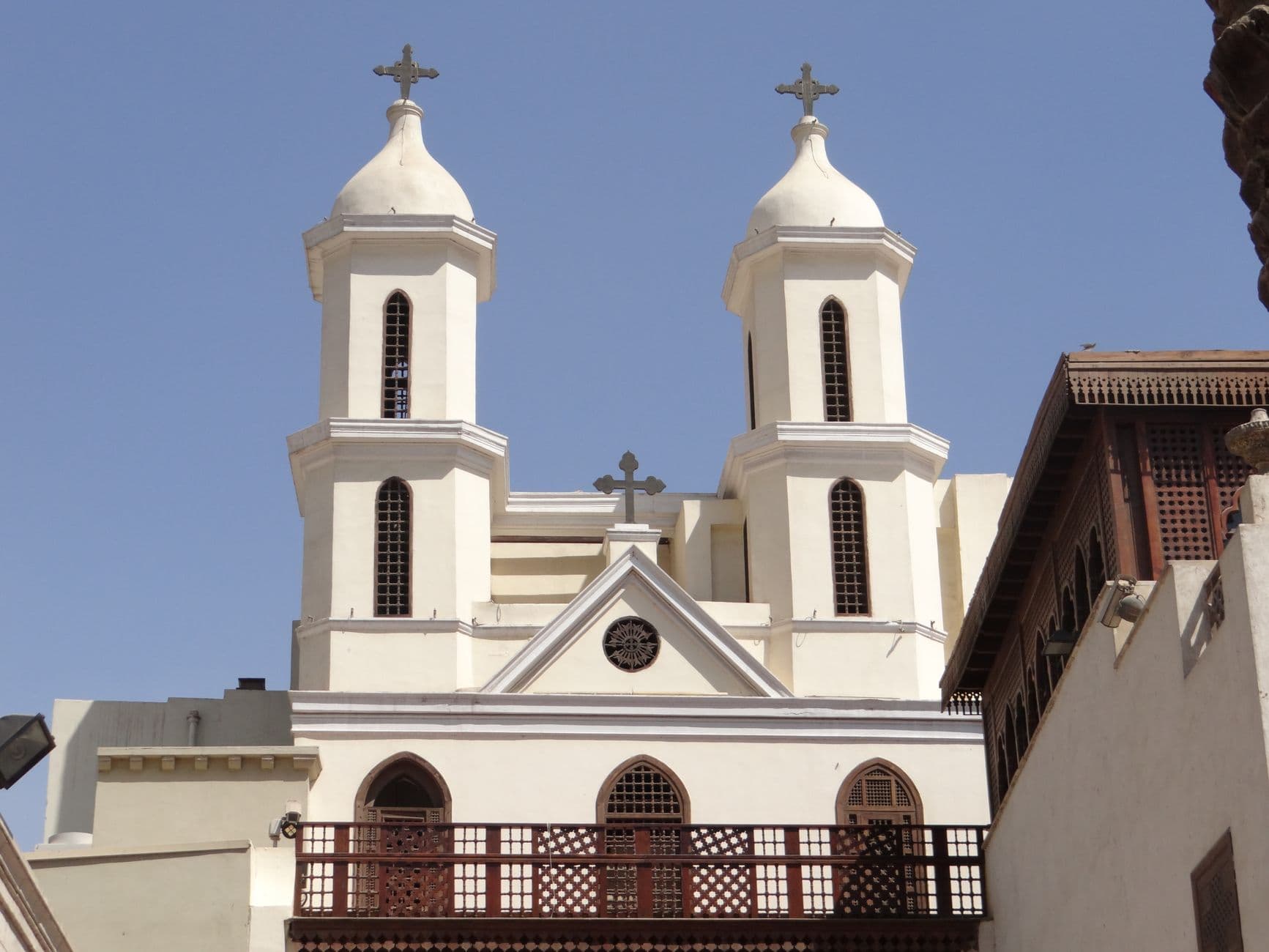
Walk south from Ben Ezra and you pass the Church of St. Sergius, built over a crypt where the Holy Family is said to have sheltered during the Flight into Egypt. The crypt periodically floods because it sits below the Nile water table, a fact that makes the theological claim feel oddly plausible given the site's antiquity. Walk north and you reach the Hanging Church, or Al-Muallaqah, which hangs suspended over the gatehouse towers of Babylon Fortress. Its wooden ceiling, carved in the shape of Noah's Ark, dates to the 11th century.
Fustat, the first Arab capital of Egypt founded in 641 CE after the Islamic conquest, was built directly east of this compound. It is now an archaeological site open to researchers but not to the general public. Beneath it lie the foundations of the most important commercial city in the early medieval world, the city whose Jewish merchants wrote the letters that ended up in the geniza.
---
Common Mistakes
Visiting without context. Ben Ezra is a quiet room with a complicated past. If you arrive knowing only that it is a synagogue in Cairo, you will spend twenty minutes, take some photographs, and leave having missed the entire point. Read about the geniza before you go. Even an hour with Amitav Ghosh's "In an Antique Land," which weaves geniza research into a meditation on Egyptian identity, will transform the visit.
Skipping the Coptic Museum. The museum houses the world's finest collection of Coptic art and holds objects that connect directly to the world the geniza documents describe. The textile collection alone justifies the entrance fee. Most visitors to Ben Ezra bypass it entirely. This is a significant loss.
Visiting only Ben Ezra and leaving. The compound repays at least three hours of slow walking. The Roman towers at Babylon, the Church of St. Sergius with its flood-prone crypt, the Hanging Church with its Ark ceiling: these are not consolation prizes. They are the context.
Hiring a guide from outside the compound. The unofficial guides who approach visitors at the Mar Girgis metro exit are generally not well-informed about the geniza specifically. The Coptic Museum has licensed guides who know this material; ask at the ticket desk.
Attempting this visit on a Friday afternoon or Sunday morning. The Hanging Church holds active Coptic services on Sundays, which makes that morning simultaneously more interesting and more crowded. Friday afternoons see increased foot traffic from Muslim families visiting the neighborhood. Wednesday and Thursday mornings are consistently the quietest.
The Sound and Light show at the Pyramids is not relevant here, but there is an equivalent trap: several tour operators sell a combined Coptic Cairo and Islamic Cairo day tour that allocates forty-five minutes to Ben Ezra. Skip that format entirely. Forty-five minutes is enough to confirm the synagogue exists. It is not enough to understand why you are there.
Expecting a museum experience. There is no display of geniza documents in Cairo. The exhibition that would make this site truly legible to visitors does not exist. If you want to see the documents themselves, the Cambridge University Library digitized the entire collection and has made it freely available online at genizah.org. This is extraordinary access to extraordinary material, and almost nobody visiting Cairo knows it exists.
---
Practical Tips
Dress conservatively. Ben Ezra is an active religious site maintained for Jewish visitors, and the compound also includes functioning Coptic churches. Shoulders and knees covered is the practical standard; a scarf for women is useful for entering any of the churches.
The light inside Ben Ezra is dim. If you want photographs, bring a camera that handles low light, or accept that your phone will struggle. The carved wooden screens photograph better than the overall interior.
The neighborhood immediately outside the compound is calm by Cairo standards, but the streets between Mar Girgis and the compound entrance can be confusing on a first visit. Walk directly toward the river when you exit the metro, then follow the wall of the Babylon Fortress south. You will see the compound entrance within two minutes.
Cairo's Jewish heritage is a subject that some visitors approach with anxiety about regional politics. In practice, Ben Ezra receives visitors from Israel, the United States, Europe, and the broader Arab world without incident. The Egyptian government has invested in the site's maintenance specifically because it draws heritage tourism. You will not be hassled, questioned, or made to feel unwelcome regardless of your background.
If you are serious about the geniza and want to go deeper, the Genizah Research Unit at Cambridge publishes accessible material for non-specialists. Goitein's "A Mediterranean Society" is scholarly but readable. Ghosh's "In an Antique Land" is literary and personal and will make you see the whole neighborhood differently.
Frequently Asked Questions
The Weekly Dispatch
More on Egypt, every Friday.
Cultural depth and places most guides never mention.
No spam. Unsubscribe anytime.