Cairo Geniza Jewish Heritage Egypt Guide: Ben Ezra & Beyond
A storeroom in a Cairo synagogue held 400,000 medieval documents for 1,000 years. They rewrote everything scholars thought they knew about the medieval world.

Quick Facts
- Best time to visit
- October to March for comfortable temperatures. Weekday mornings before 10am for minimal crowds inside the synagogue.
- Entrance fee
- Coptic Cairo compound entry free. Ben Ezra Synagogue approximately EGP 100 (approx $2 USD) for foreign visitors, paid at the door in cash.
- Opening hours
- Daily 9am to 4pm. May close earlier on Fridays. Verify locally around Jewish and Islamic holidays.
- How to get there
- Metro Line 1 to Mar Girgis station, EGP 8 to 10. Taxi from Downtown Cairo EGP 50 to 80. Uber available, slightly higher than taxi.
- Time needed
- 2 hours for Ben Ezra alone. Half a day to combine with the Coptic Museum and Hanging Church. Add 30 minutes for the Mosque of Amr ibn al-As nearby.
- Cost range
- Budget EGP 300 to 600 per day including transport, entry fees, and lunch. Mid-range EGP 1,200 to 2,000 with a licensed guide.
Quick Facts
Best time to visit: October to March, when the Old Cairo streets are cool enough to walk slowly and the light inside Ben Ezra Synagogue is soft rather than punishing.
Entrance fee: The Ben Ezra Synagogue sits inside the Coptic Cairo complex. Entry to the complex is free; the synagogue itself currently charges EGP 100 (approximately $2 USD) for non-worshippers visiting as tourists. Fees are subject to revision, so carry small notes.
Opening hours: Daily 9am to 4pm. Fridays the synagogue may close earlier. Coptic Cairo generally opens from 9am to 5pm.
How to get there: Take the Cairo Metro Line 1 to Mar Girgis station. The station exits directly into the Coptic Cairo compound. Metro fare is EGP 8 to 10 depending on zones. Taxis from Downtown Cairo run EGP 50 to 80; from Zamalek, expect EGP 80 to 120. Uber is slightly more consistent on price.
Time needed: Two hours for the synagogue alone if you are serious about it. Half a day if you combine it with the Coptic Museum, the Hanging Church, and a walk through the Roman fortress walls of Babylon.
Cost range: Budget EGP 300 to 600 per day in Old Cairo including transport, entry, and lunch from a local kushari shop. Mid-range EGP 1,200 to 2,000 if you add a guide.
---
In 1896, two Scottish twin sisters named Agnes Lewis and Margaret Gibson walked into a Cairo antique market and bought a handful of old paper fragments. They showed them to Solomon Schechter at Cambridge. Schechter recognized the script as medieval Hebrew, boarded a ship to Cairo, descended into a sealed storeroom above the Ben Ezra Synagogue, and emerged with 400,000 manuscript fragments that had been sitting there, undisturbed, for nearly a millennium. What he found rewrote the history of medieval trade, medicine, law, marriage, and daily life across three continents.
This is the Cairo Geniza. And almost nobody visiting Ben Ezra Synagogue understands what happened here or why it matters.
Why This Place Matters
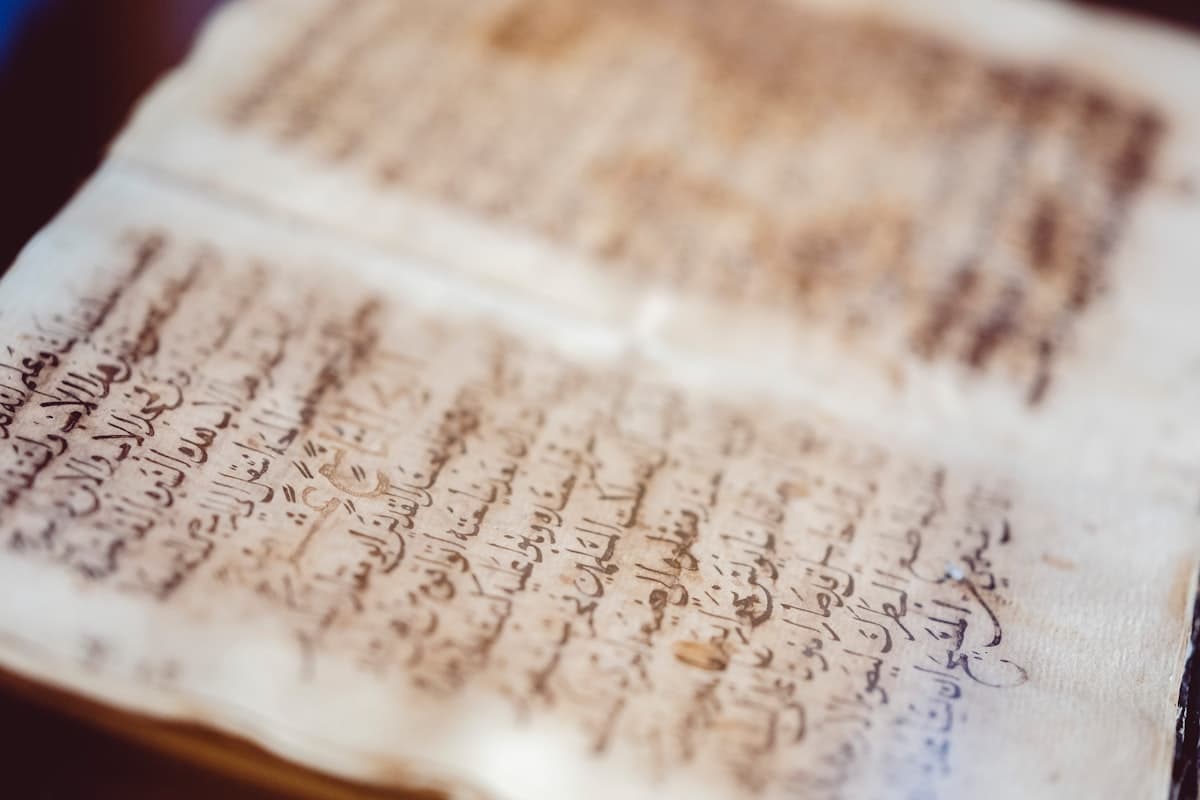
A geniza is a Jewish document repository, a room where worn or damaged texts containing the name of God are stored rather than destroyed. Jewish law forbids discarding such documents. The Ben Ezra geniza was, in theory, a temporary holding space before ceremonial burial. In practice, it became a thousand-year archive.
What Schechter found was not liturgical texts alone. The Cairo Jewish community from the tenth to the thirteenth century was a commercial hub connecting the Mediterranean world to the Indian Ocean trade routes, and its members wrote everything down: marriage contracts, business letters, physician's prescriptions, shopping lists, poetry, legal disputes, and personal correspondence. A letter complaining about the quality of pepper shipped from Aden. A contract for a glassware consignment between Cairo and Sicily. A note between a husband and wife that reads, to a modern eye, with the intimacy of a text message.
The Princeton Geniza Project has digitized more than 35,000 of these fragments, and scholars are still finding new interpretations decades after Schechter's haul. The documents revealed a Jewish merchant network, the Radhanites, who moved goods between Christian Europe, the Islamic world, and South Asia, speaking multiple languages and crossing borders that were otherwise hostile to nearly everyone else. They also revealed an Egyptian Jewish community that was legally protected, commercially sophisticated, and deeply embedded in the Fatimid Cairo economy at a moment when Cairo was, arguably, the wealthiest city on earth.
The fragments are gone now: distributed between Cambridge, Oxford, New York, Philadelphia, and Jerusalem. But the room is still there.
The Synagogue Itself: What You Are Actually Looking At
Ben Ezra is not an ancient synagogue. The building you enter today was reconstructed in the twelfth century by Abraham Ben Ezra, the Spanish Jewish scholar from whom it takes its name, after the local Jewish community purchased the site from a Coptic Christian congregation that was raising funds after a tax imposed by the Fatimid caliph Al-Hakim. The original church had been built over the ruins of a Roman fortress wall, which itself sat on much older ground. The geniza storeroom was built into the wall during the reconstruction.
The interior is composed of carved wood screens, painted arches, and a central bimah (raised reading platform) surrounded by a wooden lattice that is genuinely old, possibly dating to the fourteenth century. The women's gallery above is accessed by a separate stair and retains panels of carved mashrabiya work that have no equivalent in Cairo's other synagogues. The light inside comes in at an angle that makes the woodwork glow amber in the morning hours.
There are two Hebrew inscriptions flanking the ark that most visitors photograph without reading. One of them references the Prophet Elijah and the site's tradition as a place where Elijah appeared to the Jewish community during a period of crisis. This tradition predates the Ben Ezra reconstruction by centuries and is probably the reason the congregation chose to rebuild here rather than relocate.
The synagogue also contains a memory that most visitors miss entirely: a small spring beneath the building that local tradition identifies as the site where Pharaoh's daughter found the infant Moses in the bulrushes. The spring is sealed and not visible, but the tradition is ancient and connects this corner of Old Cairo to the foundational stories of Judaism, Christianity, and Islam simultaneously, all three of which claim Moses.
The Community Behind the Documents
To understand the Cairo Geniza Jewish heritage in full, you have to understand that the Jewish community of medieval Cairo was not living in a ghetto. The Fustat neighborhood, now part of Old Cairo, was one of the most cosmopolitan urban spaces in the medieval world. Under Fatimid rule (969 to 1171), Cairo operated a system that was not tolerance in the modern sense but was, by the standards of the eleventh century, remarkable. Jewish and Christian merchants held government positions. The court physician to several Fatimid caliphs was a Jew. Trade guilds were organized by profession rather than religion.
The Geniza documents include a letter from a Jewish merchant named Halfon Ben Nethanel, who traveled between Egypt, Yemen, India, and Spain in the early twelfth century and maintained business correspondence in Judeo-Arabic, a Jewish dialect of Arabic written in Hebrew script, which was the lingua franca of the educated Jewish mercantile class. His letters are in Cambridge now, but his world was built in the streets outside Ben Ezra's door.
The community declined slowly under Ayyubid and Mamluk rule, not through expulsion but through economic marginalization and emigration. By the nineteenth century, when Cairo's Jewish population began growing again through immigration from the Mediterranean and the Levant, the medieval community was a memory even to its own descendants. The storeroom above Ben Ezra had been sealed so long that the community had, in effect, forgotten it existed.
Egypt's Jewish population peaked at around 80,000 in the 1940s. By 1970, following three wars and the Nasser-era nationalizations, fewer than 500 remained. Today there are perhaps a dozen practicing Jews in Cairo, mostly elderly women. Ben Ezra is maintained not by a living congregation but by the Egyptian government's Department of Antiquities, which is both an institutional act of preservation and a quiet acknowledgment that the people who should be maintaining it are no longer here.
The Connections: Old Cairo as a Layered World
Ben Ezra sits inside the Roman fortress of Babylon, a name that has nothing to do with Mesopotamia and probably derives from the Egyptian Coptic "Per-Hapi-en-Iunu," meaning the estate of the Nile god of Heliopolis. The Romans built a significant garrison here in the first century CE to control river traffic and protect the road to Alexandria. The walls are still standing in places to a height of several meters, and the Mar Girgis Metro station was built partly inside them.
The Coptic Museum, forty meters from Ben Ezra's entrance, holds the largest collection of Coptic Christian art in the world, including textiles, manuscripts, and icons that predate the Arab conquest by five centuries. The Hanging Church directly above it was built into the gatehouse of the Roman fortress and takes its name from the fact that its nave hangs suspended over the fortress passage below.
Within a square kilometer, you have a Roman fortress, a synagogue built on a site connected to Moses, a Coptic church built into Roman military architecture, and an Islamic neighborhood that grew up around all of it after 641 CE. This is not unusual for Cairo. This is just Old Cairo on a quiet Tuesday.
The Mosque of Amr ibn al-As, the first mosque built on African soil, constructed in 642 CE by the Arab general who captured Egypt from the Byzantines, is a ten-minute walk from Ben Ezra. The mosque has been rebuilt so many times that almost nothing original remains, but the location is the location. Amr ibn al-As chose to build it directly adjacent to the Jewish and Christian quarters of Fustat, which tells you something about the social geography of the city his army had just taken.
Common Mistakes
Coming without context and expecting the building to provide it. Ben Ezra is a modest space. The story is enormous. If you have not read at least a brief account of the Geniza discovery before you arrive, you will walk through a pleasant but unremarkable reconstructed synagogue and wonder what the fuss is about. Read S.D. Goitein's "A Mediterranean Society" summary, or even the Wikipedia article on the Cairo Geniza, before you get on the Metro.
Trying to see Old Cairo in under two hours. The combination of Ben Ezra, the Coptic Museum, and the Hanging Church requires three hours at a minimum if you are going to absorb any of it. Most organized tours allocate ninety minutes for the entire Coptic Cairo complex. Ninety minutes is not enough for the Coptic Museum alone.
Skipping the Coptic Museum because you think it is not connected to Jewish heritage. The Coptic Museum contains manuscript traditions that directly parallel and predate the Geniza documents. The translation culture of medieval Cairo, where Greek texts moved into Arabic through Coptic intermediaries, is visible in both collections. They are part of the same intellectual world.
Hiring a guide outside the Metro station. The informal guides who approach tourists at Mar Girgis station are persistent and their information is frequently wrong. If you want a guide, arrange one through a licensed agency in advance. Expect to pay EGP 400 to 600 for a three-hour Old Cairo walk with a credentialed Egyptologist.
The sound and light show at nearby sites. This is not specific to Ben Ezra, but if a tour operator suggests adding a Nile dinner cruise with a "Pharaonic show" to your Old Cairo day, decline. It has nothing to do with anything you came to see and costs EGP 600 to 900 for the privilege of watching it.
Photographing worshippers or religious objects without asking. Ben Ezra occasionally hosts small religious gatherings, particularly around Jewish holidays. Photography restrictions apply during active religious use. Ask before pointing a camera at anything behind the bimah.
Expecting the Geniza room to be accessible or interpretively labeled. The storeroom where Schechter found the documents is not open to visitors and is not marked with any significant signage. There is no on-site exhibition explaining the Geniza discovery. This is a genuine failure of the site's interpretive infrastructure and there is no polite way to say otherwise.
Practical Tips
Go on a weekday morning, ideally a Sunday or Monday, and arrive by 9:30am. By 11am the Coptic Cairo compound begins to fill with organized tour groups and the synagogue becomes difficult to move through quietly.
Dress conservatively. Both the synagogue and the adjacent Coptic sites require covered shoulders and knees. There is no dress code enforcement at the entry gate, but it is a mark of basic respect at active religious sites.
The neighborhood immediately outside the Mar Girgis Metro station has a cluster of coffee shops and small restaurants. The kushari shop on the main road toward Amr Mosque serves a bowl for EGP 25 to 40 and is worth the detour before or after your visit.
If you want to go deeper into the Geniza collections without flying to Cambridge, the Princeton Geniza Lab (geniza.princeton.edu) has a searchable online database of digitized fragments with English translations. Spend an hour on it before your trip and you will arrive understanding what you are looking at.
Carry cash. The entry to the synagogue is cash only and the amount charged varies depending on who is at the gate. EGP 100 to 200 is the current range for foreign visitors.
For those pursuing a broader Cairo Geniza Jewish heritage journey, the Jewish Museum of Cairo in Adly Street in Downtown was restored and reopened in recent years and holds objects from Cairo's modern Jewish community (nineteenth and twentieth century) that complement the medieval story told by Ben Ezra. It is a forty-minute taxi ride from Coptic Cairo and worth the trip if the subject has caught you properly.
Frequently Asked Questions
The Weekly Dispatch
More on Egypt, every Friday.
Cultural depth and places most guides never mention.
No spam. Unsubscribe anytime.