Cairo Geniza Jewish Heritage Egypt Guide: Ben Ezra Synagogue
In 1896, two Scottish sisters bought a bag of medieval manuscripts from a Cairo synagogue bin. Inside was the largest Jewish archive ever found: 400,000 documents.

Quick Facts
- Best time to visit
- October to March. Cool enough to walk the Old Cairo compound comfortably. Avoid Friday (synagogue closed) and midday school group peak hours of 10:30am to 1pm.
- Entrance fee
- Ben Ezra Synagogue: EGP 100 (approx $2 USD). Coptic Museum (recommended addition): EGP 200 (approx $4 USD). No student discount confirmed at Ben Ezra.
- Opening hours
- Saturday through Thursday, 9am to 4pm. Closed Friday. May close on major Jewish holidays. Confirm ahead if visiting during Passover or High Holiday season.
- How to get there
- Metro Line 1 to Mar Girgis station, EGP 8 (approx $0.16 USD), five-minute walk to synagogue. Taxi from downtown Cairo EGP 60-100 depending on traffic.
- Time needed
- 45 minutes for Ben Ezra alone. Four to five hours for the full Old Cairo Jewish and Coptic heritage circuit including Coptic Museum, Hanging Church, and Abu Serga.
- Cost range
- Full Old Cairo heritage circuit under EGP 400 ($8 USD) in entrance fees. Lunch near Mar Girgis station EGP 150-200. Licensed Egyptologist guide for the half-day EGP 600-900.
In 1896, two Scottish sisters named Agnes Lewis and Margaret Gibson paid a few coins to a Cairo manuscript dealer and brought back what looked like scraps. They showed them to Solomon Schechter, a Cambridge scholar, who recognized a single fragment as belonging to the lost Hebrew text of the Book of Ben Sira, a scripture missing for a thousand years. Schechter traveled to Cairo, climbed into the geniza storage chamber of Ben Ezra Synagogue in the Coptic quarter, and found a room packed floor to ceiling with 400,000 documents that Jewish law had forbidden from being destroyed because they might contain the name of God. He shipped most of them to Cambridge in 60 boxes. Egypt's greatest Jewish archive left Egypt in a professor's luggage.
This is the starting point for understanding what the Cairo Geniza Jewish heritage trail actually is: not a single site, not a museum with tidy labels, but the residue of a medieval Jewish community that flourished in Fustat, the original Islamic capital of Egypt, for nearly a thousand years, and whose internal paperwork ended up scattered across 67 libraries on five continents.
Quick Facts
Best time to visit: October to March, when Old Cairo is cool enough to walk between sites. Summer temperatures above 38°C make the open courtyards punishing after 10am.
Ben Ezra Synagogue entrance fee: EGP 100 (approx $2 USD) for foreign visitors. Jewish Heritage Egypt site package deals sometimes include it alongside the Coptic Museum; ask at the museum gate.
Opening hours: Ben Ezra Synagogue is open Saturday through Thursday, 9am to 4pm. Closed Friday. The synagogue observes Jewish holidays, so check the calendar before visiting if you are planning around Passover or Rosh Hashana.
How to get there: Metro Line 1 to Mar Girgis station (EGP 8, approx $0.16). Walk out of the station and you are already inside the Coptic Cairo compound. Ben Ezra is a five-minute walk from the platform. Taxi from central Cairo costs EGP 60-100 depending on traffic and your negotiating skill.
Time needed: Ben Ezra Synagogue itself takes 45 minutes. If you combine it with the Coptic Museum (EGP 200/approx $4 USD, open 9am-5pm daily), the Hanging Church, and the Roman Babylon fortress walls, you are looking at a full half-day: four to five hours minimum.
Cost range: The entire Old Cairo Jewish and Coptic heritage circuit can be done for under EGP 400 ($8 USD) in entrance fees. Budget EGP 150-200 for lunch at one of the small restaurants near Mar Girgis station.
Why This Place Matters
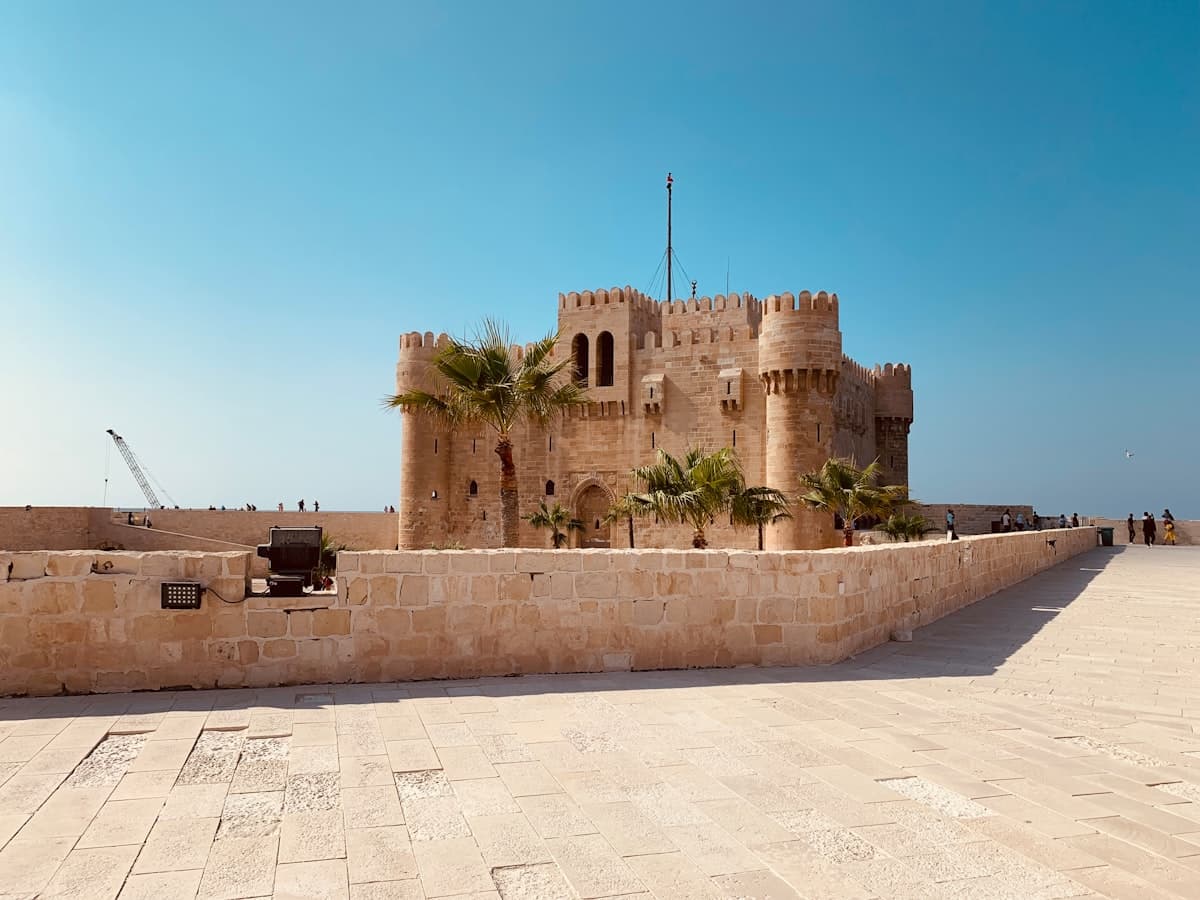
The Cairo Geniza is, by scholarly consensus, the most significant archive of medieval daily life ever discovered. This is not a claim about Jewish history specifically. It is a claim about human history. The documents inside Ben Ezra's storage chamber included business letters, marriage contracts, court records, shopping lists, medical prescriptions, children's homework, and personal correspondence from a community living in Fustat between roughly 870 CE and 1880 CE. S.D. Goitein, the scholar who spent thirty years reading and cataloguing them, reconstructed in five volumes the complete social and economic life of the medieval Mediterranean from a single synagogue's waste bin.
What makes this more than a Jewish story is the community it documents. The Jews of Fustat were not isolated from their surroundings. They traded with Muslim merchants in the Indian Ocean spice routes, borrowed legal concepts from the Fatimid caliphate's courts, wrote in Judeo-Arabic (Arabic language, Hebrew script), and composed letters that moved between Cairo, Palermo, Aden, and the Malabar Coast in the same week. The geniza reveals a medieval Cairo that was, for a specific two-century window under the Fatimid Ismaili Shia caliphate, genuinely cosmopolitan in ways that would not return until the 19th century.
The synagogue itself sits in a compound that has been a Jewish site since at least the 9th century CE, though the Coptic tradition claims it was built over the spot where the infant Moses was found in the reeds of the Nile. This is geographically improbable but culturally significant: the site has been considered sacred by multiple communities across multiple millennia, which is a distinctly Egyptian phenomenon.
What You Will Actually See at Ben Ezra
The current building dates from 1892, a reconstruction funded by the Sephardi Jewish community of Cairo using Austrian architectural plans. Do not expect a medieval interior. What you will find is a functioning synagogue in reasonable repair, recently restored with funding from the American Research Center in Egypt, with a wooden women's gallery running around three sides of the upper level and a central Torah ark decorated in Moorish revival style.
The geniza chamber itself, a small room accessed from outside the main hall, is empty. It has been empty since 1896. There is a small explanatory panel in English and Arabic. The panel is useful but does not convey the scale of what was removed. If you want to actually see the documents, you will need to go to Cambridge University Library, the Jewish Theological Seminary in New York, or the Bodleian at Oxford. Fragments are also held in Paris, Budapest, Leningrad (now St. Petersburg), and elsewhere. The Taylor-Schechter Genizah Research Unit at Cambridge has digitized roughly 40% of the collection and made it freely available online at geniza.lib.cam.ac.uk. You can read a medieval Cairo merchant's complaint letter from your phone while standing in the room where it was written.
What the building does offer, beyond its documentary ghost, is a sense of place. The courtyard outside the synagogue contains a well that tradition associates with the biblical account of Moses. Local Jewish families still occasionally bring children to touch it. The compound sits adjacent to two of the oldest Coptic churches in Egypt: the Hanging Church (Al-Muallaqah, built over the Roman Babylon fortress's southern gate tower) and the Church of Saints Sergius and Bacchus (Abu Serga), which claims to mark the spot where the Holy Family rested during the flight into Egypt. You are standing in a half-acre of land that three major Abrahamic traditions have considered sacred simultaneously.
The Human Story Behind the Documents
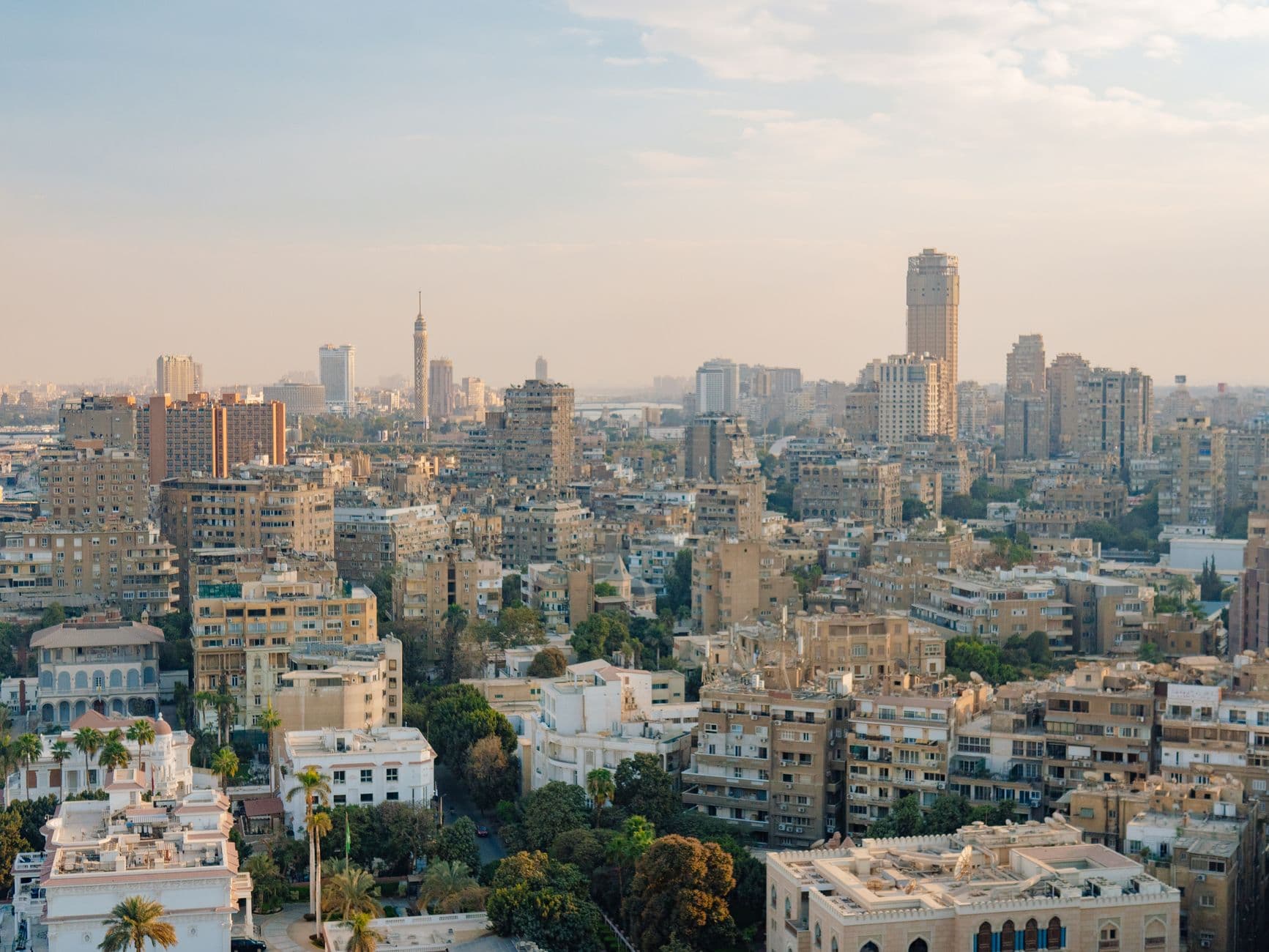
The geniza documents are most powerful when they are most ordinary. One of Goitein's most-cited finds was a letter from a woman in Alexandria to her son in Cairo, complaining about money, about her health, about his failure to visit. She writes in a hand that Goitein dated to the 12th century. The complaints are indistinguishable from a contemporary Cairo mother's WhatsApp message.
Other documents are more specifically historical. Letters from the Nagid, the head of the Egyptian Jewish community who served as an official interlocutor between the community and the Fatimid, Ayyubid, and later Mamluk authorities, reveal the mechanisms of minority governance in medieval Islamic Egypt with a granularity no other source provides. The Nagid under the Fatimids held a formal court title and had the right of petition directly to the caliph. Under the Ayyubids, who replaced the Fatimids in 1171 after Saladin's conquest, the status declined. The documents track this shift in real time, through individual letters requesting exemptions, protesting new taxes, or negotiating access to markets.
One category of document that consistently surprises visitors who learn about it: business letters between Jewish merchants and Muslim merchants that show no particular religious friction, written in Arabic, discussing prices for pepper, flax, and indigo with the kind of casual commercial trust that implies long relationships. The medieval Mediterranean economy, at least as the geniza records it, did not organize itself primarily along religious lines. This is the fact that most complicates what we assume about that period.
The Connections: Fustat, Fatimids, and the Longer Cairo Story
Ben Ezra Synagogue stands in what was Fustat, the first Islamic capital of Egypt, established by the Arab commander Amr ibn al-As in 641 CE immediately after the Byzantine conquest. Fustat was a planned military city built on the edge of the Roman fortress of Babylon, whose towers are still visible from the synagogue courtyard. When the Fatimid dynasty established their new capital to the north in 969 CE, they named it Al-Qahira, the Triumphant, and what we now call Cairo is that city's expansion. Fustat continued as a commercial district until 1168, when the vizier Shawar ordered it burned to prevent a Crusader capture. The ruins were gradually absorbed into what became Old Cairo.
The Jewish community survived and continued in the post-Fustat neighborhood because the Fatimids, who were Ismaili Shia Muslims ruling a predominantly Sunni population, had a political incentive to cultivate alliances with minority communities who were not invested in Sunni legitimacy claims. The relative tolerance of Fatimid Egypt for its Jewish and Christian populations was not idealism. It was governance strategy. When Saladin ended Fatimid rule and restored Sunni orthodoxy, the strategic logic changed, and the geniza documents record the downstream consequences in tax receipts and court petitions.
The Coptic Museum, a seven-minute walk from Ben Ezra, holds papyrus documents that overlap chronologically with the earliest geniza materials and show the same Greco-Roman legal framework adapted for local use by a different minority community. The three communities of Old Cairo, Jewish, Coptic, and eventually Sunni Muslim, used versions of the same Byzantine contract law for centuries after the Arab conquest. The forms changed; the underlying legal logic did not.
Common Mistakes
Visiting only Ben Ezra and leaving. The synagogue is a 45-minute stop. The full value of the site comes from combining it with the Coptic Museum, Abu Serga, and the Hanging Church in a single circuit. The Coptic Museum's papyrus collection directly contextualizes what the geniza means as an archive type. If you skip the museum, you have seen the empty room but not understood why the empty room matters.
Expecting a museum experience. Ben Ezra is a synagogue, not an exhibition. There is minimal interpretive material on site. Come having read something first. Goitein's one-volume distillation, "A Mediterranean Society: An Abridgement," is the best preparation. Failing that, the Cambridge Genizah Research Unit website gives you enough context in 20 minutes of reading to transform what would otherwise be a pretty but unremarkable building visit into something that stays with you.
Paying for a private guide at the synagogue gate. Several unofficial guides operate around the Mar Girgis compound and will offer Geniza-focused tours at EGP 300-500. Some are excellent. Most will repeat the Moses-in-the-reeds story and the Schechter story accurately but cannot go further. The legitimate licensed Egyptologist guides, who can be booked through Cairo-based tour operators for EGP 600-900 for a half-day, have the training to answer actual questions about Fatimid political history and medieval Mediterranean trade. The unofficial guides at the gate cannot. The difference matters here more than at the Pyramids, because the site requires interpretation that goes beyond visual description.
Visiting on a Friday. The synagogue is closed. Every guidebook says this. Visitors still show up on Fridays.
Assuming the community is gone. Egypt's Jewish community once numbered around 80,000, concentrated in Cairo and Alexandria. The 1948 war and the Nasser-era nationalizations reduced that to a few hundred, mostly elderly women in Cairo. As of the last reliable count, fewer than ten Jews live permanently in Egypt. The Adly Street synagogue in downtown Cairo (the Sha'ar Hashamayim, built in 1905 and seating 700) is maintained by a government-funded committee and occasionally opens for Rosh Hashana services attended by Egyptian-Jewish diaspora visitors from France and the United States. It is not open to casual tourism, but it is not abandoned. This distinction matters if you are writing the community off as historical.
The sound and light show at the nearby Coptic sites does not exist, but the EGP 300 horse-carriage tours around Old Cairo do. They go nowhere relevant to the geniza story and are priced for tourists who have not planned their visit. Skip them entirely.
Practical Tips
Arrive at Mar Girgis metro station by 9:30am on any day except Friday or Saturday. The compound gets crowded with school groups between 10:30am and 1pm, and the synagogue's interior is small enough that twenty students make it unnavigable. Early arrival also gives you the courtyard light before it turns harsh, which matters if you are photographing the stonework.
Wear layers in winter (November through February). The stone buildings in Old Cairo are cold in ways that surprise visitors expecting Egyptian heat.
The Coptic Museum's bookshop sells a small but serious selection of scholarship on the Cairo Geniza, including Egyptian-published academic titles at local prices. This is one of the few places in Cairo where you can buy a legitimate scholarly text on Jewish Cairo without paying import prices. The Schechter biography and affordable Goitein reprints sometimes appear there.
If you want to see digitized geniza documents before or after your visit, the Cambridge database (geniza.lib.cam.ac.uk) is free. The Princeton Geniza Lab (geniza.princeton.edu) has a more user-friendly interface and is also free. Both will show you actual documents written by people who lived within walking distance of where you are standing.
For the broader Cairo Geniza Jewish heritage Egypt context, the Jewish Cairo section of the Egyptian government's heritage site (under the Ministry of Tourism and Antiquities) lists a handful of additional sites, including the Jewish cemeteries in Bassatine, the oldest Jewish cemetery still in use outside Israel, established in the 9th century CE. Bassatine requires a formal request to visit and is not on the standard tourist circuit, but the ministry cultural affairs office in Abbassia can facilitate access for researchers and serious visitors with a week's notice.
Frequently Asked Questions
The Weekly Dispatch
More on Egypt, every Friday.
Cultural depth and places most guides never mention.
No spam. Unsubscribe anytime.