Cairo Geniza Jewish Heritage Egypt Guide: Ben Ezra to Cambridge
A dusty storeroom in Old Cairo once held 400,000 medieval documents. Cambridge owns most of them now. Here is what remains, and why it matters.

Quick Facts
- Best time to visit
- October to April. November and March offer the most comfortable walking weather in Old Cairo's narrow streets.
- Entrance fee
- EGP 200 (approx $4 USD) for the Coptic Cairo complex, which includes Ben Ezra. Coptic Museum is a separate ticket at EGP 150 (approx $3 USD). Confirm at the gate as fees are updated periodically.
- Opening hours
- Daily 9am to 5pm. Closed on some Jewish and Coptic holidays. Arrive by 9am for the best light and smallest crowds.
- How to get there
- Metro Line 1 to Mar Girgis station, exit directly at the fortress walls. From central Cairo by Uber or Careem: EGP 60 to 120 depending on traffic. Do not hire guides from outside the gate.
- Time needed
- 45 minutes for the synagogue alone. 3 to 4 hours for the full Coptic Cairo complex including the museum. Half a day if adding Fustat ruins.
- Cost range
- Budget EGP 400 to 700 including entry, lunch nearby, and transport. Mid-range EGP 1,200 to 2,000 if adding a licensed Egyptologist guide.
In 1896, a Scottish twin named Agnes Lewis walked into a Cairo antiquities dealer and bought a few torn pages of Aramaic script. She showed them to Solomon Schechter, a Cambridge rabbinics scholar. He recognized them as a leaf from the original Hebrew text of Ben Sira, a book considered lost since the second century. Within months, Schechter was on a train to Cairo, then in a synagogue attic, shoveling 400,000 documents into sacks. The result was the greatest single discovery in the history of Jewish studies. Most of Cairo does not know it happened.
Quick Facts
Best time to visit: October to April. Summer heat in Old Cairo is punishing, and the narrow streets of Coptic Cairo hold heat badly. November and March are ideal for half-day walking tours of the whole quarter.
Entrance fee: Ben Ezra Synagogue: EGP 100 (approx $2 USD) included in the Coptic Cairo complex entry, which costs EGP 200 (approx $4 USD) for foreigners as of the most recent published rates. Confirm at the gate, as fees for the complex are adjusted periodically.
Opening hours: Daily 9am to 5pm. The synagogue closes for Jewish holidays, so check the calendar if you are visiting around Rosh Hashanah or Passover.
How to get there: The Cairo Metro is the sensible choice. Take Line 1 to Mar Girgis station. You will surface directly outside the Roman fortress walls of Babylon. From central Cairo by taxi or rideshare (Uber or Careem), budget EGP 60 to 120 depending on traffic. Do not take a private guide from outside the gates unless you arranged them in advance. The men at the entrance offering tours are persistent and rarely accurate.
Time needed: The synagogue itself takes 30 to 45 minutes. The full Coptic Cairo complex, including the Hanging Church, the Coptic Museum, and the Church of Abu Serga, needs 3 hours minimum. Combine with a walk into the adjacent Fustat ruins for a full half-day.
Cost range: Budget EGP 400 to 700 for the complex entry, a local lunch in Old Cairo, and transport. Mid-range EGP 1,200 to 2,000 if you add a reputable licensed guide.
---
Why This Place Matters
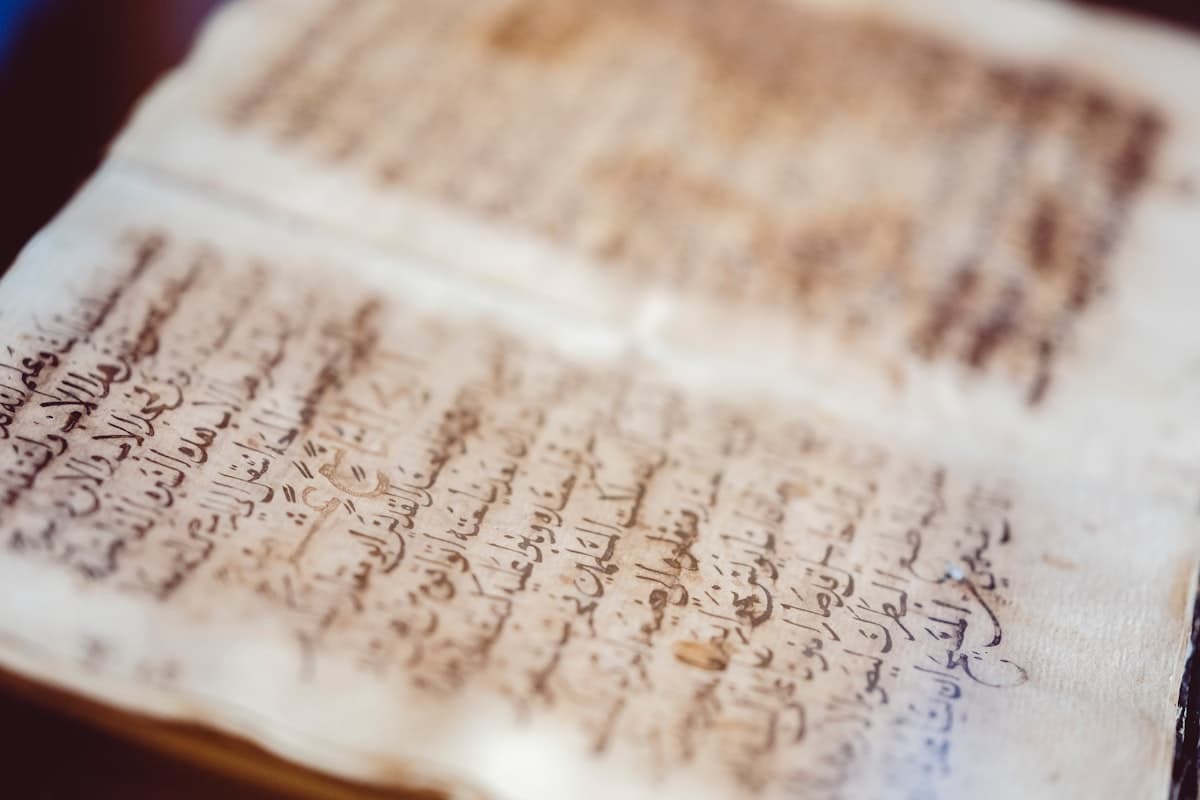
Ben Ezra Synagogue stands on ground that has held religious structures for roughly two millennia. The current building is a 19th-century reconstruction of a medieval synagogue, which itself was built on the site of a Coptic church that the Fatimid caliph al-Mu'izz sold to the Jewish community in 882 CE for 20,000 dinars. Beneath that church, according to tradition, sits the spot where the infant Moses was drawn from the Nile. Beneath that, archaeologists have found evidence of occupation going back to the Roman fortress of Babylon, built by the Emperor Diocletian around 300 CE to guard the Delta's entry point.
That layering is the key to understanding anything about Old Cairo. Nothing here is singular or self-contained. The Ben Ezra Synagogue is a Jewish building with a Coptic origin on Roman ground in a city that was then Islamic. It is not unusual for Cairo. It is typical.
The Geniza itself, the document storeroom that made this building world-famous, was discovered in a purpose-built chamber above the women's gallery. Jewish law prohibits destroying any document that contains the name of God, so communities kept worn religious texts in a geniza, a word from the Hebrew root meaning "to store" or "to hide," until they could be given a proper burial. The Ben Ezra community had been storing documents since approximately the 9th century. By the time Schechter arrived, almost a thousand years of paper had accumulated: Torah scrolls, legal contracts, marriage certificates, shopping lists, letters of complaint, business correspondence from traders traveling between Cairo and Fustat to Palermo and Aden. The shopping lists are, in some ways, the most significant. They tell you what a middle-class Jewish merchant in 11th-century Cairo ate, owed, argued about, and feared.
---
What Schechter Actually Found, and Where It Went
Solomon Schechter spent three months in the Ben Ezra attic in early 1897. He returned to Cambridge with approximately 193,000 fragments, which now form the core of the Taylor-Schechter Cairo Geniza Collection at Cambridge University Library. The remainder of the 400,000 total documents was sold to or acquired by dozens of other institutions, including the Bodleian Library at Oxford, the Jewish Theological Seminary in New York, and the Alliance Israélite Universelle in Paris. Significant fragments ended up in private hands and have only recently been digitized and returned to scholarly access through the Friedberg Genizah Project, a Canadian-funded initiative that has spent twenty years photographing and cataloguing every known fragment.
What they contain has rewritten medieval history in ways that have nothing to do with religion. The historian S.D. Goitein spent forty years working through the Geniza documents and published a five-volume study titled "A Mediterranean Society" between 1967 and 1993. It remains the single most detailed portrait of daily life in the medieval Islamic world, drawn almost entirely from the discarded papers of a Cairo synagogue attic. Goitein found evidence that Jewish, Muslim, and Christian merchants in 11th-century Cairo regularly partnered across religious lines, traveled together, trusted each other with credit, and occasionally took each other to court. The documents show a world that is more commercially integrated and less religiously segregated than most medieval histories suggest.
The synagogue itself will not tell you any of this. There is almost no interpretive material on site. The building is beautiful in a restored, slightly sanitized way: marble floors, carved wooden ark, the particular quality of light that comes through mashrabiyya screens on a winter morning. You will not read a single panel that explains what was found in the room above your head or where it went. This is a significant curatorial failure.
---
The Jewish Community That Is No Longer There
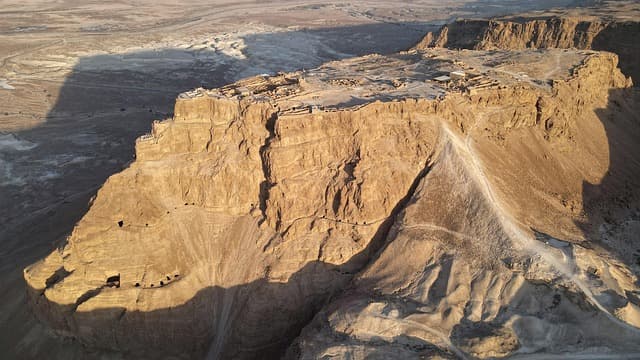
At its peak in the late 19th century, Cairo's Jewish community numbered around 80,000 people, divided broadly between Sephardic families who arrived after the 1492 Spanish expulsion, Ashkenazi immigrants who came from Eastern Europe in the early 20th century, and Arabized Mizrahi families whose presence in Egypt predated Islam by centuries. They were merchants, doctors, bankers, intellectuals. The journalist and memoirist Jacqueline Kahanoff, born in Cairo in 1917 to a Tunisian Jewish father and an Iraqi Jewish mother, described her neighborhood as a place where the languages at any dinner table might include Arabic, French, Italian, and Ladino before dessert.
By 1970, fewer than 500 Jews remained in Egypt. The departures happened in waves: some left after the 1948 Arab-Israeli war, more after the 1956 Suez Crisis, when the Nasser government expelled British and French nationals and many Jewish families held European passports. The 1967 war effectively ended the community. Property was nationalized, businesses seized, travel restricted. The people who remained were mostly elderly women who had nowhere else to go.
Today, Egypt's Jewish community numbers fewer than ten people, all elderly, all women, all in Cairo. The Ben Ezra Synagogue is maintained by the Egyptian government's Supreme Council of Antiquities, not by an active congregation. Services have not been held here in any meaningful continuity for decades. The building is a monument to an absence. That is not a criticism of Egypt. It is simply the truth of what happened to Jewish communities across the Middle East and North Africa in the second half of the 20th century. Acknowledging it is part of what makes this a serious heritage site rather than a decorative one.
---
The Connections: Old Cairo as a Layered City
Ben Ezra sits inside the Coptic Cairo quarter, which sits inside the walls of the Roman fortress of Babylon, which sits at the edge of the ruins of Fustat, the first Islamic capital of Egypt, founded in 641 CE by the Arab general Amr ibn al-As after he defeated the Byzantines. Fustat was burned by its own governor in 1168 to prevent it falling to the Crusaders advancing from the coast. The fire burned for 54 days. The ruins are still there, 800 meters north of the synagogue, and are deeply undervisited.
The connection between Jewish Cairo and the broader Islamic city is not incidental. Many of the Geniza documents are written in Judeo-Arabic, Arabic transcribed in Hebrew script, a linguistic marker of how thoroughly Arabized the community had become by the 10th century. The traders whose letters survive in Cambridge were not operating in a Jewish bubble. They were nodes in an Islamic commercial network that stretched from West Africa to the Indian subcontinent. The Geniza found in this synagogue is, paradoxically, one of the best sources for understanding medieval Islamic economic life precisely because it documents the activity of people who were integrated into that life.
The Coptic Museum, a ten-minute walk from Ben Ezra, completes a picture that the synagogue alone cannot. It holds the largest collection of Coptic art in the world and documents the Christian community that preceded the Islamic conquest by six centuries. Taken together, the synagogue, the museum, the Hanging Church, and the Fustat ruins constitute an argument: that Cairo has always been a city of coexistence under pressure, which is a more complicated and more honest narrative than either "ancient Egypt" or "Islamic Cairo" taken separately.
---
Common Mistakes
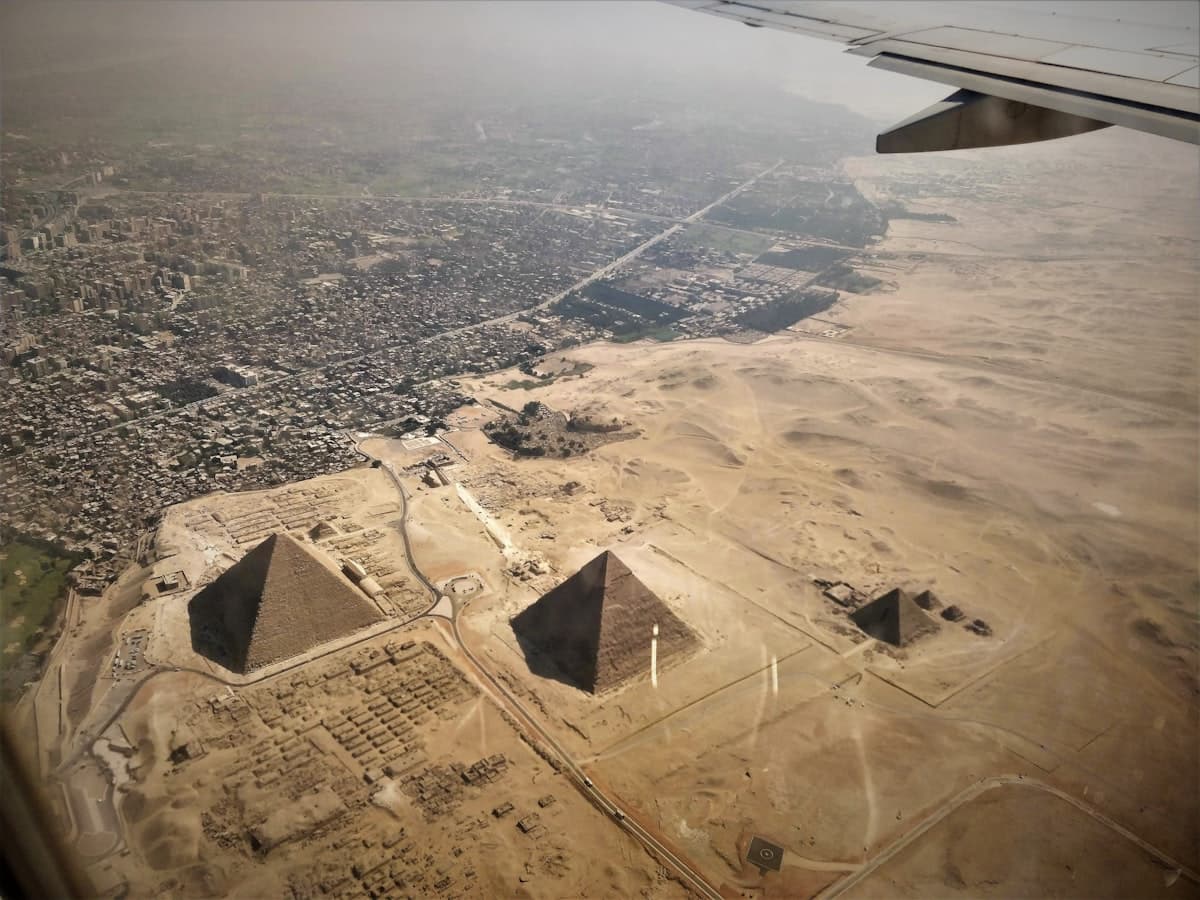
Visiting only Ben Ezra and leaving. The synagogue is 45 minutes. The Coptic Museum next door contains artifacts going back to the 1st century CE and typically takes two hours. People who skip it to "save time" for the Pyramids have misunderstood what Old Cairo offers.
Hiring a guide from outside the gate. The men who approach you at the entrance to Coptic Cairo are not licensed and are frequently wrong about basic facts. A licensed Egyptologist guide, booked through a reputable agency or your hotel concierge, costs more (EGP 400 to 800 for a half-day) but will give you a qualitatively different experience.
Expecting interpretive panels. There are almost none. If you want to understand what the Geniza was and why it matters before you arrive, read at least the introduction to Adina Hoffman and Peter Cole's "Sacred Trash," a book about the Geniza written for general readers. It is short, serious, and transforms the visit from a pretty room into a genuinely significant one.
Visiting on a Friday or Saturday morning. The quarter gets crowded, parking in the surrounding streets becomes chaotic, and some areas operate on reduced hours. Sunday morning is consistently quieter.
The sound and light show at the adjacent Coptic sites. If one is ever offered, skip it. The story of Jewish Cairo and Coptic Cairo is too specific and too layered to be served by theatrical narration over floodlights. Read instead.
Confusing the Geniza documents with what you will see in Cairo. The 193,000 Cambridge fragments are in England. You will not see them in the synagogue. A small number of reproductions exist in Cairo's Coptic Museum. If the documents themselves are your primary interest, the Friedberg Genizah Project has made high-resolution images of the full Cambridge collection available online, free, and searchable.
Ignoring Fustat. Eight hundred meters north of Ben Ezra, the ruins of Egypt's first Islamic capital are almost entirely unvisited. They are not developed for tourism, which means they are also not crowded, not commodified, and genuinely strange in a way that developed sites rarely are.
---
Practical Tips
Dress conservatively. This is a religious complex, and the dress code is enforced more consistently here than at many Islamic sites. Shoulders and knees covered for both men and women. Women are not required to cover their hair in the synagogue, but a scarf is appropriate if you enter any of the adjacent Coptic churches.
Bring cash in small denominations. EGP 10 and 20 notes are useful for tips in the complex. Card payment is not reliable.
The best light in the synagogue falls in the morning between 9am and 11am through the mashrabiyya screens. If photography matters to you, arrive when the gates open.
The Coptic Museum requires a separate ticket from the synagogue and the churches. Budget for it. It is the most intellectually serious thing in this part of Old Cairo and is almost always less crowded than the churches.
If you are combining this visit with Islamic Cairo, the route from Mar Girgis Metro station north through the street market of Port Said Street and into the Khan el-Khalili area is walkable in about 40 minutes and passes through neighborhoods that most visitors never see. It is not scenic in the conventional sense. It is very much Cairo.
Frequently Asked Questions
The Weekly Dispatch
More on Egypt, every Friday.
Cultural depth and places most guides never mention.
No spam. Unsubscribe anytime.