Cairo Geniza Jewish Heritage Egypt Guide: The Documents That Rewrote History
A storeroom in a Cairo synagogue held 400,000 medieval documents for 900 years. They rewrote what we know about the ancient world. The synagogue still stands.

Audio Guide: Cairo Geniza Jewish Heritage Egypt Guide: The Documents That Rewrote History
Quick Facts
- Best time to visit
- October to April. The Coptic Cairo compound is outdoors between buildings and Cairo heat from May to September is genuinely punishing. Morning visits before 10am are best year-round to beat tour groups.
- Entrance fee
- Ben Ezra Synagogue: free (confirm locally as fees may be introduced). Coptic Museum: EGP 150 (approx $3 USD), students EGP 75. Budget EGP 20-50 for custodian tips inside the synagogue.
- Opening hours
- Ben Ezra Synagogue: Saturday to Thursday, 9am to 4pm. Closed Fridays and Jewish high holidays. Hours subject to change without notice.
- How to get there
- Metro Line 1 to Mar Girgis station, EGP 8 per journey (approx $0.16). Four-minute walk to compound entrance. Uber from downtown: approximately EGP 35-60. Taxi: EGP 50-80.
- Time needed
- 30-45 minutes for the synagogue alone. Half-day for Ben Ezra plus Coptic Museum plus Church of Saints Sergius and Bacchus. Full day if adding Mosque of Amr ibn al-As and a downtown synagogue attempt.
- Cost range
- The entire Coptic Cairo visit can be completed for EGP 200-300 including Metro, museum entry, and a tip. Add EGP 150 for the Coptic Museum. Budget day overall: EGP 400-600.
Quick Facts
Best time to visit: October to April, when Cairo's heat is tolerable and the Coptic Cairo quarter is at its most walkable.
Entrance fee: The Ben Ezra Synagogue is free to enter (as of the most recent pricing; confirm locally, as fees are periodically introduced for the broader Coptic Cairo complex). The Coptic Museum next door charges EGP 150 (approx $3 USD), students EGP 75. Allow for a tip of EGP 20-50 for the custodians who manage access inside.
Opening hours: Ben Ezra Synagogue is generally open Saturday to Thursday, 9am to 4pm. It is closed on Fridays and during Jewish high holidays. Hours can shift without notice. Go early.
How to get there: Take the Cairo Metro Line 1 to Mar Girgis station (EGP 8 per journey, roughly $0.16). The synagogue is a four-minute walk from the station exit, inside the walled Coptic Cairo compound. Taxis from downtown will charge EGP 50-80; Uber is often cheaper at EGP 35-60.
Time needed: The synagogue itself takes 30-45 minutes. Combined with the Coptic Museum and the Church of Saints Sergius and Bacchus, budget a half-day. A serious researcher will want a full day and a library card for Cairo's later stops.
Cost range: Coptic Cairo can be done for EGP 200-300 total including transport, museum entry, and coffee. There is nothing to spend money on here that is worth spending money on.
---
In 1896, two Scottish sisters named Agnes Lewis and Margaret Gibson bought a handful of manuscript fragments in a Cairo bazaar and brought them back to Cambridge. Solomon Schechter, a rabbinics scholar at the university, looked at one fragment and went pale. It was a page from the original Hebrew text of the Book of Ben Sira, a work scholars had believed existed only in Greek translation for over a millennium. Schechter sailed to Cairo within weeks, negotiated access to a synagogue storeroom, and shipped roughly 140,000 fragments back to Cambridge in sacks. What he found there, and what remains of what he left behind, is the subject of this guide.
The Cairo Geniza Jewish heritage story is one of the most significant archival discoveries in human history. It is also almost entirely absent from standard Cairo tourism. Most visitors to Coptic Cairo photograph the exterior of Ben Ezra Synagogue and leave within ten minutes. This is a waste of a remarkable place.
Why This Place Matters
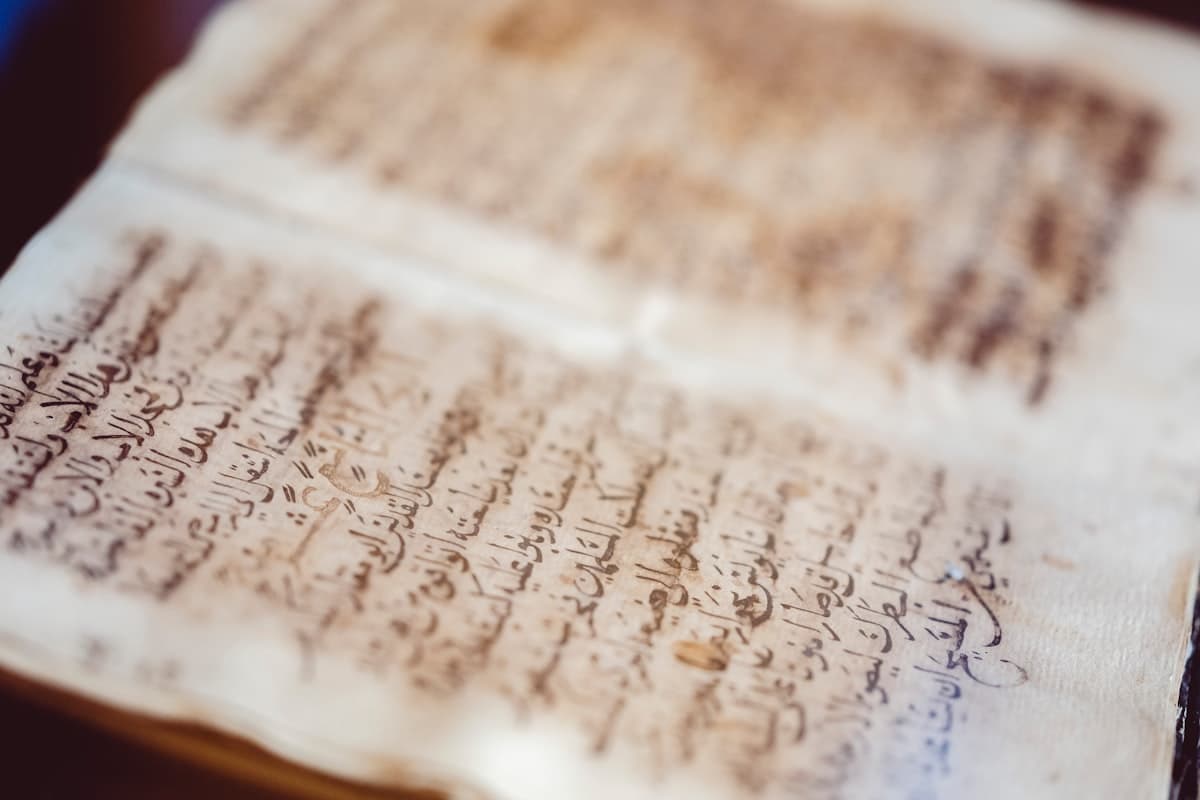
A geniza (the word derives from the Hebrew root meaning "to hide" or "to store") is a storage room attached to a synagogue where worn-out religious texts are kept rather than destroyed. Jewish law prohibits discarding any document that contains the name of God, so communities accumulate these rooms over generations. Most genizot are eventually buried or cleared. The one at Ben Ezra was not cleared for approximately 900 years.
What accumulated inside was not just religious texts. Medieval Jewish merchants in Cairo used Hebrew script for commercial correspondence, personal letters, legal contracts, marriage documents, and shopping lists. Because it all went into the geniza, Schechter's discovery amounted to a complete cross-section of daily life in medieval Cairo from roughly 870 CE to 1880 CE. The historian S.D. Goitein spent thirty years analyzing the documents and produced a five-volume work called "A Mediterranean Society" that fundamentally changed how historians understand the medieval Islamic world, trade networks, gender relations, and the lived experience of non-Muslim communities under Fatimid and Ayyubid rule.
One specific consequence: the Geniza documents proved that medieval Jewish, Muslim, and Christian merchants in Cairo routinely partnered across religious lines, extended credit across faiths, and maintained business relationships spanning from India to Spain. This was not what nineteenth-century European scholars expected to find. The documents did not confirm the story of medieval religious separation. They complicated it beyond recovery.
The synagogue that housed all of this was itself built on a site with a longer history. According to one tradition recorded in medieval sources, the Ben Ezra plot was originally a Coptic church that the Jewish community purchased in the ninth century. Before that, Roman-era foundations run beneath the neighborhood. Coptic Cairo sits on the site of the Roman fortress of Babylon, whose walls you can still see partly exposed along the street outside the compound. This is the geography of Cairo in miniature: Roman military infrastructure, then Coptic Christian community, then the oldest continuously inhabited Jewish site in Egypt, all within 200 meters of each other.
What You Will Actually See Inside Ben Ezra
The building you enter today is not medieval. The current structure dates primarily from the nineteenth century, when the synagogue was substantially rebuilt. Do not go expecting to stand in a room that looks like it did when the Geniza documents were written. You will not.
What you will find is a beautiful Sephardic-style prayer hall with a central wooden bimah (reading platform), carved wooden screens, and a gallery that once separated men and women during services. The proportions are good. The light coming through the upper windows in the morning has the particular quality of old Cairo light: slightly filtered, slightly golden, giving everything a quality of patience.
Along one wall, a small alcove is identified as the location of the original geniza chamber. There is nothing in it now. It is a whitewashed recess with a low wooden railing in front. Stand there for a moment and do the arithmetic: 400,000 documents (the total count across all collections worldwide, from Cairo and the subsequent dispersal to Cambridge, New York, Manchester, Paris, and St. Petersburg), one small room, 900 years. The custodians will tell you the same three facts on a loop. They mean well. Tip them.
The synagogue is still technically active, though Egypt's Jewish community has contracted to near-invisibility. At its peak in the 1920s, Cairo's Jewish population was approximately 80,000. Today, fewer than ten Jews are believed to remain in Cairo, nearly all of them elderly women. The Egyptian government has funded restoration of several synagogue buildings in recent years, largely as cultural heritage projects rather than active religious facilities. Ben Ezra received significant restoration work in the 1980s and 1990s. The Egyptian Ministry of Antiquities now administers it.
The Documents: Where They Are Now, and Why That Matters
The largest single collection of Cairo Geniza fragments, approximately 140,000 items, is held at Cambridge University Library, acquired by Schechter in 1897. The Jewish Theological Seminary in New York holds roughly 40,000 more. Additional fragments are in the Bodleian at Oxford, the Alliance Israélite Universelle in Paris, and the Russian National Library in St. Petersburg. Egypt holds almost none of the original material.
This is a political and historical fact that Egyptian officials sometimes raise and that international scholars sometimes deflect. The question of whether Schechter's acquisition was a negotiated purchase, a colonial extraction, or something more ambiguous has been discussed in academic literature without resolution. What is clear is that in 1897, the Egyptian authorities and the Jewish community both permitted the removal. The Geniza had been partially raided by dealers before Schechter arrived. He was not the first outsider to take material; he was simply the most systematic.
The Cambridge Digital Library has digitized over 7,000 Geniza fragments and made them freely searchable online through the Friedberg Genizah Project, a Canadian-funded initiative that has now catalogued material from all major collections. If you want to see what the actual documents look like before your visit, spend an hour on their website. You will understand the synagogue differently afterward.
One document in the Cambridge collection is a letter from a Jewish merchant in Alexandria describing the sea route to India around 1100 CE. It mentions specific goods, specific partners, and specific ports. It reads like an email. This is the register that makes the Geniza extraordinary: not sacred texts preserved by reverence, but ordinary life preserved by accident.
The Connections: Coptic Cairo, Fatimid Cairo, and the Neighborhood Around You
Leaving Ben Ezra and walking the compound gives you one of the densest archaeological layerings in any city on earth. The Church of Saints Sergius and Bacchus, about 100 meters from the synagogue, sits partially below current ground level because ground level has risen over centuries. The crypt beneath it is said to mark the spot where Mary, Joseph, and Jesus rested during the Flight into Egypt, a tradition recorded as early as the fifth century. Whether or not you engage with the theology, the crypt's depth is itself data: you are looking at how much Cairo has built itself up over two millennia.
The Babylon Fortress walls outside the compound date to the Roman emperor Trajan, around 100 CE, though the site was fortified before him. When the Arab general Amr ibn al-As conquered Egypt in 641 CE, he camped outside these walls before taking the city. He then built the first mosque in Africa, the Mosque of Amr ibn al-As, approximately 500 meters north of where you are standing. The original mosque was a simple palm-trunk structure. It has been rebuilt and expanded so many times that nothing original survives, but the location is continuous.
Fatimid Cairo, built in 969 CE several kilometers north, was founded partly to provide a new administrative capital distinct from the older Christian and Jewish quarter. The Fatimid caliphs were Shia Muslims who maintained notably complex and often tolerant relationships with the non-Muslim communities under their rule. Many of the Geniza documents date from the Fatimid period and describe a community that was legally constrained but economically active and sometimes politically connected. That nuance does not survive in simple historical summaries. It survives in the documents themselves.
Common Mistakes
Going without reading anything first. The synagogue has almost no interpretive signage. There are a few plaques, some in Hebrew, some partially in English, none of which explain the Geniza's significance adequately. If you walk in cold, you will leave knowing only that something was found here. Read about the Geniza before you go. The fifteen minutes it takes will change what you see.
Skipping the Coptic Museum next door. The Coptic Museum holds the world's largest collection of Coptic art, including textiles, manuscripts, and stonework that span the period from the first Christian communities in Egypt through the medieval period. Coptic Egypt is the direct historical bridge between Pharaonic Egypt and Islamic Egypt, and most visitors to Cairo never engage with it at all. The museum is also genuinely well-organized and rarely crowded. Entry is EGP 150. There is no reason not to go.
Going on a Friday. The synagogue is closed. The surrounding streets in Coptic Cairo are also quieter in ways that affect access to cafes and water. Saturday mornings are the best time: the compound is calm, the light is good, and the tour groups tend to arrive after 10am.
Paying for any guided tour that covers the Geniza in ten minutes as part of a "Coptic Cairo and Islamic Cairo" day tour. These tours exist to move bodies between landmarks. A guide who gives you ten minutes at Ben Ezra and then hurries you to the Hanging Church has told you nothing useful about either place. The Coptic Cairo compound is small enough to navigate alone with a phone and a bit of preparation. Save the guide budget for somewhere that actually requires navigation.
Expecting the geniza room to look like a geniza. It is empty. It has been empty for over 125 years. Some visitors feel cheated. This is the wrong response: the room being empty is the story. 400,000 documents were once in that space. Where they are now, who owns them, and what they say is the actual content of the visit.
The sound and light show at the Pyramids, if you are combining this with a broader Cairo itinerary. This is not directly relevant to the Geniza, but since many visitors pair Coptic Cairo with a Giza day: the sound and light show costs EGP 400 and tells you nothing about the Pyramids that the site itself does not already communicate far more effectively at dawn. Skip it without guilt.
Practical Tips
Dress conservatively. The Coptic Cairo compound is an active religious site. Shoulders and knees covered is the minimum. You will be asked to cover up or offered a wrap at the entrance if you are not; comply without complaint.
Bring water. There is a small cafe inside the compound, but it is unreliable in terms of hours and stock. The walk from the Metro to the compound is short, but Cairo's heat is not trivial from May through September.
Photography is permitted inside Ben Ezra but be discreet. The custodians will sometimes ask you to stop near the Torah ark area. Respect this.
If you have a serious scholarly interest in the Geniza documents, the Egyptian National Library (Dar al-Kutub) in downtown Cairo holds some related manuscript material and is accessible to researchers with credentials. This is not a tourist visit but it is worth knowing the resource exists.
For a broader Cairo Geniza Jewish heritage context, the Adly Street Synagogue (Sha'ar Hashamayim) in downtown Cairo is the other major Jewish heritage site in the city. It is significantly harder to access: visits require advance coordination with the Egyptian Ministry of Antiquities, sometimes weeks in advance. It is worth the bureaucratic effort. The building is extraordinary and almost no one sees it.
Finally: the Friedberg Genizah Project website is free, searchable, and more informative about the actual documents than anything inside the synagogue. Visit it before you go, and again after. The physical place and the digital archive are two halves of the same experience.
Frequently Asked Questions
The Weekly Dispatch
More on Egypt, every Friday.
Cultural depth and places most guides never mention.
No spam. Unsubscribe anytime.