Cairo Geniza: Jewish Heritage Egypt Guide to a Lost World
A Cairo synagogue attic held 400,000 documents for 1,000 years. A Cambridge scholar smuggled them out in 1896. Egypt is still piecing together what was lost.

Quick Facts
- Best time to visit
- October through April. Coptic Cairo is an outdoor walking district and the summer heat above 38C makes the circuit between Ben Ezra, the Coptic Museum, and Fustat exhausting by midday.
- Entrance fee
- Ben Ezra Synagogue: free. Coptic Museum adjacent: approx EGP 100 (approx $2 USD). Sha'ar Hashamayim synagogue Downtown: free but requires advance arrangement.
- Opening hours
- Generally 9am to 4pm, closed or restricted on some Jewish holidays and Friday mornings. No consistent posted hours. Confirm before visiting if the synagogue is your primary destination.
- How to get there
- Metro Line 1 to Mar Girgis station (EGP 8, approx $0.16), three-minute walk to synagogue. Taxi from Downtown Cairo EGP 60 to 120. Uber from Zamalek approximately EGP 80 to 150.
- Time needed
- 2 hours for Ben Ezra alone. Half-day for the full Coptic Cairo circuit including Coptic Museum and Hanging Church. Full day if extending to Fustat ruins and Sha'ar Hashamayim Downtown.
- Cost range
- Very low. Full heritage circuit EGP 200 to 400 including entry fees and local lunch. Transport from central Cairo adds EGP 20 to 150 each way depending on method.
Cairo Geniza: Jewish Heritage Egypt Guide to a Lost World
A Cambridge professor named Solomon Schechter climbed into an attic in Old Cairo in 1896 and found 400,000 medieval documents, some dating to the 9th century, crammed into a sealed room above a synagogue. He recognized what he was looking at immediately. He arranged to have the entire cache shipped to Cambridge University Library, where most of it still sits today. Egypt got the synagogue. England got the archive. The consequences of that transaction are still being worked through by scholars, restorers, and the descendants of the Jewish community that produced those documents over a thousand years.
That room is the Ben Ezra Synagogue Geniza. The synagogue still stands in the Coptic Cairo district of Fustat. And the story of what was inside it, who wrote it, who hid it, and what it tells us about medieval Egypt, is one of the most extraordinary things you can trace through this city, if you know where to look.
Quick Facts
Best time to visit: October through April. The Coptic Cairo district is walkable and largely open-air between sites. Summer heat above 38°C makes the narrow streets between the synagogue, the Hanging Church, and the Coptic Museum genuinely unpleasant by midday.
Ben Ezra Synagogue entrance fee: Free entry as of the most recent confirmed access. The Coptic Cairo area itself is freely walkable. The Coptic Museum adjacent to the synagogue charges approximately EGP 100 (approx $2 USD) for foreigners. Confirm current access at the synagogue by calling the Egyptian Jewish Community office in advance, as opening hours shift seasonally and the site is sometimes closed for private ceremonies.
Opening hours: Generally 9am to 4pm, though closures for Jewish holidays and private events are unannounced. Friday mornings are often restricted.
How to get there: Take the Cairo Metro Line 1 to Mar Girgis station (EGP 8, approx $0.16). The synagogue is a three-minute walk from the station exit. Taxis from Downtown Cairo cost EGP 60 to 120 depending on traffic. Uber runs approximately EGP 80 to 150 from Zamalek or Garden City.
Time needed: Two hours minimum for the synagogue and its immediate surroundings. A full half-day if you combine it with the Coptic Museum, the Hanging Church, the Church of Saint Sergius and Bacchus, and the street above the ruins of Babylon Fortress. A full day if you extend north to the nearby site of Fustat itself.
Cost range: The heritage circuit here is among the cheapest in Cairo. Budget EGP 200 to 400 for entry fees and a local lunch. Transport adds EGP 20 to 150 depending on your starting point.
Why This Place Matters
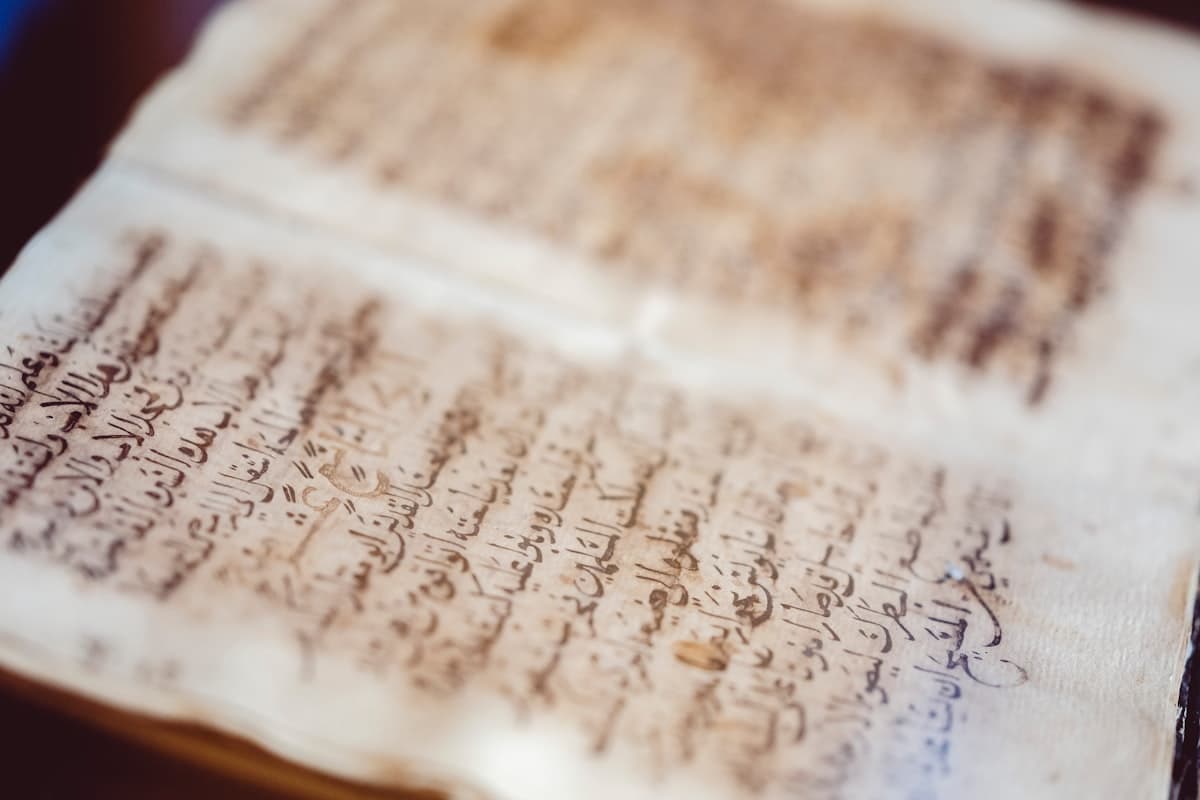
The Ben Ezra Synagogue was not always a synagogue. The building occupies ground that has been continuously sacred in one form or another since the Roman period, when this bend of the Nile was the site of a Babylonian military garrison that gave the district its enduring name. The Copts bought the site from the Romans, built a church, then sold or ceded it to the Jewish community around the 9th century CE, at which point it was restored and dedicated to Ezra the Scribe, the biblical figure credited with codifying the Torah after the Babylonian exile.
The Geniza, from the Hebrew word meaning "hiding place" or "storehouse," was used according to Jewish law, which prohibits the destruction of any document containing the name of God. Worn-out Torah scrolls, prayer books, letters, contracts, anything that might bear a sacred name was placed in the Geniza rather than discarded. Over roughly a thousand years, the room accumulated an archive that was, by the time Schechter entered it, one of the most complete records of medieval Jewish life in existence.
What makes this relevant to the Cairo Jewish heritage Egypt story specifically is what the documents revealed about the city. The Cambridge Geniza collection, now known as the Cairo Geniza and partially catalogued through a Cambridge digitization project, contains business letters between Jewish merchants across the medieval Mediterranean, marriage contracts in Judeo-Arabic, medical prescriptions, children's handwriting exercises, personal letters between spouses separated by trade routes, and a lease agreement signed by the philosopher Maimonides. The 12th-century Jewish philosopher who wrote the Guide for the Perplexed and served as personal physician to Saladin's vizier was a Cairo resident, and his handwriting exists in this archive.
What You Will Actually See in the Building
The Ben Ezra Synagogue you enter today is not medieval. It was substantially rebuilt in 1892, two years before Schechter's visit, by the Egyptian Jewish philanthropist Raphael de Castro. The interior is elegant: carved wooden screens, a central Torah shrine with mother-of-pearl inlay, and a women's gallery supported by columns that incorporate, depending on which Egyptologist you ask, either Roman-era spolia or medieval Islamic stonework. The mixture is impossible to fully disentangle, which is itself a metaphor for Fustat.
The Geniza room itself, the attic space above the women's gallery, is not accessible to visitors. It is a plain, sealed area with a small external opening. You can see it from the courtyard, unremarkable from the outside, which makes it stranger to stand beneath it and consider what Schechter found there.
What is striking inside the synagogue, aside from the quality of the woodwork, is the silence. The space is small. It seats perhaps 200. The Jewish community of Cairo, which numbered around 80,000 people at its peak in the late 1940s, is now estimated at fewer than ten individuals, most of them elderly women. The synagogue is maintained by the Egyptian government, which took responsibility for Jewish heritage sites after the community emigration following 1948 and 1956. Services are no longer held here regularly.
Spend time looking at the Torah ark at the eastern wall. The Hebrew inscriptions above it are original, and the proportions of the space, however rebuilt, preserve the orientation and feel of a working house of worship rather than a monument. It has not yet crossed fully into museum territory, which is both its sadness and its dignity.
The Documents and What They Changed
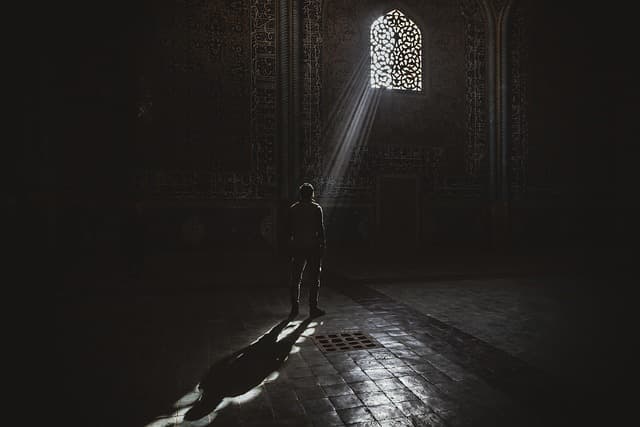
Schechter's haul from the Geniza changed medieval history in ways that took decades to fully register. The Cambridge collection of Cairo Geniza documents, now roughly 193,000 fragments held at Cambridge University Library with additional caches at the Jewish Theological Seminary in New York, the Bodleian in Oxford, and over sixty other institutions worldwide, contains the oldest known list of Hebrew Bible books in the correct order, dating to around the 10th century. It contains letters that proved the existence of extensive Jewish trading networks connecting Cairo to India via the Persian Gulf in the 11th century, a finding that overturned assumptions about medieval commerce.
The scholar Shlomo Dov Goitein spent forty years working through the Geniza documents and published a five-volume study called A Mediterranean Society, completed in 1988, which used the archive to reconstruct the daily life of Jewish, Muslim, and Christian Cairenes across several centuries. It remains one of the most detailed social histories of the medieval Islamic world ever written, sourced almost entirely from what a Cairo synagogue attic preserved by accident.
A digitization project called the Princeton Geniza Project has made tens of thousands of fragments searchable online. In the past decade alone, researchers have used the digital archive to identify a previously unknown letter from Maimonides discussing a patient's treatment, to trace a specific spice trade route from Alexandria to the Malabar Coast, and to recover the name and biography of a Jewish court poet who served under the Fatimid caliph al-Mustansir in the 11th century. The archive is not closed. It is still producing discoveries.
For the visitor in Cairo, this creates an odd experience. The physical source of all this knowledge is a sealed room above a synagogue in Old Cairo that you cannot enter. The archive itself is in Cambridge. What you have is the building, the neighborhood, and the awareness of the gap between them.
The Connections: Fustat, Fustat Everywhere
The neighborhood immediately around Ben Ezra is one of the most layered in a city that is nothing but layers. The district called Coptic Cairo sits above the ruins of Fustat, Egypt's first Islamic capital, founded by the Arab general Amr ibn al-As in 641 CE after his army defeated the Byzantines. The Mosque of Amr ibn al-As, a fifteen-minute walk north, was the first mosque built on the African continent. The current structure is almost entirely a later rebuild, heavily restored in the 19th and 20th centuries, but it stands on the original ground.
Fustat itself burned in 1168. The Fatimid vizier Shawar set fire to the city rather than allow the Crusader army of Amalric I to occupy it. Contemporary accounts describe the fire burning for 54 days. The ruins of Fustat are still there, partially excavated, and the site has yielded some of the finest medieval Islamic ceramics ever found, including Chinese Song Dynasty porcelain imported via Indian Ocean trade routes, which corroborates exactly the kinds of commercial networks the Geniza documents describe.
The Coptic Museum, adjacent to the synagogue, holds a collection that spans from the late Roman period through the early Islamic era. Its oldest pieces overlap with the world the Geniza documents describe from the Jewish side. The building itself sits partially within the walls of Babylon Fortress, the Roman military installation that gives the district its name, and you can walk along a Roman tower that is incorporated into the museum's garden. Three civilizations in one courtyard. This is not metaphor. It is the actual ground plan.
Common Mistakes
Treating Ben Ezra as a five-minute photo stop. Tour groups routinely spend eight minutes here on the way to the Hanging Church. The site requires sitting still long enough to feel the scale of what is missing from it. If you have only eight minutes, skip it and come back independently.
Expecting a museum. There are almost no interpretive panels inside the synagogue explaining the Geniza or its contents. You will see a beautiful restored synagogue interior and leave knowing no more about the archive than when you arrived unless you have read about it beforehand. Read Adina Hoffman and Peter Cole's short book Sacred Trash: The Lost and Found World of the Cairo Geniza before you visit. It is 240 pages and will transform the experience entirely.
Taking the guided Coptic Cairo tours that include the synagogue. Several mainstream Cairo tour operators include Ben Ezra on a Coptic Cairo circuit priced at EGP 800 to 1,500. These tours are designed around the Hanging Church and the Coptic Museum. The guide's knowledge of Jewish Cairo specifically is often superficial. The combination ticket pricing is not a better deal than visiting independently.
Skipping the Fustat ruins site. Most visitors to Coptic Cairo never walk the ten minutes north to the partially excavated Fustat site. It is unglamorous, it requires asking a local to point you toward the right area, and there are no signs. But standing on the ground of the city that Amr ibn al-As built, that Maimonides walked, that Saladin's court populated, and that burned for nearly two months in 1168, is worth the effort.
Visiting on a Friday morning. The synagogue frequently has restricted access on Friday mornings. Arrive early on a weekday or Saturday afternoon.
Assuming the Egyptian Jewish community story ends in 1948. The emigration of Egyptian Jews happened in waves: some left after Israeli statehood in 1948, more after the Suez Crisis of 1956, and the remainder largely after 1967. The community's departure was not a single event but a slow erasure over two decades, shaped by Egyptian nationalism, war, and property confiscation. The synagogue's maintenance by the Egyptian state is, depending on your view, either an act of cultural preservation or a monument to an absence that the state helped create. Both readings are available in the building.
The sound and light show at the Citadel, which some tours combine with Coptic Cairo. It costs EGP 400 and tells you nothing about the Jewish or Coptic layers of Cairo's history. It is Saladin forward. Skip it in favor of a longer afternoon in Fustat.
Practical Tips
Wear shoes you can remove easily. The synagogue, like many sacred spaces in Cairo, may require removing footwear at the entrance, though this is not consistently enforced. Modest dress is expected.
The light inside the synagogue is low and the woodwork detailed. A small flashlight or phone torch is useful for examining the carved screens without disturbing other visitors.
If you want to photograph the interior, ask at the entrance. Photography is generally permitted but the answer changes depending on who is staffing the site that day.
For a deeper Cairo Jewish heritage Egypt itinerary, extend your visit to include the Sha'ar Hashamayim Synagogue in Downtown Cairo's Adly Street, the largest and most formally impressive synagogue in Egypt, built in 1905 and now open for visits by advance arrangement through the Egyptian Jewish Community. It is not usually included on tours and requires a phone call or email to access. The interior, with its Italian marble and Venetian glass fixtures, is completely unlike Ben Ezra and represents the wealthier, more cosmopolitan strand of Cairo's Jewish community at its early-20th-century peak.
Do not attempt to photograph the outside of Sha'ar Hashamayim from the street. There is a security presence and photography of the exterior has caused problems for visitors.
Bring water. Coptic Cairo is walkable but the routes between sites are not always shaded, and the afternoon sun on stone is serious from May through September.
If you are researching family history connected to Egyptian Jewry, the Cairo Geniza Digital Library at Cambridge and the Princeton Geniza Lab both have searchable online interfaces. The Egyptian Jewish community organization in Cairo can sometimes provide additional local records, though their capacity is limited given the community's current size.
Frequently Asked Questions
The Weekly Dispatch
More on Egypt, every Friday.
Cultural depth and places most guides never mention.
No spam. Unsubscribe anytime.