Cairo Geniza Jewish Heritage Egypt Guide: What Survives
In 1896, two Scottish women bought a bag of old papers in Cairo. Inside was a letter written by Maimonides. The rest changed medieval history.

Quick Facts
- Best time to visit
- October to March for tolerable temperatures. Arrive before 10am on any day to avoid tour groups.
- Entrance fee
- EGP 300 (approx $6 USD). Coptic Museum next door is an additional EGP 200 (approx $4 USD).
- Opening hours
- Sunday to Friday, 9am to 4pm. Closed Saturday. Verify in advance as restoration closures occur without consistent notice.
- How to get there
- Metro Line 1 to Mar Girgis station (EGP 7, approx $0.15), then 5-minute walk. Taxi from Downtown Cairo: EGP 80 to 120.
- Time needed
- 30 to 45 minutes for the synagogue alone. 3 to 4 hours for the full Coptic compound plus Nilometer.
- Cost range
- Budget EGP 400 to 700 for a half-day including metro, entries, and water. Add EGP 300 to 500 for a private specialist guide.
In 1896, two Scottish sisters, Agnes Lewis and Margaret Gibson, bought a bag of old documents from a Cairo antiquities dealer for almost nothing. They showed the papers to Solomon Schechter, a Cambridge scholar who recognised the handwriting on one fragment: it was a page from the original Hebrew text of the Book of Ben Sira, lost for a thousand years. Schechter came to Cairo, climbed into a storage room above the Ben Ezra Synagogue in Fustat, and emerged with 300,000 documents that rewrote everything scholars thought they knew about medieval Jewish life, Islamic trade networks, and the daily texture of life in Cairo between the 10th and 19th centuries. Most of those documents are now in Cambridge. The room where they were found is still here.
Quick Facts
Ben Ezra Synagogue (primary site): Entrance fee: EGP 300 (approx $6 USD). No student discount currently available. Opening hours: Sunday to Friday, 9am to 4pm. Closed Saturday (Shabbat). Confirm hours in advance as closures for restoration work occur with little notice. How to get there: Take the Cairo Metro Line 1 to Mar Girgis station (EGP 7, approx $0.15). The synagogue is a 5-minute walk through the Coptic Cairo compound. Taxis from Downtown Cairo cost around EGP 80 to 120. Time needed: The synagogue itself takes 30 to 45 minutes. Combining it with the Coptic Museum next door and the Hanging Church requires 3 to 4 hours minimum. Best time to visit: October to March for cooler temperatures. Arrive before 10am to beat tour groups. Cost range: Budget EGP 400 to 700 for a half-day including transport and entry. The Coptic Museum entry is an additional EGP 200 (approx $4 USD).
Why This Place Matters
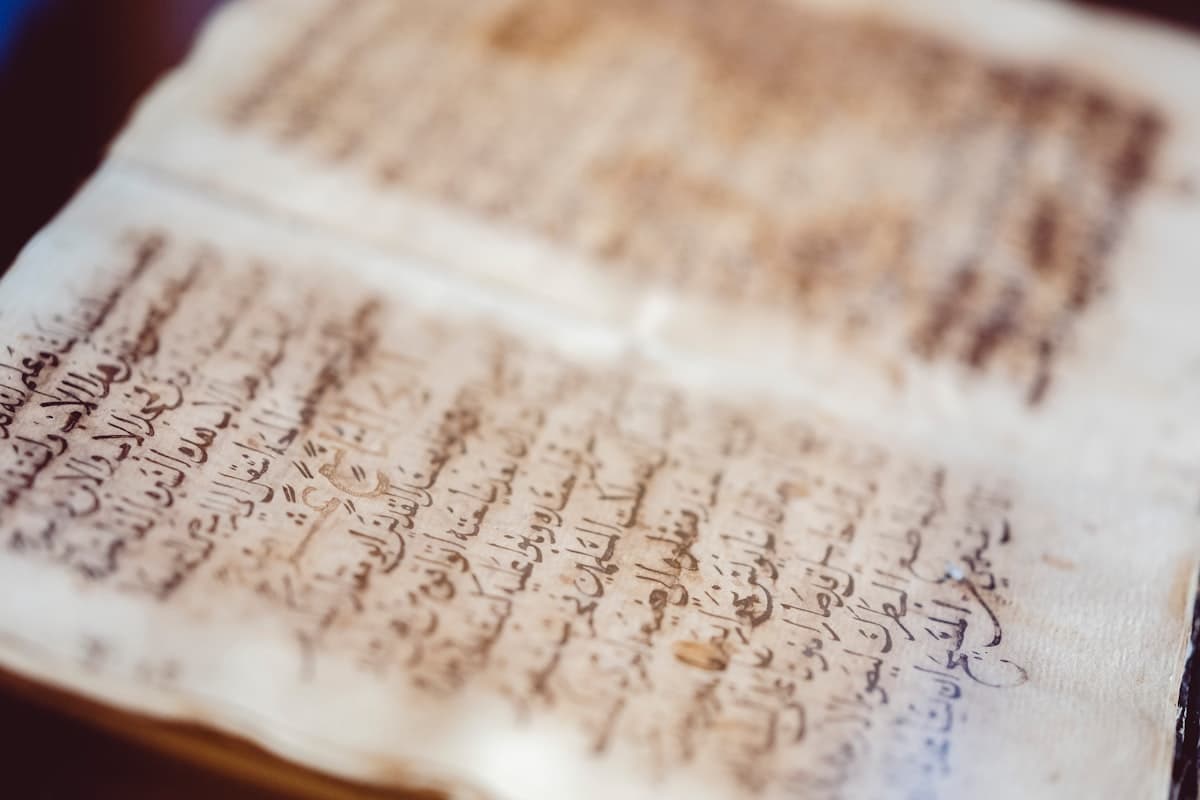
The geniza is not a library. The word comes from the Hebrew root meaning to hide or store, and Jewish law holds that any document containing the name of God cannot be destroyed. It must be buried or stored. The Ben Ezra community stored theirs in a sealed room above the synagogue for roughly 900 years. When Schechter opened it, he found everything: business letters, marriage contracts, shopping lists, court records, love poems, children's handwriting exercises, and personal correspondence written by people who never imagined anyone outside their community would read their words.
Among the 300,000 fragments were more than 100 documents written by Maimonides himself, the philosopher and physician born in Cordoba in 1138 who served as court physician to Saladin in Cairo and remains the most influential Jewish thinker since the Talmudic era. There were also merchant letters from traders operating between Cairo, Aden, and India in the 11th century, which proved that medieval Islamic trade networks were far more sophisticated and cosmopolitan than European historians had assumed.
The Geniza documents also demolished a myth. For most of the 19th century, European scholars assumed that Jewish communities living under Islamic rule were perpetually persecuted. The Cairo Geniza showed the opposite: a community deeply embedded in Cairene commercial and civic life, writing in Judeo-Arabic (Arabic in Hebrew script), interacting constantly with Muslim and Christian neighbors, and conducting business across three continents.
What You Are Actually Standing Inside
The Ben Ezra Synagogue sits inside the walled Coptic Cairo compound, which is itself built over the Roman fortress of Babylon, which was itself constructed on the site of an even older settlement the ancient Egyptians called Per-Hapi-en-lunu, the house of the Nile at Heliopolis. When you walk through the compound gate, you are walking through approximately 2,500 years of continuous urban occupation. The synagogue's current structure dates to a 12th-century rebuild, though Jewish tradition holds that a synagogue has stood on this spot since the time of the Prophet Jeremiah, who is said to have rested here after the Babylonian destruction of Jerusalem.
That tradition cannot be verified archaeologically. What can be verified is that the current building is a converted Coptic church that the Jewish community purchased from the Coptic patriarch around 882 CE. This is worth pausing on: the oldest continuously used synagogue in Cairo was originally a Christian church, and it sits inside a compound built by Romans, in a country that today is 90 percent Muslim. Egypt has always been more complicated than the story any single group tells about it.
The geniza room itself is above the women's gallery. After Schechter's 1896 excavation, it was emptied and sealed. It is not accessible to visitors as a display space, but you can see its exterior and understand its position in the building. What you will find inside the synagogue is a beautifully restored interior: marble columns salvaged from earlier structures, wooden screens carved with geometric detail, and a floor that has been relaid multiple times over twelve centuries. The restoration work completed in the late 1980s and early 2000s was thorough but not entirely sympathetic; some of the marble feels too bright, too new. The synagogue is active in the sense that it is maintained, but Cairo's Jewish community has dwindled to fewer than ten permanent residents, most of them elderly. Religious services are not held regularly.
The Documents Themselves: Where They Went and What They Proved
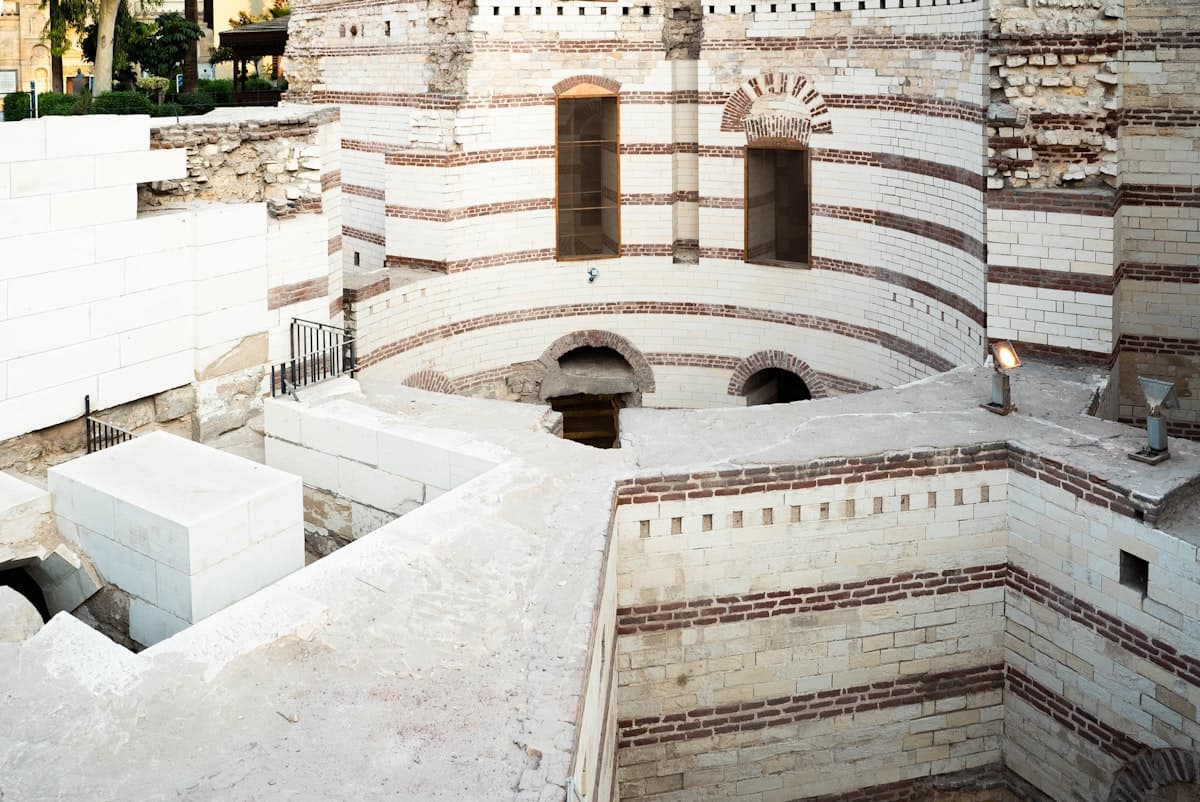
The bulk of the Cairo Geniza collection, roughly 193,000 fragments, is held at Cambridge University Library, where Schechter deposited them after his 1896 visit. Additional fragments are at the Jewish Theological Seminary in New York, the Bodleian Library in Oxford, the Alliance Israélite Universelle in Paris, and the Jewish National and University Library in Jerusalem. Egyptian law now prevents such a dispersal from happening again, but the dispersal has already happened, and Cairo itself holds almost nothing of the documentary collection.
This makes visiting the Ben Ezra Synagogue an act of imagination as much as history. The room that changed the field of medieval studies is empty. The documents are in climate-controlled archives in seven countries. What you are visiting is the container, not the contents.
For the contents, the Princeton Geniza Project and the Friedberg Geniza Project have digitised approximately 60 percent of the known fragments and made them freely searchable online. If you spend an hour with those databases before you visit Cairo, you will stand in that synagogue with a very different kind of attention. You will know that Fragment T-S 8J18.4 is a letter from a merchant in Alexandria to his business partner in Fustat complaining about the price of pepper. You will know that T-S 16.287 is a marriage contract from 1117 CE in which a woman negotiated the right to divorce her husband if he took a second wife. These people were real, and their voices are more specific than most of the stone inscriptions that fill the museums.
The Connections: Fustat, Islamic Cairo, and the Jewish Quarter That Isn't
The Ben Ezra Synagogue is in Fustat, the original Arab settlement of Egypt, founded in 641 CE by the general Amr ibn al-As within a year of the Islamic conquest. Fustat burned during the Crusader threat in 1168, when the Fatimid vizier ordered the city torched rather than let it fall to an advancing Christian army. At least 20,000 barrels of naphtha were used. The fire burned for 54 days. The Jewish community fled to a new city to the north, which the Fatimids had already begun building: al-Qahira, the city that became Cairo. Fustat was rebuilt, but it was never again a primary center of power. The geniza documents span exactly this period of upheaval, and some of them record the chaos of the 1168 fire directly.
The connection to Islamic Cairo is not just geographical. The Fatimid caliphs who built the city were Ismaili Shia Muslims who were, by the standards of the medieval Islamic world, exceptionally tolerant of religious minorities. Under Fatimid rule, the Jewish and Coptic communities in Egypt experienced a period of relative prosperity and administrative inclusion. The Fatimid palace complex in what is now Khan el-Khalili employed Jewish physicians and Christian architects. When the Ayyubid sultan Saladin dismantled Fatimid power in 1171, replacing Shia tolerance with Sunni orthodoxy, he kept Maimonides as his court physician anyway. The Geniza records show this transition in real time: the shift in language, the change in commercial networks, the slow adjustment of a community to a new political order.
Three kilometers northeast of the Ben Ezra Synagogue, in the heart of Fatimid Cairo, a handful of additional Jewish heritage sites survive in various states of repair. The Sha'ar Hashamayim Synagogue on Adly Street in Downtown Cairo is the most architecturally significant: an Italian Renaissance building completed in 1905 that seated 700 people in a community that no longer exists to fill it. It opens only for the Jewish High Holidays and by special arrangement. Ben Ezra is the site you can actually visit consistently.
Common Mistakes
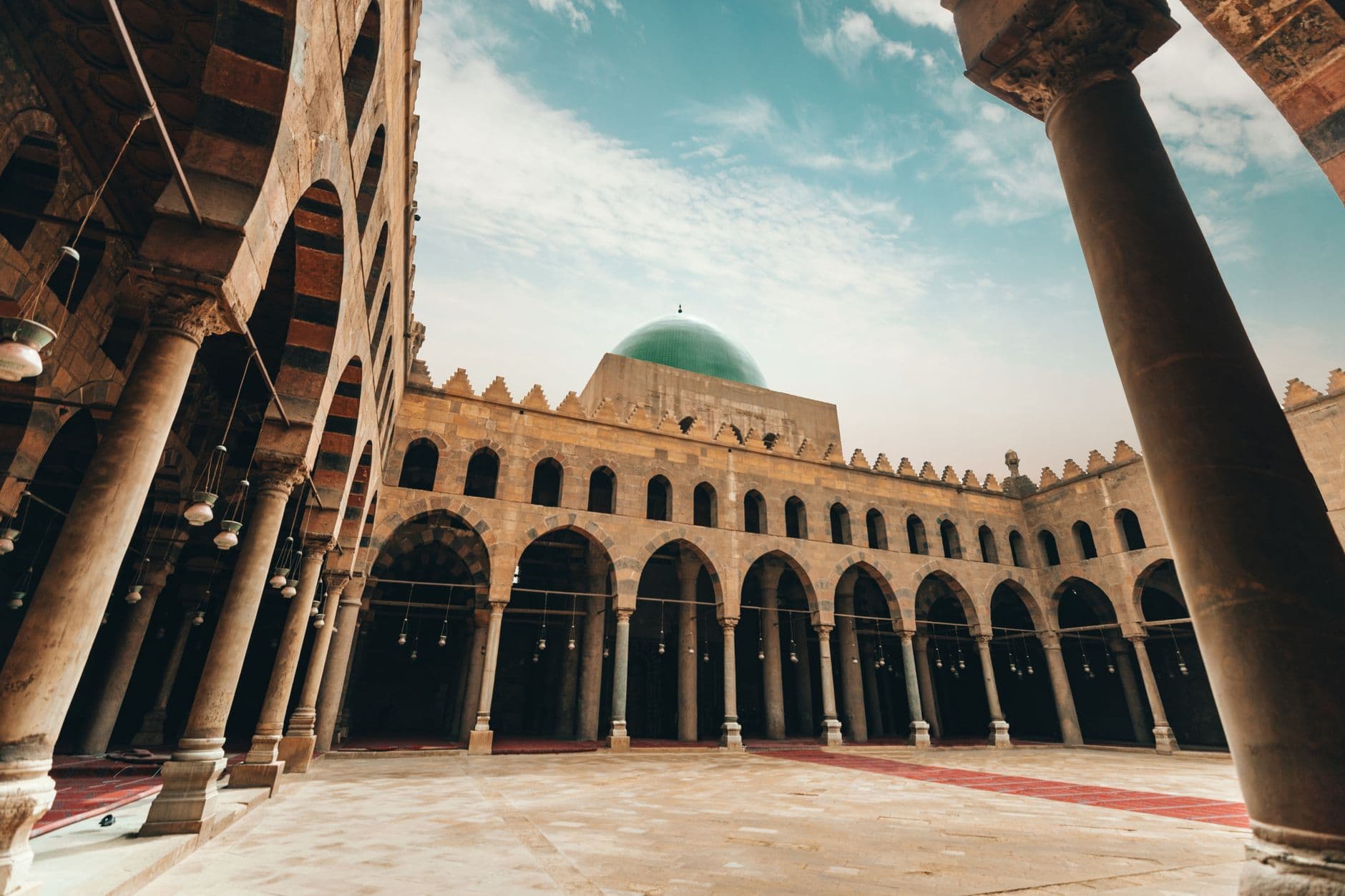
Visiting without context. The Ben Ezra Synagogue is a mid-sized converted church with a good restoration. If you walk in knowing nothing about the geniza, you will spend 20 minutes looking at marble and leave. If you spend one hour reading about the documents before you arrive, you will spend two hours standing in that space and not wanting to leave. Context is not optional here.
Assuming the Coptic compound requires a separate trip. The Ben Ezra Synagogue is inside the same walled area as the Hanging Church, the Coptic Museum, the Church of St. Sergius and Bacchus, and four other early Christian structures. Visitors who come only for the synagogue miss one of the most dense concentrations of late antique religious architecture in the Middle East. Budget half a day for the whole compound.
Paying for a guided tour that skips the geniza entirely. Most generic Cairo day tours include Ben Ezra as a five-minute photo stop between the Pyramids and Khan el-Khalili. The guide will tell you the synagogue is old, say something vague about the Dead Sea Scrolls (which have nothing to do with the Cairo Geniza), and move on. If you want the actual story, hire a specialist guide through the Egyptian Society for Historical Studies or arrange a private tour with one of the academics affiliated with the American University in Cairo.
The sound and light show at nearby sites is not relevant here, but the Nilometer is. On Rhoda Island, a 10-minute walk from the Coptic compound, stands the oldest intact Islamic monument in Egypt: the Nilometer, built in 861 CE to measure the annual Nile flood. Geniza merchants wrote constantly about the flood levels because the flood determined the harvest, and the harvest determined whether pepper prices in Alexandria would rise or fall. The Nilometer costs EGP 100 to enter and is almost entirely ignored by tourists. It is more honest about daily medieval life than most sites costing five times as much.
Skipping the Coptic Museum to save money. The Coptic Museum entry costs EGP 200 and contains one of the world's great collections of late antique Christian art, including Nag Hammadi Gnostic manuscripts found in Upper Egypt in 1945. The Nag Hammadi texts are contemporaries of the earliest Geniza fragments and come from the same tradition of document preservation. The museum is 50 meters from the synagogue. Skipping it is a real loss.
Assuming the Jewish community of Egypt is entirely gone. It is nearly gone. But the Bassatine Cemetery in southeast Cairo, one of the oldest Jewish cemeteries in the world with graves dating to the 9th century CE, still exists and still has a small active committee maintaining it. It is not on tourist itineraries. It requires advance arrangement to visit. For anyone seriously interested in Cairo's Jewish heritage, it is more affecting than the synagogue.
Practical Tips
Dress modestly: covered shoulders and knees for all genders. There is no dress code enforcement at the door, but this is a functioning religious site.
The compound can be crowded on Friday and Sunday mornings when Coptic worshippers attend church. If you want quiet, come on a Wednesday or Thursday between 9am and 10am.
Photography is permitted inside Ben Ezra. There is no charge for cameras, but avoid photographing any worshippers or staff without permission.
The guards at the compound gate sometimes ask for a small informal fee to show you around. This is not an official charge. You do not need to pay it, though it is at your discretion.
The neighborhood immediately outside the compound, the old Fustat area near Mar Girgis station, has almost no tourist infrastructure. Bring water. There are small cafes near the metro station but nothing inside the compound itself.
For serious research purposes: the Supreme Council of Antiquities maintains a small office in Cairo that can facilitate access to archival materials. Researchers affiliated with universities should contact the Egyptian Center for Jewish Studies at the American University in Cairo before arrival.
Frequently Asked Questions
The Weekly Dispatch
More on Egypt, every Friday.
Cultural depth and places most guides never mention.
No spam. Unsubscribe anytime.