Cairo Geniza & Jewish Heritage Egypt: The Full Guide
A single Cairo storeroom held 400,000 documents that rewrote medieval history. Most visitors walk past it without knowing it exists.

Quick Facts
- Best time to visit
- October to April. The compound is partially open-air and the summer heat makes sustained walking uncomfortable. Friday mornings in winter are the quietest.
- Entrance fee
- Ben Ezra Synagogue: EGP 100 (approx $2 USD). Coptic Museum: EGP 120 adults, EGP 60 students (approx $2.50 and $1.25 USD). Coptic Cairo compound itself: free.
- Opening hours
- Saturday to Thursday, 9am to 4pm. Closed Friday. Confirm before visiting as hours shift seasonally and the synagogue occasionally closes for conservation.
- How to get there
- Metro Line 1 to Mari Girgis station (EGP 8 to 10 from central Cairo). Taxi from Downtown Cairo: EGP 80 to 130. The compound entrance is directly beside the metro exit.
- Time needed
- 45 to 60 minutes for Ben Ezra alone. Two to three hours minimum if combining with the Coptic Museum and Church of the Hanging Virgin, which is the recommended approach.
- Cost range
- Budget day including metro, all entrance fees, and street breakfast: EGP 300 to 500. No mid-range infrastructure in the immediate area; restaurants are a taxi ride away.
In 1896, two Cambridge scholars named Agnes Lewis and Margaret Gibson bought a handful of old manuscript fragments in a Cairo bazaar. They brought them back to Solomon Schechter at Cambridge. Schechter looked at one fragment, recognized a text lost for a thousand years, and within weeks was on a boat to Egypt. What he found in the Ben Ezra Synagogue's geniza, a storeroom where worn Hebrew documents were preserved rather than destroyed, was approximately 400,000 medieval manuscripts, letters, legal contracts, shopping lists, love notes, and medical prescriptions. They had been accumulating since roughly the ninth century. The Cairo Geniza is not a monument. It is an archive of daily life that no one intended to create, and it remains one of the most significant document discoveries in human history.
Quick Facts
Location: Ben Ezra Synagogue, Coptic Cairo (Mari Girgis area), Old Cairo Entrance: Access to Coptic Cairo is free. The Ben Ezra Synagogue charges EGP 100 (approx $2 USD) per person. The synagogue is technically administered by the Egyptian government's Supreme Council of Antiquities. Opening Hours: Saturday to Thursday, 9am to 4pm. Closed Friday. Confirm in advance, as hours shift seasonally and the synagogue occasionally closes for conservation work. How to Get There: Metro Line 1 to Mari Girgis station. Exit and walk south for five minutes. The station is directly beside the Coptic Museum entrance. The metro costs EGP 8 to 10 depending on your starting zone. Taxis from Downtown Cairo cost EGP 80 to 130. Avoid the tourist buses that park outside: you do not need a guide to walk in. Time Needed: The synagogue itself takes 45 minutes to an hour. Budget two to three hours if you combine it with the Coptic Museum and the Church of the Hanging Virgin (al-Mu'allaqa), which you should. Best Time to Visit: October through April. Coptic Cairo is partially outdoors and the summer heat makes the compound genuinely uncomfortable. Friday mornings are the quietest. Weekends draw Coptic Christian visitors to the churches, which makes the atmosphere richer but the paths more crowded. Cost Range: Budget day including metro, entrance fees, and food at a nearby fuul shop: EGP 300 to 500. Adding the Coptic Museum brings the entrance total to EGP 220 (approx $4.50 USD) for adults.
Why This Place Matters
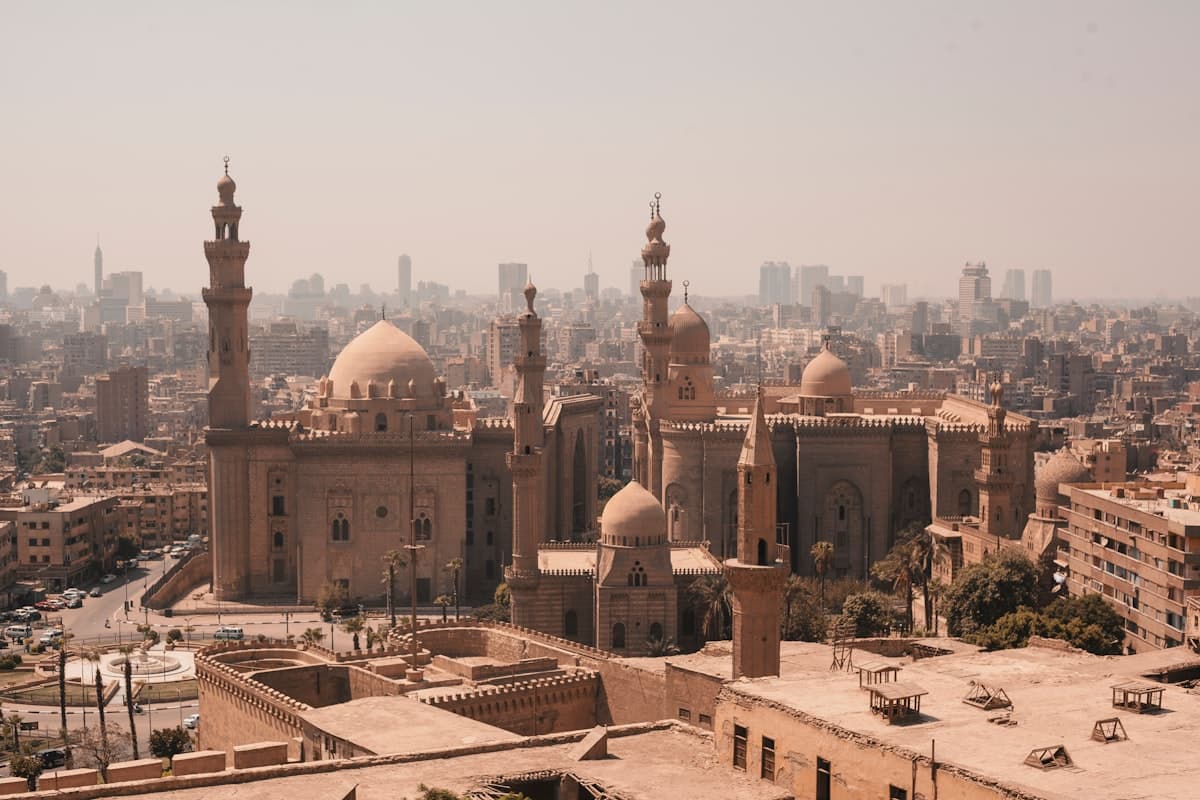
The word geniza comes from the Hebrew root meaning to hide or to store. Jewish law prohibits the destruction of any document containing the name of God, which in practice meant that synagogues accumulated centuries of paper that could not be thrown away. Most communities eventually buried their genizas in a cemetery. The Ben Ezra community, for reasons that remain debated, simply kept adding to the same storeroom for roughly a thousand years.
What Schechter shipped back to Cambridge in 1897, in crates and sacks, was not a library. It was a cross-section of medieval Mediterranean life: correspondence between Jewish merchants trading between Egypt, Tunisia, Sicily, and India; ketubbot (marriage contracts) from the eleventh century; Maimonides's own handwriting on medical texts; letters from Jewish communities in Yemen, Palestine, and Spain asking Cairo's Fustat community for money, shelter, or news. The historian S.D. Goitein spent forty years working through the commercial correspondence and produced a five-volume work called A Mediterranean Society, which remains the definitive account of everyday life in the medieval Islamic world. The Geniza documents are not peripheral to that history. They are its foundation.
The Ben Ezra Synagogue itself sits inside a compound that was already ancient when the Geniza documents began accumulating. The site was originally a Coptic church, sold to the Jewish community in the ninth century, according to tradition, in exchange for the funds to pay a tax levied by the Abbasid governor Ahmad ibn Tulun. The church before it may have been built on the site where, according to Coptic tradition, the Holy Family rested during the flight into Egypt. The Pharaonic layer is also present: the area was part of the city of Babylon in Egypt, a Roman fortress whose walls you can still see from the Mari Girgis metro exit, built over an earlier settlement that guarded a canal connecting the Nile to the Red Sea.
All of this is within a five-minute walk of each other. Cairo does not do single-era history.
What You Will Actually See
The Ben Ezra Synagogue is a working synagogue in the formal sense: it is maintained, the Torah scrolls are present, and Jewish visitors occasionally use it for prayer. In practice, it receives very few Jewish visitors and a mix of tourists, scholars, and Egyptians with a specific interest in the country's pre-Islamic and non-Islamic heritage.
The interior was heavily restored in the 1980s and 1990s by a Jewish philanthropist named Carmen de Vita. The restoration is competent and the space is clean and well-lit, but the building you see is not the medieval structure. The wooden gallery, the carved stonework around the bimah (the raised reading platform), and the pale stone walls are largely twentieth-century reconstructions. This is worth knowing before you arrive so that you are not looking for something that is no longer there.
What you are actually looking for is the room in the upper left corner of the building, up a narrow staircase, where the geniza storeroom was located. There is a small display explaining the Schechter discovery and showing facsimiles of a few documents. The original documents are now distributed across more than seventy libraries and universities worldwide, with the largest collection at Cambridge University Library. A significant portion went to the Jewish Theological Seminary in New York. Some fragments ended up in private hands and a few have been traced back through auction houses. The physical storeroom is modest: a low-ceilinged space that gives no indication it once held nearly half a million pieces of paper.
The Documents Themselves
If you want to see the actual Geniza documents rather than facsimiles, you have two options outside of traveling to Cambridge or New York. The Coptic Museum, a four-minute walk from the synagogue, holds a small number of related Egyptian Jewish artifacts. More usefully, the Ben Ezra's own display cases contain high-quality reproductions of some of the most remarkable finds, including a letter from a merchant stranded in India in the twelfth century, writing to his wife in Fustat (Old Cairo) to explain why he has not come home. The letter, discovered in the Geniza, is one of the earliest personal letters in any language to survive from the medieval world. It reads like a WhatsApp message from someone with no signal.
The fragment that first alerted Schechter to the significance of the collection was a page from the Hebrew original of the Book of Ben Sira, also known as Ecclesiasticus. The book was written around 180 BCE and had been known only through Greek and Latin translations for nearly two thousand years. The Hebrew original was assumed permanently lost. The Geniza contained not one but multiple fragments of it.
The Neighborhood: Fustat and What Surrounds Ben Ezra
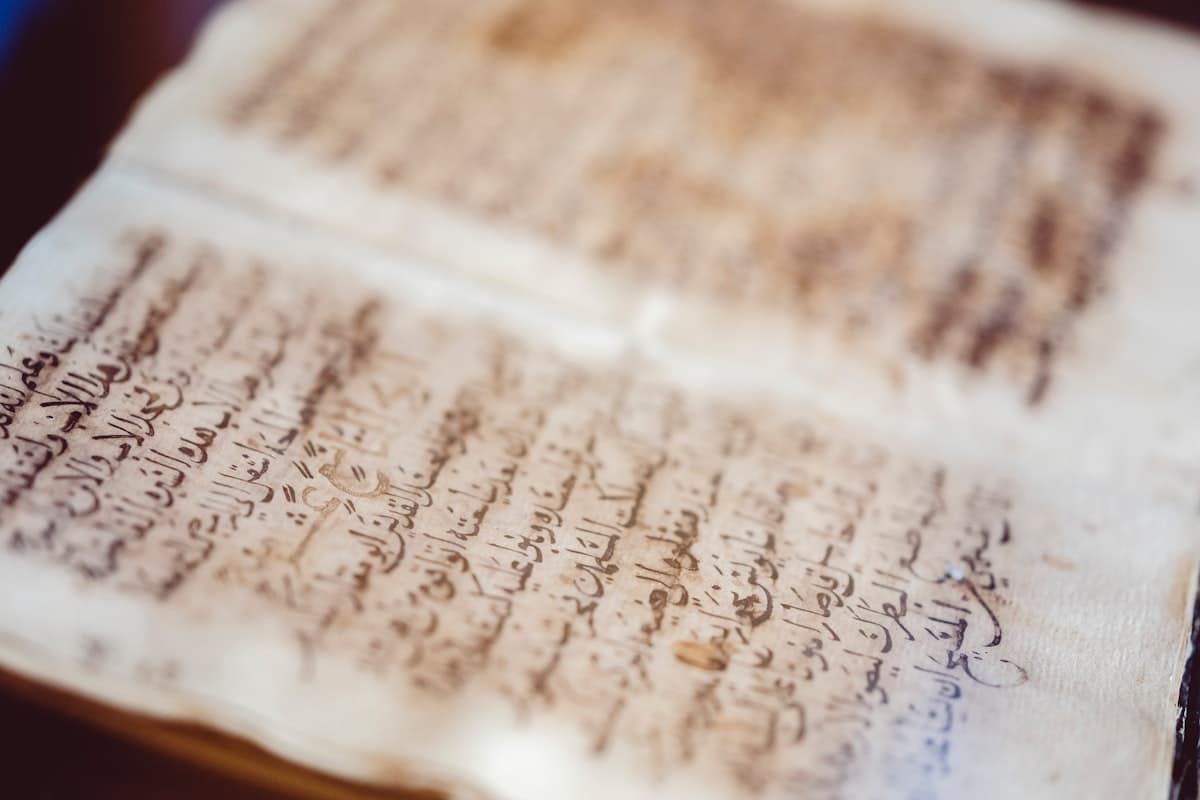
The Ben Ezra Synagogue sits inside Coptic Cairo, but the district it belongs to historically is Fustat, the first Arab city built in Egypt after the conquest of 641 CE. The general Amr ibn al-As chose the site deliberately: it was beside the Roman fortress of Babylon, which controlled the river crossing, and near enough to the existing population centers to be administratively useful. Fustat grew into one of the largest cities in the early medieval world, with a population estimated at between 100,000 and 200,000 people at its peak in the tenth and eleventh centuries.
The Jewish community of Fustat is exactly the community documented in the Geniza. They lived not in a ghetto but in a mixed neighborhood, bought property from Muslim neighbors, had Muslim business partners, and brought their commercial disputes to both Jewish rabbinical courts and Muslim qadi courts, depending on which ruling they expected would favor them. The Geniza documents reveal a community that was religiously distinct but socially integrated in ways that contradict both the myth of medieval Islamic tolerance as a golden age of harmony and the opposite myth of constant persecution.
Amr ibn al-As's mosque, the first mosque built on African soil, is a short walk north of the synagogue. The current structure dates mostly to the eighteenth century and was expanded so many times that nothing of the original 641 building survives above ground. But the location is the location, and standing there it is worth knowing that when it was built, the Ben Ezra site was already an ancient church serving a community that had been in Egypt for centuries.
The Connections
Maimonides, the twelfth-century Jewish philosopher and physician whose Guide for the Perplexed shaped both Jewish and Islamic theology, lived in Fustat. His synagogue, sometimes identified as a site near Ben Ezra, no longer stands, but his presence in the Geniza documents is constant: letters to and from him, medical prescriptions in his handwriting, responsa (legal opinions) he issued to communities across the Mediterranean. His remains are said to have been taken to Tiberias in present-day Israel. His intellectual legacy never left Cairo.
The Coptic Museum, which you should visit directly after the synagogue, holds the Nag Hammadi codices (originals or excellent facsimiles depending on the display cycle), early Christian documents that were found in Upper Egypt in 1945 and, like the Geniza, rewrote the history of a religion by revealing its internal arguments and suppressed voices. The parallel between the two collections is not accidental: Egypt's dry climate preserves paper in ways no other Mediterranean environment can match, and Cairo has been collecting the world's overflow of civilization for three thousand years.
The Ibn Tulun Mosque, about two kilometers north through winding Coptic and Islamic Cairo streets, was built by the same governor whose tax, according to tradition, prompted the sale of the original church site to the Jewish community. Ibn Tulun's mosque, built between 876 and 879 CE, is the oldest mosque in Cairo to survive in its original form. The courtyard, with its unusual spiral minaret modeled on the minarets of Samarra in Iraq, is one of the genuinely worth-your-time experiences in Cairo and takes forty-five minutes to absorb properly.
Common Mistakes
Treating the Synagogue as a standalone destination. It is not. The Ben Ezra makes full sense only in the context of Coptic Cairo and Fustat. Come with three hours minimum and walk the whole compound. The Church of Saint Sergius (Abu Serga), built directly over a crypt the Coptic Church identifies as the Holy Family's resting place, is two minutes from the synagogue and almost always empty. The crypt is flooded seasonally and sometimes inaccessible, but when open it is the most atmospheric spot in the compound.
Hiring a guide at the gate. The freelance guides who approach visitors at the Mari Girgis metro exit will tell you dramatic and largely fabricated histories. The actual history here is more extraordinary than anything they will invent. Read before you come. The Cambridge Genizah website (genizah.org) has free accessible material.
Skipping the Coptic Museum because it sounds like a minor detour. The museum holds one of the world's finest collections of early Christian art, including textiles, manuscripts, and icons that have no parallel outside Egypt. Entrance costs EGP 120 for adults (approx $2.50 USD). It is not a detour. It is the reason the entire area makes sense.
Coming on a Friday. The synagogue is closed. This is not always clear on tourist websites.
Expecting visible Geniza documents. The originals are in Cambridge, New York, and dozens of other archives. What you will see are facsimiles and a modest exhibition. If you are coming specifically for the manuscripts, you need to book access to the Taylor-Schechter Collection at Cambridge University Library, not buy a plane ticket to Cairo. What Cairo offers is the location and the context, which is its own kind of essential.
Paying for the Coptic Cairo sound and light show. It runs on weekend evenings, costs EGP 250, and delivers a condensed version of information available on any of the compound's free information boards. The money is better spent on dinner in Maadi or a river taxi back north along the Nile.
Rushing through the compound to get to Islamic Cairo. The temptation to combine Coptic Cairo, the Citadel, and Khan el-Khalili in a single day is strong and almost always produces a day where nothing is actually absorbed. Choose one. If you are here for the Jewish heritage specifically, the Coptic Cairo compound plus the Amr ibn al-As mosque plus a slow walk through the Fustat archaeological area is already a full day's worth of history.
Practical Tips
Dress conservatively in Coptic Cairo: covered shoulders and knees are expected in all the religious buildings, and the compound includes active churches where services take place. This applies to all genders.
The compound has a small cafe near the Coptic Museum entrance. The coffee is acceptable. Better food is available at the small fuul and ta'meya shops on the street outside the Mari Girgis metro station, where a full breakfast costs EGP 40 to 60.
Photography is permitted inside Ben Ezra. Some of the churches prohibit it, particularly during services. Ask.
If you have a specific research interest in the Cairo Geniza Jewish heritage, contact the Jewish community office in Cairo through the Egyptian Jewish Community Association before your visit. The community is small, elderly, and not always able to receive visitors, but scholars and writers with genuine interest are occasionally accommodated for more detailed access than the standard tourist visit allows.
The area around Mari Girgis after dark is quiet and not particularly well-lit. The metro runs until around midnight. Take it.
Frequently Asked Questions
The Weekly Dispatch
More on Egypt, every Friday.
Cultural depth and places most guides never mention.
No spam. Unsubscribe anytime.