Cleopatra's Alexandria: A Historical Guide to Egypt's Lost Capital
Cleopatra never ruled from the city tourists visit. Her palace is under the Mediterranean. What survives is stranger and better than any reconstruction.

Audio Guide: Cleopatra's Alexandria: A Historical Guide to Egypt's Lost Capital
Quick Facts
- Best time to visit
- October to March. Cooler temperatures, minimal crowds, and no summer domestic tourism surge. November is ideal.
- Entrance fee
- National Museum EGP 150 (approx $3 USD). Catacombs of Kom el-Shoqafa EGP 180 (approx $3.50). Pompey's Pillar and Serapeum EGP 180. Qaitbay Citadel EGP 180. Bibliotheca Alexandrina EGP 70 general entry.
- Opening hours
- Most sites daily 9am to 5pm. Catacombs close at 4:30pm. Bibliotheca Alexandrina closed Fridays. National Museum closed Tuesdays.
- How to get there
- High-speed train from Cairo Ramses Station: 2 hours, EGP 145 to 350 depending on class. Within Alexandria: trams EGP 3, taxis EGP 30 to 50 per journey.
- Time needed
- 2 full days minimum for the major historical sites. 3 days if adding the old city center neighborhoods, cosmopolitan architecture, and the Eastern Harbour waterfront.
- Cost range
- Budget EGP 800 to 1,200 per day including accommodation, sites, and meals. Mid-range EGP 2,000 to 3,500 per day with a good seafood dinner and comfortable hotel.
Quick Facts
Best time to visit: October through March. Alexandria in July is humid, crowded, and unforgiving. October gives you clear sea air and almost no cruise groups.
Entrance fees: Graeco-Roman Museum: EGP 200 (approx $4 USD), students EGP 100 Pompey's Pillar and Serapeum: EGP 180 (approx $3.50 USD) Catacombs of Kom el-Shoqafa: EGP 180 (approx $3.50 USD) Bibliotheca Alexandrina: EGP 70 (approx $1.50 USD) general entry; museum entry priced separately Qaitbay Citadel: EGP 180 (approx $3.50 USD)
Opening hours: Most sites daily 9am to 5pm. The Catacombs close earlier at 4:30pm. The Bibliotheca Alexandrina is closed Fridays.
How to get there: From Cairo, the high-speed rail from Ramses Station takes 2 hours and costs EGP 145 to 350 depending on class. From Cairo Airport, a direct cab to Alexandria is roughly EGP 1,200 to 1,500. Within Alexandria, the blue-and-white trams are still running, tickets cost EGP 3, and they will take you to most sites in the old city if you know which stop to ask for. Tuk-tuks negotiate.
Time needed: Two full days minimum to do Cleopatra's Alexandria any justice. Three days if you plan to also spend time at the Eastern Harbour waterfront and the Montaza gardens.
Cost range: Budget EGP 800 to 1,200 per day. Mid-range EGP 2,000 to 3,500 per day including a decent seafood dinner on the Corniche.
---
Why Cleopatra's Alexandria Still Matters
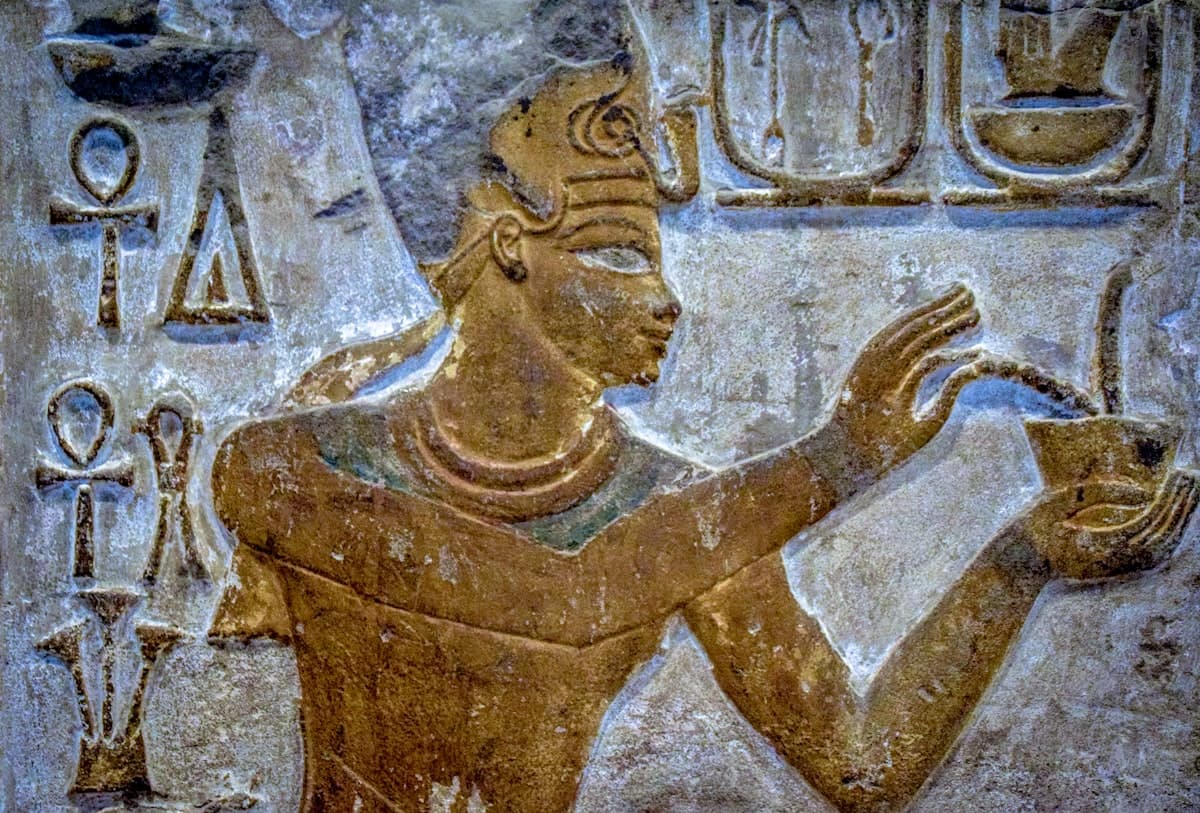
Cleopatra VII was the first ruler of the Ptolemaic dynasty, which had governed Egypt for nearly 275 years, to speak Egyptian. Her predecessors, descendants of one of Alexander's generals, had ruled an Egyptian empire while speaking Greek and never bothering to learn the language of their subjects. That single biographical detail reframes everything you think you know about her: she was not primarily a seductress or a tragic queen. She was an extraordinarily capable multilingual politician who spoke nine languages including Aramaic, Ethiopian, and the Parthian tongue, and who understood that Egypt could not be held by force of personality alone.
The Alexandria she ruled was, by the first century BC, the largest city in the world after Rome. Its population sat near 500,000. It housed the largest library ever assembled in the ancient world, a medical school where human dissection was practiced openly, a lighthouse that stood roughly 137 meters tall and was considered one of the Seven Wonders, and a royal quarter that stretched from the current Eastern Harbour across what is now submerged coastline. An earthquake in 365 AD and subsequent sea-level changes swallowed an estimated 150 acres of the Ptolemaic city. Cleopatra's palace is down there. So is the tomb that may contain her body, though that debate remains unresolved.
The city above water tells a different story, but it is not a lesser one. It is the story of what Alexandria became after Cleopatra: Roman provincial capital, early Christian theological battleground, center of Islamic scholarship, Ottoman trading port, and finally the cosmopolitan Mediterranean city of Cavafy and Durrell, which was itself largely dismantled by the mid-twentieth century. Every layer survives somewhere in the city, usually below, occasionally above, and almost never where you expect it.
This is the context for any serious Cleopatra Alexandria Egypt historical guide: you are not visiting a preserved Ptolemaic city. You are visiting a city that has been continuously rebuilt over a Ptolemaic foundation, and the skill is in learning to read the layers.
---
What the Underwater City Tells Us (And How to Access It)
In 1996, French underwater archaeologist Franck Goddio mapped the submerged royal quarter of ancient Alexandria using nuclear resonance magnetometry, technology developed for detecting submarines. He found sphinxes, columns, pavements, and what is almost certainly the foundation of the Ptolemaic palace complex, all sitting 6 to 8 meters beneath the Eastern Harbour. Among the objects recovered was a red granite statue of a priest that had once stood at the Temple of Isis, which Cleopatra used as her primary religious sanctuary because she publicly identified herself with Isis throughout her reign.
You can see some of these recovered objects at the National Museum of Alexandria on Tariq al-Hurriya Street, which is vastly undervisited given its quality. The ground floor holds the Pharaonic collection; the middle floor covers the Graeco-Roman period including several underwater finds; the upper floor moves into the Coptic and Islamic eras. The building itself is a restored Italian-style palace that belonged to a wealthy Jewish merchant family before it was nationalized in the 1950s. The entrance fee is EGP 150, hours are 9am to 5pm, and on a good weekday morning you may have entire rooms to yourself.
For anyone with an Open Water diving certification, Alexandria's Eastern Harbour has a small diving operation that runs supervised dives to the submerged ruins near the Qaitbay Citadel. Check with the Alexandria Diving Center on the Eastern Harbour corniche for current permits and pricing, as the schedule depends on water visibility and archaeology department approvals. This is not a polished tourist product. It is a real dive site with real submerged antiquities and it is worth every bureaucratic hoop.
---
The Sites Above Ground: What to See and What to Ignore
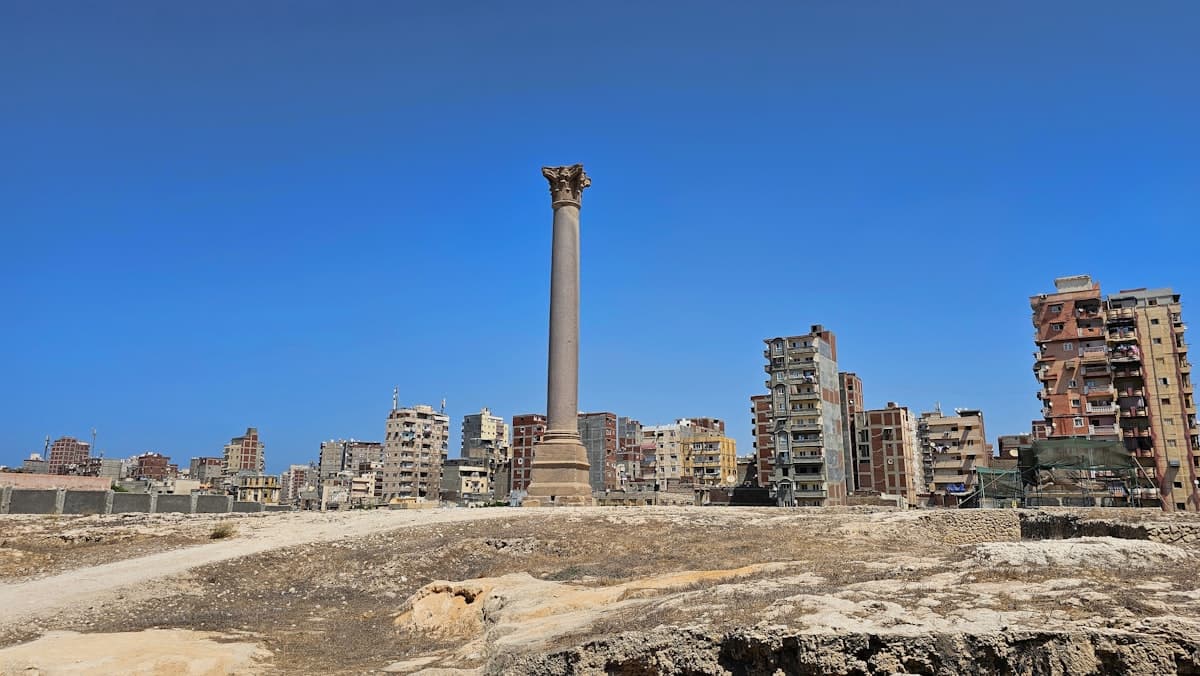
Pompey's Pillar and the Serapeum: Do Not Be Fooled by the Name
The column called Pompey's Pillar has nothing to do with Pompey. The Roman general's head was brought to Alexandria after his assassination in 48 BC, and early European travelers, apparently in need of a story, attached his name to the most prominent column they could find. The column actually bears an inscription, still readable, stating it was erected in honor of the Emperor Diocletian around 297 AD. It stands 26.85 meters tall, is made from a single piece of Aswan red granite, and was the tallest monumental column in the Roman world outside of Rome itself.
What makes the site genuinely interesting is not the column but what surrounds it: the underground galleries of the Serapeum, the great temple to Serapis that once held a satellite collection of the Library of Alexandria. The Serapeum was destroyed by a Christian mob in 391 AD on the orders of the Patriarch Theophilus, an act that marked one of the decisive early moments of Christian supremacy in Egypt. The underground galleries survive. You can walk them.
Along the site's perimeter, two sphinx statues lie on their sides, unremarked by most visitors, representing the transition point where Pharaonic Egyptian religious forms were being absorbed into the Ptolemaic hybrid religion of Serapis, himself a deity invented under Ptolemy I to bridge Egyptian and Greek religious sensibilities.
The Catacombs of Kom el-Shoqafa: Where Three Religions Share One Tomb
These are the most interesting site in Alexandria and are consistently underestimated. Discovered in 1900 when a donkey fell through the ground, the catacombs at Kom el-Shoqafa were built between the first and second centuries AD and represent the most complete surviving example of what happens when Egyptian, Greek, and Roman religious traditions are forced to coexist in a single burial space.
The main tomb chamber shows the god Anubis dressed as a Roman legionnaire. The mummification scenes use Egyptian hieroglyphic positioning but the figures carry Roman tools. Greek architectural orders frame scenes from the Book of the Dead. This is not syncretism as a philosophical choice; it is syncretism as social navigation, a wealthy Alexandrian family trying to honor Egyptian burial customs while signaling fluency in the city's Greek cultural codes and Roman administrative reality, all simultaneously.
The catacombs held approximately 300 bodies. Entrance costs EGP 180, descend three floors underground, and budget 90 minutes minimum.
The Bibliotheca Alexandrina: The Honest Verdict
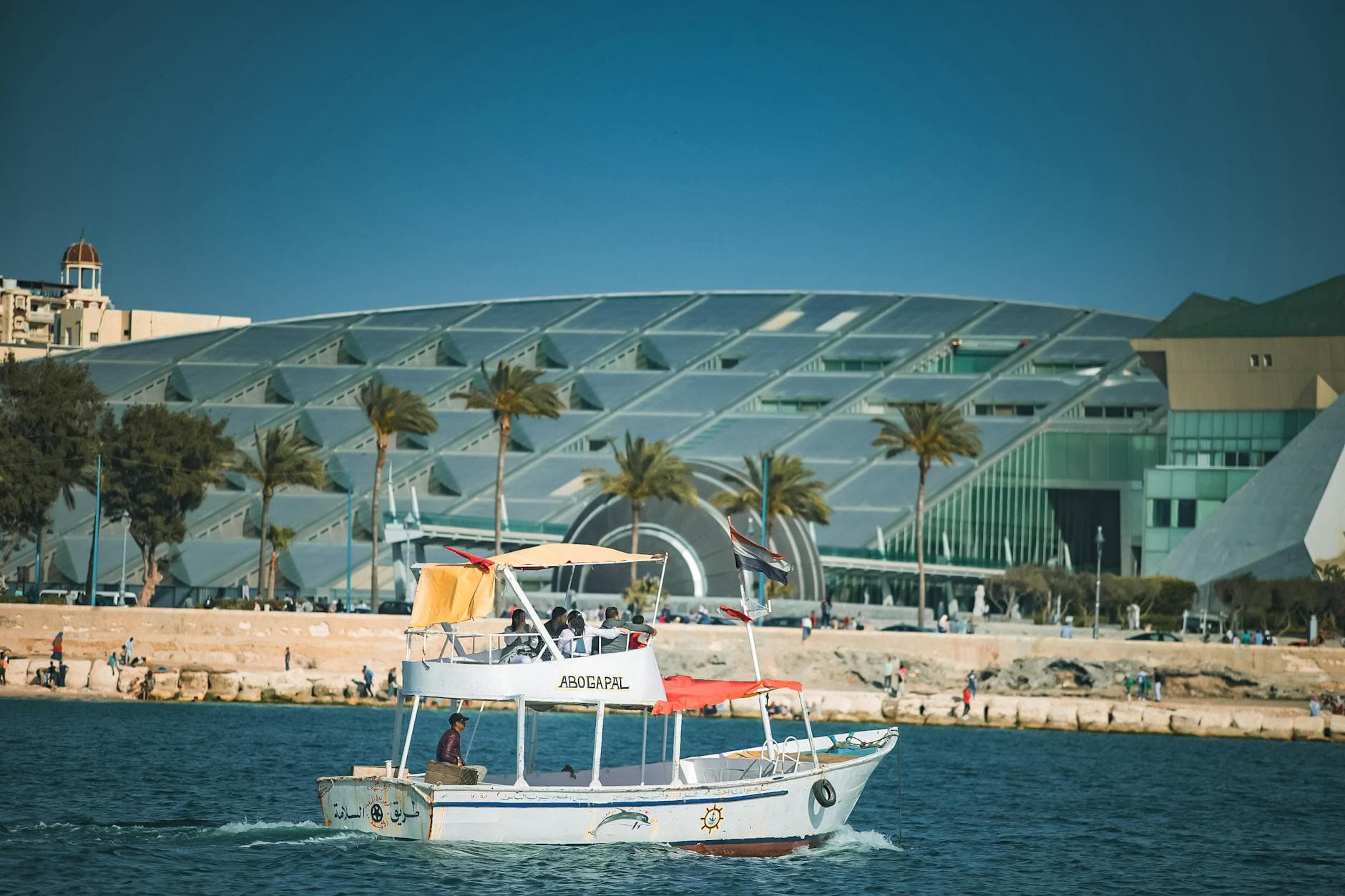
The modern library built on the approximate site of the ancient one opened in 2002 and was designed by the Norwegian firm Snohetta. It is architecturally coherent and the manuscripts collection and the rare books reading room are worth a visit. The permanent exhibitions inside are of genuinely mixed quality. The planetarium is aimed at schoolchildren. The museum of Anwar Sadat memorabilia inside is a strange piece of political hagiography that tells you more about Egyptian official memory than about Sadat himself.
The institution matters because of what it tries to represent: the idea that Alexandria was once the intellectual capital of the known world, and that this is a lineage worth claiming. Whether the building lives up to that idea is something you can decide for yourself. But do not pay for the packaged tour. Walk in, pay the EGP 70 general entry, find the calligraphy on the outer wall, which contains letters from every writing system ever used, and spend your time in the reading rooms and permanent manuscript gallery. That is the real thing.
Skip: The Sound and Light Show at Qaitbay
The sound and light show staged periodically near the Qaitbay Citadel costs upward of EGP 300 and recites a version of Alexandrian history so compressed and dramatized that it creates false impressions rather than genuine understanding. The citadel itself, a fifteenth-century Mamluk fort built directly on the foundations of the Pharos lighthouse using stones from the lighthouse's ruins, is absolutely worth visiting in daylight. You can identify the granite blocks in the walls that came from the lighthouse. That is the real spectacle. Save the EGP 300 for a dinner of grilled sea bass at one of the fish restaurants behind the Eastern Harbour, where the catch came in that morning.
---
The Connections: Alexandria Across Time
The Qaitbay Citadel's story illustrates exactly how Alexandria works as a city. The Pharos lighthouse, built under Ptolemy II around 280 BC and considered one of the Seven Wonders, collapsed in stages between the tenth and fourteenth centuries, damaged by repeated earthquakes. The Mamluk Sultan Qaitbay, who ruled from Cairo and was himself a former slave purchased for the Mamluk military corps as a child, ordered the fortress built in 1477 using the fallen stones. So the lighthouse that guided Cleopatra's ships is now the wall of a medieval fortress built by a man who had been bought and sold before becoming one of Egypt's most effective rulers.
About 500 meters inland from Qaitbay, below the current street level of the Anfushi neighborhood, Roman-era catacombs of a different kind preserve wall paintings that mix Egyptian funerary art with Roman decorative styles, dated to roughly the same period as Kom el-Shoqafa. The neighborhood above them is one of Alexandria's oldest continuously inhabited areas, and the coffee shops along its waterfront lanes have been places of male social gathering, in various forms, for nearly two thousand years.
The Coptic Orthodox church of Abu Mena, west of the city, was built over the tomb of a Roman soldier who converted to Christianity and was martyred under Diocletian, the same emperor whose name appears on the column at Pompey's Pillar. The pillar and the martyrdom are approximately contemporary. Walk between those two facts and you are walking the edge of the moment when the Roman Empire began its conversion.
---
Common Mistakes
Treating Alexandria as a day trip from Cairo. The train journey takes two hours each way and most organized day trips spend four hours at sites. You will see almost nothing and understand less. Two nights minimum is the correct allocation.
Skipping the National Museum of Alexandria for the Graeco-Roman Museum. The Graeco-Roman Museum has been under renovation for years and its current partial opening contains a fraction of its collection. The National Museum is fully open, better laid out, and holds the underwater finds from Goddio's excavations. It is the better choice right now.
Spending money on guided tours that focus on the Corniche and Montaza. The Corniche is a pleasant walk. Montaza is a royal garden. Neither requires a paid guide or a tour fee. Save that money for a guide at the Catacombs, where context transforms the experience.
Visiting in August. Alexandria doubles its population in August when Cairenes migrate north for the summer. Accommodation prices triple, beaches are packed, and the site entrances have actual queues. The city in November belongs to you almost completely.
Assuming the underwater ruins are inaccessible. Most visitors never ask about diving the submerged Ptolemaic sites. The permits are real and the process takes advance planning, but the experience of swimming over Cleopatra's city is available to certified divers who inquire specifically.
Buying the combined tour packages offered at most hotels. They typically route you to Pompey's Pillar, the outside of the Bibliotheca, the Corniche, and Qaitbay in four hours. This is a tour designed to tick boxes. It teaches you nothing about the city and removes your ability to spend time where it actually matters.
Ignoring the Greek Orthodox Patriarchate and the old synagogue district in the city center. Alexandria was, until the mid-twentieth century, home to substantial Greek, Jewish, Italian, and Armenian communities. The city's cosmopolitan period ended rapidly after 1952, when many of these communities emigrated following nationalizations and political pressure. The physical traces of this world persist in the architecture of the city center and are one of Alexandria's most specific and unrepeatable qualities. No tour takes you there.
---
Practical Tips
Book accommodation in the Raml Station area of central Alexandria rather than along the beach strip. You will be walking distance from the Eastern Harbour, the old city sites, and the train station. The seafront hotels west of the center are aimed at summer beach tourists and are poorly positioned for historical exploration.
Alexandria's taxi culture is gentler than Cairo's. Agree a price before getting in; EGP 30 to 50 will cover most cross-city journeys. The trams are genuinely useful for the central corniche route and cost EGP 3.
Dress codes at the Catacombs and the Serapeum are relaxed compared to mosque visits. The Bibliotheca Alexandrina requires covered shoulders for entry into certain sections. Carry a light scarf regardless.
The seafood restaurants behind the Eastern Harbour operate on a system: you choose your fish from the display, agree a weight and price, they cook it. Expect to pay EGP 400 to 700 for a full meal for two with bread and salads. The fish is caught the same morning. Do not eat seafood at the tourist-facing restaurants on the Corniche itself, where prices double and quality halves.
If you read French, the work of Jean-Yves Empereur, director of the Centre d'Etudes Alexandrines, is the best scholarly literature on the archaeology of the city and much of it is available in shorter accessible formats. His excavation reports on the Pharos site changed what historians understood about the lighthouse's final form.
Frequently Asked Questions
The Weekly Dispatch
More on Egypt, every Friday.
Cultural depth and places most guides never mention.
No spam. Unsubscribe anytime.