Cleopatra's Alexandria: The City She Built and Rome Destroyed
Cleopatra VII spoke nine languages but not Egyptian. The city she ruled has almost entirely vanished. What survives will surprise you.

Audio Guide: Cleopatra's Alexandria: The City She Built and Rome Destroyed
Quick Facts
- Best time to visit
- October to April for clear Mediterranean weather and manageable crowds. Avoid July and August, which bring humidity, coastal haze, and large domestic tourism crowds.
- Entrance fee
- Alexandria National Museum: EGP 180 (approx $3.60 USD). Catacombs of Kom el-Shoqafa: EGP 180 (approx $3.60 USD). Pompey's Pillar and Serapeum: EGP 180 (approx $3.60 USD). Bibliotheca Alexandrina: EGP 100 (approx $2 USD). Student discounts of 50% apply with valid ID at most sites.
- Opening hours
- Most sites daily 8am to 5pm. Bibliotheca Alexandrina: Saturday to Thursday 10am to 7pm, closed Fridays. National Museum: daily 9am to 4:30pm.
- How to get there
- Train from Cairo Ramses Station to Sidi Gaber or Misr Station: EGP 60 to 150 (approx $1.20 to $3 USD), 2 to 2.5 hours. Private car from Cairo: EGP 800 to 1,200 (approx $16 to $24 USD). Within Alexandria: Uber and white taxis are reliable; budget EGP 30 to 60 per ride across central sites.
- Time needed
- Minimum two full days to cover the main Cleopatra-era and Ptolemaic sites meaningfully. One day is possible but leaves you rushed and with incomplete context.
- Cost range
- Budget EGP 600 to 900 per day including transport, entry fees, and street food. Mid-range EGP 1,800 to 3,000 per day with a Corniche hotel and restaurant meals.
Cleopatra VII, the last pharaoh of Egypt, never learned to read hieroglyphics. She was the first ruler of her Macedonian Greek dynasty, the Ptolemies, to bother learning Arabic's ancestor, Demotic Egyptian, at all. She also spoke Ethiopian, Hebrew, Aramaic, Parthian, and Latin, among others. The Romans called her a seductress. She was, by every account, primarily a scholar and a politician operating under conditions that would have broken most men. Her Alexandria was the intellectual capital of the ancient world. Almost none of it survives above ground. What does survive is stranger, more layered, and more interesting than the tour operators will tell you.
Quick Facts
Best time to visit: October through April. Alexandria's Mediterranean climate makes summer (June to August) genuinely unpleasant: humid, crowded with Egyptian domestic tourists, and hazy. Spring and autumn give you clear light and bearable temperatures.
Key sites and entrance fees: Bibliotheca Alexandrina: EGP 100 adults, EGP 50 students (approx $2 USD / $1 USD). Includes the main library, Antiquities Museum, and Manuscripts Museum. Pompey's Pillar and Serapeum: EGP 180 adults (approx $3.60 USD) Catacombs of Kom el-Shoqafa: EGP 180 adults (approx $3.60 USD) Alexandria National Museum: EGP 180 adults (approx $3.60 USD) Royal Jewelry Museum: EGP 100 adults (approx $2 USD)
Opening hours: Most sites open daily 8am to 5pm. Bibliotheca Alexandrina closes Fridays and opens 10am to 7pm Saturday through Thursday.
How to get there: Trains from Cairo Ramses Station to Sidi Gaber or Misr Station run roughly every hour. Second-class seats cost EGP 60 to 90 (approx $1.20 to $1.80). The journey takes 2 to 2.5 hours. From the airport or downtown Cairo, private car hire to Alexandria costs EGP 800 to 1,200 (approx $16 to $24). Within Alexandria, white taxis and Uber are both reliable; tuk-tuks operate in some areas.
Time needed: Cleopatra's Alexandria is not a single site. Budget two full days minimum: one day for the Kom el-Shoqafa Catacombs, Pompey's Pillar, and the Serapeum area; one day for the Bibliotheca Alexandrina, the National Museum, and the Eastern Harbour waterfront.
Cost range: Budget EGP 600 to 900 per day including transport, entry fees, and street food. Mid-range EGP 1,800 to 3,000 per day including a decent hotel on the Corniche.
Why This Place Matters
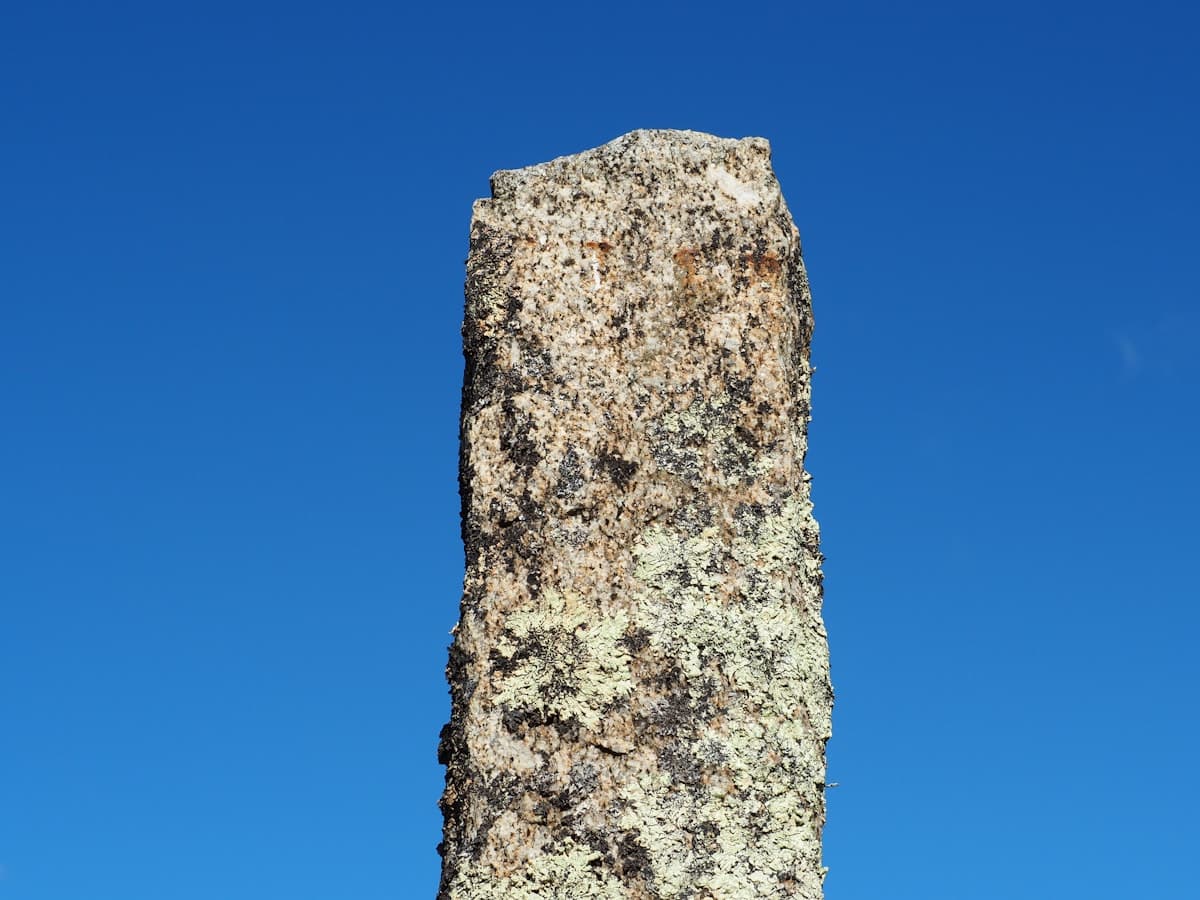
Alexander the Great founded Alexandria in 331 BC and left within months, never to return alive. His body was brought back and buried here. For a thousand years, pilgrims came to Alexandria specifically to see Alexander's tomb. Julius Caesar came. Augustus came and accidentally broke off Alexander's nose while leaning in for a closer look. The tomb has not been found. It is almost certainly under the modern city.
What Alexandria represented in Cleopatra's era is almost impossible to overstate. The Library of Alexandria, at its height under Ptolemy III, held an estimated 400,000 to 700,000 scrolls. Ships arriving in Alexandria's harbor were boarded, their books confiscated and copied, and the copies returned to the ship owners while the originals went to the Library. This was official state policy. The Museum attached to the Library, the Mouseion, was history's first state-funded research institution: scholars were paid salaries, given free meals, and exempted from taxes in exchange for their work. Euclid taught geometry here. Eratosthenes calculated the circumference of the earth here, getting it accurate to within 1%. Archimedes studied here. Cleopatra herself was almost certainly educated within these institutions.
The Library was not burned in a single dramatic fire by Caesar's soldiers, despite what the popular story suggests. That is a myth compressed from centuries of partial damage. The institution declined slowly through Roman-era neglect, Christian-era suppression of pagan scholarship, and eventual disuse. What this means for the traveler is that Alexandria's destruction was not a single event you can point to. It was an accumulation of choices, each one reasonable to the people making them, that together erased a civilization.
What Survives: Reading the Layers
Alexandria's problem, from a heritage tourism perspective, is that ancient Alexandria sits roughly 6 to 8 meters below the modern city. Every time a foundation is dug for a new building, archaeologists are called in, work frantically for weeks, document what they find, and then the building goes up anyway. The Eastern Harbour holds the submerged remains of Cleopatra's royal quarter, identifiable by underwater archaeologist Franck Goddio's surveys beginning in 1996. Goddio's team found sphinxes, columns, and statuary on the harbor floor, including what may be a representation of Cleopatra herself. You cannot dive to see them on a standard tourist permit, but the Alexandria National Museum has casts and photographs that give you a real sense of what was recovered.
The museum itself deserves more time than most visitors give it. Three floors organized chronologically from Pharaonic through Greco-Roman through Coptic and Islamic periods. The Greco-Roman room holds a black granite head widely believed to represent Cleopatra VII, not idealized but specific: a real face with a pronounced nose, strong jaw, and the diadem of a queen. This is not the Elizabeth Taylor version. If you come to Alexandria looking for the cinematic Cleopatra, you will not find her. If you come looking for the actual queen, a calculating, multilingual ruler who kept Egypt independent for twenty-one years through sheer political intelligence, the evidence is here.
At the Catacombs of Kom el-Shoqafa, built in the 2nd century AD, you see what happens when three civilizations attempt to process grief simultaneously. The burial complex mixes Egyptian, Greek, and Roman iconography in ways that are not syncretism so much as deliberate ambiguity: Anubis wears Roman armor, Thoth carries a caduceus, the deceased are depicted in all three visual traditions at once. This was a community navigating Roman imperial power, Greek cultural dominance, and deep Egyptian religious instinct at the same time. It is the most physically honest site in Alexandria for understanding what Cleopatra was managing politically at the scale of an entire city.
Pompey's Pillar and the Serapeum: What the Name Gets Wrong
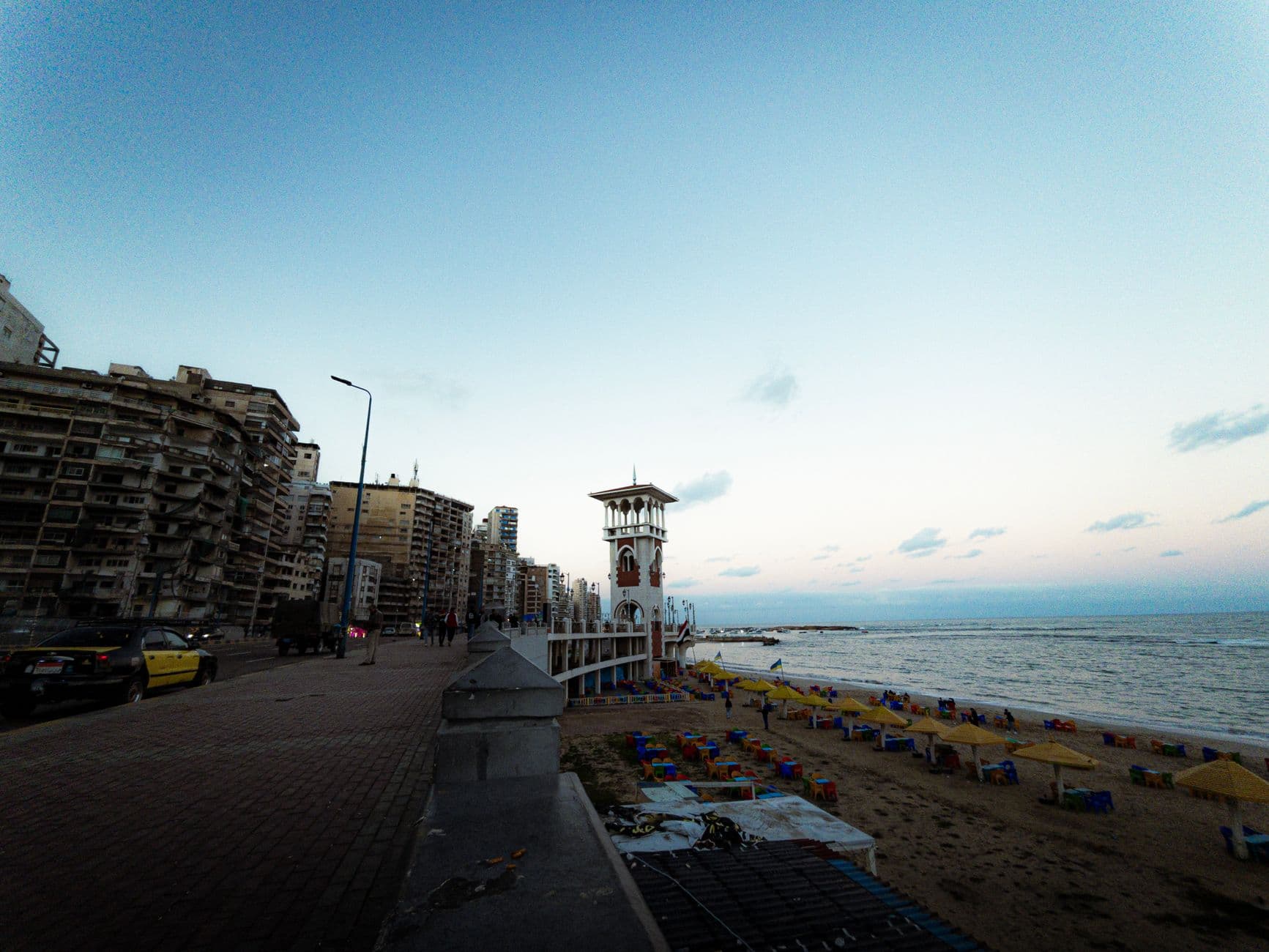
Pompey's Pillar has nothing to do with Pompey. The Roman general was murdered on an Egyptian beach in 48 BC, his head presented to Caesar as a gift that reportedly made Caesar weep. The 30-meter red Aswan granite pillar in the Serapeum precinct was erected in 298 AD in honor of the Emperor Diocletian, nearly 350 years after Pompey's death. Medieval Crusader sailors saw a tall column and assumed it marked the location of Pompey's remains. The name stuck.
The pillar is genuinely impressive not for its association with anyone famous but for what it represents structurally. It is a single piece of Aswan granite, quarried 900 kilometers to the south, transported by river, then by sea, then dragged through the city. The logistics of moving it would be demanding with modern equipment. In the 3rd century AD it required an organizational system that no longer exists and that we cannot fully reconstruct.
The Serapeum beneath and around it was the temple of Serapis, a deity invented by Ptolemy I specifically to bridge Egyptian and Greek religious traditions. Serapis combined Osiris, Apis the sacred bull, and Greek Hades into a single god who could be worshipped by both populations without either group feeling they had compromised. Religious engineering as political strategy. What survives at the site is mostly the underground galleries used to house the Apis bulls before burial. You can walk into them. The scale of the tunnels and the niches carved for the bulls' stone sarcophagi make the devotion concrete in a way that reading about it does not.
The Connections: Alexandria Is Not Separate From Egypt
Alexandria is often treated as Greece-in-Egypt, a Mediterranean city that happens to be located on the African coast. This is lazy thinking. Cleopatra conducted religious ceremonies at the Temple of Ptah in Memphis. She held the title of Isis incarnate and was depicted in wall carvings at Dendera Temple in exactly the same visual language used for Egyptian queens three thousand years before her. The Dendera relief, which you can visit today, shows Cleopatra and her son Caesarion in full Pharaonic iconography: double crown, offering stance, hieroglyphic inscription. This was not costume. She understood that her legitimacy in Egypt required Egyptian framing, not Greek.
The Coptic Christian community that grew in Alexandria after the 1st century AD built its theology directly on Alexandrian scholarly infrastructure. The Catechetical School of Alexandria, founded in the 2nd century, was the first Christian institution to systematically engage with Greek philosophy. Clement of Alexandria and Origen taught here. The theological arguments worked out in Alexandria shaped the Nicene Creed in 325 AD, which is still recited in Christian churches globally every Sunday. The Coptic Museum in Cairo holds manuscripts from this tradition, but the intellectual lineage runs directly through the same Alexandria that Cleopatra ruled.
The city's Islamic period is equally layered. The Mosque of Abu al-Abbas al-Mursi, rebuilt in its current form in 1943 but standing on a site of continuous religious use since the 13th century, draws Alexandrian fishermen before every voyage. The saint it honors was an Andalusian Sufi scholar who died in 1287. His tomb became the spiritual center of Alexandria's maritime community. On a Friday morning, the crowds around it are larger than at any ancient site in the city.
Common Mistakes
1. Spending your first morning at Pompey's Pillar. It is a column. It is large. It takes twenty minutes. Start with the Catacombs of Kom el-Shoqafa, which are genuinely undervisited and require mental energy. Go when you are fresh.
2. Skipping the Alexandria National Museum in favor of more famous sites. This is the single best museum in Alexandria for understanding the Ptolemaic period and the actual material evidence for Cleopatra's world. Most visitors are at the Bibliotheca Alexandrina instead. The National Museum has the actual artifacts. The Bibliotheca has architecture.
3. Taking the full Bibliotheca Alexandrina tour without checking what exhibitions are currently installed. The building itself, a Hans Hollein-influenced design completed in 2002 at a cost of $220 million USD, is genuinely worth seeing. But the permanent collection is modest. Check the temporary exhibition calendar before you commit half a day.
4. The horse carriages along the Corniche. They cost more than a taxi, move slower, and the horses are visibly exhausted. Skip them entirely.
5. Believing that the site of Cleopatra's palace is accessible. It is underwater. Tours that claim to show you Cleopatra's Alexandria above ground are showing you Roman-era and later remains, which are real and interesting but not what is being advertised. Adjust your expectations accordingly or you will spend the day feeling cheated.
6. The sound and light show at any Alexandria site. These cost EGP 250 to 350, run about an hour, and tell you nothing you will not learn from reading the museum placards. The one at the Serapeum is particularly underwhelming. The money is better spent on a dinner of fresh fish at Fish Market restaurant on the Eastern Harbour.
7. Doing Alexandria as a day trip from Cairo. You can do it. But two hours each way on the train means you arrive with five hours in the city and leave before you have understood anything. Stay at least one night.
Practical Tips
The Corniche is best walked at 6am or after 8pm, when the traffic is lighter and the Mediterranean light is either golden or dark. At midday it is a six-lane highway with no shade.
Alexandria's street food culture centers on liver sandwiches from Sayed Hanafi near the Attarine market, Hawawshi from any of a dozen street carts near Misr Station, and the feteer at El-Tabei near the National Museum. Do not eat at the tourist restaurants on the Corniche waterfront. They charge triple the price for half the quality.
If you want to engage seriously with the underwater archaeology, the Bibliotheca Alexandrina's Centre for Alexandrian Studies publishes Franck Goddio's survey maps and findings. The centre is located within the Bibliotheca complex and sometimes offers lectures. Check their schedule before arrival.
For context before you go: read Adrian Goldsworthy's biography of Caesar and Stacy Schiff's biography of Cleopatra. Schiff in particular is meticulous about separating ancient propaganda from documented fact, which matters enormously when you are standing in a city that Romans spent two thousand years misrepresenting.
Frequently Asked Questions
The Weekly Dispatch
More on Egypt, every Friday.
Cultural depth and places most guides never mention.
No spam. Unsubscribe anytime.