Cleopatra's Alexandria: The City She Ruled and Rome Erased
Cleopatra VII spoke nine languages but not Egyptian. Her city is now 8 meters underwater. What survives is stranger than what was lost.

Quick Facts
- Best time to visit
- October through April. Spring (March to April) offers the best light and mild temperatures. Summer is humid with sea haze that dulls outdoor sites.
- Entrance fee
- Pompey's Pillar and Serapeum: EGP 150 (approx $3 USD). Catacombs of Kom el-Shoqafa: EGP 180 (approx $3.50 USD). Alexandria National Museum: EGP 100 (approx $2 USD). Bibliotheca Alexandrina exhibitions: EGP 50-100 (approx $1-2 USD).
- Opening hours
- Most sites daily 8am to 5pm. Catacombs last entry 4:30pm. Alexandria National Museum 9am to 5pm, closed Tuesdays.
- How to get there
- Talgo high-speed train from Cairo Ramses Station: 2 hours, EGP 90-175 (approx $1.75-3.50 USD). Once in Alexandria, taxis between sites cost EGP 30-80. City tram runs EGP 2-5 but is slow.
- Time needed
- Two full days minimum to cover Ptolemaic, Roman, and early Islamic layers properly. One long day is possible but requires strict prioritization.
- Cost range
- Budget EGP 600-900 per day including accommodation near Raml Station. Mid-range EGP 1,800-3,000 per day with seafront hotel and full meals at fish restaurants in Anfushi.
Cleopatra's Alexandria: The City She Ruled and Rome Erased
Cleopatra VII was not Egyptian by blood. She was Macedonian Greek, the seventh woman in the Ptolemaic dynasty to bear that name, and the first in three centuries of Ptolemaic rule to bother learning the Egyptian language. She also spoke Aramaic, Ethiopian, Hebrew, Parthian, Median, and several others. Rome feared her not because she was exotic, but because she was the most politically literate ruler on the Mediterranean and she controlled Egypt's grain, which fed the Roman empire. When Octavian finally took Alexandria in 30 BC, he did not burn it. He absorbed it. Then, methodically, the city that Cleopatra ruled sank. Not metaphorically. The royal quarter, the Mouseion, the harbors she sailed from, all of it dropped between three and eight meters below the surface of the Mediterranean due to earthquakes, tsunamis, and subsidence. You are walking above a drowned capital.
Quick Facts
Best Time to Visit: October through April. Alexandria summers are humid and the sea haze reduces visibility for outdoor sites. Spring light in March and April is exceptional.
Key Site Entrance Fees: Pompey's Pillar and the Serapeum: EGP 150 (approx $3 USD) Catacombs of Kom el-Shoqafa: EGP 180 (approx $3.50 USD) Graeco-Roman Museum (when open, currently under renovation phases): EGP 100 (approx $2 USD) Alexandria National Museum: EGP 100 (approx $2 USD) Royal Jewelry Museum: EGP 75 (approx $1.50 USD) Bibliotheca Alexandrina general access: Free; permanent exhibitions EGP 50-100 (approx $1-2 USD)
Opening Hours: Most archaeological sites run 8am to 5pm daily. The Catacombs close promptly and do not allow entry after 4:30pm.
How to Get There: Alexandria is 225km from Cairo. The Spanish-built high-speed rail (the Talgo) runs from Cairo Ramses Station and takes roughly 2 hours; tickets run EGP 90-175 (approx $1.75-3.50 USD) depending on class. Once in Alexandria, taxis between major sites cost EGP 30-80. The city's tram is cheaper at EGP 2-5 but slower and confusing if you do not know the lines.
Time Needed: Two full days minimum. One day for the Ptolemaic and Roman layer (Serapeum, Catacombs, Kom el-Dikka), one day for the modern city reading the ancient city (Alexandria National Museum, coastal walk from Silsileh to Pharos, Anfushi).
Cost Range: Budget EGP 600-900 per day including accommodation in Raml Station area. Mid-range EGP 1,800-3,000 per day including a seafront hotel and sit-down meals at good fish restaurants.
Why This Place Matters
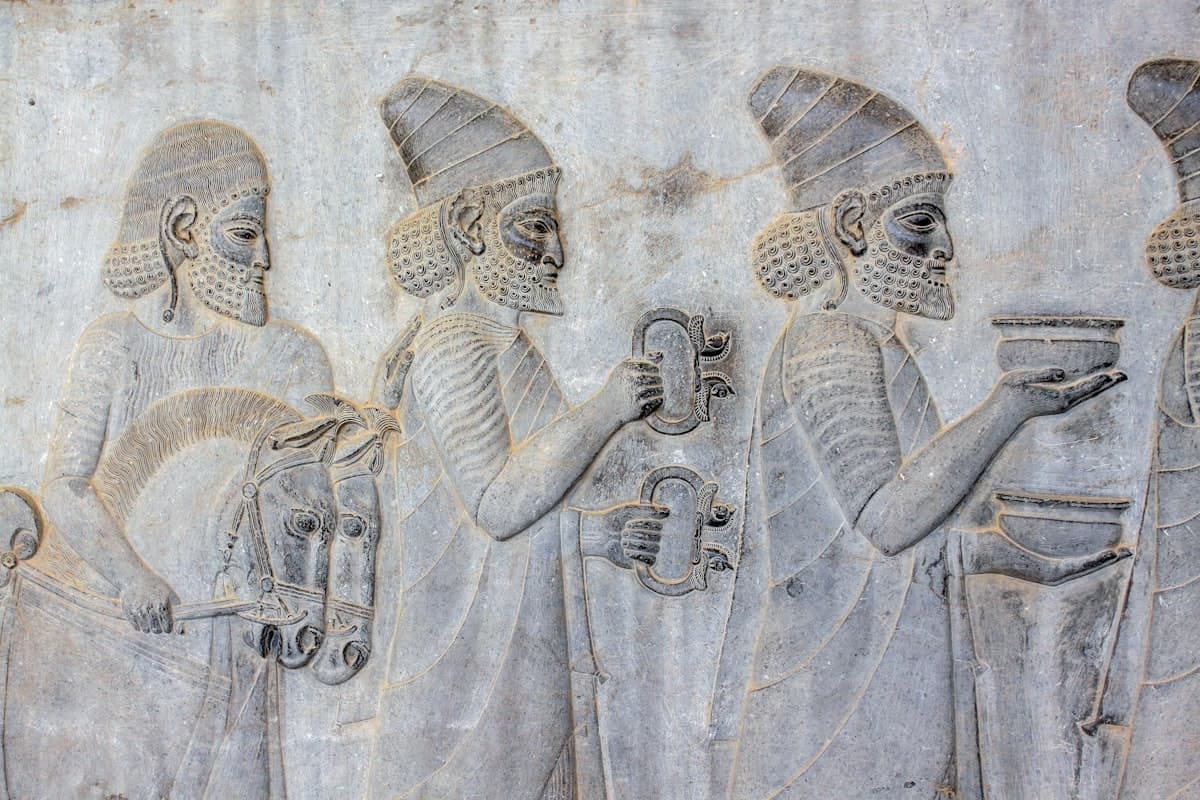
Alexander the Great founded over twenty cities named Alexandria. The Egyptian one became the largest Greek city on earth, overtaking Athens within a generation of its founding in 331 BC. At its peak under the Ptolemies, it held perhaps 600,000 people, making it the second largest city in the ancient world after Rome, which it pre-dated as a metropolis by centuries.
The Library of Alexandria, the one you have heard of, was not the only library in the city. The Mouseion complex, attached to the royal palace on the northeastern shore, was the main research institution. There was a secondary library inside the Serapeum temple on the western hill. When Julius Caesar accidentally burned ships in the harbor during the civil war of 48 BC, he probably destroyed books stored in a warehouse near the docks, not the Library itself. The Library declined slowly over centuries of reduced royal patronage and was largely defunct well before the Arab conquest of 641 AD, which popular history has incorrectly blamed for its destruction since at least the 12th century.
Cleopatra herself is relevant to this story because she was the last royal patron of the Mouseion. After her death, Alexandria remained important but it was never again governed by someone who understood it as a civilization rather than a tax base.
What Survives and Where to Find It
Pompey's Pillar and the Serapeum
The column Europeans named Pompey's Pillar has nothing to do with Pompey. The Roman general was assassinated in Egypt in 48 BC, but this red Aswan granite column, 27 meters tall and cut from a single piece of stone, was erected in 297 AD in honor of the Emperor Diocletian. The name came from Crusader-era travelers who needed a famous Roman to attach to the most visible monument in Alexandria. They chose wrong.
The column stands on the flattened ruins of the Serapeum, the great temple to Serapis that Ptolemy I created specifically as a syncretic deity, part Osiris, part Apis bull, part Greek god, designed to be worshipped by both Egyptians and Greeks simultaneously. This was deliberate religious policy, not organic fusion. The Serapeum was destroyed in 391 AD on the orders of the Bishop Theophilus, who obtained an imperial rescript from Theodosius I permitting the demolition of pagan temples. The destruction of the Serapeum was one of the largest acts of deliberate cultural erasure in late antiquity, celebrated at the time by Christian writers and mourned by pagan philosophers who saw it as the end of classical civilization. Both sides were correct.
On site today you will see the column, two pink granite sphinxes, underground galleries where the sacred Apis bulls were kept, and foundation cuts in the bedrock where one of the ancient world's greatest temple complexes once stood. The site deserves an hour and receives a fraction of the attention it warrants.
The Catacombs of Kom el-Shoqafa
Discovered in 1900 when a donkey fell through the ground into a shaft, the Catacombs of Kom el-Shoqafa are the most architecturally coherent surviving structure from Cleopatra's Alexandria and its immediate aftermath. They date from the 2nd century AD, when Alexandria was Roman but culturally still Greek and Egyptian simultaneously.
The carvings inside are the clearest visual evidence of what scholars call the Alexandrian synthesis: Egyptian gods carved in the style of Greek statuary wearing Roman armor. Anubis, the jackal-headed god of the dead, appears here in a Roman soldier's cuirass. Thoth holds his caduceus like a Roman legionary. The burial niches accommodate Egyptian mummification, Greek funeral banqueting, and Roman architectural orders in the same underground room. No other site in Egypt shows you this three-way negotiation so plainly.
The catacombs descend three levels. The third is flooded and has been since their discovery. Wear shoes that can handle slippery stone steps and bring a jacket because the temperature drops sharply underground even in summer.
Kom el-Dikka: The Roman Lecture Halls
In the middle of modern Alexandria, behind a fence on a busy street, are the only surviving Roman lecture halls from the ancient world. Thirteen auditoria, each with tiered stone seats arranged in a D-shape, dating from the 4th to 7th centuries AD. These were the university of Roman Alexandria, and their survival is partly accidental: the site was built over by later medieval construction, which protected the Roman layer from being quarried.
Also at Kom el-Dikka is a Roman theater, small by Roman standards but intact enough to understand, and Roman-era baths. The site was excavated by a Polish archaeological mission beginning in 1960 and work continues. The lecture halls are not in any popular Cleopatra Alexandria Egypt historical guide I have seen that was not written by an archaeologist, which is the most direct evidence I can give you that most guides are not doing their homework.
The Underwater City: What Is Gone and How to See It
French marine archaeologist Franck Goddio has been excavating the submerged royal quarter of ancient Alexandria since 1996. His team has recovered sphinxes, statues, columns, the remains of Cleopatra's palace complex on the island of Antirhodos, and objects from the Ptolemaic temple of Isis that stood at the harbor entrance. None of this is currently on public display underwater; dive tourism in the submerged harbor is discussed periodically but has not been properly established.
What Goddio's team recovered is partially in the Alexandria National Museum on Tariq al-Hurriya. The museum is housed in a former Italian consulate, an odd container for Ptolemaic sculpture, but the collection is genuinely good and chronically under-visited. The colossal pink granite statues of Ptolemaic rulers pulled from the harbor weigh several tons each. Standing next to a statue that was underwater for 1,600 years and was once in a room where Cleopatra would have walked is a specific feeling that the labels do not prepare you for.
The Connections: Alexandria Across Eras
Alexandria is where Egypt's layers are most compressed and most visible. The Ptolemaic city sits beneath the Roman city, which sits beneath the Byzantine city, which the Arab general Amr ibn al-As besieged in 641 AD and then largely abandoned in favor of his new capital at Fustat (the seed of Cairo). Alexandria became a secondary city after the Arab conquest for the first time in a thousand years.
The Attarine Mosque on the street of the same name was built on the site of a Byzantine church dedicated to Saint Athanasius, who was himself born in Alexandria in the early 4th century and whose theological arguments against Arianism at the Council of Nicaea in 325 AD shaped the doctrine of the entire Roman church. The church was itself built on Ptolemaic foundations. The mosque today is unremarkable architecturally, but the ground it stands on has been sacred in three different religious frameworks.
The Anfushi district, north of the main harbor, contains Ptolemaic-era tombs from the 3rd century BC that were already being built for Alexandrian Greeks who had adopted Egyptian burial customs. The tombs are painted to imitate marble and alabaster that the owners could not afford. This is not poverty. This is adaptation, the same adaptation you see in the Catacombs three centuries later. Alexandria has always been a city where cultures did not merely coexist but actively borrowed from each other in the most practical and personal contexts, including how they buried their dead.
Common Mistakes
1. Spending all your time at the Bibliotheca Alexandrina and calling it a day. The modern library is architecturally interesting and the Antiquities Museum inside it has good pieces, but it is a 21st-century building on a 20th-century site. The ancient Library stood about 1km to the east, in the area now occupied by the eastern harbor corniche. The Bibliotheca is worth two hours. Do not let it eat the afternoon you should spend at the Catacombs.
2. Taking the Corniche walk as a substitute for research. The seafront between Silsileh point and Pharos island is pleasant. It also tells you almost nothing about ancient Alexandria because the relevant structures are underwater. Walk it, but know what you are not seeing.
3. Expecting to find Cleopatra's tomb. Archaeologist Kathleen Martinez has been excavating Taposiris Magna, 45km west of Alexandria, based on her theory that Cleopatra and Mark Antony were buried there in a temple of Osiris. The site has yielded coins bearing Cleopatra's face and some mummies of significance, but no royal burial has been confirmed. The media coverage of this excavation is consistently about fifteen steps ahead of the actual evidence. Go to Taposiris if you are interested in serious archaeological process. Do not go expecting a tomb.
4. The sound and light show at various sites. Skip it. The one offered periodically in Alexandria repeats information available in any competent guidebook, costs EGP 250-350, and is staged in a way that prioritizes spectacle over content. Spend that time at Kom el-Dikka in the early morning when no one is there.
5. Dismissing the Alexandria National Museum as secondary. Every serious visitor I have spoken to who skipped it to spend more time at the Library regretted it. The Ptolemaic statuary recovered from the harbor is at the National Museum, not the Library.
6. Not eating before visiting the Catacombs. The descent is more disorienting than it looks on paper. Three levels underground with limited lighting and no food or water available inside. Eat first.
7. Arriving without cash. Several smaller sites and all taxis operate cash only. ATMs exist on Saad Zaghloul Square and along the Corniche. Draw money before heading to any western sites.
Practical Tips
Stay in the Raml Station area, the historic heart of the city, not Miami or Montazah if you are here for the Ptolemaic layer. The commute from the eastern beach suburbs eats time you need for sites.
Alexandria is a working Mediterranean city, not a purpose-built tourist zone. The crowds at the Catacombs are manageable on weekday mornings. Friday and Saturday afternoons are difficult everywhere because Egyptian families also visit and the sites are not sized for weekend volume.
The Alexandria National Museum requires about two hours to do properly. Take the audio guide if they have it in your language. The labels on the Ptolemaic pieces are good but the context between objects is not always clear without help.
If you have a serious interest in the underwater sites, contact the Bibliotheca Alexandrina's Center for Alexandrian Studies. They organize occasional academic access to Goddio's findings and can connect you with researchers who will tell you more in an afternoon than three days of independent touring.
Finally: the fish. Abu Ashraf in Anfushi, and the string of restaurants along the fish market, serve seafood that arrives off boats that morning. A full meal for two with fried calamari, grilled sea bass, salads, and bread costs EGP 400-700. This is not a footnote. Eating well in Alexandria is part of understanding it as a living city and not a ruin.
Frequently Asked Questions
The Weekly Dispatch
More on Egypt, every Friday.
Cultural depth and places most guides never mention.
No spam. Unsubscribe anytime.