El Alamein World War 2 Egypt Guide: Beyond the Battlefield
More soldiers died at El Alamein than in the entire Pacific War's first year. Most visitors spend 90 minutes. That is not nearly enough time.

Quick Facts
- Best time to visit
- October to April. October and November coincide with the battle's anniversary and offer meaningful atmosphere. Summer months bring beach resort crowds entirely inappropriate to the site.
- Entrance fee
- El Alamein Military Museum: EGP 100 (approx $2 USD), students EGP 50. All three war cemeteries are free to enter.
- Opening hours
- Military Museum: daily 8am to 5pm. Commonwealth, German, and Italian cemeteries are accessible throughout the day with no set closing time.
- How to get there
- From Alexandria: West Delta Bus from Sidi Gaber station, EGP 30 to 50, approximately 2 hours. Private taxi from Alexandria EGP 500 to 700 return with waiting time. From Cairo: approximately 4 hours by road, private car or bus via Alexandria.
- Time needed
- 4 hours minimum for museum and all three cemeteries. Full day recommended for serious engagement with the battlefield and its geography.
- Cost range
- Budget day trip EGP 200 to 500 including bus transport from Alexandria. Mid-range with private driver and specialist guide EGP 1,200 to 2,000.
Quick Facts
Best time to visit: October to April. The desert summer is brutal and the coast turns into a beach resort, which creates a jarring atmosphere for a war memorial site.
Entrance fees: El Alamein War Cemetery is free. The El Alamein Military Museum costs approximately EGP 100 (about $2 USD) for adults, EGP 50 for students. The Commonwealth War Cemetery and the German and Italian memorial cemeteries are also free.
Opening hours: The Military Museum is open daily 8am to 5pm. The cemeteries maintained by the Commonwealth War Graves Commission have no set closing time and are accessible throughout the day.
How to get there: From Alexandria, take a West Delta Bus Company service from Sidi Gaber bus station. The journey takes about two hours and costs EGP 30 to 50 depending on the service. Private taxis from Alexandria run EGP 400 to 600 for a return trip with waiting time. From Cairo, you are looking at roughly four hours by road. Many visitors combine El Alamein with a night in Alexandria.
Time needed: Four hours minimum if you are visiting the museum and all three cemeteries seriously. A full day if you intend to read inscriptions, understand the battlefield geography, and sit with what you are looking at.
Cost range: Budget day trip EGP 200 to 500 including transport from Alexandria. Mid-range with a private driver and guide EGP 1,200 to 2,000.
---
In four months of fighting across a strip of Egyptian desert roughly 65 kilometers wide, the Second Battle of El Alamein produced more than 70,000 casualties. The battlefield sits 106 kilometers west of Alexandria. If Rommel had broken through, the city would have fallen within days, and with it, the Suez Canal. The whole trajectory of the war in North Africa, possibly in Europe, would have shifted on this flat, featureless ground that looks today like it could not matter less.
That is the problem with El Alamein. The landscape refuses to explain itself. There are no dramatic ridgelines, no rivers, no obvious reason why this particular piece of desert became the hinge point of a global war. You have to do the intellectual work yourself, and most visitors do not arrive equipped to do it.
This guide is for people who want to do it properly.
---
Why This Place Matters
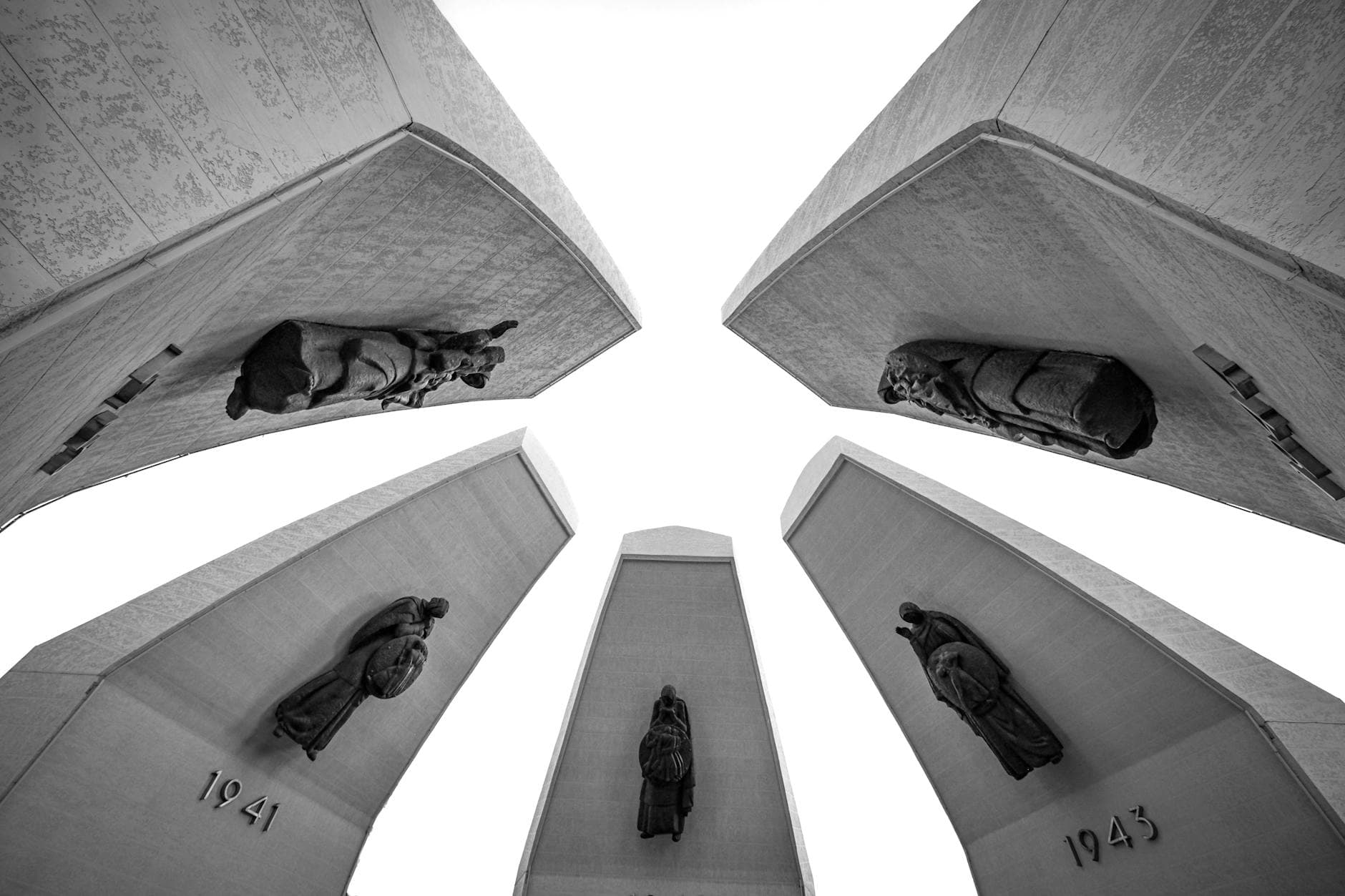
El Alamein matters for a reason that rarely appears in the tourist literature: it was the only major land battle of the Second World War fought on Egyptian soil, and Egypt was not a combatant. The country was under British occupation, nominally independent but governed in practice by British military authority. King Farouk had complicated sympathies, some of his officers actively hoped for a German victory that might end British control, and Cairo's street gossip in the summer of 1942 included the phrase "Rommel is coming" with a combination of fear and something more ambivalent.
When the Eighth Army finally pushed Rommel back at El Alamein in October and November of 1942, Churchill called it "the end of the beginning." But for Egypt, the end of the battle meant continued British occupation for another decade. Victory here delayed Egyptian independence as much as it secured it.
The site also sits on ground that had already absorbed thousands of years of movement. The ancient Egyptians used this coastal strip as a route between the Delta and Libya. Alexander the Great marched his army along this same corridor in 331 BC on his way to found Alexandria. The Romans fortified it. The Arab conquest passed through here in 641 AD. The desert does not forget its history, even when humans do.
---
The Three Cemeteries: What You Are Actually Looking At
Most visitors to the El Alamein World War 2 Egypt sites come for the Commonwealth War Cemetery, which is maintained by the Commonwealth War Graves Commission to a standard of care that can feel almost surreal in the Egyptian desert. The grass is kept green, the Portland stone headstones are cleaned, the roses are watered. The Commission maintains 23,000 cemeteries across 153 countries and spends roughly £100 million per year doing it. The El Alamein cemetery holds 7,240 graves.
What most visitors miss is the German memorial cemetery, three kilometers away. It holds 4,280 German soldiers, interred under dark volcanic basalt crosses rather than pale limestone headstones. The aesthetic is deliberately somber where the Commonwealth cemetery is consoling. Many of the German graves are mass burials, multiple names on a single plaque, because the bodies were impossible to identify individually after years in the desert. There is a tower you can climb for the only elevated view of the battlefield. Do this. The flatness of the terrain from above tells you something about the tactical problem both sides faced.
The Italian memorial is the architectural statement of the three. Built in 1959, it is a severe modernist structure with a chapel, colonnaded galleries, and 4,800 Italian dead interred in its walls. It is the least visited of the three cemeteries and, architecturally, the most interesting. The Italians fought here longer than either the British or the Germans, from 1940 onward, and their suffering is the least memorialized in the English-language history of the campaign.
---
The Military Museum: What It Gets Right and Wrong
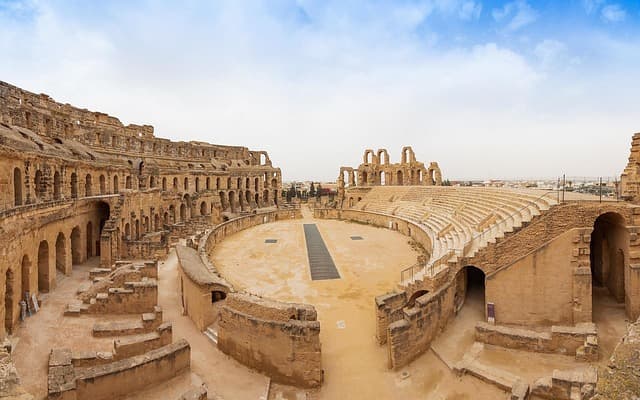
The El Alamein Military Museum opened in 1965 and has been updated sporadically since. It contains tanks, artillery pieces, and military equipment from all three combatant forces, displayed in outdoor courts and indoor galleries. A Sherman tank and a German Panzer IV sit close enough to compare. This is genuinely interesting. These were not equal machines and the differences explain a great deal about how the battle was won.
The indoor galleries are more uneven. The dioramas and maps are helpful for orienting yourself to a battlefield that otherwise offers no visual cues. But the explanatory texts are thin, sometimes inaccurate in minor ways, and the Egyptian contribution to the context of the battle, the political situation, the occupied country in which these armies fought, is almost entirely absent. The museum tells the story of the battle as if Egypt were a stage set rather than a country with its own stakes in the outcome.
One exhibit that passes the fact test without any help from the museum's labels: the German 88mm anti-aircraft gun, repurposed as an anti-tank weapon, was so effective at El Alamein that British tank crews gave it the nickname "the 88." It could penetrate the armor of any Allied tank at ranges where those tanks could not fire back. The Allies won the battle despite this weapon, not because they solved the tactical problem it posed, but because they had more tanks than Rommel could replace.
---
The Human Stories the Sites Don't Tell You
The Commonwealth cemetery contains a grave for an unknown soldier with an inscription that reads: "Known unto God." Rudyard Kipling wrote that phrase after his own son John was killed at the Battle of Loos in 1915, his body never recovered. Kipling spent the rest of his life trying to use his influence to find out what happened to John. He failed. He died believing he had sent his son to his death by using his connections to secure a commission for a boy who had twice been rejected for service due to poor eyesight. The inscription he wrote for the unknown dead is one of the most grief-stricken acts of public writing in the English language, and it appears on headstones in El Alamein as it does in cemeteries across the world.
Look also for the graves of soldiers from undivided India, Australia, New Zealand, and South Africa. The Eighth Army that fought at El Alamein was one of the most multinational forces ever assembled, drawn from across the British Empire in its final phase. New Zealand alone lost 2,700 men in the North African campaign. These were not volunteers for a British war in any straightforward sense. The politics of why they were there is complicated and worth thinking about as you walk the rows.
Among the German dead is a contingent from the Afrika Korps who were prisoners of war before the battle began, captured earlier in the campaign and then killed when the Allied ship transporting them was sunk in the Mediterranean. They are buried in the desert they never reached as soldiers. The war's ironies are distributed unevenly among the graves.
---
The Connections: El Alamein in Egyptian Time
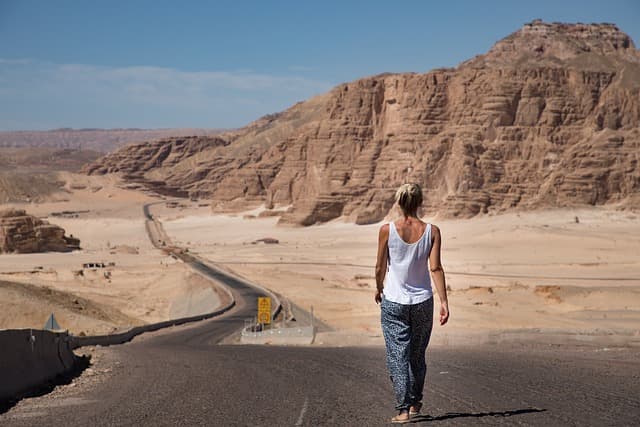
The most important connection most visitors miss is geographic. The reason El Alamein became the final defensive line is the Qattara Depression, a vast below-sea-level basin that begins roughly 60 kilometers south of the coast. It is impassable to armored vehicles. This meant any army approaching from the west had to squeeze through a corridor between the coast and the Depression, turning what is normally a flexible desert war into something closer to a static front. The Depression is 300 kilometers long and drops to 133 meters below sea level at its lowest point. It is one of the most effective natural defensive features on earth, and it decided the outcome of a world war.
El Alamein also sits on the same coastal road that has connected Egypt to Libya for millennia. The road the German and Italian forces used to advance east is the same road the Arab armies used in the 7th century conquest, the same road Greek merchants used to reach Alexandria from Cyrene. The desert does not offer many routes. History keeps using the ones that exist.
From El Alamein, Alexandria is less than two hours east. If you are building an itinerary, the combination is obvious but worth structuring deliberately. The city that the battle was fought to protect has its own war history, including a sequence of events in the summer of 1942 that is sometimes called the "Flap," when British officials in Alexandria and Cairo began burning documents in anticipation of German arrival. The smoke from the burning files was visible across the city. That panic, and the shame of it, shaped British Egypt's final decade.
---
Common Mistakes
Visiting only the Commonwealth Cemetery. It is the most maintained and most famous, but it tells only one third of the story. Budget time for the German and Italian memorials. The Italian memorial in particular is visited by almost no independent travelers and is architecturally more ambitious than anything at the Commonwealth site.
Arriving without context. The museum's explanatory material is insufficient for understanding what you are looking at. Read at minimum a summary account of the North African campaign before you go. Antony Beevor's chapter on El Alamein in his writing on the Second World War is a good primer. Without context, you are looking at a flat desert and some headstones.
Taking the "sound and light" experience at the museum if it is running. At EGP 200 to 300 it tells you less than thirty minutes of independent reading and adds nothing to the experience of standing in the actual cemeteries. This is not a spectacular site that benefits from theatrical enhancement. It benefits from silence.
Coming in July or August. The Egyptian north coast becomes a dense summer resort strip in these months, with traffic, noise, and crowds that have nothing to do with war commemoration. The atmosphere is wrong. October and November, which coincide with the actual anniversary of the battle, are significantly better.
Skipping the drive west along the coastal road. If you have a driver, ask to continue ten or fifteen kilometers past the museum toward the Libyan border direction. The landscape opens, the resort development stops, and you begin to understand what armies were fighting across. It is necessary for the battlefield to make spatial sense.
Not accounting for transport logistics. The three cemeteries and the museum are spread over several kilometers. The public bus drops you at the museum. Without a private vehicle or taxi waiting, moving between sites in the midday heat is difficult. Arrange a private driver or rent a car for this day.
Treating the visit as a quick detour from a beach holiday. El Alamein is frequently packaged as a half-day from the north coast resorts. Half a day is not enough to do it seriously. If you are not willing to give it a full day, the site will not give you anything back.
---
Practical Tips
The most comfortable base is Alexandria, which has a full range of accommodation and is far more interesting than the north coast resort towns. The bus connection is reliable and cheap. A private taxi with a driver who will wait for you costs EGP 500 to 700 from Alexandria and is worth it for the flexibility.
Bring water. The sites are open-air and shaded only in the museum building and inside the Italian memorial. In any month other than December and January, the sun at midday is serious.
The Commonwealth War Graves Commission cemeteries have a visitors' book and a register of the dead, which you can use to locate specific graves if you are visiting for family reasons. This is a more common visit than you might think. Australian, New Zealand, and South African families make pilgrimages to El Alamein with some regularity.
The museum has a small gift shop with books in Arabic and some in English. The English-language titles are limited. Buy your reading material before you arrive.
There is no significant food option at or near the military sites. The town of El Alamein has a few basic cafes but nothing you would plan a meal around. Eat before you go or bring food.
Photography is permitted in the cemeteries and outside the museum. Inside the museum, ask before photographing specific exhibits. Behave in the cemeteries as you would in any active place of mourning. Some of the people around you are there for reasons that are not touristic.
Frequently Asked Questions
The Weekly Dispatch
More on Egypt, every Friday.
Cultural depth and places most guides never mention.
No spam. Unsubscribe anytime.