El Alamein World War 2 Egypt Guide: Beyond the Cemeteries
More soldiers died at El Alamein than in the entire Pacific campaign of 1942. Most visitors spend 90 minutes and leave. Here is what that misses.
Audio Guide: El Alamein World War 2 Egypt Guide: Beyond the Cemeteries
Quick Facts
- Best time to visit
- October to April. Late October and early November for anniversary commemorations. Avoid June through September due to extreme heat above 40°C.
- Entrance fee
- War Museum: EGP 100 (approx $2 USD), students EGP 50. Commonwealth Cemetery, German Memorial, Italian Memorial: all free.
- Opening hours
- War Museum: daily approximately 8am to 4pm. Cemeteries and memorials have no formal hours and can be visited at any time, though morning light is best for the Commonwealth Cemetery.
- How to get there
- Microbus from Alexandria Midan El Gumhuriyya toward Mersa Matruh: EGP 30 to 50, approx 90 min. Private taxi from Alexandria return with waiting: EGP 600 to 900. No train stop at El Alamein.
- Time needed
- Half day for the main four sites. Full day if adding Ruweisat Ridge and driving the battle geography. Combine with Alexandria for a complete day.
- Cost range
- Budget day from Alexandria: EGP 400 to 700. Mid-range with private driver and lunch: EGP 1,500 to 2,200.
Quick Facts
Best time to visit: October to April. The desert is brutal from June through September, with temperatures regularly exceeding 40°C. October is ideal: the anniversary commemorations happen in late October and early November, and the coastal light is sharp and clear.
Entrance fees: The El Alamein War Museum costs approximately EGP 100 (around $2 USD) for adults, EGP 50 for students. The Commonwealth War Cemetery, the German Memorial, and the Italian Memorial are all free to enter and have no formal opening hours, though the museum is typically open 8am to 4pm daily. The Italian Memorial occasionally closes without notice, so confirm locally.
How to get there: From Alexandria, take a microbus or minibus from Midan El Gumhuriyya toward Mersa Matruh. Journey time is roughly 90 minutes to two hours. Cost is approximately EGP 30 to 50. Taxis from Alexandria will negotiate, expect to pay EGP 600 to 900 for a return trip with waiting time. The sites are spread along and near the coastal road, so having a driver for the day makes sense. There is no train stop at El Alamein itself.
Time needed: Half a day minimum if you are visiting all four major sites. A full day if you want to drive into the desert ridges, find the original mine belt markers, or visit Ruweisat Ridge. Plan around museum opening hours and use the afternoon for the open-air sites.
Cost range: Budget day from Alexandria around EGP 400 to 700. Mid-range with a private driver and lunch: EGP 1,500 to 2,200.
---
Why This Place Matters
In the summer of 1942, the German Afrika Korps under Erwin Rommel stood 106 kilometers from Alexandria. Residents of Cairo could see smoke on the western horizon. The British Embassy burned its files in the courtyard of the embassy building on the Nile, and the ash fell across Garden City like dirty snow. That day in July became known among Cairenes as "Ash Wednesday," though it happened on a Saturday. The name stuck because it captured something true: everyone believed the city was about to fall.
El Alamein stopped that. The First Battle of El Alamein in July 1942 halted the advance. The Second Battle, fought in late October and early November 1942, turned the entire war in North Africa. Churchill later said: "Before Alamein we never had a victory. After Alamein we never had a defeat." That may be an overstatement, but the strategic reality it describes is accurate. The victory at El Alamein allowed the Allies to launch Operation Torch in Northwest Africa two weeks later, and it initiated the sequence of events that ended with Italy's capitulation in 1943.
What most visitors do not know is that the location of the battle was not an accident of military movement. El Alamein was chosen as a defensive line precisely because of its geography. To the north lies the Mediterranean. To the south, only 60 kilometers away, lies the Qattara Depression: a vast salt flat sitting 134 meters below sea level, impassable to armored vehicles. Any army advancing east had to funnel through a corridor little more than 60 kilometers wide. The British understood this. That narrow corridor is the reason the battle happened here and not somewhere else.
---
What You Will Actually See
The Commonwealth War Cemetery
This is where most people spend their time, and it deserves every minute you give it. There are 7,240 graves here, arranged in precise rows of white Portland stone, each one level with the desert floor so that no grave is higher than another. The design principle was deliberate: officers and enlisted men lie at the same height. It is quiet in a way that feels earned rather than imposed.
The inscriptions are worth reading slowly. Families were invited to add personal epitaphs beneath the official details of name, rank, and date. Some are formal. Some are not. One reads: "He died as he lived, thinking of others." Another, over a grave listing only "A Soldier of the 1939-1945 War, Known Unto God," has no epitaph because there was no family left to provide one, or no body identified clearly enough to name.
Of the 7,240 buried here, 815 are unidentified. That number is worth sitting with.
The cemetery is maintained by the Commonwealth War Graves Commission, which also maintains 23,000 other cemeteries and memorials in 153 countries. Its annual budget is funded by the governments of the United Kingdom, Australia, Canada, India, South Africa, and New Zealand, in proportion to the number of their dead. It has operated continuously since 1917.
The El Alamein War Museum
The museum is uneven. Some of it is very good: the diorama of the battle lines, the original maps, the collection of field equipment and personal objects recovered from the desert. A German officer's journal, open behind glass, contains entries up to three days before the breakthrough. You do not need to read German to understand what the handwriting in the final entries looks like.
Other parts of the museum feel dated: mannequins in uniforms, poorly lit display cases, explanatory panels that repeat what you already know from the basics. Spend your time at the maps and the recovered personal effects. Skip the vehicle park outside unless you have a specific interest in the mechanical history of the Matilda tank versus the Panzer III. The context panels there are minimal.
One object that stops most people: a collection of hand-drawn caricatures found in an Italian soldier's kit. They are funny, human, and careful. The soldier who drew them died at El Alamein in November 1942. His name is on the Italian Memorial.
The German and Italian Memorials
Both are worth visiting and both are often empty when the Commonwealth Cemetery has a tour group. The German Memorial is the more architecturally significant: a dark basalt fortress sitting on a low ridge with a view across the coastal plain to the sea. It contains 4,280 German dead, and it looks nothing like a cemetery. It looks like something that expects to be attacked. Whether that was intentional is debated.
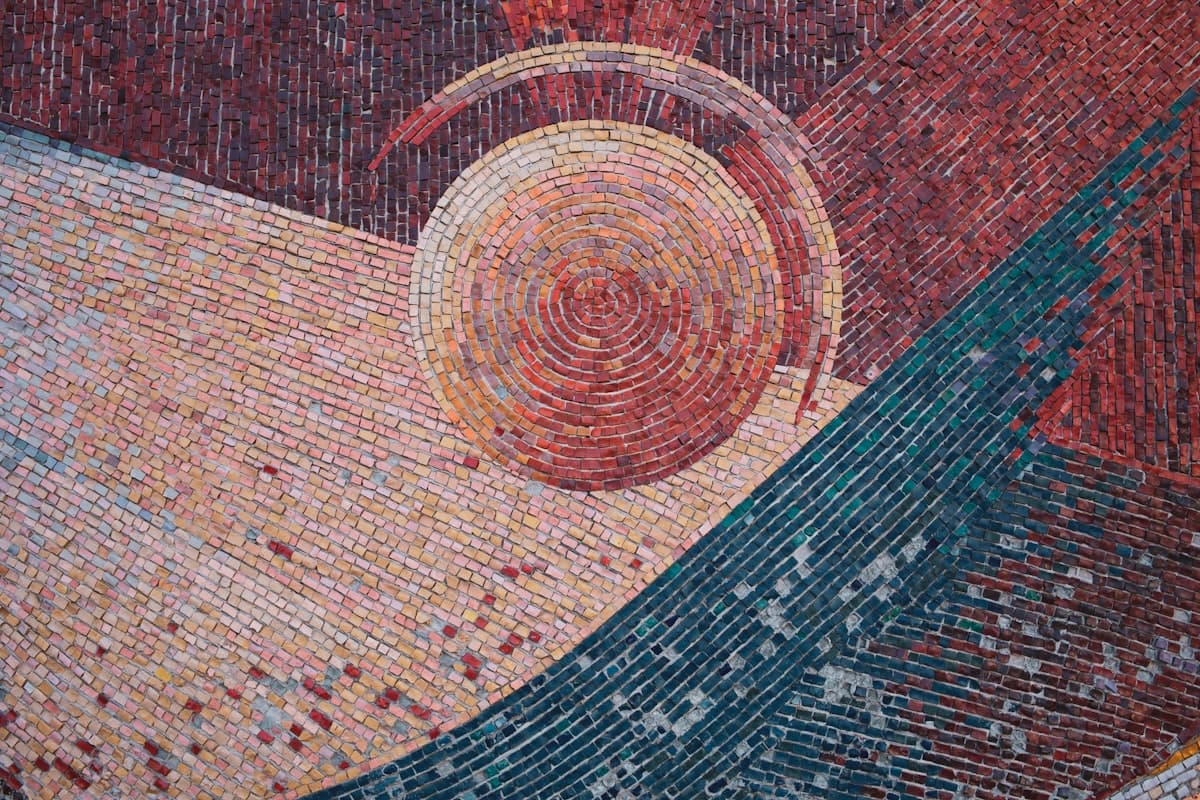
The Italian Memorial is more conventional in form but contains a mosaic interior that almost nobody mentions in El Alamein World War 2 guides. The mosaic depicts the campaign in a style that sits somewhere between Byzantine religious art and Soviet realist propaganda. The visual grammar is dissonant in an interesting way: the same formal language used to depict saints in Alexandria's churches was applied here to soldiers dying in the desert. It is worth spending twenty minutes with.
---
The Connections
El Alamein is not where World War Two intersects Egypt. It is where World War Two intersects a coast that has been contested for 3,000 years.
The Western Desert road that Rommel drove east along is essentially the same coastal route that Alexander the Great took west in 331 BC when he founded Alexandria. The salt flats of the Qattara Depression that made the battle's geography possible were known to Cambyses II of Persia, whose army of 50,000 men is said to have vanished somewhere in the Western Desert in 524 BC, possibly swallowed by a sandstorm. That army has never been found, though Italian archaeologists working near the Siwa Oasis reported in 2009 finding bones, weapons, and cloth that may belong to it.
And Alexandria, 106 kilometers to the east, holds its own World War Two history that almost no visitors seek out. The Cecil Hotel on the Corniche was used by British intelligence during the war; Somerset Maugham worked there as a spy earlier in the century and the hotel retained the habit. The Graeco-Roman Museum in Alexandria, which contains the material record of the city that Alexander built, was itself partially evacuated during the summer of 1942 when the city expected to fall. Curators wrapped the most significant pieces and moved them south. They brought them back in November, after El Alamein.
That continuity, the same city protecting its same objects across the same existential threats, across 2,300 years, is the thing Egypt does that nowhere else does quite as completely.
---
Common Mistakes
Treating El Alamein as a half-day add-on to a beach trip. Sidi Abdel Rahman, the resort area near El Alamein, has made the site into an afterthought for some visitors. If you are going to El Alamein, go to El Alamein. The beach can wait.
Only visiting the Commonwealth Cemetery. It is the best-maintained and most visited, but seeing only one cemetery gives you one nation's experience of the same battle. The German and Italian memorials take less than an hour combined and they change the geometry of what happened here.
Arriving without water and sun protection. The sites are largely unshaded. The coastal desert in summer will dehydrate you faster than you expect. In winter the problem is wind, not heat, but the wind off the Mediterranean at El Alamein in January is serious.
Paying for the Sound and Light Show. It runs in the evenings, costs EGP 200 to 300 depending on the current price list, and delivers a dramatized narration over a light display at the museum. The information it contains is less detailed than reading a single good book about the campaign before you arrive. Skip it. Spend the money on a long lunch in Marsa Matruh if you are continuing west.
Skipping Ruweisat Ridge. The ridge is where the critical defensive fighting of the First Battle took place in July 1942. It is not well signed and you will need to ask locally or use coordinates. But standing on the ridge and looking north to the sea and south toward the Qattara Depression makes the entire battle's geography suddenly legible in a way that no map achieves. It takes forty minutes to find and twenty minutes to understand the whole campaign.
Not reading anything before you go. This is the specific mistake that turns a meaningful site into a confusing collection of stones and plaques. John Bierman and Colin Smith's "The Battle of Alamein" is the most readable single-volume account. Cornelius Ryan wrote about it. Alan Moorehead was there as a journalist and his dispatches are still in print. Any of these, read on the bus from Alexandria, will transform what you see.
Expecting infrastructure. There is one small café near the museum. Food options are limited. If you are bringing children or spending a full day, bring food.
---
Practical Tips
The best day to visit is a weekday in October or November. The anniversary commemorations, held in late October or early November depending on the year, bring veterans' groups, official delegations, and a degree of ceremony that is genuinely moving rather than performative. The Commonwealth War Graves Commission holds a formal service. Check dates with the British Embassy in Cairo if you want to attend.
Dress practically. The cemeteries are not sacred sites in a religious sense, but they carry a weight that makes most visitors naturally quiet and careful about what they wear. Light, covering clothing is appropriate for both the heat and the context.
If you are driving yourself from Alexandria, the coastal road is straightforward. The museum is signposted. The Commonwealth Cemetery is clearly visible from the road. The German Memorial is on a ridge above the road and slightly harder to find the first time. The Italian Memorial is west of the town. A driver who knows the area will save an hour of navigation.
Combining El Alamein with a visit to Alexandria makes a full and coherent day. The Greco-Roman Museum and the Catacombs of Kom El Shoqafa in Alexandria, both of which contain layers of exactly the kind of civilizational overlap that the North African campaign was, in its way, fought to preserve, are worth the afternoon after El Alamein. The drive back along the coastal road at dusk, with the Mediterranean turning orange on your left, is one of the better versions of an Egyptian evening.
Frequently Asked Questions
The Weekly Dispatch
More on Egypt, every Friday.
Cultural depth and places most guides never mention.
No spam. Unsubscribe anytime.