El Alamein World War 2 Egypt Guide: Beyond the Monuments
Over 11,000 men are buried at El Alamein in three cemeteries divided by the side they fought on. Most tourists visit one. The other two tell a completely different story.

Audio Guide: El Alamein World War 2 Egypt Guide: Beyond the Monuments
Quick Facts
- Best time to visit
- October to March. The Mediterranean coast is tolerable year-round but summer heat makes the exposed cemeteries genuinely unpleasant between 11am and 3pm. October also coincides with the battle's anniversary, when small commemorative events sometimes occur.
- Entrance fee
- Military Museum: EGP 150 (approx $3 USD), students EGP 75. All three cemeteries are free to enter.
- Opening hours
- Museum: daily 8am to 4pm (winter), 8am to 5pm (summer). Cemeteries: open sunrise to sunset, unstaffed outside working hours but accessible.
- How to get there
- 105km west of Alexandria. Private taxi from Alexandria EGP 600 to 800 return. West Delta bus from Mowis station EGP 25 to 40 one way, drops on highway. No direct service from Cairo.
- Time needed
- Half day for museum and all three cemeteries. Full day if adding battlefield walk and Sidi Abd el Rahman beach 18km west.
- Cost range
- Budget EGP 400 to 700 per day including bus transport from Alexandria and museum entry. Mid-range EGP 1,500 to 2,500 with private driver and Alexandria overnight.
Quick Facts
Best time to visit: October to March. Summer temperatures on the Mediterranean coast regularly exceed 38°C, and the cemeteries offer almost no shade.
Entrance fees: El Alamein Military Museum: EGP 150 (approx $3 USD), students EGP 75 Commonwealth War Cemetery: Free, maintained by the Commonwealth War Graves Commission German War Cemetery: Free Italian Memorial and Cemetery: Free
Opening hours: Museum daily 8am to 4pm (winter), 8am to 5pm (summer). The cemeteries are open from sunrise to sunset and are unmanned, so you can visit outside those hours, though the museum kiosk will not be staffed.
How to get there: El Alamein sits 105km west of Alexandria along the coastal highway. A private taxi from Alexandria costs roughly EGP 600 to 800 return if you negotiate before departure. West Delta buses run from Alexandria's Mowis bus station to Marsa Matrouh and stop at El Alamein for around EGP 25 to 40 one way, though schedules are irregular and you will be deposited on a highway verge with no signage pointing to anything. For a first visit, a half-day private car is worth the cost.
Time needed: Half day for the cemeteries and museum alone. Full day if you are combining with the battlefield sites, the coastal road, and a stop at Sidi Abd el Rahman beach, which is 18km west and one of the best on Egypt's Mediterranean coast.
Cost range: Budget EGP 400 to 700 per day including transport from Alexandria. Mid-range EGP 1,500 to 2,500 with a private driver, lunch, and an overnight in Alexandria.
---
Why This Place Matters
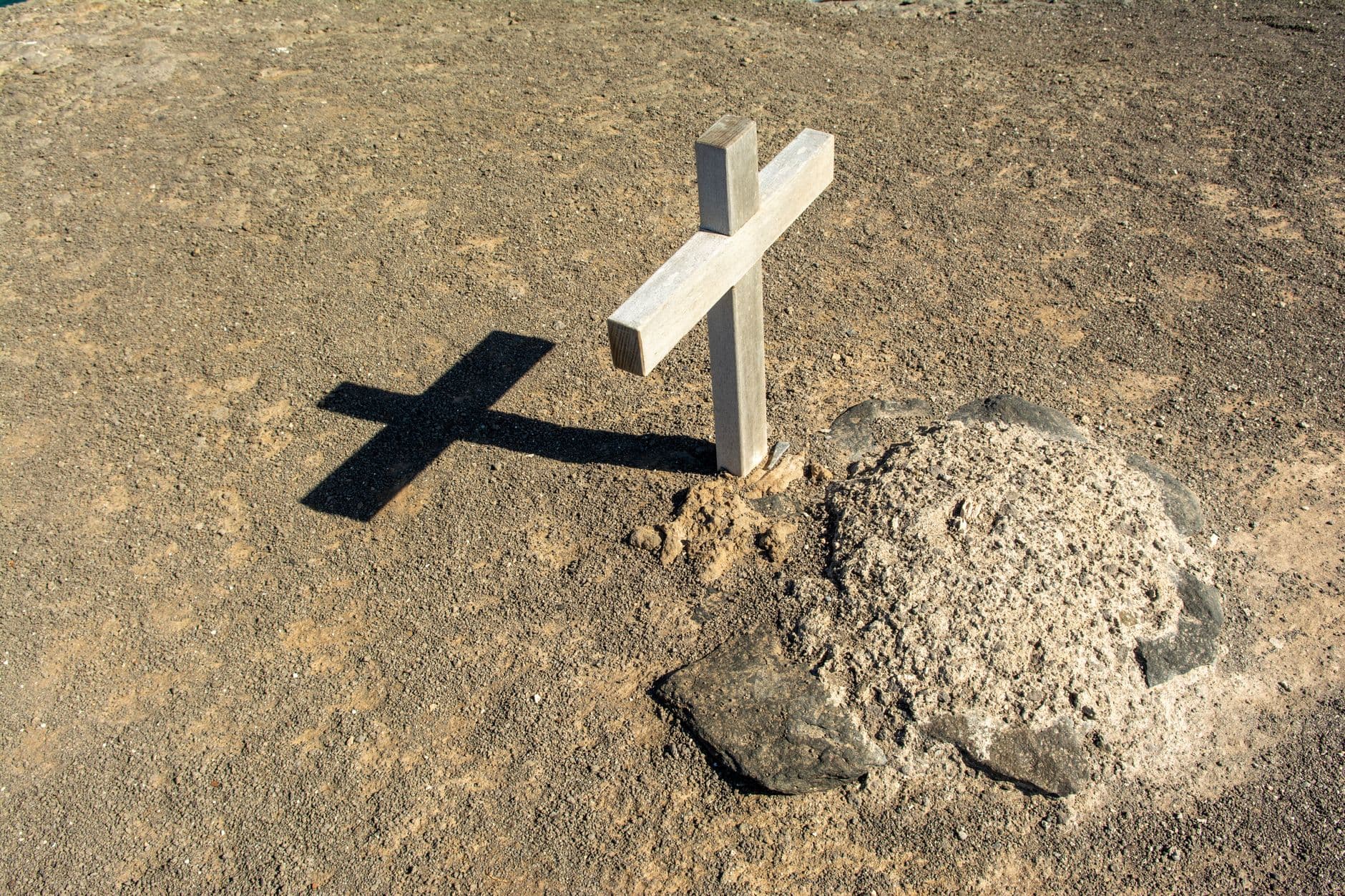
The Second Battle of El Alamein lasted twelve days, from October 23 to November 4, 1942. By the time it ended, Field Marshal Rommel had lost roughly 500 tanks and 59,000 men. Churchill called it the turning point: "Before Alamein we never had a victory. After Alamein we never had a defeat." That quote is everywhere at the site. What is not everywhere is the full picture of what happened on this particular strip of Egyptian desert, and why Egypt was the prize that neither side could afford to lose.
The stakes were not sentimental. Whoever controlled Egypt controlled the Suez Canal, and whoever controlled the Suez Canal controlled Britain's supply lines to India and the Far East. If Rommel had broken through at Alamein, he would have been in Cairo within days. The Egyptian king, Farouk I, was widely known to be sympathetic to the Axis powers, and British intelligence had already prepared plans to occupy Cairo by force if necessary. There was a real and documented possibility in 1942 that Egypt would shift allegiance mid-war. The battle was fought, in part, to prevent that outcome, not to liberate anyone.
This context the museum handles awkwardly, because it complicates the straightforward Allied victory narrative. Egypt was not a willing participant in this war. It was a theater.
---
The Three Cemeteries: Why You Need to Visit All of Them
Most visitors to El Alamein go to the Commonwealth War Cemetery, spend twenty minutes, take photographs of the pale Portland stone markers, and leave. This is the version of El Alamein that appears in tour itineraries. It is also the version that tells you least about what actually happened here.
The Commonwealth cemetery contains 7,240 graves, including soldiers from Britain, Australia, New Zealand, South Africa, India, and a handful of other nations. The headstones are identical in shape by design: the Commonwealth War Graves Commission, founded in 1917, established the principle that officers and enlisted men would receive the same marker. No rank, no title, just name, unit, age, and a brief personal inscription chosen by the family. Some families chose Bible verses. Some chose nothing at all. The ones that chose nothing are often the most affecting.
Three kilometers west, the German cemetery is an entirely different experience. Where the Commonwealth cemetery is white and open and arranged with almost mathematical precision, the German site uses dark basalt stones laid flat into the ground. The effect is somber to the point of oppressive, which may be intentional: West Germany built this cemetery in 1959 under conditions of postwar reckoning rather than commemoration. There are 4,280 men buried here, many in mass graves, marked by flat iron crosses rather than individual headstones. Four figures stand at the corners of the central hall in black bronze, heads bowed. You will likely be the only person there.
The Italian memorial is different again: a towering white marble structure built by Mussolini's government in 1936 to honor Italians who had died in earlier North African campaigns, and later expanded to include the roughly 5,000 Italian dead from El Alamein itself. The architecture is fascist modernism in the most literal sense. The building tells you about a different relationship to military death, one that aestheticizes sacrifice in ways that the Commonwealth and German approaches deliberately avoid.
These three cemeteries, within sight of each other across the same flat coastal land, are a short course in how different cultures choose to remember the same war.
---
The Museum and What It Gets Right (and Wrong)
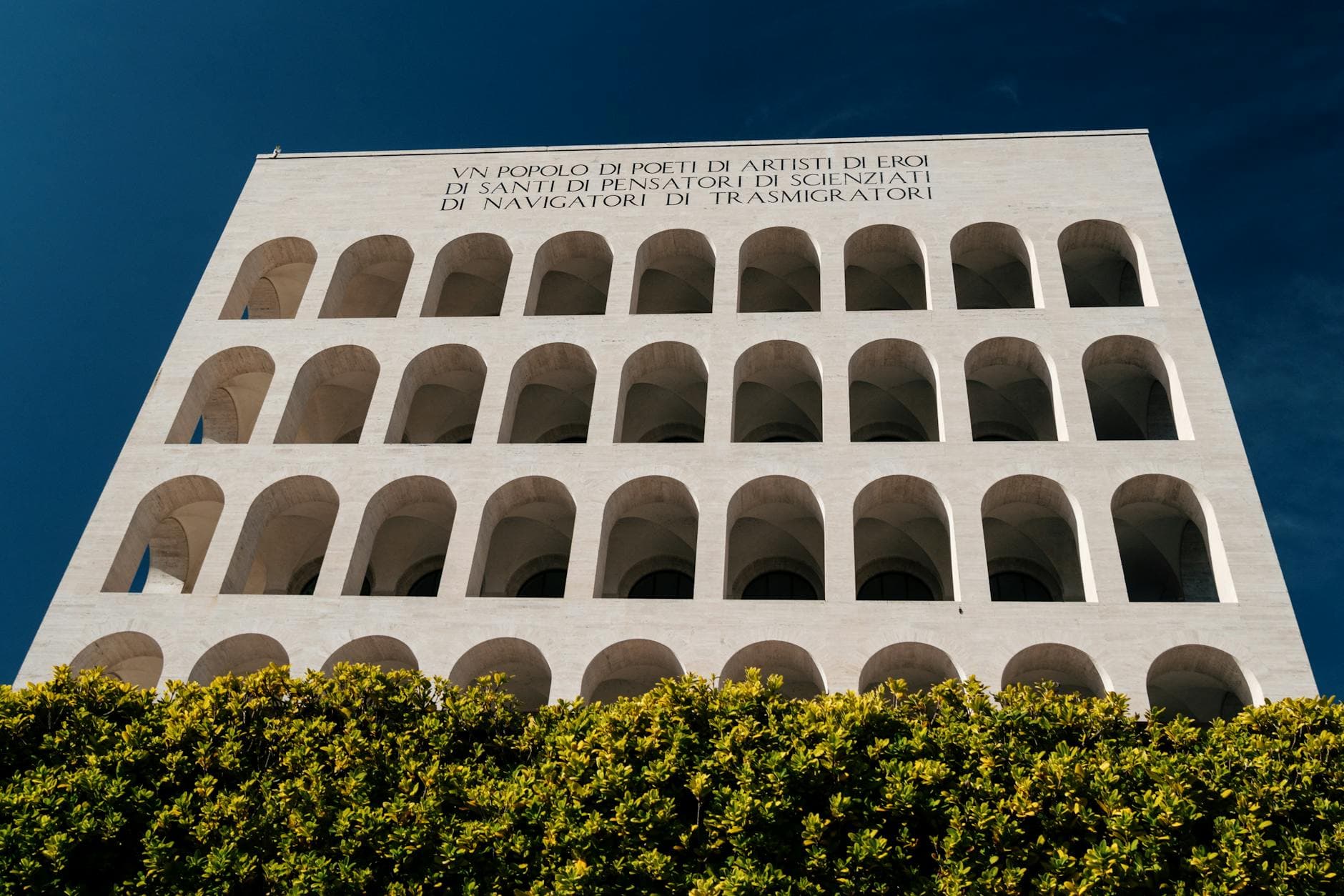
The El Alamein Military Museum opened in 1965, which means it was built during Nasser's presidency, during a period when Egypt was actively working to frame its own identity against the colonial powers that had used its territory as a battlefield. The framing reflects that. The museum is organized to show Egyptian viewers a story of foreign powers fighting over Egyptian land, which is historically accurate, while giving relatively little attention to the Egyptian soldiers who did serve in support roles for the British forces, and almost no attention to the Axis attempts to recruit Egyptian nationalists.
Despite this, the museum's hardware is genuinely worth seeing. There are full-scale tanks, artillery pieces, and vehicles positioned outdoors in a kind of open-air diorama, including a German 88mm anti-aircraft gun that was the most feared weapon on the North African battlefield. The 88 had originally been designed to shoot down planes but Rommel realized its flat trajectory made it lethal against tanks at long range. By the time of El Alamein, the Allied tank crews had developed tactics specifically around avoiding the 88's line of sight. The actual gun, sitting in the Egyptian sun, is considerably more instructive than any diagram.
The interior displays are uneven. Some rooms have good period photographs and genuine battlefield artifacts. Others have text panels that were written in the 1960s and have not been updated, with Arabic and occasionally French captions and limited English translation. Allocate 45 minutes and do not expect the Musee de l'Armee.
---
The Connections: Desert, Canal, and the Long Memory of North Africa
El Alamein sits in the Western Desert, which connects it to one of the most important and least-discussed routes in ancient Egyptian history. The road running along the Mediterranean coast west of Alexandria was a major Hellenistic trade route, and the region was part of the ancient Marmarica, a territory that shifted between Egyptian, Greek, Roman, and eventually Arab control over two millennia. When Arab armies swept west in the 7th century to claim North Africa, they moved along almost exactly the same coastal corridor that Rommel used thirteen centuries later. The desert does not offer many routes.
The connection to Alexandria matters more immediately. Alexandria's current shape and population are partly a product of the war. The city received large numbers of Commonwealth troops for resupply and leave throughout the North African campaign. Greek, South African, Australian, and Indian soldiers drank in the same bars and walked the same corniche. The Trianon cafe on Saad Zaghloul Square, still operating, served officers during the war. Durrell's Alexandria Quartet, though fiction, captures the city's particular wartime atmosphere with more accuracy than most history books. If you are approaching El Alamein from Alexandria, read Durrell first.
The other connection is to Suez, which is what the battle was ultimately about. The canal that Nasser nationalized in 1956, triggering a crisis that ended British imperial power in the Middle East, was the same infrastructure that made El Alamein strategically necessary in 1942. The British fought and died on this beach to keep a canal they would lose peacefully fourteen years later. That irony is not noted anywhere at the site.
---
Common Mistakes
Visiting only the Commonwealth cemetery. The German and Italian sites are within a few kilometers and take no more than thirty additional minutes total. Seeing all three transforms a single-note visit into something genuinely comparative. If you leave after the Commonwealth cemetery you have seen the most photographed site and understood the least.
Arriving in the middle of the day in summer. The cemeteries are fully exposed. In July and August, the heat between 11am and 3pm makes a contemplative walk through white stone markers close to impossible. Go early or go in winter.
Relying on the museum alone for context. The museum's interpretation is dated and politically selective. Read Anthony Beevor's account in his broader Second World War history, or John Bierman and Colin Smith's dedicated book on the North African campaign, before or after visiting. The museum is better understood as an artifact of Egyptian postcolonial politics than as a neutral historical resource.
The sound and light show does not exist here, so you are safe from that particular waste of money. However, some Alexandria-based tour operators will bundle El Alamein with a day at Sidi Abdel Rahman, marketing it as a beach-and-history combination. The beach is genuinely good. The combination means you will rush both. Do them on separate trips if you have the time.
Skipping the battlefield positions. Several kilometers of the original front line have been preserved with signage marking where specific engagements took place. These are rarely included in group tours and require some walking over rough ground, but they are more viscerally affecting than anything in the museum. The scale of the battlefield, the flatness of the terrain, the absolute lack of cover becomes real when you are standing on it.
Assuming the cemeteries are crowded. El Alamein receives far fewer visitors than its historical significance would suggest. On most weekdays outside Egyptian school holiday periods, you may have the Commonwealth cemetery largely to yourself. This is one case where the off-season advice is to go whenever you can: crowds are not the problem here.
Not checking the road conditions west of Alexandria. The coastal highway is good but truck traffic is heavy, and if you are traveling by local bus or service taxi you will need to be specific about which stop you want. Drivers will know El Alamein but may not know the museum entrance from the cemetery entrance. Have a map downloaded offline.
---
Practical Tips
Dress practically rather than formally. The cemeteries are places of mourning but they are outdoors, unpaved in sections, and often sandy. Comfortable shoes and sun protection matter more than formal attire, though you should be appropriately respectful in demeanor.
The nearest town with reliable food options is El Alamein village itself, which has a few basic kiosks near the museum. There is no cafe on the cemetery grounds. If you are spending a full day, bring water and food from Alexandria. The drive back takes 90 minutes to two hours depending on traffic through the Alexandria approach.
The Commonwealth War Graves Commission website has a searchable database of every person buried at El Alamein. If you have any family connection to the campaign, or simply want to arrive knowing the specific stories of two or three of the men buried there, the database transforms the visit. Reading names off headstones is moving. Reading names you already know something about is different entirely.
There is no entry fee for any of the cemeteries, and the Commonwealth cemetery in particular is staffed by a local caretaker who can answer basic questions and will sometimes walk visitors to specific grave sections. A small tip, EGP 20 to 50, is appropriate and appreciated.
Photography is permitted at all sites. Some visitors feel uncertain about photographing graves. The Commonwealth War Graves Commission explicitly encourages it, on the basis that images shared keep the memory alive. The German cemetery has slightly different energy but photography is not prohibited there either.
Frequently Asked Questions
The Weekly Dispatch
More on Egypt, every Friday.
Cultural depth and places most guides never mention.
No spam. Unsubscribe anytime.