El Alamein World War 2 Egypt Guide: The Desert War
Over 11,000 men are buried in the desert 106km west of Alexandria. Most tourists drive past without stopping. The ones who do rarely see the right things.

Quick Facts
- Best time to visit
- October to April. October and November are historically significant (battle anniversary) and temperatures are manageable. Summer is genuinely dangerous heat with no shade at open sites.
- Entrance fee
- Commonwealth, German, and Italian cemeteries: free. El Alamein Military Museum: EGP 100 (approx $2 USD), students EGP 50.
- Opening hours
- Cemeteries approximately 7am to 2:30pm daily. Military Museum: approximately 8am to 3pm daily. Hours can vary; arrive before noon to be safe.
- How to get there
- Alexandria by bus (EGP 40 to 60, 90 mins) or private taxi (EGP 600 to 900 return). Car rental from Alexandria approximately EGP 800 to 1,200 per day. Sites span 5km of coastal road so a vehicle is essential.
- Time needed
- Half day for museum and Commonwealth cemetery. Full day for all three cemeteries plus museum. Two days for serious battlefield exploration.
- Cost range
- Budget EGP 400 to 700 per day including Alexandria transport. Mid-range EGP 1,500 to 2,500 with private driver-guide.
Over 11,000 men are buried in the desert 106km west of Alexandria. They came from Britain, Australia, New Zealand, South Africa, India, Germany, and Italy. The oldest was 52. The youngest was 15. The battle they died in lasted twelve days in October and November of 1942 and arguably determined whether Nazi Germany would control the Suez Canal, the Middle East oil fields, and the route to British India. Winston Churchill said, before Alamein we never had a victory, after Alamein we never had a defeat. That sentence is carved into the Commonwealth cemetery wall, and most visitors photograph it without understanding what it means.
The El Alamein World War 2 Egypt sites are not a single place. They are a 50-kilometer corridor of cemeteries, memorials, a museum, and unmarked desert that together form one of the most consequential battlefields of the twentieth century. This guide will tell you what is worth your time, what is not, and what almost nobody explains when they bring you here.
Quick Facts
Best time to visit: October to April. Summer temperatures regularly exceed 40°C and the sites have no shade. October and November are historically appropriate: the Second Battle of El Alamein began on October 23, 1942.
Entrance fees: El Alamein Military Museum: EGP 100 (approx $2 USD), students EGP 50. The three main cemeteries (Commonwealth, German, Italian) are free and open daily. Cemetery hours are approximately 7am to 2:30pm, though the Commonwealth War Graves Commission cemetery has been accessible outside these hours in practice.
How to get there: From Alexandria, take the Desert Road (Cairo-Alexandria Desert Road) west. Buses depart from Alexandria's main station toward Marsa Matruh and stop in El Alamein; the journey is roughly 90 minutes and costs EGP 40 to 60. A private taxi from Alexandria runs EGP 600 to 900 return depending on waiting time. Renting a car from Alexandria is the most practical option if you want to visit multiple sites in sequence, roughly EGP 800 to 1,200 for the day.
Time needed: Half a day for the museum and Commonwealth cemetery. A full day if you include the German and Italian memorials, the ridge at Tel el Eisa, and the coastal road sites. Two days if you are serious about the battlefield.
Cost range: Budget EGP 400 to 700 per day including transport from Alexandria. Mid-range EGP 1,500 to 2,500 if you hire a driver-guide.
Why This Place Matters
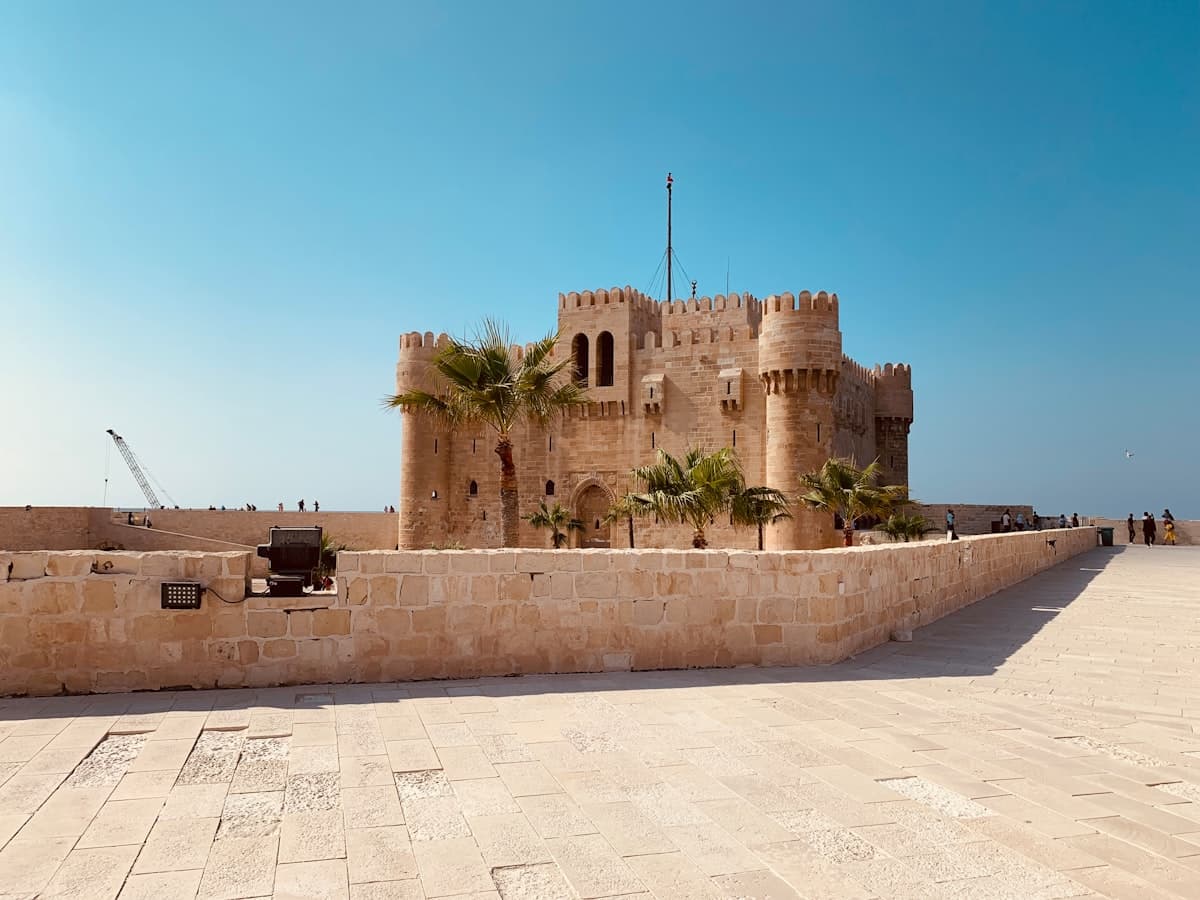
Most visitors to Egypt treat El Alamein as an afterthought, a detour on the way to Marsa Matruh's beaches. That framing misses something important. The desert that Rommel and Montgomery fought over in 1942 was not empty. It was Egyptian. The local Bedouin tribes had lived along this coast for centuries. The small railway station at El Alamein had served the narrow-gauge line connecting Alexandria to the Libyan border since the 1930s. When the Afrika Korps advanced to within 106 kilometers of Alexandria in the summer of 1942, Egyptian civilians fled the city in a panic known as the Flap. King Farouk reportedly considered abdication. The British ambassador literally forced Farouk at gunpoint to appoint a pro-Allied prime minister. Egypt was nominally neutral in the war, but its territory, its people, and its political fate were entirely at the mercy of a battle being fought by foreigners in its own desert.
The connection between this twentieth-century battle and older Egyptian history is more literal than it sounds. The coastal strip between Alexandria and the Libyan border has been a military corridor for three thousand years. Alexander the Great marched this route in 332 BC. The Roman legions used it. The Arab armies that brought Islam to Egypt crossed it in 641 AD. Rommel was not doing anything new when he tried to take Alexandria from the west. He was following the oldest military road in Africa.
What was new in 1942 was the scale of industrialized death compressed into twelve days. Montgomery fired over a million artillery shells in the opening barrage alone. The desert west of El Alamein town still contains unexploded ordnance. This is not a metaphor. The Egyptian government estimates that 17 million landmines remain in the Western Desert from World War II. Farmers and Bedouin have been killed by them within the last decade.
What You Will Actually See
The Commonwealth War Graves Commission Cemetery
This is where you should begin. The cemetery contains 7,367 graves, arranged in precise rows that extend toward the Mediterranean in a way that feels less like a graveyard and more like a geometry problem. The Commonwealth War Graves Commission, established after the First World War, operates on a principle of equality: every grave is identical regardless of rank. Field Marshal and private soldier share the same headstone dimensions. This was radical in 1917. It remains moving in practice.
What most visitors miss is the specificity of individual stones. Take time to read names and regiments. You will find men from Punjab, from Cape Town, from Auckland, from Calcutta. The 4th Indian Infantry Division lost 2,000 men at El Alamein. The 9th Australian Division suffered 5,800 casualties in the course of the North Africa campaign. The battle was imperial in its composition in ways that the phrase World War II tends to flatten. The British Empire sent men from every corner of its territory to die in Egyptian sand.
The register at the entrance lists every man buried here. It is available to consult. Some visitors come specifically to find a grandfather or great-uncle. If you plan to do this, contact the Commonwealth War Graves Commission before you travel at cwgc.org. They can tell you the exact plot and row.
The El Alamein Military Museum
The museum opened in 1965 and has not been substantially renovated since the 1980s. The displays include tanks, artillery pieces, uniforms, maps, and dioramas that show the battle's phases. The labeling is inconsistent and some of the English translations are unreliable, but the actual objects are worth seeing. A captured German Panzer IV tank sits outside. A British Valentine tank is parked next to it. Seeing them side by side at the scale of actual machines rather than diagram illustrations recalibrates what the desert fighting must have been like: small, hot metal boxes moving across open ground with no cover.
The museum's most important room contains the operations maps. These are reproductions rather than originals, but they show the October 23 to November 4 timeline in a way that no photograph can. Montgomery's plan was called Operation Lightfoot, named because the first infantry wave had to walk across minefields that were too densely laid for heavy vehicles to cross. Soldiers walked through minefields so that tanks could follow. This was the calculation.
Skip the gift shop. It sells plastic pyramids and polyester scarves with no connection to El Alamein whatsoever.
The German and Italian Memorials
The German memorial, about 3 kilometers west of the Commonwealth cemetery, sits on a low hill and is built in the style of a medieval German fortification, with thick stone walls and a tower. It contains 4,280 German soldiers, most in mass graves because individual identification was impossible. The atmosphere is completely different from the Commonwealth cemetery: enclosed, dark, heavy. It was designed to feel like that.
The Italian memorial is the most architecturally striking of the three. A tall white tower visible from the coast road, it contains a chapel and the remains of 4,633 Italian soldiers. Italy's role at El Alamein is complicated: the Italian divisions were often under-equipped and poorly supported by the German high command, used as flank guards while Rommel prioritized his German units. The memorial registers this: there is a quality of abandonment to it that the German memorial does not share.
Visiting all three cemeteries in sequence, which takes about two hours total, produces a kind of moral recalibration that visiting only the Commonwealth cemetery does not. The dead look the same from all three sides.
The Connections
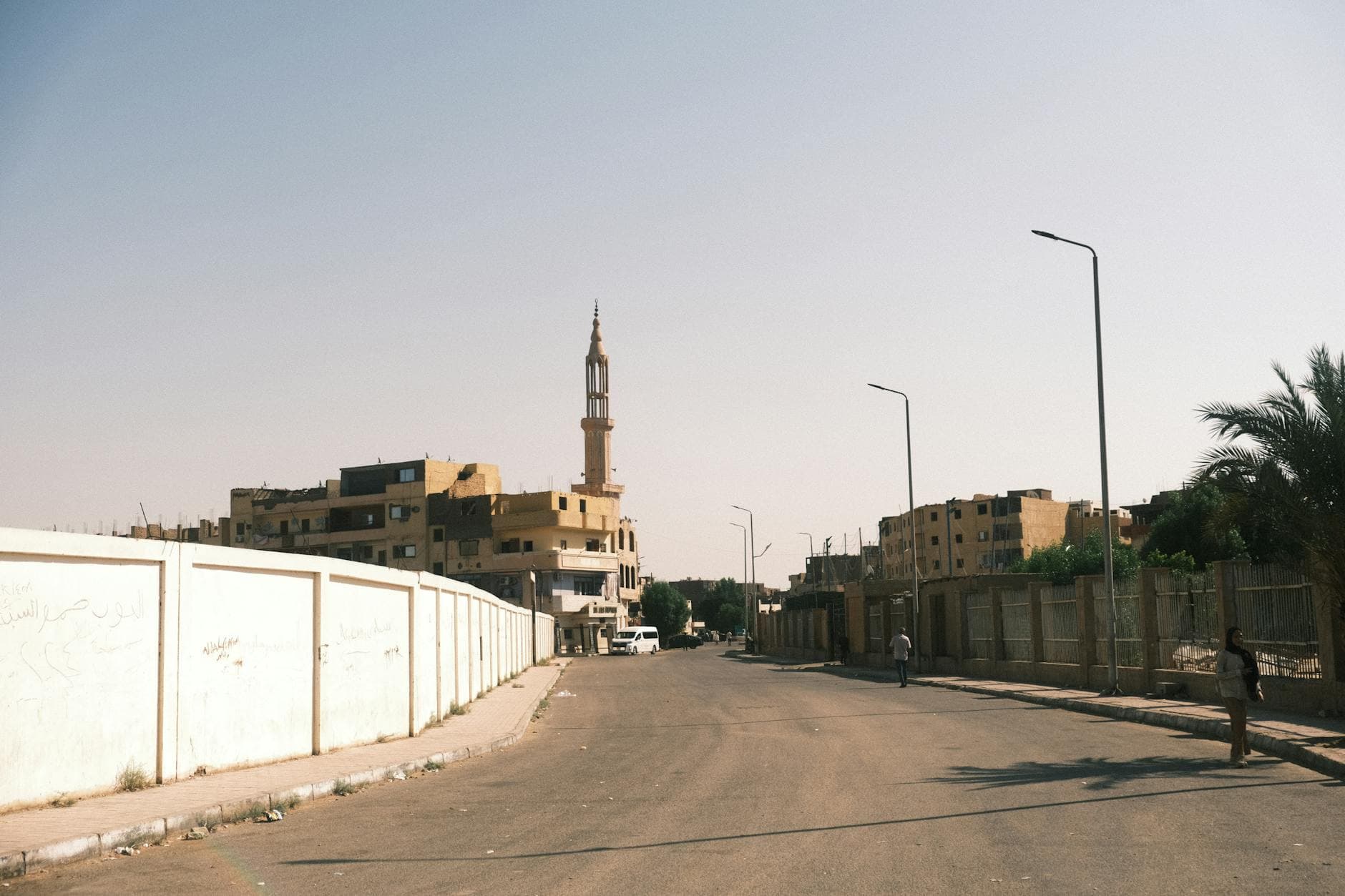
The desert west of Alexandria has one more layer that almost no El Alamein World War 2 Egypt guide mentions. The coastal town of El Alamein sits near the ancient site of Taposiris Magna, a Ptolemaic temple complex that Egyptian archaeologist Kathleen Martinez has been excavating since 2005. Martinez believes Cleopatra VII, the last pharaoh of Egypt, may be buried somewhere in this complex. The theory remains contested, but tunnels and artifacts of genuine significance have been found. The site is not open to general visitors, but its existence means that within a few kilometers of a World War II battlefield, there may be the undiscovered tomb of the last ruler of ancient Egypt. This is the kind of layering that Egypt does without apology.
The coast road itself, the one that Rommel's Afrika Korps raced along in the summer of 1942, is the same road that the Arab general Amr ibn al-As used in 641 AD when he brought Islam to Egypt, marching from the Libyan border toward Alexandria. He too was moving through this desert corridor. He too was trying to take Alexandria from the west. He succeeded. The city submitted without significant resistance and became the intellectual capital of the early Islamic world. History's military corridors do not change. Only the armies do.
Common Mistakes
Treating this as a half-hour stop on the way to the beach. El Alamein is regularly included in beach holiday itineraries from Alexandria as a quick detour. The result is people spending twenty minutes photographing the cemetery entrance and leaving. If that is your plan, do not include El Alamein at all. It deserves presence or absence, not a quick glance.
Visiting only the Commonwealth cemetery. This is the default because it is the first cemetery you reach from Alexandria. The German and Italian memorials are 3 to 5 kilometers further west and are not on most organized tour itineraries. They change the experience entirely.
Going in July or August. The beach resorts that line this coast are packed in summer and the heat at the open desert sites is genuinely dangerous. There is no shade at the German or Italian memorials. October to April is the correct window.
Taking the Sound and Light Show at the museum. It runs on weekends, costs EGP 200, and consists of colored lights on tank displays with recorded narration that is also available in the museum's printed handout. Skip it.
Ignoring the minefield problem. Do not walk into unfenced desert at or near the battlefield sites. This is not atmospheric caution. The landmine contamination in the Western Desert is real and ongoing. Stay on paved paths and marked areas.
Relying on organized tours from Alexandria. Most Alexandria day tours to El Alamein spend 40 minutes total across all sites, do not include the Italian memorial, and do not visit the museum. Hiring a private driver for the day costs more but gives you actual time at the sites.
Underestimating the emotional weight. This is not an ancient site where historical distance provides comfort. The men buried here have living grandchildren. Some visitors find themselves less prepared for that than they expected. Plan accordingly.
Practical Tips
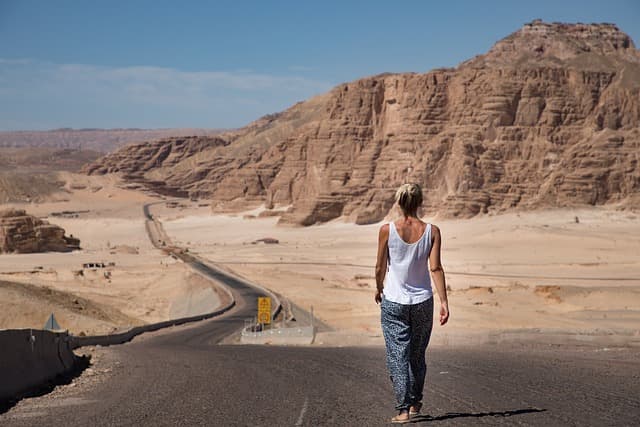
Bring water, sunscreen, and a hat regardless of season. The cemeteries are exposed and the Western Desert sun is relentless from March onward. There are no food vendors at the memorial sites. The museum has a small cafe that may or may not be open. Eat before you arrive or bring food.
If you want a guide, hire a local one in Alexandria rather than taking a packaged tour. Ask specifically for someone with knowledge of both the military history and the Egyptian context of the campaign. A good guide will tell you about the Flap, about King Farouk, and about what Egyptian civilians experienced during the battle. Most packaged tour guides do not go near this material.
The Commonwealth War Graves Commission website allows you to search by name before you visit. If you have any family connection to any of the armies that fought here, check the database. The search is free and the records are detailed down to plot and row number.
Photography is permitted at all three cemeteries and the museum. Be respectful at the gravesites. This is obvious but worth stating: people visit these places in active grief.
If you are combining El Alamein with a stay in Marsa Matruh, the drive continues west along the coast road for another 200 kilometers. Marsa Matruh has reasonable hotels and a beach that is genuinely good. It is also the site where Cleopatra allegedly swam, and where Rommel had his forward headquarters in 1942. The layers never stop.
Frequently Asked Questions
The Weekly Dispatch
More on Egypt, every Friday.
Cultural depth and places most guides never mention.
No spam. Unsubscribe anytime.