El Alamein World War 2 Egypt: The Full Cultural Guide
In 1942, more soldiers died per square kilometre at El Alamein than almost anywhere else in WW2. Most visitors spend 90 minutes. That is not enough.

Quick Facts
- Best time to visit
- October to March. The coast is hot and shadeless in summer and the cemeteries offer no shelter from midday sun.
- Entrance fee
- War Museum: EGP 100 (approx $2 USD), students EGP 50. All three cemeteries are free and open daily.
- Opening hours
- War Museum daily 8am to 4pm. Cemeteries: no fixed closing time, accessible from dawn.
- How to get there
- Microbus from Alexandria Mou'af El Gumhoreya station: EGP 40-60 per person, 90 minutes. Private taxi from Alexandria round trip with waiting: EGP 350-500. From Cairo: 300 km, hire a car or take a guided day trip from Alexandria.
- Time needed
- Five to six hours for all four sites. Full day if coming from Cairo.
- Cost range
- Budget EGP 500-900 per person including transport from Alexandria, entry, and food. Mid-range EGP 1,500-2,500 with private driver and seafood lunch on the coast road.
Quick Facts
Best time to visit: October to March. Summer temperatures on the Mediterranean coast reach 38°C and the exposed cemeteries offer no shade.
Entrance fees: El Alamein War Museum: EGP 100 (approx $2 USD), students EGP 50 Commonwealth War Cemetery: Free, open daily German War Cemetery (El Alamein): Free, open daily Italian Memorial and Cemetery: Free, open daily
Opening hours: War Museum daily 8am to 4pm. The three cemeteries have no set closing time and can be visited at dawn or dusk, which is when the light and the silence justify the trip.
How to get there: El Alamein sits 106 km west of Alexandria on the Desert Road. Microbuses from Alexandria's Mou'af El Gumhoreya station run regularly for around EGP 40-60 per person and drop you near the museum. A private taxi or ride from Alexandria costs EGP 350-500 for the round trip with waiting time, which is strongly recommended because the sites are spread over several kilometres and there is no reliable local transport between them. From Cairo, the drive is around 300 km; hire a car or book a guided day trip from Alexandria rather than attempting public transport from the capital.
Time needed: A serious visit covering all four sites, with time to actually read the headstones and walk the cemetery perimeters, takes five to six hours. Budget a full day if you are coming from Cairo.
Cost range: Budget EGP 500-900 per person for transport from Alexandria, entry, food at the small canteen near the museum. Mid-range EGP 1,500-2,500 if combining with a private driver and lunch at a seafood restaurant on the coast road.
---
In four days of fighting in July 1942, the Eighth Army lost 13,250 men killed, wounded, or captured. The German-Italian Panzer Army lost a comparable number. This was the First Battle of El Alamein, the one most people have never heard of, because the Second Battle in October-November of the same year, the one Montgomery won, became the story the Allied powers needed. There were, in fact, three distinct battles fought in this narrow coastal corridor between the sea and the Qattara Depression, a salt flat so soft and deep that tanks could not cross it. The geography of El Alamein was not incidental. It was the entire strategic logic of the place. The Qattara Depression compressed the front to 64 kilometres, which meant neither side could outflank the other. They had to fight in a straight line until someone gave way. That is what makes El Alamein different from almost every other desert battle of the war, and it is what the museum, if you spend real time with it, eventually explains.
Why This Place Matters
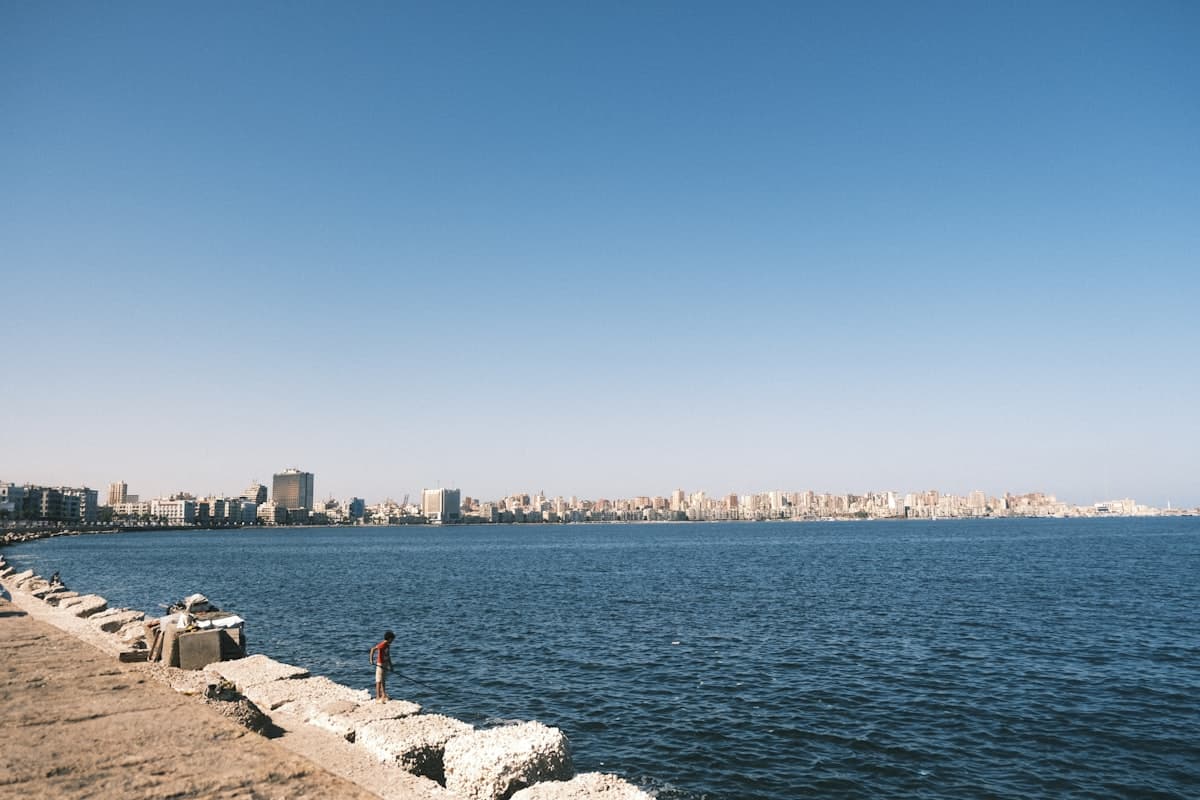
The conventional story positions El Alamein as the moment that saved Egypt and turned the tide of the war in North Africa. This is broadly true but misses the specific reason the battle was fought here rather than at Cairo. By June 1942, Rommel's forces had swept across Libya and crossed the Egyptian border. British headquarters in Cairo began burning documents. King Farouk was in quiet contact with German agents, genuinely uncertain which side would prevail. The British embassy had already prepared plans to evacuate to Palestine. What stopped the advance was not Montgomery, who didn't arrive until August, but a series of defensive actions by commanders now largely forgotten, particularly Lieutenant General Claude Auchinleck, who was sacked precisely because his defensive victory was not cinematic enough for Churchill's political needs.
The deeper context that most visitors miss entirely is Egypt's position in all of this. Egypt was not a British colony in the legal sense by 1942, but it was occupied by British forces under a treaty, and Egyptian sovereignty was essentially theoretical. The Egyptian Army played no role in the battle fought on Egyptian soil. The government in Cairo had been installed by a British ultimatum in February 1942, when British tanks literally surrounded the royal palace until Farouk complied. El Alamein was a battle for Egypt fought without Egyptians. That particular irony is absent from every exhibit in the war museum.
What You Will Actually See
The Commonwealth War Cemetery
This is the site that earns the trip. The Commonwealth War Graves Commission maintains 7,367 graves here in a walled garden of limestone and desert plants, each headstone individually carved with the soldier's name, regiment, age, and a personal inscription chosen by the family. The inscriptions are the reason to come. They are not military. They are domestic and specific and occasionally unbearable. A mother from Lancashire wrote four words for her nineteen-year-old son. A wife from Auckland described a husband she had known for eight months before he shipped out.
The cemetery contains soldiers from across the British Empire: Australians, New Zealanders, South Africans, Indians, Greeks fighting with the Allied forces, and Poles who had already lost one country and came here to fight for another. The grave of an unidentified Indian soldier reads simply "Known unto God," the phrase Rudyard Kipling chose for all unidentified Commonwealth dead after his own son was lost at Loos in 1915. There are 102 such graves at El Alamein.
Walk the full perimeter. The back rows are quieter and the proportions of the cemetery become clear only from the far end. It is large in a way that photographs do not convey.
The El Alamein War Museum
The museum is small, underfunded, and in places genuinely interesting. The collection includes original tanks, artillery pieces, and field equipment arranged on the grounds outside, and interior galleries with maps, photographs, and personal effects recovered from the battlefield. The maps are the most valuable exhibits if you study them. The visual of the compressed coastal corridor, the sea to the north and the Qattara Depression to the south, explains in thirty seconds what paragraphs of text cannot.
The honest assessment: the indoor exhibitions are poorly lit, the English captions are inconsistent, and several exhibits have not been updated in two decades. The outdoor armour collection, however, is unexpectedly good. You can stand next to a German 88mm anti-tank gun, the weapon that made Rommel's reputation and destroyed British armour throughout the campaign, and understand by its size and elevation exactly how it worked as a field gun. That tactile encounter is worth the EGP 100.
The German and Italian Memorials
The German Cemetery on a low hill outside town contains 4,280 graves under dark basalt crosses, and the visual effect is deliberately austere. The designer, Robert Tischler, used the same darkness of stone across all his German war cemeteries in North Africa to convey, as he said, not victory but loss. The Italian Memorial is the most architecturally ambitious of the three. It is a tall octagonal tower of travertine marble with an interior crypt containing the remains of 4,633 Italian soldiers, and a mosaic floor that took a Florentine workshop three years to complete. Most visitors spend ten minutes here. The mosaics repay twenty.
The Connections
El Alamein is easy to treat as an isolated military episode on Egyptian soil, a foreign war that passed through. But Egypt's position in 1942 was the direct consequence of geography that had been strategically central for two thousand years.
The coastal road along which both armies advanced had been a military route since antiquity. Alexander the Great used essentially the same corridor when he moved from the Libyan coast to Egypt in 332 BC. The Romans fortified the road. Arab armies used it in the seventh-century conquest. Napoleon came the same way. The Desert Road between Alexandria and El Alamein follows, in places almost exactly, the ancient track between the Nile Delta and the Libyan interior. When Rommel's intelligence officers studied the landscape, they were reading terrain that had been studied by generals for millennia.
Alexandria itself, 106 km to the east, holds the other half of this story. The city founded by Alexander and made the capital of Ptolemaic Egypt had always been Egypt's window to the Mediterranean world, which is why it was the target. Whoever controlled Alexandria controlled the port, the canal system, and ultimately Cairo. This is what Churchill understood and what made the political pressure on his commanders so intense. The loss of Alexandria would have meant the loss of the Suez Canal, and the loss of the canal would have broken the supply line to India and the Far East. The battle at El Alamein was fought over a strip of Egyptian desert, but its stakes were imperial in the fullest sense of that word.
Coptic and Islamic Egypt seem remote from this story until you notice that the soldiers who died at El Alamein were buried using the same practice of individual named commemoration that Coptic Christians brought to Egypt from early Christian tradition. The Islamic cemeteries of Cairo, which any visitor to the City of the Dead will recognize, mark each grave individually by name and date. The Commonwealth War Graves Commission's insistence on individual headstones rather than mass graves was a conscious ethical choice, but it drew on a commemorative tradition that Egypt had practised, in various forms, for centuries.
Common Mistakes
Coming only for the Commonwealth Cemetery and leaving. The Italian Memorial and the German Cemetery together take an additional hour and the contrast between all three is the most instructive thing El Alamein offers. Each nation buried its dead differently, and that difference is the whole argument about what the war meant to each of them.
Taking a tour from Cairo. The four-hundred-kilometre round trip leaves almost no time on the ground. By the time you arrive, you have two hours before the driver needs to leave. Come from Alexandria, where the round trip is manageable and the city itself deserves a day before or after.
Visiting in July or August. The coastal breeze that makes Alexandria pleasant in summer does not reach far enough inland. The cemeteries are open ground with no shade and the midday heat is genuinely unpleasant and potentially dangerous for older visitors.
Spending money on the sound and light show. It runs on occasional evenings at the war museum and costs EGP 250-300 per person. It covers the same material as the museum itself, less clearly, in the dark. Read a serious account of the battle before you arrive and you will understand more than the show teaches.
Skipping the museum shop's one useful item. The museum sells a small Arabic-English battlefield map for EGP 20-30. It is the best orientation tool for understanding the spatial relationship between the sites and the original defensive lines. Buy it at the start, not the end.
Not reading the headstones. Visitors who walk the Commonwealth Cemetery without pausing to read individual inscriptions are missing the entire point of the place. Allow at least forty-five minutes here. Sit with it. The inscriptions are not uniform military language. They are private grief made public, and they are the reason this site is different from a battlefield monument.
Expecting extensive English signage throughout. Outside the main museum, signage is primarily in Arabic. Downloaded offline maps and a basic preparation with satellite images of the site layout will save significant confusion.
Practical Tips
Arrive at the Commonwealth Cemetery first, before 9am if possible. In the early morning the light from the sea is flat and cold and the white headstones are at their most legible. Tour buses from Alexandria arrive between 10am and 11am and the contemplative atmosphere changes quickly.
Wear closed shoes. The ground between the German Cemetery and the car park is uneven limestone and gravel that punishes sandals.
Bring water for the full day. There is a small canteen near the war museum that sells drinks and simple sandwiches, but nothing near the Italian or German memorials.
The sites are approximately three kilometres apart. You cannot walk between them comfortably. If you arrive by microbus, arrange for a local taxi to meet you at the museum, or ask your microbus driver if he will wait for an agreed fee. EGP 150-200 for a driver to shuttle you between all four sites is reasonable and saves significant time and frustration.
Photography is permitted everywhere except inside the Italian crypt, where a sign requests that visitors refrain. Respect this. The crypt is small, dark, and the families of the soldiers interred there have asked for it.
If you are a Commonwealth citizen or have family connected to Commonwealth military history, the War Graves Commission website allows you to search by name before you visit, find the exact grave location by row and plot number, and arrive knowing where you are going. This takes ten minutes of preparation and makes the visit entirely different.
Frequently Asked Questions
The Weekly Dispatch
More on Egypt, every Friday.
Cultural depth and places most guides never mention.
No spam. Unsubscribe anytime.