El Alamein World War 2 Egypt: The Full Guide to the Desert Battlefield
Over 80,000 soldiers died at El Alamein in under a year. The desert preserved their positions so well that unexploded ordnance still kills Bedouin shepherds today.

Audio Guide: El Alamein World War 2 Egypt: The Full Guide to the Desert Battlefield
Quick Facts
- Best time to visit
- October to March. October commemorations around October 23 add meaningful context. Avoid June to August: no shade, extreme heat.
- Entrance fee
- War Museum: EGP 100 (approx $2 USD), students EGP 50. Commonwealth, German, and Italian memorials are free.
- Opening hours
- War Museum daily 8am to 4pm. Cemeteries and memorials have no fixed closing time but are best visited in daylight.
- How to get there
- West Delta Bus from Alexandria Sidi Gaber station: EGP 60 to 80, 1.5 to 2 hours. Private taxi from Alexandria: EGP 500 to 700 return. From Cairo by car: 3.5 hours via Desert Road.
- Time needed
- 4 hours minimum for all main sites. Full day recommended, especially if traveling from Cairo.
- Cost range
- Budget EGP 300 to 600 per person for a full day from Alexandria including transport, entry, and lunch.
Quick Facts
Best time to visit: October to March. Summer temperatures at El Alamein regularly exceed 38°C with no shade on the open battlefield. The October anniversary of the Second Battle brings commemorations worth timing your visit around.
Entrance fees: El Alamein War Museum: EGP 100 (approx $2 USD), students EGP 50 Commonwealth War Cemetery: Free, open daily German War Memorial: Free, open daily Italian War Memorial: Free, open daily
Opening hours: The War Museum opens daily 8am to 4pm. The cemeteries have no fixed closing time and can be visited at any hour, though the museum grounds close at dusk.
How to get there: From Alexandria, take a West Delta Bus Company coach from Sidi Gaber station toward Marsa Matruh. Buses run roughly every hour and the journey takes 1.5 to 2 hours. Fare is around EGP 60 to 80. A private taxi from Alexandria runs EGP 500 to 700 return, which makes sense if you are three or four people splitting the cost. Driving from Cairo takes around 3.5 hours via the Desert Road.
Time needed: The museum, Commonwealth Cemetery, German Memorial, and Italian Memorial together require a minimum of four hours done properly. Add two hours if you want to walk any portion of the actual battle lines along the coast road.
Cost range: Budget EGP 300 to 600 per person for the day from Alexandria including transport, entry, and lunch at one of the simple fish restaurants along the coast.
---
In October 1942, the British Eighth Army fired a opening artillery barrage at El Alamein using 882 guns simultaneously. The sound was heard in Alexandria, 106 kilometers east. Residents who had spent months packing their valuables in anticipation of a German occupation unpacked them the following week. That single statistic reframes what happened here: El Alamein was not a distant desert skirmish. It was the moment Cairo and Alexandria were saved from Nazi occupation, and the people who lived through it knew it in real time.
Most visitors who make it to El Alamein at all treat it as a half-day detour between Alexandria and the beaches at Marsa Matruh. That is a profound miscalculation. What survives in this flat strip of Mediterranean coastline is one of the most intact World War Two landscapes anywhere on earth, precisely because the Western Desert had no use for the ground after the armies left. No postwar housing developments, no motorways driven through former trench lines. The minefields were simply abandoned, which is both a gift to history and an ongoing tragedy for the people who live here.
Why This Place Matters
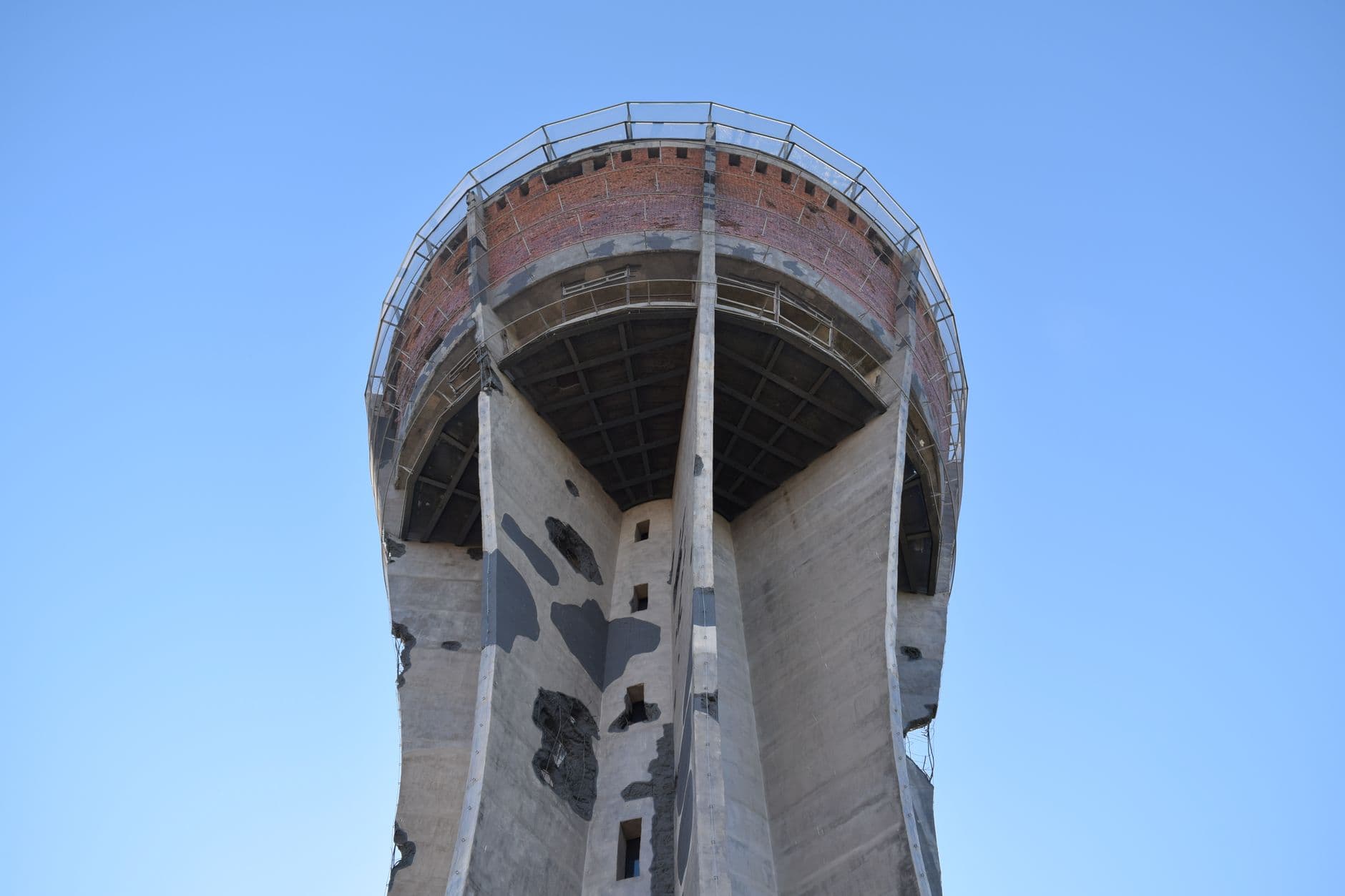
The Second Battle of El Alamein, fought between October 23 and November 11 in 1942, produced one of the most consequential strategic reversals of the Second World War. Before it, Rommel's Afrika Korps had advanced to within 106 kilometers of Alexandria. After it, Germany never again threatened North Africa. Winston Churchill, who had staked considerable political capital on the campaign, wrote afterward: "Before Alamein we never had a victory. After Alamein we never had a defeat." The battle cost the Allies roughly 13,500 casualties. The Axis lost approximately 59,000 men killed, wounded, or captured.
What most visitors do not know: this was actually the third major engagement at El Alamein. The First Battle in July 1942 stopped Rommel's initial advance. The Battle of Alam Halfa in August repelled his second attempt. By the time Montgomery launched his October offensive, the front line had been static for nearly three months, and both sides had laid minefields of extraordinary density. The British alone laid 445,000 mines in a defensive belt called the "Devil's Garden." Clearing them took decades. Some were never cleared.
The other context most visitors arrive without: Egypt in 1942 was a British protectorate in everything but name, and Egyptian opinion on the battle was genuinely divided. King Farouk had German sympathies. Elements of the Egyptian army made contact with Rommel. The nationalist movement had calculated that a German victory might accelerate the end of British control. This is not a comfortable history, and you will not find it explained at any of the memorials. But it is the reason that El Alamein is commemorated with tremendous solemnity by British, Australian, New Zealand, South African, Indian, and Greek veterans and their descendants, while Egyptians largely experience it as something that happened on their soil to other people.
The Memorials: What You Will Actually See
The Commonwealth War Cemetery sits closest to the town center and should be your first stop. It contains 7,367 graves, a number that stops being abstract the moment you walk the rows. The Commonwealth War Graves Commission maintains this ground to a standard that feels almost aggressive in its precision: the headstones are perfectly spaced, the grass is irrigated green against the surrounding sand, the inscriptions are legible and individual. A headstone for an Indian soldier from Lahore sits next to one for a boy from Auckland, New Zealand. Many headstones carry only: "A soldier of the 1939-1945 War. Known unto God." The identified graves are the minority.
The German Memorial sits on a low hill several kilometers west and is architecturally the most distinctive of the three. Built in 1959 from local sandstone, it contains the remains of 4,280 German soldiers, many moved here from scattered desert burial sites after the war. The interior is deliberately austere, a single circular chamber with names carved into the stone. There are no flags, no eagles, no insignia. The design is an act of deliberate contrition that you can either find moving or read as studied.
The Italian Memorial is the most elaborate structure on the battlefield, a white marble edifice with a chapel and a tower that was completed in 1959 under Mussolini's successor government. It holds 4,634 Italian dead. The craftsmanship is visibly superior to the German memorial, which tells you something about the resources available to each postwar government. Inside the chapel, mosaics cover the ceiling in a style that blurs the line between religious commemoration and nationalist monumentalism in a way the German memorial carefully avoids.
The Museum and the Battlefield Itself

The El Alamein War Museum is small, underfunded, and essential. The collection includes original tanks, artillery pieces, and aircraft in varying states of preservation arranged outside, and inside, maps, uniforms, personal effects, and photographs that give the battle a human scale the open desert cannot. The German Panzer IV and the British Valentine tank parked side by side in the courtyard were both designed to kill each other's crews at ranges of less than 1,000 meters. Standing between them is instructive.
The museum's most valuable exhibits are the tactical maps showing the minefields, the supply lines, and the night movements that determined the battle's outcome. Montgomery's plan, Operation Lightfoot, required infantry to physically walk through minefields in darkness to clear paths for armor. The name referred to soldiers moving carefully enough not to trigger the mines underfoot. A significant number did trigger them.
Beyond the official sites, the coast road running west from El Alamein town passes through the actual battle area. Pull over anywhere and walk a hundred meters into the desert and you will find depressions in the ground that were fighting positions, rusted fragments of vehicles and equipment, and the occasional deliberate marker where a unit recorded its position. Do not touch or move any metal object on the desert floor. This advice is not precautionary. The Egyptian Minetec clearance program has removed millions of pieces of ordnance from the Western Desert since the 1990s, but the Egyptian Army estimates that 17 million mines and items of unexploded ordnance remain in the ground between El Alamein and the Libyan border. Stay on established tracks.
The Connections
El Alamein sits on a coastal strip that has been strategically significant for far longer than the twentieth century. The ancient Libyan Desert trade route ran through this corridor. Alexander the Great passed this coastline in 332 BC on his way to found Alexandria, and his supply route would have crossed roughly the same ground where the Afrika Korps later laid its minefields.
In a more direct historical line, the logistics network that supplied the British Eighth Army ran through Alexandria and Cairo, cities whose entire modern infrastructure had been built under British administration since 1882. The railway line that carried ammunition and reinforcements to El Alamein was the same line that transported Egyptian cotton to Alexandria for export to Lancashire mills. Empire built the infrastructure that defended empire. That layering is very Egyptian, and worth sitting with.
The aftermath of El Alamein also connects directly to Egypt's postwar trajectory. The humiliation of British strategic weakness revealed during the campaign, followed by the 1942 incident in which British tanks surrounded Abdin Palace to force King Farouk to appoint a pro-British prime minister, radicalized a generation of Egyptian army officers. Ten of them, calling themselves the Free Officers, launched the revolution that ended the monarchy in 1952. Gamal Abdel Nasser was among them. El Alamein is, in a line you can draw with some confidence, part of the cause of modern Egypt.
Common Mistakes
Skipping the Italian Memorial because it feels optional. Most itineraries mention the Commonwealth Cemetery and the German Memorial and treat the Italian one as optional. The Italian Memorial's interior mosaics are the single most visually interesting thing on the whole battlefield site. It takes 25 minutes. Go.
Arriving without water in summer. The cemetery and memorials have no shade structures of note. The museum is air-conditioned but small. If you are visiting between May and September, bring more water than you think you need and accept that the battlefield exploration component of the visit will be limited.
Trusting the War Museum to be comprehensive. The museum covers the battle adequately but almost entirely from a British command perspective. It has almost nothing on the Indian, Australian, New Zealand, or South African contributions, whose soldiers make up a substantial portion of the Commonwealth Cemetery. Come with some background reading done.
Taking the sound and light show at the museum. It runs in high season and costs additional entrance fees. It adds nothing to what the museum's maps and exhibits already tell you, and the production values are poor. Use that time to walk the cemetery at dusk instead, when the light on the headstones is unlike anything else you will see in Egypt.
Touching or collecting battlefield debris. This is not a metaphorical warning about cultural respect. This is about unexploded ordnance that has killed and maimed people within the last decade. Treat every piece of metal on the desert floor as live until Egyptian Army bomb disposal has assessed it.
Expecting local Egyptian context at the memorials. All three major memorials were designed, funded, and are maintained by European governments and the Commonwealth War Graves Commission. They tell a European story on Egyptian soil. If you want to understand what the battle meant for Egypt, you need to seek that narrative elsewhere, starting with any decent history of the 1952 Revolution.
Driving directly from Cairo in a single day trip. The round trip from Cairo is roughly seven hours of driving for four hours of site time. Take the train or bus to Alexandria the night before, spend the evening in that city, and do El Alamein as a day trip from there. Alexandria has its own weight of history and deserves the time.
Practical Tips
The October commemorations around the anniversary of the battle's opening on October 23 are worth planning around. British, Australian, and New Zealand veterans' organizations hold formal services at the Commonwealth Cemetery that are open to the public and genuinely moving. The Egyptian Tourism Authority sometimes offers additional programming in this period.
Lunch options near the site are limited. There are small fish restaurants along the coast road that serve fresh Mediterranean catches simply grilled. They are good, cheap, and informal. Do not expect a menu in English or credit card facilities. Carry EGP cash.
The town of El Alamein itself is a small, unremarkable coastal settlement that has been somewhat overtaken by the New El Alamein City development project several kilometers to the west, which is an Egyptian government resort megaproject with no meaningful connection to the battlefield or its history. Do not let resort hotel signage for New El Alamein confuse you into thinking you have arrived at the historic site. The historic site is the older settlement, clearly signposted from the coast road.
If you have a particular family connection to the battle, contact the Commonwealth War Graves Commission in advance of your visit. They maintain complete records of all identified burials and can tell you the exact grave location and any recorded details about the individual. The CWGC website allows you to search by name before you travel.
Frequently Asked Questions
The Weekly Dispatch
More on Egypt, every Friday.
Cultural depth and places most guides never mention.
No spam. Unsubscribe anytime.