French Egyptology History: Egypt Through the Scholars Who Decoded It
France didn't just study ancient Egypt. It invented the modern discipline, then left Egypt to manage the consequences. The full, uncomfortable story.

Audio Guide: French Egyptology History: Egypt Through the Scholars Who Decoded It
Quick Facts
- Best time to visit
- October through March for Nile Valley sites. Summer is manageable if you reach sites before 8am. Winter light in the Nile Valley, particularly in the Luxor region, is sharper and cooler than anywhere else in Egypt.
- Entrance fee
- Egyptian Museum EGP 450 (approx $9 USD), students EGP 225. Dendera EGP 360 (approx $7 USD). Abydos EGP 360 (approx $7 USD). Coptic Museum EGP 200 (approx $4 USD). Crypt access at Dendera requires a guide tip of approximately EGP 50 to 100.
- Opening hours
- Egyptian Museum daily 9am to 5pm. Dendera daily 7am to 5pm (winter), 7am to 6pm (summer). Abydos daily 8am to 5pm. IFAO is not open to the public.
- How to get there
- Cairo to Luxor: sleeper train EGP 700 to 1,200 one way, departs Cairo Ramses Station nightly around 8pm. Luxor to Dendera: private taxi EGP 300 to 400 return. Luxor to Abydos: private taxi EGP 500 to 700 full day. Microbus from Luxor to Qena (nearest town to Dendera) costs approximately EGP 30 but requires additional transport to the site.
- Time needed
- Minimum 7 days to engage seriously: 3 days in Cairo for the Egyptian Museum, Coptic Museum, and related sites, then 4 days based in Luxor for Dendera, Abydos, and the West Bank. A single day each at Dendera and Abydos is insufficient.
- Cost range
- Budget EGP 800 to 1,200 per day covering hostel accommodation, street food, and site entry. Mid-range EGP 2,000 to 3,500 per day covering a 3-star hotel, restaurant meals, and private transport.
Quick Facts
Best time to visit: October through March for Cairo and the Delta sites; April to September makes northern sites tolerable if you start before 7am
Key sites in this guide: Institut Français d'Archéologie Orientale (IFAO), Cairo; Champollion sites across Luxor; the Egyptian Museum's French-catalogued collection; Dendera Temple; Abydos
Entrance fees: Egyptian Museum EGP 450 (approx $9 USD), students EGP 225. Dendera EGP 360 (approx $7 USD). Abydos EGP 360. IFAO library access: contact in advance, free for researchers.
Opening hours: Egyptian Museum daily 9am to 5pm. Dendera daily 7am to 5pm (winter), 7am to 6pm (summer). Abydos daily 8am to 5pm.
How to get there: Cairo to Luxor by sleeper train (EGP 700 to 1,200 depending on class). Luxor to Dendera by private taxi, approximately EGP 300 to 400 return. Abydos from Luxor by taxi or microbus, EGP 400 to 600 return for private hire.
Time needed: This is not a single site. Budget at least four days in Cairo engaging seriously with the Egyptian Museum's French-catalogued galleries, then three days based in Luxor to reach Dendera and Abydos properly.
Cost range: Budget EGP 800 to 1,200 per day covering accommodation, food, and site entry. Mid-range EGP 2,000 to 3,500 per day.
---
Napoleon brought 167 scientists, engineers, and artists to Egypt in 1798. He brought no translators who could read hieroglyphics, because no one alive on earth could read hieroglyphics. What he left behind, accidentally, was the Rosetta Stone. What France did with that accident changed everything.
The French Egyptology history guide most visitors encounter is the sanitized version: Champollion was a genius, he cracked the code, the field was born. What gets left out is the full weight of what happened next. France didn't just decode a dead language. It established the institutional architecture that decided how Egypt would be studied, who would study it, what would be taken, what would be left, and what stories would be told. Two centuries later, Egypt is still negotiating those terms.
This is a guide to following that story across Egypt's actual landscape, from the Cairo institution that has housed French scholarship since 1880 to the temples whose walls Champollion described, from the museum galleries organized under French classification systems to the Nile Valley sites where French archaeologists first dug, often without permission, almost always without returning what they found.
Why This Matters: The Science That Was Also a Seizure
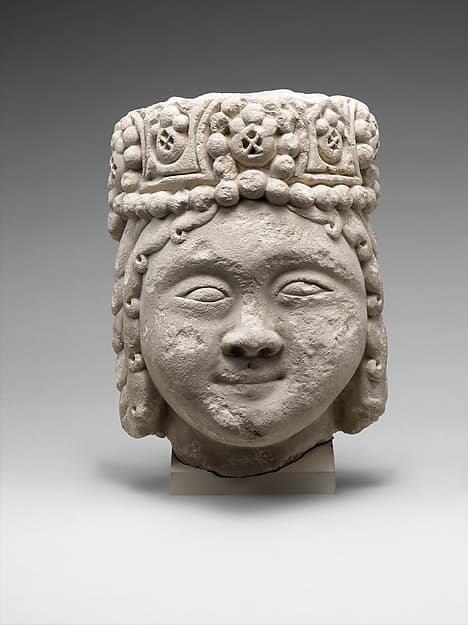
The Description de l'Égypte, the encyclopedic publication produced from Napoleon's expedition, ran to twenty-three volumes and took until 1829 to complete. It was the first systematic scientific survey of any country in the modern era. It was also produced by an occupying army that had just killed thousands of Egyptians at the Battle of the Pyramids and would go on to suppress multiple uprisings before being expelled by the Ottomans and British in 1801.
This is the foundational tension in French Egyptology history, and it is worth sitting with before you visit any site. The scholars on Napoleon's expedition were genuinely brilliant. They measured, drew, catalogued, and described monuments that European science had never documented. They also traveled under the protection of an imperial force, and the discipline they seeded grew in a colonial context that treated Egyptian antiquities as a resource to be extracted and classified by outsiders.
The Institut Français d'Archéologie Orientale, known universally as IFAO, was established in Cairo in 1880 and remains one of the most serious Egyptological research institutions in the world. Its library holds over 80,000 volumes. Its publication record spans 140 years. It has trained generations of Egyptian archaeologists. It has also, for most of its history, been a French institution operating on Egyptian soil with a mandate defined in Paris. The current era, in which IFAO works extensively with Egyptian scholars and the Egyptian Ministry of Tourism and Antiquities sets the terms for all excavation, represents a genuine shift. But the institutional history is what it is.
The reason this matters for the traveler is not political abstraction. It is that almost everything you will be told at Egypt's major sites, every guidebook description, every museum label, every tour script, descends from a scholarly tradition shaped by French Egyptology. Knowing that tradition's origins changes how you hear it.
Jean-François Champollion and the Walls He Actually Stood Before
Champollion deciphered hieroglyphics in September 1822, working from the Rosetta Stone's parallel texts in Greek, Demotic, and hieroglyphic script. He was 31 years old. He did not travel to Egypt until 1828, six years later, meaning he decoded an entire writing system from copies and casts before he ever saw a hieroglyphic inscription on an actual wall.
When he arrived at Dendera, which sits about 60 kilometers north of Luxor on the west bank of the Nile, he wept. His letters describe standing in the hypostyle hall at dawn, watching the light move across the carved zodiac ceiling, which he knew from drawings but had never experienced as a physical space. The Dendera zodiac is a circular astronomical chart carved into the ceiling of one of the temple's chapels. Champollion identified it as a representation of the sky from roughly 50 BC. The original was cut from the ceiling by French agents in 1820 and is now in the Louvre. What you see at Dendera is a plaster cast. This is something most visitors to the temple are not told.
The temple itself is among the best-preserved in Egypt, largely because it was buried under desert sand until the nineteenth century and was also used as a church by early Christians, whose whitewashing over the reliefs paradoxically protected the painted surfaces beneath. The Hathor-headed columns of the facade, the inner sanctum shrines, the crypt corridors running beneath the floor where priests stored ritual objects: these are intact in a way that temples open to air and foot traffic for millennia are not. Come at 7am when the doors open. The quality of Luxor-region light before 9am, that particular pale gold that makes stone look warm from within, is the reason Champollion wept. It is not sentimentality. It is optics.
Abydos: What Mariette Found and What He Took
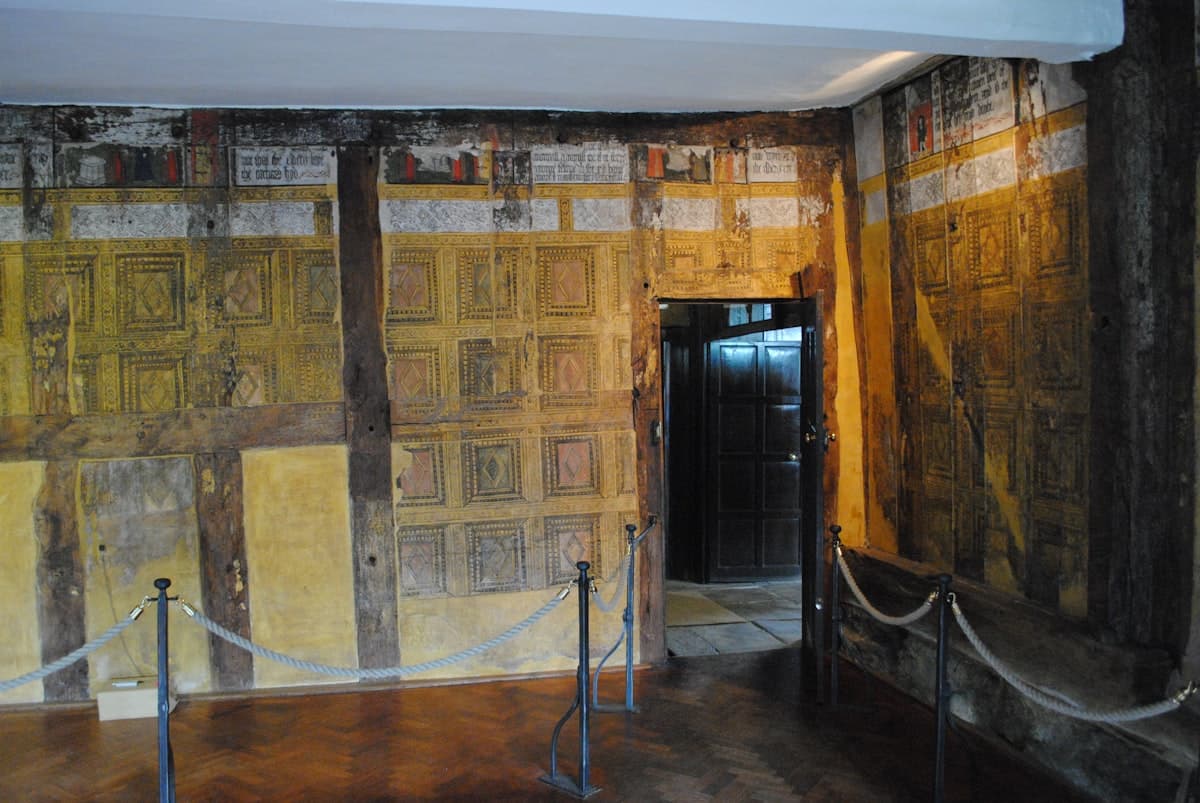
Auguste Mariette arrived in Egypt in 1850 as an agent of the Louvre, sent to purchase Coptic manuscripts. He spent the acquisition budget on illegal excavations instead. He discovered the Serapeum at Saqqara, the underground burial vaults of the sacred Apis bulls, where he found statues, stelae, and objects that he shipped to Paris in quantity that even contemporary French officials found embarrassing. He was investigated. He was also made Egypt's first Director General of Antiquities in 1858, a position created partly to bring order to the chaos of foreign excavators stripping the country, and partly because Mariette was the only person qualified to hold it.
At Abydos, the cult center of Osiris and one of the oldest continuously occupied religious sites in Egypt, Mariette excavated extensively in the 1860s. He identified the Osireion, the mysterious underground structure behind the Temple of Seti I, which he believed was the oldest building in Egypt. He was wrong about the date (it is New Kingdom, not pre-dynastic) but right about its significance. The Osireion is a subterranean hall designed to flood with Nile water, representing the primordial mound of creation. You can see it from above, partially submerged, looking genuinely alien in its undecorated massiveness. Most tour groups skip it. Walk twenty meters past the Seti temple and look down.
Mariette is buried at the Egyptian Museum in Cairo, in the garden, beneath a bronze statue. He specifically requested burial in Egypt. It is one of the stranger images in Egyptology: the man who shipped thousands of objects out of Egypt, interred in a garden in Cairo surrounded by the objects he did not manage to take.
The Egyptian Museum and Its French Skeleton
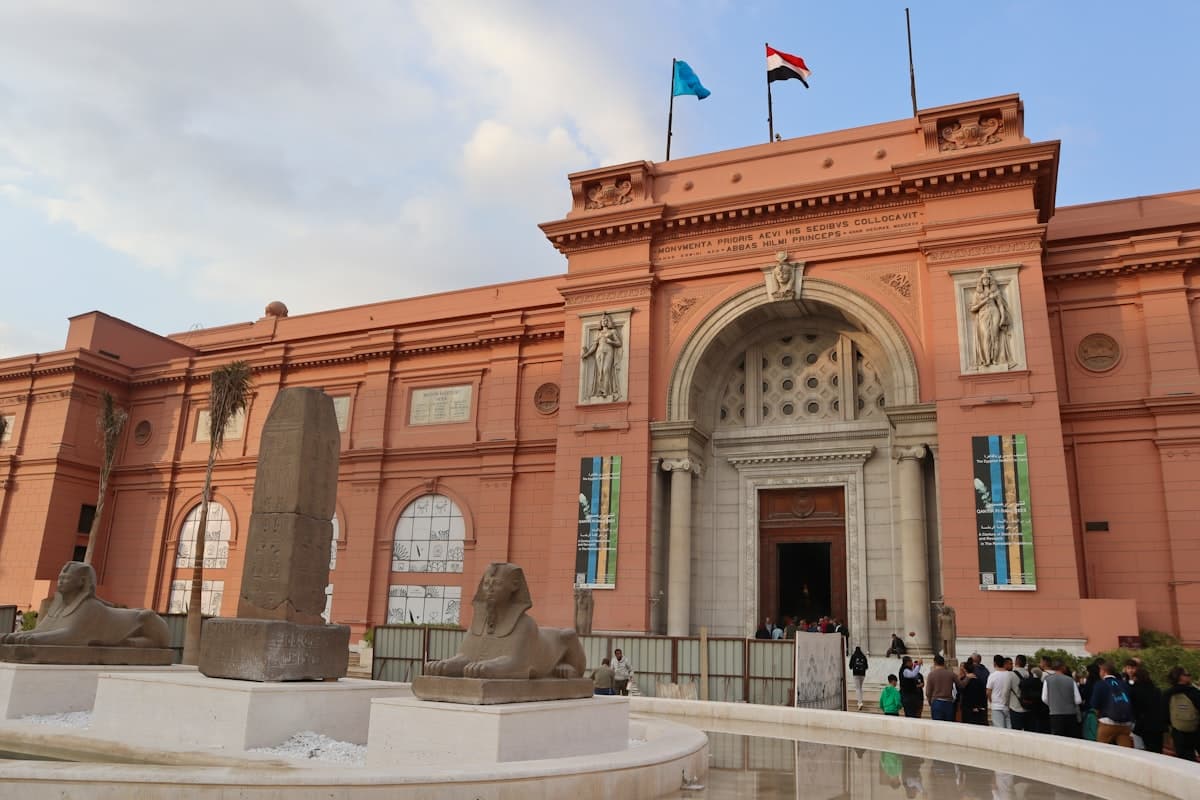
The Egyptian Museum on Tahrir Square was designed by the French architect Marcel Dourgnon, who won an international competition in 1895. It opened in 1902. The classification systems used to organize the collection when it opened were largely those developed by French Egyptologists, particularly the chronological framework established by scholars working from Champollion's foundation.
The museum currently holds over 120,000 objects, of which approximately 50,000 are on display. The Tutankhamun galleries occupy most visitor attention and most of the upper floor. But the rooms that repay serious time are the ones housing the Middle Kingdom and pre-dynastic material, where you can see the object sequences that French classification systems first organized into coherent historical narratives. Room 43, for the Amarna period. Room 32 for the wooden models from Deir el-Bahari. These are not rooms that tour groups linger in. They are rooms where you can actually think.
The Grand Egyptian Museum near Giza, which now holds the Tutankhamun collection, was designed by the Irish-Egyptian consortium Heneghan Peng, not a French firm. The handover represents something real about the current state of Egyptology: the discipline's center of gravity has shifted, and Egyptian archaeologists now lead more excavations in their own country than any foreign team. The French role in founding the modern discipline does not erase this shift. Both things are true simultaneously.
The Connections: One Discipline Across Three Centuries
Champollion's decipherment was built on Thomas Young's earlier work, which the two men disputed bitterly and which remains contested in terms of credit. Young, an English polymath, correctly identified that some hieroglyphic signs were phonetic. Champollion correctly identified that the system was a mixture of phonetic and semantic signs, and that it represented a specific spoken language he could trace to Coptic. Without Coptic, preserved by Egypt's Christian community as a liturgical language after Arabic replaced it in daily life, the decipherment was impossible. French Egyptology owes its founding insight to a language kept alive by Egyptian Christians for two thousand years.
The Coptic Museum in Cairo, a ten-minute walk from the Hanging Church in Old Cairo, holds the largest collection of Coptic art in the world. Its building incorporates architectural elements from a Fatimid-era structure. The site sits on Roman foundations. Beneath it runs the filled channel of an ancient Pharaonic canal. This is not metaphor. It is stratigraphy. Egypt does not arrange its layers of civilization in sequence. It stacks them.
Common Mistakes
Treating Champollion as the whole story. The French Egyptology history guide that begins and ends with the Rosetta Stone misses Mariette, Maspero, Brugsch, and the entire institutional history that followed. Read at least one chapter of Jason Thompson's "Wonderful Things" before you visit any major site.
Paying for the IFAO library tour operators advertise. IFAO does not offer public tours. Any agent selling you an "exclusive IFAO access" experience is selling you an email introduction at best. Contact IFAO directly at ifao.egnet.net if you have a legitimate research purpose. For general visitors, the library is not accessible.
Visiting Dendera without knowing the zodiac is a copy. The ceiling in the Hathor chapel is a plaster reproduction. The original, removed in 1820 by Sébastien Louis Saulnier on behalf of French collector Jean-Baptiste Lelorrain, is in the Louvre's Room 12. This is useful information before you stand beneath it planning your photograph.
Doing the sound and light show at Karnak. It costs EGP 350 and tells you nothing specific about the French Egyptological tradition or about Karnak's actual history that you will not learn from reading the free site information boards. The narration is promotional, not scholarly. Skip it and use the evening to walk the Luxor corniche instead.
Rushing Abydos. Most day trips from Luxor give you ninety minutes at Abydos. The Temple of Seti I has some of the finest painted reliefs in Egypt, and the colors in the inner halls have survived because the space was never converted or heavily trafficked. You need three hours minimum. Hire a private taxi for the day, EGP 500 to 700, and set your own schedule.
Assuming the Egyptian Museum labels are reliable. Many labels in the older galleries have not been updated since the mid-twentieth century and reflect interpretations that Egyptology has since revised. The museum is magnificent. Its interpretive infrastructure is inconsistent. Bring a serious guidebook or download the Smithsonian's Egypt guide before you go.
Not visiting the Coptic Museum. If you are engaging seriously with French Egyptology history in Egypt, the Coptic Museum is not optional. Champollion's decipherment was possible because Coptic survived. The museum costs EGP 200 (approx $4 USD) and is almost never crowded. It deserves two hours.
Practical Tips
The serious traveler interested in French Egyptology history should structure their time in two nodes: Cairo for the Egyptian Museum, the Coptic Museum, and a walk through Zamalek (where the nineteenth-century European scholarly community built its clubs and villas, most now embassies or cultural centers), and then Luxor as a base for Dendera, Abydos, and the West Bank sites that French teams excavated most extensively.
For the Egyptian Museum, arrive at 9am on a Tuesday or Wednesday. Weekends and Mondays draw larger crowds. The Tutankhamun galleries get congested by 11am regardless of the day. Start on the ground floor with the Old Kingdom rooms, work to the Middle Kingdom material, then go upstairs. Most groups do the reverse.
At Dendera, the crypt beneath the main sanctuary, accessible through narrow staircases in the floor, contains some of the most detailed and best-preserved reliefs in Egypt. A guard will usually unlock it for EGP 50 to 100 tip. Bring a torch. The images include Cleopatra VII and her son Caesarion, fathered by Julius Caesar, one of the last royal reliefs carved before Rome absorbed Egypt entirely.
Abydos is a 3-hour drive from Luxor. Stay the night in Sohag, 30 kilometers away, to see the site at opening. Early morning at Abydos, when the painted interior of the Seti temple holds the cool of the night and the reliefs are lit from the east entrance, is one of the best experiences available in the entire Nile Valley. No one else will be there.
Frequently Asked Questions
The Weekly Dispatch
More on Egypt, every Friday.
Cultural depth and places most guides never mention.
No spam. Unsubscribe anytime.