French Egyptology History Guide: Egypt Through Their Eyes
Napoleon brought 167 scientists to Egypt in 1798. They produced the Description de l'Égypte, 23 volumes that invented modern Egyptology. The sites they mapped are still arguing with their conclusions.

Quick Facts
- Best time to visit
- October to February for Cairo-based sites and IFAO; Upper Egypt sites like Deir el-Medina year-round but avoid July to August above 40 degrees C
- Entrance fee
- Egyptian Museum EGP 450 adults (approx $9 USD), EGP 225 students; Saqqara and Serapeum EGP 360 adults (approx $7 USD); IFAO library free for researchers and serious visitors
- Opening hours
- Egyptian Museum daily 9am to 5pm; Saqqara daily 8am to 5pm winter, 8am to 4pm summer; IFAO Monday to Friday 9am to 4pm
- How to get there
- Cairo metro Line 2 to Tahrir Square for Egyptian Museum, EGP 8 per journey; taxi to IFAO in Munira EGP 40 to 60 from downtown; Saqqara by private taxi EGP 300 to 500 return from Giza
- Time needed
- Two full days in Cairo minimum for Egyptian Museum and IFAO; one additional day at Saqqara; one day at Deir el-Medina if traveling to Luxor
- Cost range
- Budget EGP 700 to 1,000 per day; mid-range EGP 2,000 to 3,500 per day including private transport between sites
Quick Facts
Best time to visit: October through February for Cairo archives and Delta sites; Upper Egypt sites year-round but brutal in July and August above 45°C
Entrance fees: Institut français d'archéologie orientale (IFAO) library access is free for researchers; Champollion-related sites in the Egyptian Museum are included in the standard EGP 450 ticket (approx $9 USD); Egyptian Museum general admission EGP 450 adults, EGP 225 students
Opening hours: Egyptian Museum daily 9am to 5pm; IFAO in Munira, Cairo, open to researchers Monday through Friday 9am to 4pm; Louvre-partnered Serapeum at Saqqara open daily 8am to 5pm (winter), 8am to 4pm (summer)
How to get there: Cairo metro Line 2 to Tahrir Square for the Egyptian Museum (EGP 8 per journey); taxi from downtown Cairo to IFAO in Munira costs roughly EGP 40 to 60; Saqqara requires a taxi or tour from Giza, budget EGP 300 to 500 return
Time needed: A focused French Egyptology trail in Cairo alone requires two full days minimum. Add one day at Saqqara, one day at Abydos or Dendera if in Upper Egypt.
Cost range: Budget EGP 600 to 900 per day; mid-range EGP 2,000 to 3,500 per day including private transport
---
Napoleon Bonaparte never made it to Upper Egypt. He got as far as Middle Egypt before the British destroyed his fleet at Abukir Bay and stranded his entire expedition. What he left behind anyway changed the world's understanding of this civilization more than almost any event since the Arab conquest. He brought 167 scientists, engineers, and artists to Egypt in 1798. They measured, drew, and catalogued everything they could reach. The result was the Description de l'Égypte, published between 1809 and 1828 in 23 volumes, a work so comprehensive that European scholars were still correcting its errors 80 years later. France's relationship with Egyptology was born in military failure and scholarly obsession. It never really ended.
Why This Place Matters
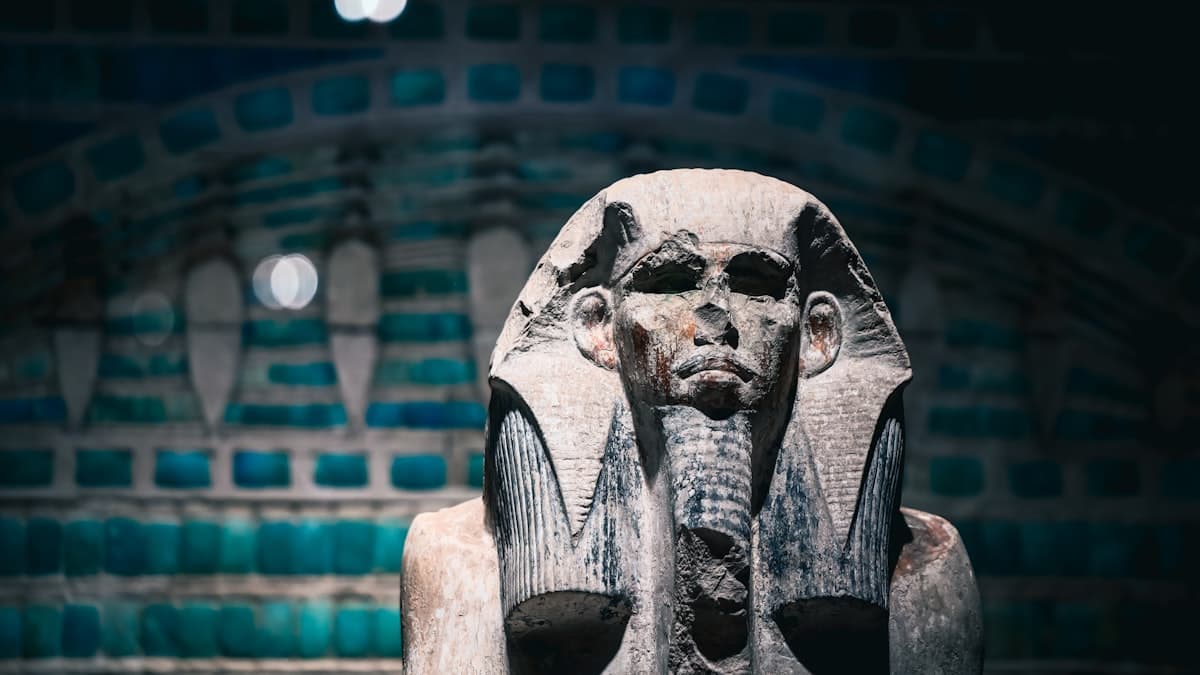
The French Egyptology history guide you will find in most mainstream sources begins and ends with Champollion and the Rosetta Stone. That framing misses almost everything important.
Jean-François Champollion deciphered hieroglyphics in September 1822, working from a copy of the Rosetta Stone. The original had been seized by the British after their defeat of the French at Alexandria in 1801, and it has sat in the British Museum ever since. What most people do not know is that Champollion never went to Egypt until 1828, six years after the decipherment. He spent those intervening years working from papyri, obelisk inscriptions, and the plates of the Description de l'Égypte that Napoleon's scholars had produced. He cracked one of history's great linguistic codes without ever having stood in front of a temple.
When Champollion finally arrived in Egypt in 1828, on a joint Franco-Tuscan expedition, he spent 15 months traveling from Alexandria to the Second Cataract near Aswan. He was so overwhelmed by what he saw at Karnak that he reportedly wept. He was also horrified by the condition of the monuments, particularly the systematic removal of objects by private collectors and rival national expeditions. He died in 1832 at 41, almost certainly from the cumulative strain of the journey. Egypt cost him everything, and he had already given it everything first.
The Institut français d'archéologie orientale, the IFAO, was founded in Cairo in 1880, and it remains one of the most productive archaeological institutions on earth. It has published over 500 volumes of scholarship, trained hundreds of Egyptian archaeologists, and maintains one of the most specialized Egyptological libraries outside France. It sits quietly in Munira, a few minutes from the Nile, and almost no tourist has ever walked through its door.
The Expedition That Changed Everything
The Description de l'Égypte was not one book. It was a monument in paper form, 23 volumes including nine of plates, depicting everything from temple reliefs and tomb paintings to Egyptian flora, fauna, and the daily life of its population in 1798. The plates were so large that a special reading desk, the pupitre à la Description, had to be manufactured to hold them open. Dominique Vivant Denon, the artist-diplomat who produced the first illustrated volume in 1802 while the full work was still being compiled, became so famous that Napoleon appointed him director of the Louvre.
What Denon and the savants of the Commission des Sciences et des Arts produced was, in the most precise sense, a colonial inventory. Egypt was being catalogued as a possession, not a civilization. That tension sits inside every beautiful plate. The temples they drew were still partly inhabited, the tombs were still being used as homes, and the people they sketched were not consulted about what any of it meant. The French brought the tools of the Enlightenment to a country they had occupied by force, and the result was simultaneously the founding document of modern Egyptology and one of the earliest examples of what Edward Said would later call orientalism.
You can see original plates from the Description de l'Égypte at the IFAO library in Cairo, with advance arrangements. The Egyptian Museum also holds objects that were documented in its plates, including stelae from the Delta that Denon sketched in the field and that had disappeared from the sites by the time the volumes were printed.
Champollion, the Louvre, and What Egypt Kept
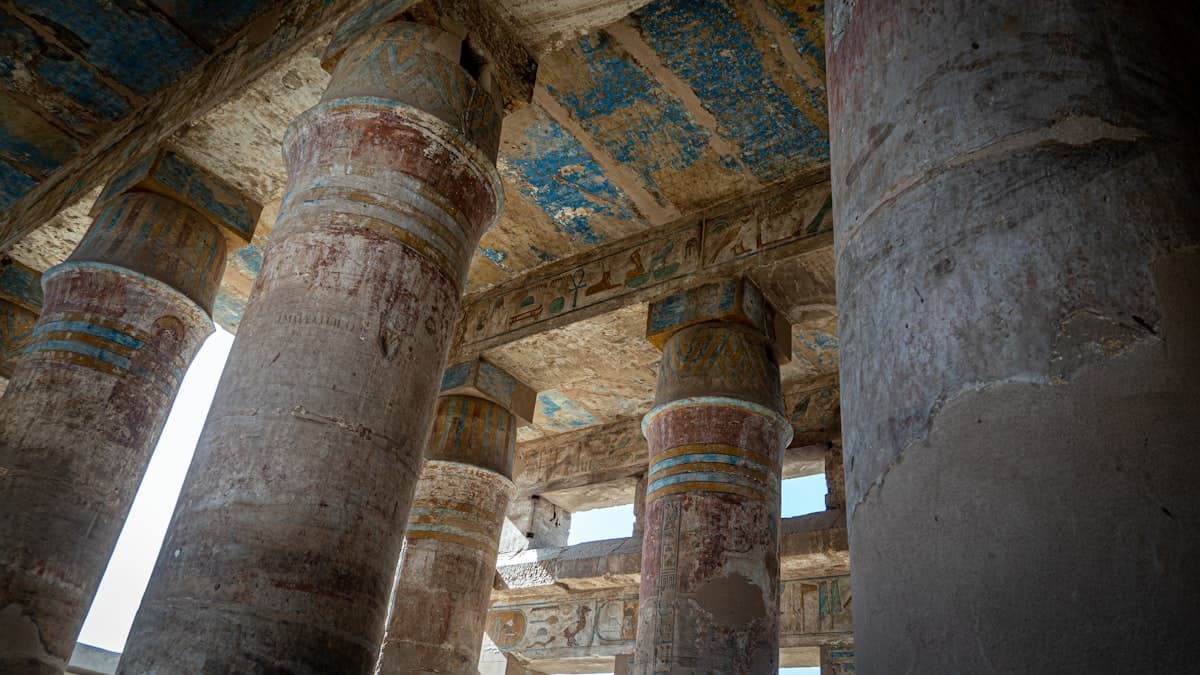
Champollion is the French name most associated with Egyptology, and Egypt's relationship with him is complicated in ways the official story glosses over. He was a passionate advocate against the removal of Egyptian antiquities even as France was acquiring them. He helped negotiate the transfer of the Luxor Obelisk to Paris in 1833, a decision made after his death that he had actually argued against in principle. The obelisk now stands in the Place de la Concorde. Its twin still stands at Karnak, where it has been since Ramesses II erected it around 1250 BC.
At the Egyptian Museum in Cairo, Rooms 2 and 3 of the ground floor hold objects that Champollion personally examined and catalogued during his 1828 expedition. The pink granite sarcophagus of Ramesses III, which he sketched in exhaustive detail at the Valley of the Kings, is documented in his published correspondence in terms that make clear he understood its iconographic program better than any European had ever understood an Egyptian funerary object before him. His notes became the first systematic analysis of royal funerary theology from a linguistic rather than purely visual standpoint.
The Serapeum at Saqqara, where Auguste Mariette discovered the Apis bull burials in 1851, represents a different chapter in French Egyptology. Mariette was not supposed to be excavating at all. He had been sent to Cairo by the Louvre to purchase Coptic manuscripts. He spent the acquisition budget on excavating instead, discovered one of the most significant underground burial complexes in Egypt, and in doing so got himself essentially fired and then rehired as the most important archaeologist in Egypt. He went on to found the Egyptian Antiquities Service and the original Bulaq Museum, the direct predecessor of today's Egyptian Museum. A Frenchman, working largely on French institutional money, built the infrastructure of Egyptian state archaeology.
The Connections
The French Egyptology history guide cannot be read without reading the British one alongside it, because the two are braided together in competition and theft. The Rosetta Stone was found by a French soldier, Pierre-François Bouchard, at the coastal fort of Qaitbay in 1799. Qaitbay itself was built in 1477 on the foundations of the Pharos of Alexandria, one of the Seven Wonders of the Ancient World. When the British took the stone to London under Article 16 of the Treaty of Alexandria, they were continuing a pattern of monument-as-trophy that the Romans had started with Egyptian obelisks eighteen centuries earlier. The difference was that the French had by then invented the scholarly apparatus to understand what they were losing.
Mariette's Bulaq Museum, the building that preceded the current Egyptian Museum, stood near where the Ramses Hilton now stands on the Nile Corniche. It flooded repeatedly, and its collections were moved first to Giza and then to the current building in Tahrir Square, opened in 1902. The architect of that building was Marcel Dourgnon, who won the design competition in 1895. A French architect designed the building that houses the world's largest collection of Pharaonic antiquities. That building is currently being emptied in favor of the Grand Egyptian Museum at Giza, a project funded partly by Japan. The institutions that protect Egyptian heritage have always been funded by someone else's agenda.
The IFAO continues active excavations at Tell el-Dab'a in the Delta, at Deir el-Medina in Luxor where workmen who built the royal tombs lived, and at Coptic sites in the Fayoum. The workmen's village at Deir el-Medina is the best-documented community in the ancient world, because its inhabitants were literate and left behind thousands of ostraca, pottery shards used as notepaper. A French team has been working there since 1917. Over a century of continuous excavation, and the site is still producing new findings every season.
Common Mistakes
Treating the Egyptian Museum as the main event and IFAO as a footnote. If you have any serious interest in French Egyptology, the IFAO library and its publications archive in Munira is where the actual intellectual history lives. Email them in advance. They are accommodating to serious visitors.
Skipping Saqqara for Giza. Mariette's Serapeum, where he found 24 granite sarcophagi weighing up to 70 tonnes each inside a labyrinthine underground gallery, is genuinely disorienting in the best possible way. Most tour groups never enter it. The Giza Pyramids are larger and more famous. The Serapeum is more interesting.
Buying the Description de l'Égypte coffee table reproduction at the museum gift shop. It costs EGP 2,800 to 4,500 depending on format and you can access the full digitized version free online through the Bibliothèque nationale de France's Gallica archive. Spend that money on a meal at Abou El Sid instead.
The Sound and Light Show at Karnak costs EGP 350, takes 75 minutes, and contains no information that is not in the free signage inside the temple. The French-language version is slightly better written than the English one, which is damning with faint praise. Skip it entirely and use that evening to walk the Avenue of Sphinxes instead.
Assuming French-language sources are only for French readers. The IFAO publishes a free journal, the Bulletin de l'Institut français d'archéologie orientale, available in full online. Many of its articles are in English. It is the best free scholarly resource on active Egyptian excavations that most tourists never know exists.
Visiting the Rosetta Stone's findspot at Rashid without context. The town of Rashid, known in French sources as Rosette, is worth visiting for its Ottoman-era architecture, but the actual spot where Bouchard found the stone in 1799 is marked by a small sign near a reconstructed fort. Manage expectations accordingly.
Treating Champollion as a lone genius. He could not have deciphered hieroglyphics without Thomas Young's prior work on the demotic script, without the Coptic language scholarship of the previous two centuries, and without the visual documentation produced by Napoleon's expedition. The lone genius narrative sells books. The collaborative, contested, multi-decade reality is more interesting.
Practical Tips
The IFAO at 37 Sheikh Ali Yusuf Street in Munira is not signed in any way that a non-specialist would recognize. Take a taxi and show the driver the Arabic address. The library requires an introduction letter from a university or cultural institution for full access, but the staff are genuinely welcoming to serious visitors and the reading room is open without formal credentials for browsing published volumes.
For the Serapeum at Saqqara, the underground galleries are unlit beyond the entrance and the floor is uneven. Bring a proper torch, not just your phone. The temperature drops sharply underground regardless of the season above.
At the Egyptian Museum, the rooms documenting the Napoleonic expedition and its aftermath are on the upper west wing, which most visitors skip in favor of Tutankhamun. Go there first, before the Tutankhamun rooms fill up and crowd fatigue sets in.
Deir el-Medina in Luxor is best visited at opening time, 6am in winter. The IFAO team typically works in the early morning before the heat builds. The site is small enough that an hour is sufficient, which means you can combine it with the Valley of the Queens in the same morning before the buses arrive from the cruise ships.
For anyone wanting to engage seriously with French Egyptology history as a living research tradition, the IFAO hosts periodic public lectures in Cairo, usually in French with Arabic translation, occasionally in English. Their website lists upcoming events and they are free to attend.
Frequently Asked Questions
The Weekly Dispatch
More on Egypt, every Friday.
Cultural depth and places most guides never mention.
No spam. Unsubscribe anytime.