French Egyptology History Guide: Egypt's Debt to Napoleon's Savants
Napoleon brought 167 scientists to Egypt in 1798. They produced a 23-volume work that invented Egyptology. Here is where to find their legacy still embedded in Cairo.

Quick Facts
- Best time to visit
- October to March. Cairo museums and Luxor sites are manageable in this window without summer heat, and winter morning light on Karnak sandstone is specific and worth planning around.
- Entrance fee
- Egyptian Museum EGP 450 (approx. USD 9). Karnak Temple EGP 360 (approx. USD 7). Deir el-Medina EGP 180 (approx. USD 4). Dendera Temple EGP 180 (approx. USD 4). IFAO library: free with academic ID.
- Opening hours
- Egyptian Museum: daily 9am to 5pm. Karnak Temple: daily 6am to 5:30pm (winter), 6am to 6pm (summer). Luxor Museum: daily 9am to 10pm (winter), split hours in summer.
- How to get there
- Egyptian Museum: 15-minute walk from Tahrir Metro (Lines 1 and 2). Luxor from Cairo: overnight sleeper train from Ramses Station, EGP 700 second class. Luxor West Bank sites by taxi: EGP 150 to 200 return.
- Time needed
- Two full days in Cairo to trace the French Egyptology thread through the Egyptian Museum, Institut d'Égypte, and IFAO. One full day in Luxor for Karnak, Deir el-Medina, and the West Bank. Dendera adds a half-day excursion from Luxor.
- Cost range
- Budget EGP 800 to 1,200 per day including transport and entry. Mid-range EGP 2,500 to 4,000 per day with knowledgeable private guide and comfortable accommodation.
Quick Facts
Best time to visit: October to March, when Cairo's museums and archives are bearable without the summer heat bearing down on you through glass rooftops.
Key sites covered: Egyptian Museum (Tahrir Square), Institut d'Égypte (Downtown Cairo), Champollion's trace sites in Luxor and the Valley of the Kings, French Institute in Cairo (IFAO).
Entrance fees: Egyptian Museum: EGP 450 (approx. USD 9). Graeco-Roman Museum in Alexandria: EGP 200 (approx. USD 4). Luxor Museum: EGP 200 (approx. USD 4). The IFAO building itself is not a public museum, but its library is accessible to researchers with a valid ID.
Opening hours: Egyptian Museum: daily 9am to 5pm. Luxor Museum: daily 9am to 10pm in winter, 9am to 1pm and 5pm to 10pm in summer.
Getting there: Cairo Museum is a 15-minute walk from Tahrir Metro (Line 1 or 2). Luxor is four hours from Cairo by overnight sleeper train; a second-class berth costs roughly EGP 700 (approx. USD 14). Taxis in Luxor to the West Bank sites run EGP 150 to 200 return.
Time needed: Two full days in Cairo to trace the French Egyptology thread properly. One full day in Luxor for the Champollion-connected sites. Rushing any of this is a mistake with specific consequences covered below.
Cost range: Budget EGP 800 to 1,200 per day including transport and entry. Mid-range EGP 2,500 to 4,000 per day with a private guide who actually knows French scholarly history.
---
Why French Egyptology Matters More Than You Were Told
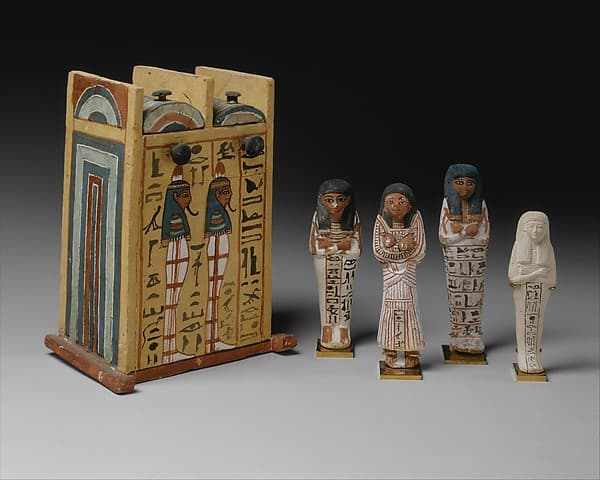
Napoleon Bonaparte's 1798 Egyptian campaign is usually described as a military failure. That framing misses almost everything important. He arrived with 167 scientists, artists, engineers, and scholars, a group he called the Commission des Sciences et Arts, and their three-year work produced the Description de l'Égypte: 23 volumes, 837 plates, and approximately 3,000 illustrations published between 1809 and 1829. It is not an exaggeration to say this work invented the modern discipline of Egyptology, created the template for systematic archaeological documentation, and permanently altered how the world understood ancient civilization.
The Rosetta Stone, which the French discovered at Rashid in 1799, was seized by the British after the French military surrender. This part of the story is well known. Less known is what followed. Jean-François Champollion, who eventually deciphered hieroglyphics in 1822, never set foot in Egypt until 1828, six years after the breakthrough. He made his discovery in Paris, working from the Rosetta Stone's text and from copies of inscriptions in the Description de l'Égypte made by those same Commission scholars. The physical journey to Egypt came after the intellectual revolution, not before.
What this means for you as a traveler is that the French Egyptology history thread runs through two geographies at once: the European archives where the decipherment happened, and the Egyptian sites where the objects, inscriptions, and ruins still carry the marks of that extraordinary scholarly encounter.
---
Cairo: The Institut d'Égypte and What Survived the Fire
Napoleon founded the Institut d'Égypte in August 1798, modeled directly on the Institut de France in Paris. He housed it in a confiscated palace near what is now Tahrir Square and held regular scientific meetings there himself, participating in debates about the salinity of the Red Sea and the feasibility of a Suez Canal, a question French engineers eventually answered 61 years later.
The Institut's building burned during the 2011 revolution. Around 200,000 documents were destroyed or damaged, including original manuscripts and maps from the Napoleonic period. The institute was rebuilt and reopened, and it functions today as a scholarly body rather than a visitor attraction. But standing outside the restored building on Sheikh Rihan Street, two minutes from the Egyptian Museum, is one of the more quietly affecting moments available to anyone interested in this history. The fire was not incidental to Egyptian politics; it happened because the building was seen, correctly, as a symbol of foreign intellectual extraction.
The Egyptian Museum itself is the most direct continuation of the French scholarly project. Its first director, appointed when it opened in Bulaq in 1858, was Auguste Mariette, a French Egyptologist who had been sent to Egypt by the Louvre in 1850 to purchase Coptic manuscripts and ended up excavating Saqqara instead. Mariette founded the Egyptian Antiquities Service, which controlled all archaeological work in Egypt until 1952. His statue stands in the museum garden, and he is buried there in a stone sarcophagus. The founder of Egyptian state archaeology is interred in the garden of Cairo's national museum. This is worth pausing on.
Inside the museum, look specifically at Room 43, the Amarna Gallery. The sensitivity with which the French-influenced early Egyptologists approached the Akhenaten period, treating it as a coherent theological revolution rather than a heresy to be dismissed, shaped how the objects there were preserved and displayed.
---
Luxor: Champollion's Cartouches and the West Bank at 6am
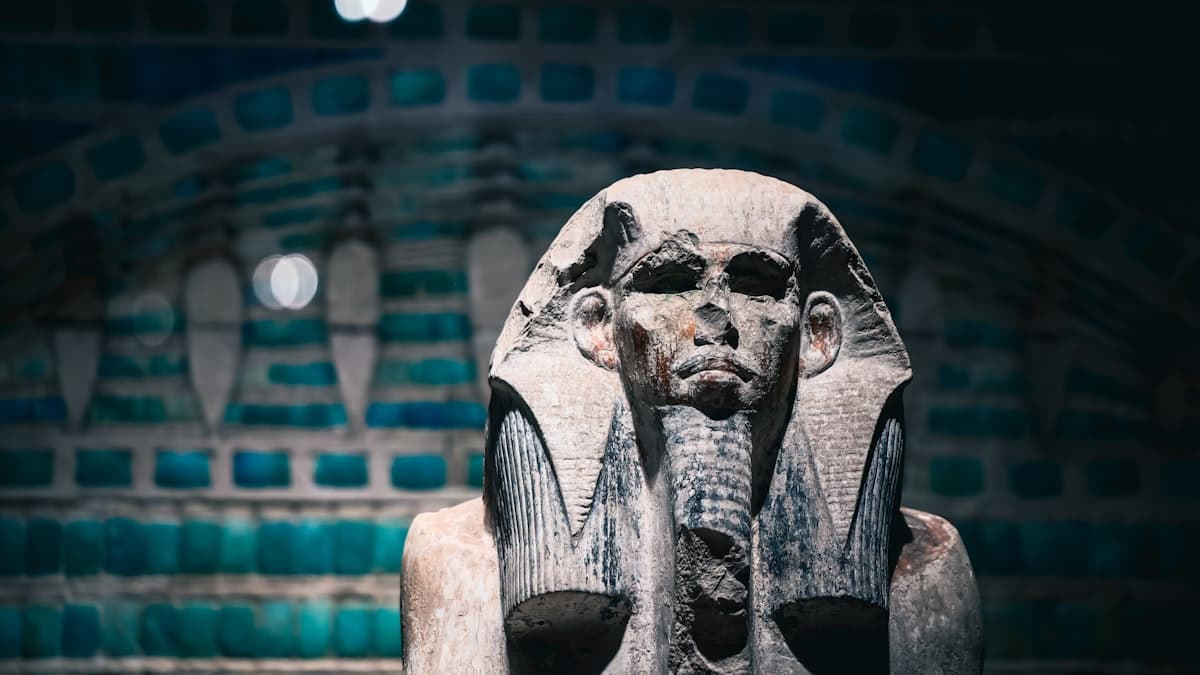
Champollion arrived in Luxor in 1829 and reportedly wept when he saw the inscriptions at Karnak and could finally read them in person. He had spent years working from copies. Seeing the originals, he wrote in a letter to his brother, was like hearing a voice you had only known through written transcripts.
At Karnak, the Hypostyle Hall is where most visitors spend their time, and correctly so. But Champollion's specific contribution to Karnak scholarship is the Festival Hall of Thutmose III, the smaller chamber built around 1450 BCE in the northeastern section of the complex. Champollion documented the botanical reliefs there, which depict plants brought back from military campaigns in Syria-Palestine, the so-called Botanical Garden Room. Most tour groups do not enter it. Most guides do not mention it. It takes seven minutes to reach from the main hall and costs nothing beyond your standard Karnak entry fee of EGP 360 (approx. USD 7).
The Luxor light at 6am, when the temple complex opens and the angle of sun hits the sandstone columns at roughly 15 degrees, is a specific quality you do not encounter anywhere else in Egypt. It is not warmth exactly. It is density. The stone looks heavier than it did the day before. Champollion described the columns at Karnak as making European cathedrals look like toys, and standing there at first light, before the tour buses unload their passengers at 9am, it is possible to understand exactly what he meant.
On the West Bank, the Deir el-Medina site is where French archaeological investment has been most sustained and most significant. The Institut Français d'Archéologie Orientale, the IFAO, has excavated here continuously since 1917. Deir el-Medina was the village of the artisans who built the royal tombs. The workers left written records: shopping lists, legal disputes, love poems, sick notes. They are among the most complete records of ordinary working life from the ancient world. The French excavated and published the papyri that made this possible. Entry to Deir el-Medina costs EGP 180 (approx. USD 4). The tombs of Sennedjem and Inherkhau are small, privately decorated chambers that are, without qualification, more personally moving than anything in the Valley of the Kings.
---
The Connections: From Champollion to Modern Egyptian Archaeology
The French Egyptology history guide cannot be told without acknowledging its extractive dimension. The Louvre holds approximately 5,000 Egyptian objects. Many arrived through Mariette's predecessor system, when the Khedival government permitted export. Mariette himself stopped that system, which is why he remains a complicated figure in Egyptian memory: a Frenchman who protected Egyptian antiquities from French collectors.
The Dendera Zodiac, a circular astronomical ceiling relief carved during the Ptolemaic period, was removed from Dendera Temple in 1820 by French agents under orders from King Louis XVIII and replaced with a plaster cast. It sits today in the Louvre. The Egyptians have formally requested it back. The French have declined. When you visit Dendera, which is 60km north of Luxor and costs EGP 180 to enter, you are looking at a cast. The original has been in Paris for over 200 years.
The Coptic connection is also specific and often missed. Many French scholars of the Napoleonic Commission recognized that Coptic, the liturgical language of Egyptian Christians, was the direct descendant of ancient Egyptian. Champollion himself studied Coptic specifically because he believed it held the phonetic key to hieroglyphics. He was right. When you hear Coptic chanted in Hanging Church in Old Cairo, you are hearing a language whose grammatical structure connects directly to the inscriptions Champollion decoded. The French scholarly obsession with ancient Egypt led them back to a living Christian community that had preserved Egypt's oldest linguistic thread.
---
Common Mistakes
Visiting the Egyptian Museum without a specific focus. The museum contains over 120,000 objects across 107 halls. Visitors who arrive without a defined interest leave remembering almost nothing. If you are tracing the French Egyptology thread, go directly to the Amarna Gallery, the Tutankhamun rooms, and the Graeco-Roman wing. Everything else can wait for a second visit.
Paying for a sound and light show at Karnak or Luxor Temple. Both cost EGP 350 to 400 and deliver roughly 45 minutes of purple narration and colored floodlights that tell you nothing you will not learn from this article. The same sites at dusk, entered on a standard ticket, look better and cost less.
Ignoring Deir el-Medina in favor of the Valley of the Kings. This is the most direct mistake available. The Valley of the Kings costs EGP 360 for three tombs, delivers extraordinary painting, and is so crowded by 10am that you are moving through it shoulder to shoulder. Deir el-Medina costs EGP 180, contains tombs with equally extraordinary painting, and on most mornings has fewer than twenty visitors. The French have been excavating it for over a century. Their work is the reason the site is so well understood.
Arriving at Karnak after 9am. The site opens at 6am. Arriving at 6am and the arriving at 9:30am are different experiences in the same way that a conversation and a crowd are different. Be there at dawn.
Booking a private guide without verifying their knowledge of French archaeological history. Many guides in Luxor and Cairo are excellent on Pharaonic chronology and weak on everything from the Islamic period to the European scholarly encounter. Ask specifically: who was Auguste Mariette and what did he establish? If you get a blank look, manage your expectations accordingly.
Spending EGP 600 on the Luxor sleeper train first-class compartment when second class is the same train. The difference is the linen. The journey is the same four hours.
Missing the IFAO library. The Institut Français d'Archéologie Orientale on Mounira Street in Cairo holds one of the most significant collections of Egyptological scholarship in the world. It is open to researchers and serious students. If you have any academic affiliation, request access. The building itself, built in 1906, is worth the visit.
---
Practical Tips
For the Cairo leg, base yourself in Downtown Cairo rather than Zamalek or Maadi if you want to walk the French institutional geography. The Institut d'Égypte, the Egyptian Museum, and the Coptic Museum in Old Cairo are all within a reasonable taxi circuit of EGP 50 to 80 per trip.
For Luxor, the overnight sleeper from Cairo departs around 8pm from Ramses Station and arrives at approximately 7am. This timing is useful: you step off the train in time for the 6am Karnak opening, having slept on the way. A one-way second-class berth costs roughly EGP 700 and should be booked through the Egyptian National Railways website at least three days in advance.
The IFAO publishes a substantial catalog of scholarly works on Egyptian sites, many in French but some in Arabic and English. Their bookshop on Mounira Street stocks titles unavailable elsewhere in Cairo. Budget EGP 200 to 400 if you plan to buy.
For anyone specifically interested in the French Egyptology history thread in depth, the best single-volume introduction remains Jason Thompson's Wonderful Things: A History of Egyptology, available through the American University in Cairo Press. The AUC bookshop on Tahrir Square stocks it. It costs approximately EGP 550 and is worth every piaster.
Frequently Asked Questions
The Weekly Dispatch
More on Egypt, every Friday.
Cultural depth and places most guides never mention.
No spam. Unsubscribe anytime.