French Egyptology History Guide: How France Shaped Egypt
France didn't just study ancient Egypt. It invented the discipline, stole half the artifacts, and accidentally gave Egypt its modern bureaucratic DNA. Here's the full reckoning.

Quick Facts
- Best time to visit
- October to March. Cairo and Upper Egypt are both manageable in terms of temperature, and the winter light in the Nile Valley is clear and low-angled, ideal for reading temple reliefs.
- Entrance fee
- Egyptian Museum: EGP 450 (approx $9 USD), students EGP 225. Dendera Temple: EGP 450 (approx $9 USD). Philae Temple: EGP 450 (approx $9 USD) plus mandatory boat transfer approx EGP 200 per person.
- Opening hours
- Egyptian Museum: Daily 9am to 5pm. Dendera Temple: Daily 7am to 5pm. Philae Temple: Daily 7am to 4pm (winter), 7am to 5pm (summer).
- How to get there
- Cairo: fly into Cairo International or take the overnight train from Luxor (EGP 400 to 600 sleeper cabin). Dendera: private taxi from Luxor, EGP 300 to 400 round trip. Philae: taxi or microbus from Aswan to Shellal dock, then mandatory boat transfer EGP 200 per person.
- Time needed
- Full week to cover Cairo, Dendera, and Philae seriously. Egyptian Museum alone requires two full mornings. Dendera: 2 to 3 hours on site. Philae: 90 minutes to 2 hours.
- Cost range
- Budget EGP 800 to 1,200 per day covering accommodation, transport, and entry fees. Mid-range EGP 2,000 to 3,500 per day with private guides and better accommodation.
Quick Facts
Best time to visit relevant sites: October to March, when Cairo and Luxor are cool enough to spend full days outdoors without the heat becoming the story.
Key sites covered in this guide: The Egyptian Museum (Tahrir Square, Cairo), Institut d'Égypte ruins and Bibliotheca Alexandrina, Dendera Temple, Philae Temple, and the Franco-Egyptian sites of the Nile Delta.
Egyptian Museum entrance: EGP 450 (approx $9 USD), students EGP 225. Hours: Daily 9am to 5pm.
Dendera Temple entrance: EGP 450 (approx $9 USD). Hours: Daily 7am to 5pm. Located 60km north of Luxor; a taxi from Luxor costs roughly EGP 300 to 400 return.
Philae Temple entrance: EGP 450 (approx $9 USD) plus mandatory boat transfer from Shellal dock, approximately EGP 200 per person. Hours: Daily 7am to 4pm in winter.
Getting to Cairo from Luxor: Overnight train, EGP 400 to 600 for a sleeper cabin. Domestic flight, EGP 800 to 1,500 depending on timing.
Time needed: This is not a single site. Budget two to three days in Cairo for the Egyptian Museum and Institut d'Égypte area, one day at Dendera, and a half day at Philae. If you are serious about French Egyptology history in Egypt, this is a week-long itinerary.
---
Napoleon Bonaparte brought 167 scholars, artists, and scientists to Egypt in 1798. He brought approximately 54,000 soldiers. The soldiers largely failed. The scholars produced a 23-volume encyclopedia called the Description de l'Égypte that took 25 years to complete and redrew how the entire Western world understood human civilization. This is the most consequential academic project ever conducted at gunpoint, and almost nobody in Egypt talks about it that way.
The French Egyptology history guide you find in most travel brochures begins with Jean-François Champollion decoding the Rosetta Stone in 1822 and ends with a gift-shop reproduction hieroglyph cartouche. The actual story is more uncomfortable, more fascinating, and frankly more Egyptian: a story of colonial obsession, genuine intellectual revolution, Egyptian scholars who have never received proper credit, and a discipline that simultaneously illuminated and looted the civilization it claimed to love.
Why This Matters: The Invention of a Discipline
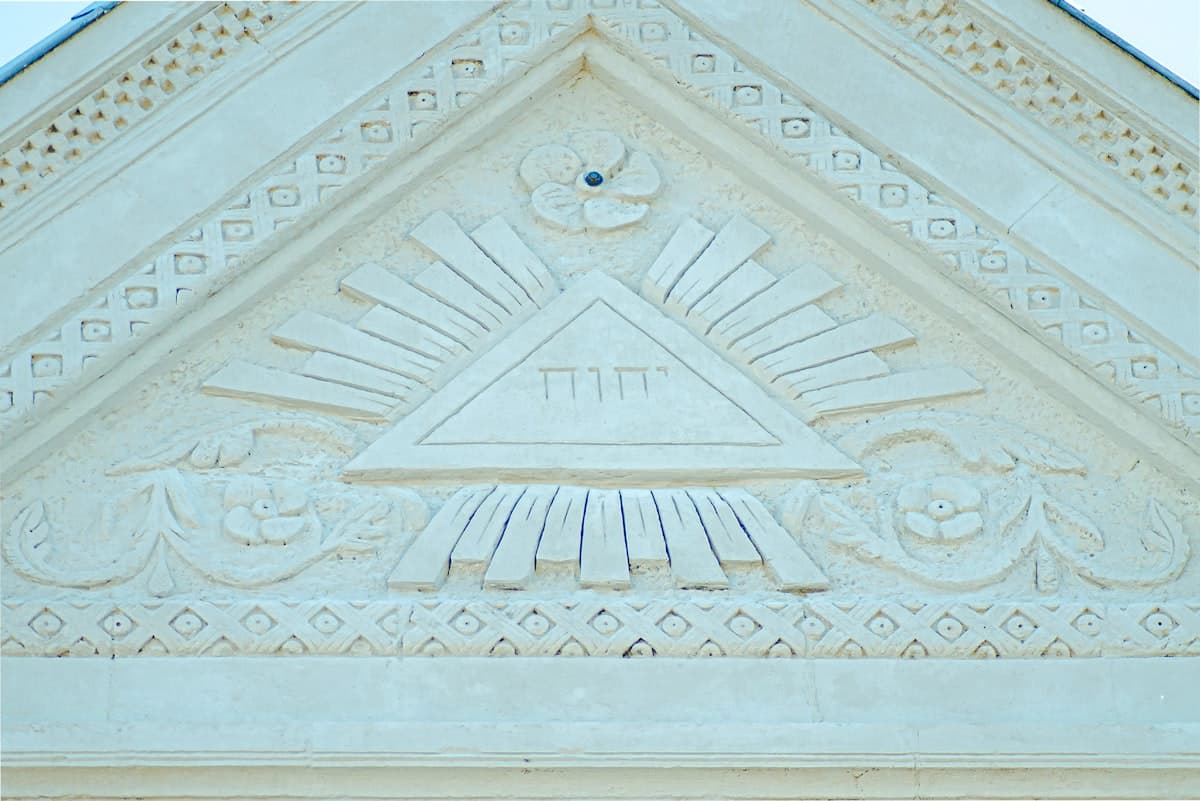
Before 1798, the ancient world of Egypt was essentially illegible to outsiders. Herodotus had written about it. Roman emperors had stolen obelisks from it. Medieval Arab scholars had theorized about the pyramids. But nobody could read a single hieroglyph. The signs on every temple wall, every papyrus, every royal cartouche were decorative noise to European eyes.
Napoleon's Commission des Sciences et des Arts changed that, though not in the way Napoleon intended. He wanted a survey of a territory he planned to colonize permanently. His scholars, who included the mathematician Gaspard Monge and the chemist Claude Louis Berthollet, instead became genuinely consumed by what they found. The Description de l'Égypte, published between 1809 and 1829, contained the first systematic documentation of Egyptian monuments, flora, fauna, and contemporary society. Volume by volume, it made Egypt legible to Europe.
The Rosetta Stone, discovered by French soldiers near Rashid (Rosetta) in 1799, was the key that unlocked ancient Egyptian writing entirely. It was seized by the British under the terms of the Treaty of Alexandria in 1801, which is why it sits in the British Museum today rather than in Cairo. Champollion, working from a printed copy of the Stone's text, cracked the hieroglyphic code in 1822 by recognizing that the cartouche containing the name Ptolemy in Greek corresponded to a repeated group of signs in the Egyptian script. He reportedly fainted from excitement and did not recover consciousness for five days. Whether this is true or apocryphal, it tells you something about the stakes.
What the French Actually Took
The answer is: a great deal, through methods ranging from outright removal to systematic casting and documentation that sometimes preceded demolition. The obelisk now standing in the Place de la Concorde in Paris was given to France by Muhammad Ali Pasha in 1833 in exchange for a clock. The clock, intended for the Citadel mosque in Cairo, never worked. It still stands there, frozen, which Egyptians will tell you is the best metaphor for the entire exchange.
The French consul Bernardino Drovetti, operating under French authority in the early 19th century, assembled two massive collections of Egyptian antiquities that were sold to Turin (forming the nucleus of what is now one of the world's great Egyptology museums) and to the Louvre. The mechanisms were not always legal even by the standards of the time. They involved bribery, coercion, and the exploitation of local workers who had no voice in what was removed from their land.
This history is not incidental to a French Egyptology history guide. It is the guide.
The Egyptian Museum: Where the Story Lives in Cairo
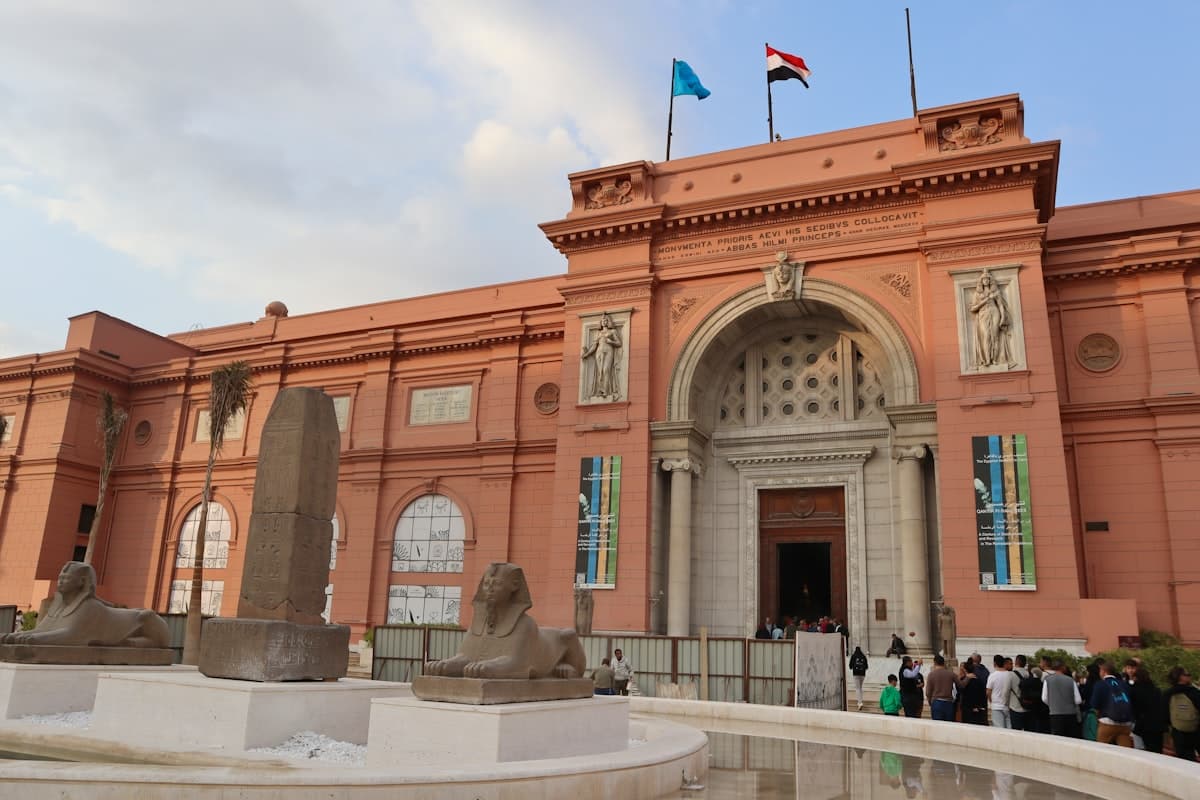
The pink building on Tahrir Square was designed by the French architect Marcel Dourgnon and opened in 1902. This fact is displayed nowhere prominently inside. The irony is thick: the institution created to house Egypt's antiquities and resist foreign removal was itself designed by a Frenchman, built on a budget partly financed by the Egyptian state under British occupation, and modeled on the neoclassical aesthetic of European academia.
Inside, the connection to French Egyptology is everywhere if you know where to look. The organizational logic of the museum, the taxonomic approach of sorting objects by dynasty and material type, derives directly from the Description de l'Égypte and from Champollion's own organizational work during his 1828 to 1829 expedition to Egypt, the first time he actually visited the country whose ancient language he had already decoded. He spent 18 months here, visited Dendera at night by torchlight, and wept when he saw the temple ceiling's zodiac, which by then had already been removed to Paris by a French expedition in 1821. He was weeping, in part, over an absence France had created.
In the museum's ground floor, find Room 43 and look for the Amarna Gallery. The naturalistic art style of the Amarna period, which broke radically from 3,000 years of Egyptian artistic convention, was first systematically described by French scholars working from pieces Champollion documented. The elongated necks, the domestic scenes of Akhenaten and Nefertiti with their daughters, the obsession with natural light as a theological concept: all of this was categorized and named by people working in the tradition Champollion established.
Dendera: The Temple That Made France Rethink Its Own Age
Of all the monuments documented by Napoleon's scholars, Dendera was the one that caused the most intellectual chaos back in Europe. The ceiling of the outer hypostyle hall contains a circular zodiac, carved in stone, showing the positions of stars and constellations. When French scholars examined it in 1799 and tried to calculate when the astronomical positions depicted would have aligned, they produced dates of 15,000 BC or earlier, which directly contradicted the biblical chronology that placed the creation of the world around 4,000 BC.
The French state was alarmed enough that it commissioned additional study. Champollion eventually demonstrated that the zodiac dated from the Ptolemaic period, roughly 50 BC, not from some pre-biblical era. The relief visible today in the temple's outer hall is a copy; the original was removed by a French expedition in 1821, using a team of workers, pulleys, and saws to cut it from the ceiling. It is now in the Louvre, Room 12 of the Egyptian Antiquities section, catalogue number D38. The absence in the ceiling at Dendera is still visible. It is a rectangular scar in the stone that no tour guide lingers on.
The temple itself, dedicated to Hathor and largely built under Ptolemaic and Roman rulers, is one of the best-preserved temple complexes in Egypt. It survived intact largely because early Christians converted it into a church and filled the hypostyle hall with plaster and mud, which inadvertently preserved the painted reliefs beneath. The soot and plaster were partially removed in the 20th century. Some columns in the rear still show the paint the ancient Egyptians applied, colors that have lasted 2,000 years because medieval Christians sealed them in darkness.
The descent into the crypts beneath the temple, a series of narrow passages where ritual objects and temple valuables were stored, is genuinely disorienting. The passages are carved through solid stone, barely shoulder-width, and contain carved reliefs that were never meant to be seen by ordinary worshippers. They were for the gods and for the priests who served them. You can descend with a flashlight and see the figure of the Dendera Lightbulb, a carving that conspiracy theorists claim represents an ancient electric device and that archaeologists identify as a standard lotus-and-serpent creation symbol. The fact that the debate exists tells you more about modern psychology than about ancient Egypt.
The Connections: From Napoleon to Naguib Mahfouz
The French intellectual presence in Egypt did not end with the 19th-century expeditions. The Institut d'Égypte, established by Napoleon in 1798 in a villa in Cairo, was re-established as a permanent scholarly institution in 1859 and operated continuously until 2011, when it was set on fire during the revolution. The blaze destroyed approximately 192,000 books and manuscripts, including the original publication drawings for the Description de l'Égypte. Egyptian protesters formed human chains to pass surviving books out through the flames. The building has since been partially restored, though the collection loss was irreversible.
The modern Egyptian intellectual tradition is, in complicated ways, a direct response to the French encounter. Rifa'a al-Tahtawi, sent to Paris in 1826 by Muhammad Ali as chaplain to an Egyptian student mission, returned after five years as the first Egyptian to systematically engage with European thought on Egyptian terms. His 1834 account of Paris, Takhlis al-Ibriz, is one of the founding texts of modern Arabic literary prose. It exists because Napoleon came to Egypt, because Muhammad Ali responded by modernizing his state on French bureaucratic models, because al-Tahtawi was sent to learn what the French knew. Naguib Mahfouz, who won the Nobel Prize in Literature in 1988, wrote his early novels about Pharaonic Egypt partly under the influence of Egyptological discoveries that filtered into Egyptian popular culture through this same chain of transmission. French Egyptology history in Egypt is not just about temples. It is about how a country came to know itself.
Common Mistakes
Treating Champollion as the only story. The decipherment of hieroglyphs involved the parallel work of the British polymath Thomas Young, who correctly identified that hieroglyphs were partly phonetic, a decade before Champollion's breakthrough. Champollion built on Young's published findings without fully crediting him. This dispute is still active in the historiography and is worth knowing before you stand in front of the Rosetta Stone replica at the Egyptian Museum.
Visiting Dendera only as a temple, not as a crime scene. If you go to Dendera without looking up at the rectangular scar in the ceiling of the outer hypostyle hall and knowing why it is there, you are missing the central fact of the building's modern history. Take five minutes before you arrive to read about the zodiac removal.
The sound and light show at Karnak costs EGP 350 and delivers a narration that could have been written in 1965. It tells you nothing specific about the French scholarly presence at the site, nothing about the obelisk from Karnak that now stands in Paris, and nothing that reading this article will not cover more accurately. Skip it.
Assuming the Egyptian Museum is the whole story. The Grand Egyptian Museum near Giza, which has been opening in phases, has reorganized significant parts of the collection and provides better contextual explanation for how the Egyptological framework was built. If you are visiting specifically to understand the history of the discipline, go to both, but go to the Grand Egyptian Museum second, after you have the Egyptian Museum's older organizational logic as a reference point.
Neglecting Upper Egyptian sites in favor of Cairo. The Dendera zodiac debate, the Philae Temple rescue operation (a UNESCO-French collaboration that moved the entire island temple between 1972 and 1980 to save it from the rising waters of Lake Nasser), and the great Nubian monuments are all part of the French Egyptology story. Cairo is the academic center; the Nile Valley is where the actual objects are.
Believing the narrative stops at looting versus scholarship. Egyptian Egyptologists, including Ahmed Fakhry, who mapped the Dakhleh and Kharga oases in the mid-20th century, and Zahi Hawass, whose tenure at the Supreme Council of Antiquities was devoted partly to repatriation claims against European museums, are central figures in this story. The discipline is no longer French. It belongs to Cairo University's Faculty of Archaeology as much as to the Collège de France.
Practical Tips
If you are in Cairo specifically to follow French Egyptology history, start at the Egyptian Museum on a weekday morning, arrive at 9am when it opens, and go directly to the Amarna Gallery and the Tutankhamun rooms before the tour groups arrive. The museum is manageable before 11am and difficult after noon.
For Dendera, the most practical base is Luxor. A private taxi for the 120km round trip costs EGP 300 to 400. There is no reliable public transport. Go early, the light inside the hypostyle hall is best before 10am and the tour buses from Luxor typically arrive between 10am and 11am. The temple takes two hours if you explore the crypts; add another hour if you read the wall texts seriously.
For Philae, the mandatory boat transfer from Shellal dock runs continuously and costs approximately EGP 200 per person for the round trip. The temple itself takes 90 minutes to two hours. The island is small enough that you will see the whole thing, which is genuinely satisfying after so many Egyptian sites that overwhelm with scale.
If you read French, the Description de l'Égypte is available in facsimile editions and online. Reading even one volume before arriving in Egypt changes how you see everything. The drawings are scientifically rigorous and artistically extraordinary. They were made by people who knew they were documenting something their own civilization had never seen, and the care in the line work shows it.
Frequently Asked Questions
The Weekly Dispatch
More on Egypt, every Friday.
Cultural depth and places most guides never mention.
No spam. Unsubscribe anytime.