French Egyptology History Guide: How France Shaped Egypt's Past
France didn't just study ancient Egypt. It invented the discipline, stole half the artifacts, and left behind a scientific legacy Egyptians are still reckoning with.

Quick Facts
- Best time to visit
- October to April. Cairo and Delta sites are manageable in these months. Avoid June to August when outdoor site visits are genuinely draining and Delta roads near Tanis are dusty and waterless.
- Entrance fee
- Egyptian Museum EGP 450 (approx $9 USD), students EGP 225. Saqqara EGP 450 plus individual tomb fees EGP 100 to 300 each. Tanis has a nominal local entry fee of roughly EGP 20 to 50 payable on site.
- Opening hours
- Egyptian Museum daily 9am to 5pm. Saqqara daily 8am to 4pm (winter), 8am to 5pm (summer). IFAO library by appointment only, contact in advance.
- How to get there
- Egyptian Museum: walkable from Tahrir Square or 10 minute taxi from central Cairo, EGP 30 to 50. Saqqara: taxi from central Cairo EGP 150 to 200 return, or organized tour from EGP 400. Tanis: bus from Torgoman station EGP 30 to 50 one way, approximately 2 hours.
- Time needed
- Cairo sites alone require 2 full days to follow the French Egyptology thread properly. Add a full day for Saqqara and 1 day for Tanis if traveling to the Delta. Alexandria warrants a separate overnight.
- Cost range
- Budget EGP 600 to 1,000 per day covering entry fees, local transport, and meals. Mid-range EGP 1,800 to 3,000 per day including hotel in Garden City or Zamalek and private transport to Saqqara.
Quick Facts
Best time to visit: October to April, when Cairo and Luxor are cool enough to move between outdoor sites without losing half the day to heat.
Key sites covered in this guide: Institut Français d'Archéologie Orientale (IFAO), Cairo; Champollion exhibits at the Egyptian Museum, Tahrir Square; French excavation zones at Saqqara and Tanis; the Bibliotheca Alexandrina's Egyptology collections.
Egyptian Museum entrance: EGP 450 (approx $9 USD), EGP 225 for students. Opens daily 9am to 5pm.
IFAO (Institut Français d'Archéologie Orientale): Not open to the general public without prior arrangement, but the library and occasional public lectures are accessible. Contact in advance at 1 Mounira Street, Cairo.
Getting there: A taxi from Tahrir Square to Mounira takes roughly 10 minutes and costs EGP 30 to 50. The Egyptian Museum is walkable from most central Cairo hotels.
Time needed: To follow the French Egyptology thread meaningfully across Cairo alone, allow two full days. Add three more if you extend to Saqqara and the Delta sites.
---
France did not discover ancient Egypt. Ancient Egypt had been sitting in plain sight, populated, farmed, and theorized about by Egyptians, Greeks, Romans, and Arab scholars for millennia before a 29-year-old Corsican general sailed into Alexandria harbor with 167 scientists packed into the hold. But Napoleon Bonaparte's 1798 expedition did something no previous invasion had done: it brought systematic, written, illustrated measurement to a civilization that Europe had been fantasizing about for centuries. The Description de l'Égypte, the 23-volume scientific survey produced by that expedition, was the founding document of Egyptology as a formal discipline. It was also, depending on your perspective, the founding document of a very long argument about who gets to own the past.
This guide is for the traveler who wants to follow that argument on the ground, through the sites, archives, and museum rooms where French Egyptology history and Egyptian reality have collided, collaborated, and occasionally been at war with each other for over two hundred years.
---
Why This Matters: The Science Born From an Invasion
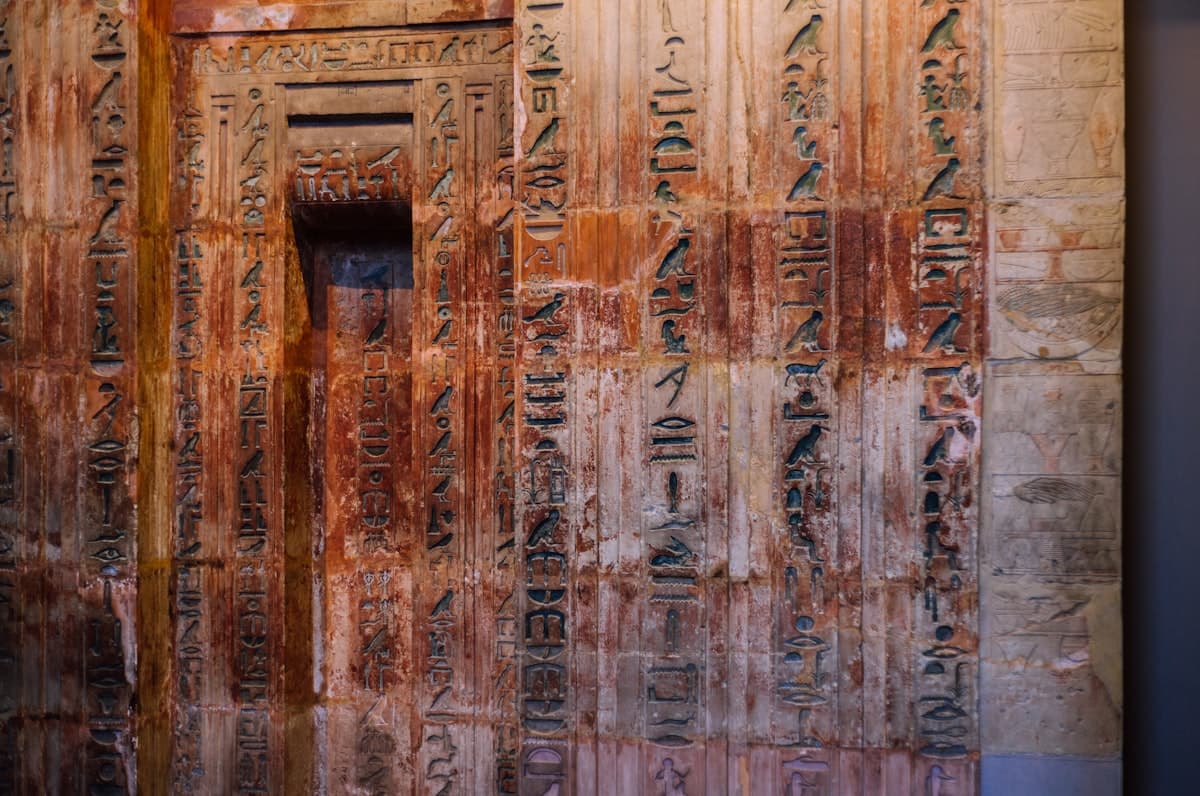
The Description de l'Égypte took twenty-three years to publish after Napoleon's men sailed home. It ran to 37 volumes in its expanded edition and contained 837 copper-plate engravings of temples, inscriptions, flora, fauna, maps, and people. No comparable documentation of any ancient civilization existed anywhere in the world at that point. It was extraordinary scholarship produced under extraordinary circumstances, most of which involved armed conflict, plague, and the British Navy.
But the expedition's most lasting consequence was not the Description. It was a soldier named Pierre-François Bouchard accidentally noticing an irregularly shaped black stone being used as building material in the walls of Fort Julien near Rosetta in July 1799. The Rosetta Stone. Bouchard recognized the three-script inscription as significant, the stone was shipped to Cairo for study, and when the British defeated the French in 1801, the surrender terms included handing it over. It has been in the British Museum ever since. France lost the stone but kept the intellectual credit for the work that eventually cracked it.
That decipherment came in 1822, when Jean-François Champollion, a 32-year-old linguist from Figeac in southern France, published his Lettre à M. Dacier demonstrating that Egyptian hieroglyphs were not purely symbolic but contained phonetic elements keyed to Coptic, the liturgical language of Egyptian Christians. He had taught himself Coptic specifically for this purpose, reasoning correctly that it was a direct descendant of ancient Egyptian. The hieroglyphic script had been unreadable for approximately 1,400 years. Champollion read it in an afternoon and reportedly had to be carried to bed after collapsing from the effort.
This is the thread that runs through the French Egyptology history guide: not just discovery, but the specific human intelligence and political circumstance that shaped what we know, and how we know it, about ancient Egypt.
---
Cairo: Where the French Archives Live
The Institut Français d'Archéologie Orientale has been operating in Cairo since 1880, making it older than the Egyptian Antiquities Service in its modern form. Its library on Mounira Street holds one of the most complete collections of Egyptological research in the world, including original field notes, site photographs, and unpublished excavation records from digs at Karnak, Deir el-Medina, and the Dakhla Oasis. Scholars come from everywhere to work in it. Most tourists have never heard of it.
The IFAO is also responsible for some of the most significant ongoing fieldwork in Egypt, including the excavations at Deir el-Medina in Luxor, the workers' village where the men who built the Valley of the Kings tombs lived. French archaeologists have been digging at Deir el-Medina almost continuously since 1917. The ostraca they have recovered there, pottery shards and limestone flakes used as writing surfaces, give us strike records, love letters, medical prescriptions, and legal disputes from a community of craftsmen working in roughly 1300 BC. These are ordinary Egyptian voices. France has been the primary custodian of them for over a century, which is either a tribute to French institutional commitment or a reminder of how colonial archaeology worked, and those are not mutually exclusive.
At the Egyptian Museum on Tahrir Square, the French presence is visible in the collection's organization. Auguste Mariette, a French archaeologist who arrived in Cairo in 1850 ostensibly to buy Coptic manuscripts for the Louvre, instead excavated the Serapeum at Saqqara and discovered 64 intact sarcophagi of sacred Apis bulls. He stayed in Egypt for the rest of his life and founded the Antiquities Service and the Bulaq Museum, which eventually became the Egyptian Museum. His intention, which was radical for the time, was that Egyptian artifacts should stay in Egypt. His statue stands in the museum garden. Mariette was French. The institution he built is now one of the primary arguments for Egyptian cultural sovereignty.
---
Saqqara and Tanis: The Field Sites
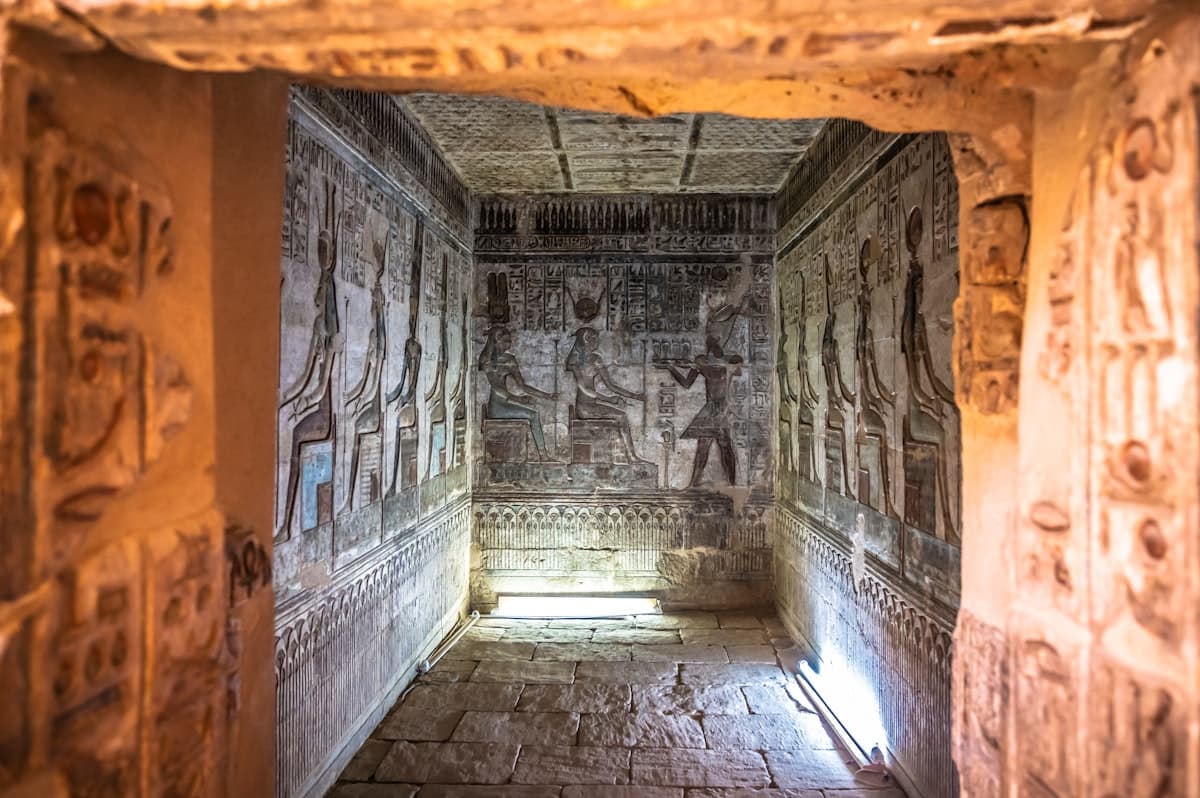
If you want to see French Egyptology history at work in the ground rather than the archive, Saqqara is the place to go. The French have conducted excavations at multiple zones across the Saqqara necropolis, and the ongoing work by the French Archaeological Mission in the area has produced consistent finds that rewrite New Kingdom burial practices. The 2023 discovery of a complete embalming workshop at Saqqara, with ceramic vessels still labeled with the substances they contained, was led in part by French and German teams working jointly under Egyptian Antiquities oversight.
Tanis in the Delta is less visited and more significant than most travelers realize. Pierre Montet excavated there between 1929 and 1951 and found the intact royal tombs of the 21st and 22nd Dynasty pharaohs, including Psusennes I, buried in a solid silver coffin inside a pink granite sarcophagus originally carved for Merenptah, the pharaoh many scholars associate with the Exodus. Montet's find was arguably the most important royal tomb discovery after Tutankhamun, and it received almost no international attention because World War Two started the same week. The silver coffin of Psusennes I is in the Egyptian Museum, Room 2, and most people walk past it to reach the Tutankhamun galleries. This is a serious mistake.
To reach Tanis from Cairo, take a bus or microbus to San el-Hagar in Sharqia Governorate. The journey takes roughly two hours from Cairo and costs EGP 30 to 50 depending on the vehicle. There is no entrance kiosk infrastructure equivalent to Luxor, and the site is rarely crowded. A local guide from the village is worth the EGP 100 to 150 fee.
---
The Connections: Three Civilizations in One Discipline
Champollion could not have deciphered hieroglyphs without Coptic. This fact matters more than it is usually given credit for. Coptic was kept alive as a liturgical language by the Egyptian Christian community, the same community that had survived Roman persecution, Arab conquest, and centuries of being a minority in their own country. The Coptic monasteries of Wadi Natrun, two hours west of Cairo on the desert road, contain manuscripts that Champollion studied. The monks copying those manuscripts in the 8th and 9th centuries had no idea they were preserving the key to a 3,000-year-old writing system. They were just doing what monks do.
The Description de l'Égypte documented Islamic Egypt as extensively as it documented Pharaonic Egypt. The expedition's scientists drew and measured the medieval quarters of Cairo, the minarets of the Mamluk mosques in the city's southern districts, and the caravanserais of the Delta with the same rigorous attention they brought to Karnak. This part of the project is rarely discussed in standard French Egyptology history, but it established a methodology for documenting Islamic architecture that influenced restoration work in Cairo for the next century, mostly through the Comité de Conservation des Monuments de l'Art Arabe, a Franco-Egyptian body that operated from 1881 to 1961.
The Bibliotheca Alexandrina, rebuilt in 2002 on the approximate site of the ancient Library of Alexandria, holds a permanent exhibit called the Antiquities Museum with material drawn partly from French excavation records. Alexandria itself was mapped extensively by French scholars after 1798, and those maps are the primary evidence for the city's ancient street plan. The modern city covers almost everything. The maps are the next best thing.
---
Common Mistakes

Treating the Egyptian Museum as a Pharaonic museum only. Pierre Montet's silver-coffined pharaohs from Tanis and the late-period royal material are as important as anything from the New Kingdom. Go to Room 2 before the Tutankhamun galleries.
Skipping Saqqara for Giza. Giza has the pyramids. Saqqara has the oldest complete religious text ever found, the Pyramid Texts carved inside the pyramid of Unas around 2350 BC, and ongoing French-led excavations that are actively changing what we know about the New Kingdom. Admission is EGP 450 (approx $9 USD) plus extra for individual tombs, and it is never as crowded as Giza.
Going to Alexandria and missing the ancient city underneath. The Greco-Roman Museum (currently under renovation, check status before visiting) and the catacombs of Kom el-Shoqafa, a three-level underground necropolis where Pharaonic, Greek, and Roman burial styles physically merge in a single chamber, are the real Alexandrian Egyptology sites. Most visitors photograph the waterfront and leave.
Taking the sound and light show at Karnak. It costs EGP 350, lasts an hour, and tells you nothing about the temple's actual history. The same money buys you a serious Egyptological paperback from the IFAO's published series, available at the museum shop, and that will serve you for the rest of your life.
Assuming French-language sources are inaccessible. The IFAO publishes in French, but many of its key reports have English summaries, and the institute's website carries free digital editions of older publications. If you are doing serious research before or after your trip, this is the best free Egyptological archive available online.
Visiting Tanis without advance preparation. The site lacks interpretive signage. Without knowing what Montet found where and why it matters, you are looking at eroded mud-brick outlines. Print a site plan, read at minimum the Wikipedia entry on Pierre Montet, and bring a hat. There is no shade.
Expecting political neutrality from the discipline. French Egyptology history is inseparable from colonial history, and the question of which artifacts should return to Egypt from French museum collections is active and unresolved. The Louvre holds tens of thousands of Egyptian objects. This is not background. It is part of what you are traveling to understand.
---
Practical Tips
The best single book to read before this trip is Jean Lacouture's biography of Champollion, available in French, or Andrew Robinson's The Story of Writing for the English-speaking reader who wants the decipherment story without the academic apparatus. Toby Wilkinson's The Rise and Fall of Ancient Egypt gives the political history that makes the excavation sites legible.
In Cairo, stay in the Garden City or Zamalek neighborhoods if you want proximity to the Egyptian Museum, the IFAO, and Coptic Cairo without paying downtown prices. A mid-range hotel in Garden City runs EGP 1,500 to 2,500 per night (approx $30 to $50 USD).
The Egyptian Museum's research library is accessible by appointment for serious researchers. Contact the library division directly through the Supreme Council of Antiquities website. For general visitors, the museum shop carries legitimate academic publications at reasonable prices, including IFAO-published excavation reports.
At Saqqara, hire a licensed guide from the site entrance rather than accepting offers from individuals at the car park. The licensed guides know which tombs are currently open and which areas have active excavations you can observe from a distance. Budget EGP 200 to 300 for a two-hour guided walk.
Photography inside most Egyptian museum spaces requires a separate camera ticket, typically EGP 50 to 150 depending on the site. Enforce this habit: the fee goes to site maintenance, and arguing about it wastes everyone's time.
Frequently Asked Questions
The Weekly Dispatch
More on Egypt, every Friday.
Cultural depth and places most guides never mention.
No spam. Unsubscribe anytime.