French Egyptology History Guide: How France Shaped Egypt's Story
France didn't just study ancient Egypt. It looted it, mapped it, decoded it, and then handed the key to the world. The Rosetta Stone is in London because a British admiral seized a French ship.

Audio Guide: French Egyptology History Guide: How France Shaped Egypt's Story
Quick Facts
- Best time to visit
- October through March for all sites. Summer heat above 40°C makes outdoor archaeological sites in Upper Egypt genuinely difficult. Cairo and Alexandria archives are accessible year-round.
- Entrance fee
- Egyptian Museum Cairo: EGP 450 (approx $9 USD), students EGP 225. Luxor Temple: EGP 420 (approx $8.50 USD). Valley of the Nobles / Deir el-Medina: EGP 100 to 300 depending on tombs included. Bibliotheca Alexandrina: EGP 80 (approx $1.60 USD).
- Opening hours
- Egyptian Museum: Daily 9am to 5pm. Luxor Temple: Daily 6am to 9pm. Valley of the Nobles and Deir el-Medina: Daily 6am to 5pm (winter), 6am to 4pm (summer). Bibliotheca Alexandrina: Daily 10am to 7pm except Friday.
- How to get there
- Cairo: Metro Line 1 to Sadat station for Egyptian Museum and Tahrir area, EGP 7 per journey. Luxor: overnight train from Ramses Station EGP 200 to 350 second class, or 1-hour flight EGP 800 to 1,800. Alexandria: train from Ramses Station EGP 90 to 150 second class, 2 hours.
- Time needed
- Minimum 5 days to trace French Egyptology across Cairo, Luxor, and Alexandria meaningfully. Cairo alone warrants 2 full days. Luxor west bank sites require a full day.
- Cost range
- Budget EGP 600 to 900 per day including accommodation, transport, and site entries. Mid-range EGP 1,800 to 3,000 per day.
Quick Facts
Best time to visit: October through March for Cairo and Alexandria archives; Luxor and Aswan sites year-round but oppressive above 40°C from June through August
Key sites with French connections: Egyptian Museum, Tahrir Square, Cairo: EGP 450 (approx $9 USD), students EGP 225. Daily 9am to 5pm. Institut d'Égypte, Cairo: Not open to general public, but the building is visible from the street near the American University in Cairo campus. Free to view externally. Champollion's Maison de France, Luxor area (adjacent to Luxor Temple): No dedicated entry, absorbed into Luxor Temple ticket EGP 420 (approx $8.50 USD). Bibliotheca Alexandrina (houses French Expedition archives in digital form): EGP 80 (approx $1.60 USD) general admission. Daily 10am to 7pm except Friday.
How to get there: Cairo sites are accessible by Metro (Line 1 to Sadat station for the Egyptian Museum, EGP 7 per journey). Luxor requires a train from Cairo (EGP 200 to 350 for air-conditioned 2nd class, roughly 10 hours overnight) or a one-hour flight (EGP 800 to 1,800 depending on timing). Alexandria is two hours from Cairo by train from Ramses Station (EGP 90 to 150 second class).
Time needed: To trace French Egyptology properly across Cairo, Luxor, and Alexandria requires at minimum five days. Cairo alone warrants two full days.
Cost range: Budget EGP 600 to 900 per day. Mid-range EGP 1,800 to 3,000 per day.
---
Napoleon Bonaparte invaded Egypt in 1798 with 54,000 soldiers and 167 scholars. The soldiers mostly failed. The scholars changed civilization.
The expedition carried savants from every French discipline: mathematicians, chemists, naturalists, architects, artists. Their mandate was to measure, draw, and catalog everything. What they produced, the 23-volume Description de l'Égypte published between 1809 and 1828, was the first systematic scientific survey of a country in history. It ran to 3,000 illustrations and weighed, in its complete imperial edition, roughly 300 kilograms. No single act of intellectual audacity has shaped how the modern world understands ancient Egypt more than those nine years of French occupation, and almost every site you visit in Egypt today exists in a framework those scholars built.
This is a guide to that framework: where to see it, what it cost, what it got wrong, and what it, perhaps accidentally, gave back.
---
Why This Matters Beyond the Obvious
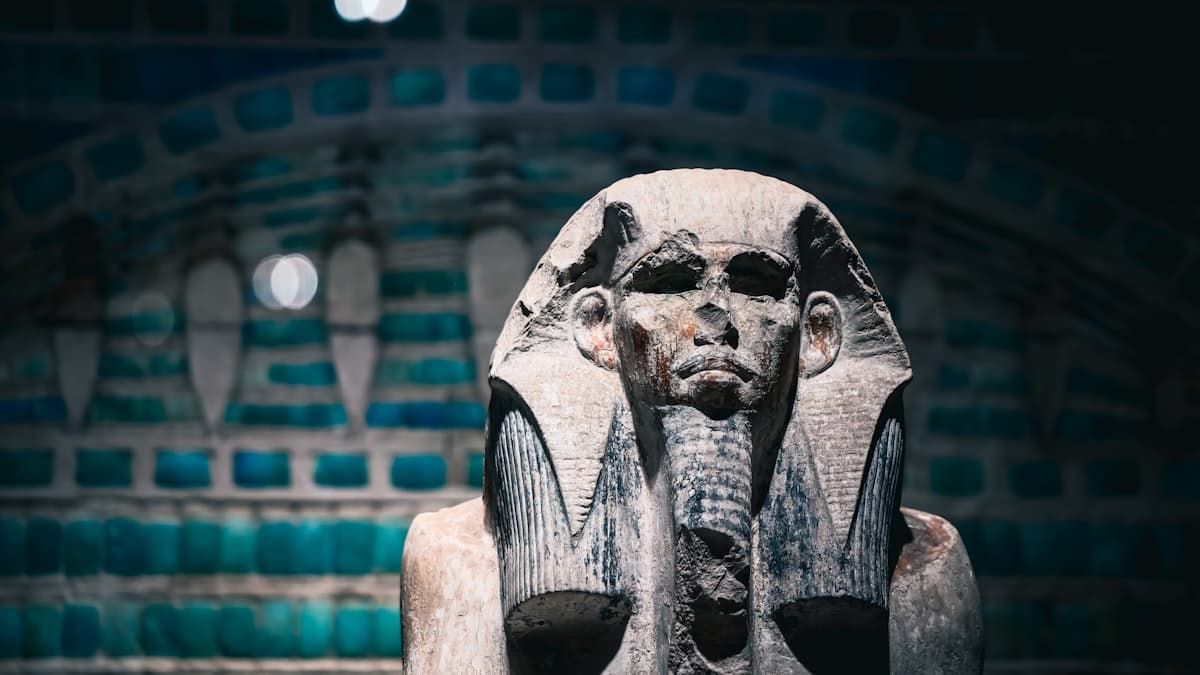
Most accounts of French Egyptology start with Napoleon and end with Jean-François Champollion's decipherment of hieroglyphics in 1822. That framing is too narrow. France's engagement with Egypt ran from the 1798 expedition through the establishment of the Institut Français d'Archéologie Orientale (IFAO) in Cairo in 1880, through the construction of the Suez Canal under Ferdinand de Lesseps, through decades of excavations at Deir el-Medina that unearthed the working-class village of the pyramid builders, through to ongoing French-Egyptian archaeological partnerships that continue today.
Deir el-Medina is the clearest example of what French archaeology specifically contributed. IFAO excavated the site from 1917 through 1947, recovering over 10,000 ostraca, limestone flakes used as notepads by the craftsmen who carved the Valley of the Kings tombs. These fragments record sick days, love poems, records of water deliveries, and complaints about grain rations. They transformed our understanding of Pharaonic Egypt from a civilization of kings to a civilization of people. That transformation happened because French archaeologists stayed long enough and dug carefully enough to notice the small things.
The connection most visitors miss: the village at Deir el-Medina was built specifically to house the craftsmen working on royal tombs across the hill. It was a closed community, segregated by royal decree, because the workers knew too much about tomb locations. French excavations proved this by finding records of the very security arrangements designed to keep the knowledge contained.
---
The Rosetta Stone Problem: What France Found and Who Took It
The single most consequential object in the history of Egyptology was found by a French soldier named Pierre-François Bouchard in July 1799 near the town of Rashid, which Europeans called Rosetta. He recognized that the stone carried the same text in three scripts: ancient Egyptian hieroglyphics, Demotic, and ancient Greek. Greek was readable. If the texts matched, hieroglyphics might be too.
The French never got to finish the work. When the British defeated French forces at Alexandria in 1801, the surrender terms included a clause specifically demanding the Rosetta Stone and other antiquities collected during the expedition. The French scholars refused to hand over their notes and drawings. The British took the stone anyway, transported it to London, and it has been in the British Museum ever since, where it currently sits under glass and receives more visitors per year than any other object in the collection.
Champollion, working partly from a plaster cast of the stone and partly from copies circulated by the French expedition, published his decipherment in September 1822. He was 31. He died ten years later, having visited Egypt only once, in 1828, for a single expedition. He never saw the Rosetta Stone in person. He decoded ancient Egyptian civilization from paper copies in a Paris apartment.
In Egypt today, the absence of the Rosetta Stone is felt as a specific grievance, not a vague one. The Egyptian government has formally requested its return multiple times. The British Museum has declined each time, citing the 1801 treaty as legal basis. The argument that the object belongs to a different legal era than current international cultural property norms is one the museum has so far not engaged with publicly.
If you visit the Egyptian Museum in Cairo, the Rosetta Stone is not there. What you will find is a replica, labeled clearly as such, positioned in a way that makes the absence part of the story. Pay attention to the label. The original French Egyptology history guide to this object was written in the form of that stone, and it is currently housed not in Egypt but 3,500 kilometers away.
---
Deir el-Medina: Where French Archaeology Found the Workers
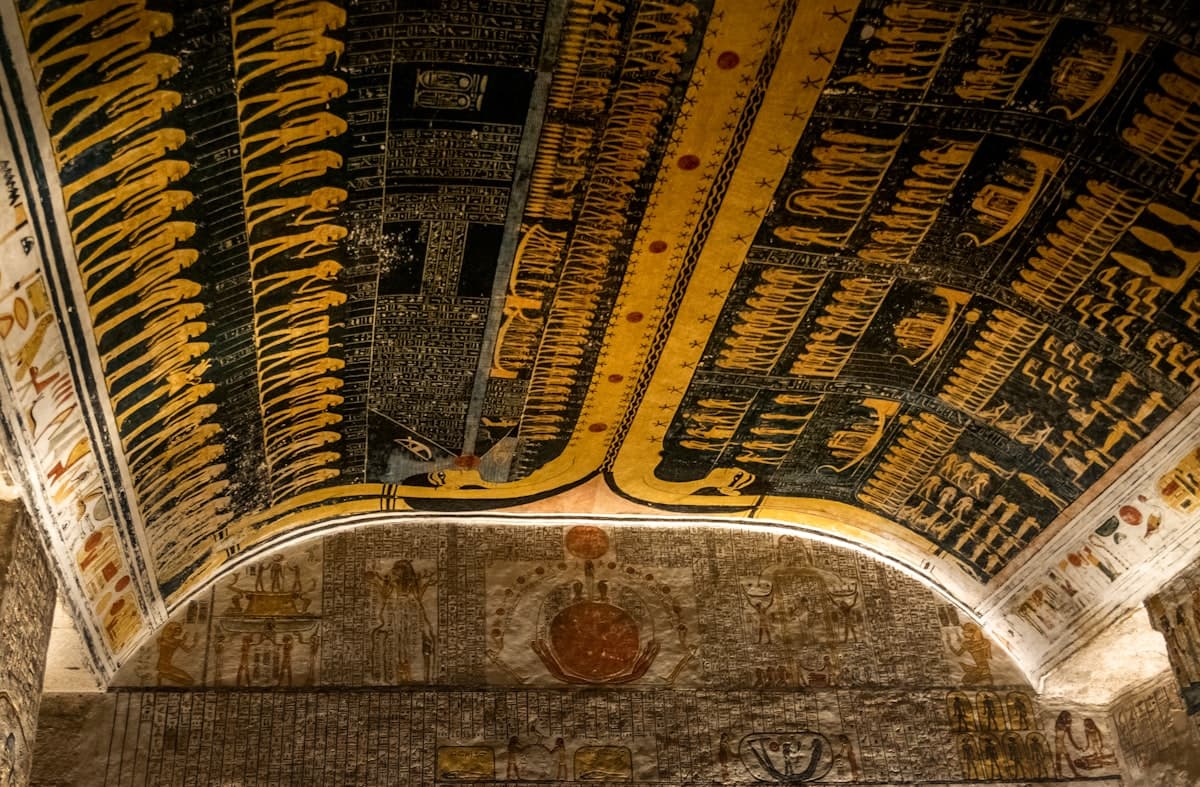
The Valley of the Kings sits on the west bank of Luxor behind a ridge of yellow limestone. On the other side of that ridge, in a bowl-shaped depression that receives no direct wind, is the village where the tomb builders lived. The air there in summer is close and still in a way that feels almost pressurized.
Deir el-Medina was occupied from roughly 1550 BCE to 1070 BCE, across the entire New Kingdom period, by a community of specialized craftsmen and their families. Their work was secret. Their location was intentional, close enough to both royal necropolises to walk but far enough from the Nile to prevent casual contact with the general population. The Egyptian word for their community was "Set Maat," meaning the Place of Truth.
French archaeologist Bernard Bruyère led excavations at the site for three decades, a commitment that has almost no parallel in modern archaeology. The ostraca his team recovered are now distributed between the Egyptian Museum in Cairo, the IFAO in Cairo, and the Louvre in Paris, a distribution that itself reflects the colonial archaeology model of the era: find in Egypt, study and hold in France.
The tomb of Sennedjem, one of the craftsmen, was found intact in 1886 and is one of the most vividly decorated private tombs in Egypt. The entrance fee is included in the Valley of the Nobles ticket (EGP 100 to 300 depending on which tombs are included, approx $2 to $6 USD). Most visitors to Luxor never reach it because tour operators default to the Valley of the Kings on the other side of the ridge. This is a mistake with a specific cost: you miss the most complete picture of who actually built the monuments you came to see.
---
The Institut Français and the Long Game of French Archaeology
The IFAO, established in Cairo in 1880, is the oldest foreign research institute in Egypt and has operated continuously for over 140 years. Its mandate has shifted across that period from the explicit colonial collection model to a collaborative partnership model with the Egyptian Supreme Council of Antiquities, but its physical presence in Cairo, at 37 Sheikh Aly Youssef Street in the Munira neighborhood, is a direct continuation of the French institutional investment that began with Napoleon's savants.
The institute publishes the Bulletin de l'Institut Français d'Archéologie Orientale, one of the oldest Egyptology journals still in print. It also maintains a specialized library of over 65,000 volumes, which is accessible to researchers by appointment. If you are doing serious research on French Egyptology's history in Egypt, this is the primary institutional archive outside France itself.
The neighborhood around the IFAO in Munira is worth walking regardless. The area still contains late 19th-century French colonial architecture, the period when French influence over Egyptian infrastructure and institutions was at its peak before British occupation formalized in 1882. The layering here is characteristic of Cairo: Pharaonic, Coptic, Islamic, Ottoman, French colonial, British colonial, post-independence Egyptian, all present in the same few square kilometers.
---
The Connections: From Champollion to the Suez Canal to Deir el-Medina
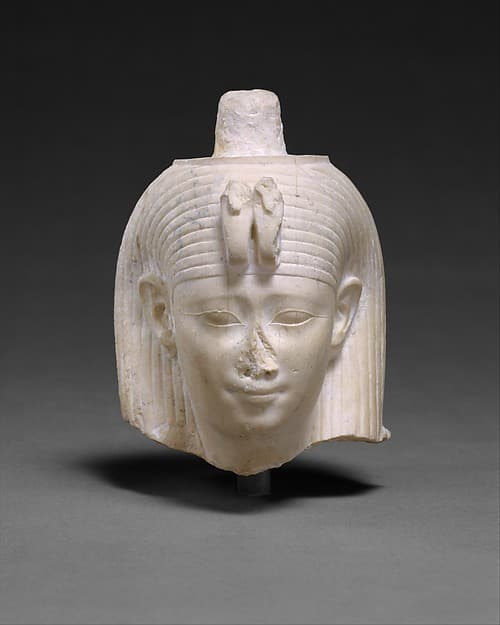
French engagement with Egypt was never only archaeological. Ferdinand de Lesseps, who built the Suez Canal between 1859 and 1869, was a former French consul in Cairo and a personal friend of the Egyptian Khedive Said Pasha. The canal's construction displaced tens of thousands of Egyptian workers, many of whom died during the project. Contemporary Egyptian accounts describe conditions that the celebratory French narratives of the canal's opening in 1869 did not address.
The Suez Canal zone towns of Ismailia, Port Said, and Suez still contain French colonial architecture from the canal era: company housing, administrative buildings, and the freshwater canal that de Lesseps built parallel to the Suez Canal to supply workers with drinking water. This is a different French Egypt than the Egyptology Egypt, more industrial, more explicitly colonial, and less visited by tourists focused on ancient sites.
The through-line connecting Napoleon's expedition, Champollion's decipherment, IFAO's excavations, and the Suez Canal is French state investment in Egyptian knowledge as a tool of influence. The Description de l'Égypte was printed on the orders of Napoleon. Champollion's first Egyptian expedition was funded by Charles X. The IFAO was established by the French Foreign Ministry. The canal was built by a French company with French diplomatic backing. Understanding French Egyptology requires understanding that the science was never entirely separable from the politics.
---
Common Mistakes
1. Visiting the Egyptian Museum without understanding the French contribution to its collection. The museum's curatorial framework, its organization by dynasty, its treatment of objects as data points in a historical sequence rather than religious artifacts, derives directly from the methodology of French Egyptology. Knowing this changes how you read the labels.
2. Taking the sound and light show at any major site as a substitute for context. The sound and light show at Karnak costs EGP 350 and runs approximately 50 minutes. It tells you nothing about the French expedition that first measured and documented Karnak's layout. Skip it. Buy a copy of the Description de l'Égypte's atlas reprint instead and spend the 350 EGP on a good dinner in Luxor.
3. Skipping Deir el-Medina for the Valley of the Kings. The Valley of the Kings is famous. Deir el-Medina is where the people who made the Valley of the Kings famous actually lived. French archaeological work at Deir el-Medina is the reason we know anything substantive about the human beings behind the monuments. The site is less crowded, less expensive, and more illuminating.
4. Assuming the Louvre's Egyptian collection has nothing to do with your Egypt trip. Many objects excavated by French archaeologists in Egypt are in Paris. If you are researching French Egyptology before travel, the Louvre's Egyptian antiquities department and the objects documented in Description de l'Égypte are primary sources, not supplements.
5. Missing the IFAO publications available in Cairo bookshops. The American University in Cairo bookshop on Tahrir Square stocks IFAO publications at Egyptian prices, not European ones. These are serious archaeological monographs, not tourist books. If you want to understand what French archaeologists actually found and argued, this is where to start.
6. Treating Champollion's decipherment as a solo act. Thomas Young, a British polymath, identified the phonetic nature of some hieroglyphic signs before Champollion published. The two men were in bitter competition. Champollion's 1822 letter to the Académie des Inscriptions made no mention of Young's prior work. The history of Egyptology's founding moment is also a history of intellectual priority disputes that still generate academic debate.
7. Not going to Alexandria for the Bibliotheca Alexandrina's French Expedition archive. The digitized records of the 1798 expedition are accessible at the Bibliotheca Alexandrina and the entry fee is under EGP 100. Most Egyptology tourists in Egypt never visit Alexandria at all. This is a significant gap.
---
Practical Tips
Research accommodation near the Egyptian Museum in Cairo, in the Garden City or Downtown neighborhoods, not in Giza. The museum is in Cairo. Giza is 20 kilometers away and the traffic between them in morning hours can absorb 90 minutes of your day.
For Luxor's west bank, hire a private driver for the day rather than joining a group tour. The going rate is EGP 400 to 600 for a full day (approx $8 to $12 USD) and it allows you to spend actual time at Deir el-Medina and the Tombs of the Nobles rather than moving on a tour operator's schedule.
The IFAO library requires advance contact for researcher access. Email the institute directly through their website with your research interests. Response times are typically one to two weeks.
Carry cash at all sites. Card readers exist but are unreliable. ATMs at Cairo airport and Tahrir Square branches of major Egyptian banks (Banque Misr, CIB) are functional. Draw sufficient cash before heading to Luxor or Aswan, where ATM reliability drops.
For Arabic language guides to French Egyptological sites, the Egyptian Antiquities Organization publishes site guides in Arabic that contain information not available in English tourist editions, particularly regarding the French excavation history. These are available at the Egyptian Museum gift shop.
Frequently Asked Questions
The Weekly Dispatch
More on Egypt, every Friday.
Cultural depth and places most guides never mention.
No spam. Unsubscribe anytime.