French Egyptology History Guide: Where France Decoded Egypt
Napoleon brought 167 scientists to Egypt in 1798. One decoded hieroglyphs. Another stole an obelisk. France did not just study ancient Egypt. It invented the discipline that reads it.

Quick Facts
- Best time to visit
- October to March for outdoor sites in Luxor and Abydos. Cairo sites including IFAO and the Egyptian Museum are comfortable year-round. Avoid July and August at Abydos specifically as midday temperatures exceed 42C with no shade.
- Entrance fee
- Egyptian Museum: EGP 200 (approx $4 USD), students EGP 100. Royal Mummies at NMEC Fustat: EGP 300 (approx $6.30 USD). Luxor Temple: EGP 260 (approx $5.50 USD). Valley of the Kings: EGP 360 (approx $7.50 USD) for 3 tombs standard. Abydos: EGP 200 (approx $4 USD). Serapeum at Saqqara: included in Saqqara complex ticket EGP 450 (approx $9.50 USD).
- Opening hours
- Egyptian Museum: Daily 9am to 5pm. Luxor Temple: Daily 6am to 10pm. Valley of the Kings: Daily 6am to 5pm (winter), 6am to 6pm (summer). Abydos: Daily 8am to 5pm. IFAO: By appointment for research access, check website for public events.
- How to get there
- Cairo to Luxor: Overnight sleeper train from Ramses Station, EGP 400 to 700 one way. Cairo to Rashid (Rosetta): Microbus from Alexandria (reach Alexandria by bus or train from Cairo first), EGP 20 to 30, 90 minutes. Luxor to Abydos: Private hire car EGP 500 to 700 round trip, or microbus to Balyana then local transport.
- Time needed
- Cairo (Egyptian Museum plus IFAO): 2 full days minimum. Luxor (east and west bank sites on Champollion trail): 2 to 3 days. Abydos: 1 full day including travel from Luxor. Rashid: Half day, best added to Alexandria trip. Full French Egyptology trail: 7 to 9 days.
- Cost range
- Budget EGP 600 to 900 per day (hostel, microbus, self-guided entry). Mid-range EGP 1,800 to 2,800 per day (3-star hotel, hired car for Abydos, guide for Valley of the Kings). Specialist Egyptology tour packages from European operators run $200 to $350 USD per day all-inclusive.
Quick Facts
Best time to visit: October to March for outdoor sites; the Egyptian Museum and Institut Français d'Archéologie Orientale (IFAO) are year-round
Key sites covered: Egyptian Museum (Cairo), IFAO (Cairo), Champollion's trail in Luxor and Abydos, the obelisk sites at Luxor Temple, the Rosetta Stone discovery site at Rashid
Entrance fees: Egyptian Museum: EGP 200 (approx $4 USD), students EGP 100. Luxor Temple: EGP 260 (approx $5.50 USD). Abydos: EGP 200 (approx $4 USD). IFAO library visits by appointment, free with academic affiliation.
Opening hours: Egyptian Museum: Daily 9am to 5pm. Luxor Temple: Daily 6am to 10pm. Abydos: Daily 8am to 5pm.
Getting there: Cairo to Luxor by sleeper train from Ramses Station, EGP 400 to 700 depending on class. Luxor to Abydos by microbus from Luxor's Karnak terminal, roughly EGP 20 to 30 each way. Rashid (Rosetta) from Cairo by microbus from Midan Tahrir area, about EGP 30 and two hours.
Time needed: Cairo sites alone require two full days. Add two days for Luxor and one for Abydos. Rashid is a half-day side trip best added to an Alexandria visit.
---
Napoleon Bonaparte arrived in Egypt in 1798 with 35,000 soldiers and 167 scientists. The soldiers lost. The scientists changed human history. Among them were mathematicians, naturalists, engineers, and artists who spent three years measuring, drawing, and cataloguing a civilization that nobody on earth could yet read. The result was the Description de l'Égypte, a 23-volume encyclopaedia published between 1809 and 1828 that remains one of the most ambitious documentary projects ever attempted. It also, as a side effect, launched the modern French Egyptology history that still shapes how Egypt is excavated, interpreted, and displayed today.
This guide is for the reader who wants to walk that inheritance: to stand where Champollion stood, to understand what the French took and what they left, and to see Egypt not only through the lens of its ancient builders but through the lens of the people who taught the modern world how to look at it.
---
Why This Matters: France Invented the Grammar of Ancient Egypt
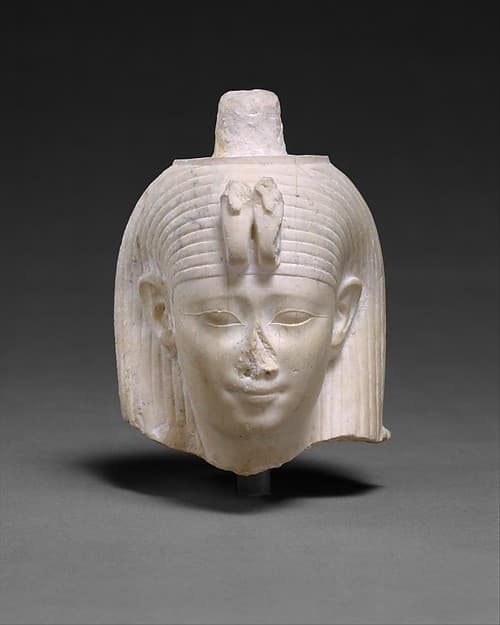
Before 1799, hieroglyphs had been unreadable for approximately 1,400 years. The last person who could read them fluently died sometime in the 5th century CE, likely a priest at Philae. The knowledge dissolved. Visitors from medieval Arab scholars to Renaissance Europeans stared at temple walls covered in text and saw decoration, symbol, mystery, anything but language.
The Rosetta Stone changed this, but not immediately. Discovered by French army engineer Pierre-François Bouchard near the town of Rashid in July 1799, the stone carried the same decree in three scripts: hieroglyphics, Demotic, and Greek. The French understood immediately what they had. They made plaster casts before the British seized the original in 1801 under the Treaty of Alexandria, which is why the stone sits in the British Museum today while France got the science.
Jean-François Champollion spent more than twenty years working from those casts. On September 14, 1822, he walked into the office of his brother Jacques-Joseph in Paris and said, simply, "I've got it," then fainted from exhaustion. He had cracked the phonetic structure of hieroglyphs, proving that the signs represented sounds, not just ideas. He was 31 years old. He did not visit Egypt until six years later, in 1828, and when he finally stood in the Hypostyle Hall at Karnak, he reportedly wept and said that no European people, ancient or modern, had conceived of architecture on such a scale.
Champollion's 1828 expedition to Egypt, co-led with the Italian Ippolito Rosellini, produced thousands of inscriptions copies, tomb drawings, and the first systematic reading of temple texts ever attempted. The sites he visited form a near-perfect itinerary for anyone tracing the French Egyptology history in Egypt today.
---
Cairo: The Institut Français and the Egyptian Museum
The Institut Français d'Archéologie Orientale on Mounira Street in Cairo, commonly called IFAO, has been operating continuously since 1880. It is older than the Egyptian Antiquities Service as currently constituted, older than the Cairo metro, older than the city's current borders. IFAO researchers have worked on sites ranging from Deir el-Medina in Luxor (the village of the men who actually built the royal tombs) to Coptic monasteries in the Eastern Desert. Their library holds over 100,000 volumes and their archive contains unpublished field notebooks going back to the 19th century.
Most tourists never know IFAO exists. This is a mistake if you care about how archaeology actually works. The institute runs public lectures, publishes its journal online, and occasionally opens its exhibitions to visitors. Email ahead. The building itself, a handsome colonial-era villa, tells its own story about how France positioned itself as Egypt's intellectual guardian during the British occupation period.
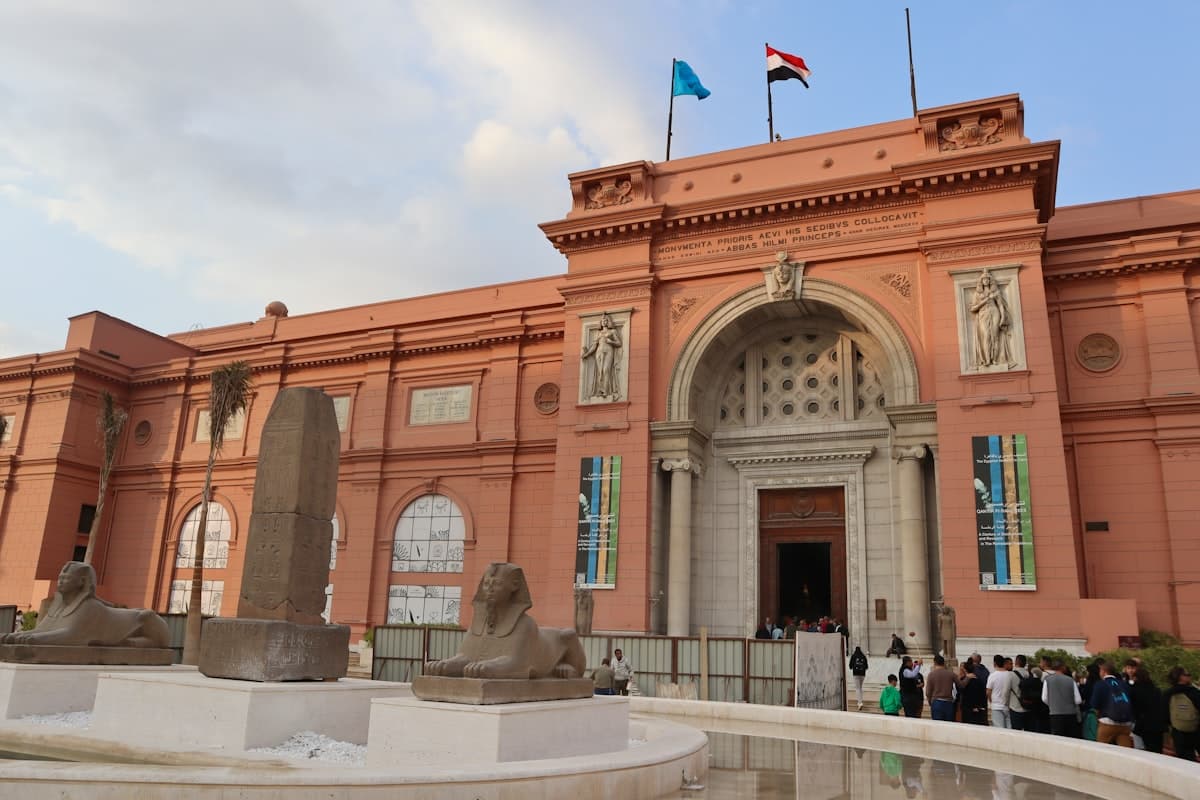
The Egyptian Museum in Tahrir Square is a French project in origin. The building was designed by the French architect Marcel Dourgnon and opened in 1902. The original museum director, Gaston Maspero, was French, as were several of his predecessors. The entire cataloguing system used for the museum's 170,000 objects was developed by French scholars. When you walk past a display case and read a reference number, you are using an organizational system that a 19th-century French Egyptologist devised.
The collection itself rewards closer attention than most visitors give it. The Amarna Room, which holds objects from Akhenaten's revolutionary monotheistic reign, contains a painted limestone head of Nefertiti that is less famous than the Berlin bust but more complex in what it shows about New Kingdom artistic conventions. The stele of Amenhotep II in Room 3 records a military campaign in terms so brutal that no modern translation softens them adequately. These are not decorative objects. They are primary sources.
Skip this: The mummies ticket at the Egyptian Museum costs an additional EGP 180 (approx $3.80 USD) and shows you a dozen preserved bodies in climate-controlled cases. The emotional weight of the room is real, but the interpretive information is thin and the crowds are relentless. The National Museum of Egyptian Civilization in Fustat, which holds 22 royal mummies transferred from the Egyptian Museum in 2021, gives the same experience with significantly more context and a building designed for the purpose. Go there instead.
---
Luxor: Walking Champollion's Route
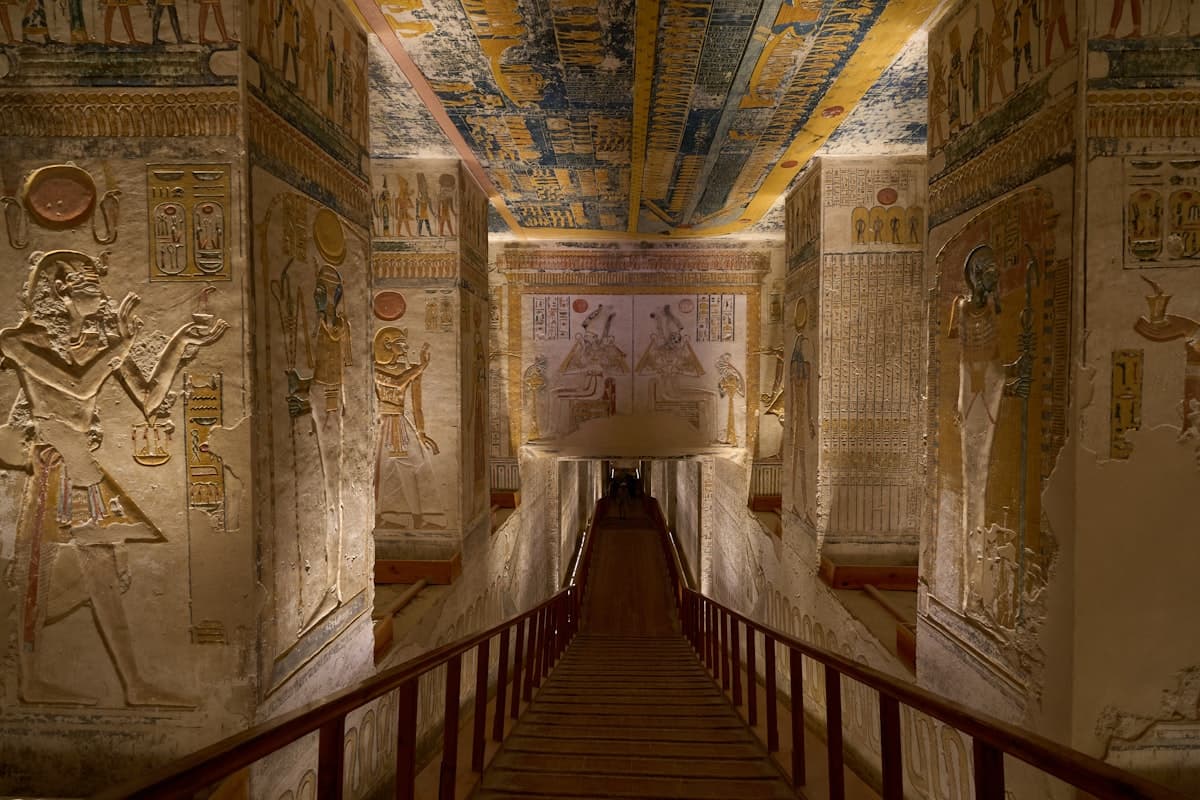
Champollion arrived in Luxor in November 1828 and spent weeks inside the tombs of the Valley of the Kings, reading walls that had been sealed for three millennia. His copies of the astronomical ceiling in the tomb of Seti I (KV17) remain among the most accurate records made before 19th-century tourism and humidity began degrading the pigments.
The tomb of Seti I is currently closed to the public under restoration. This is frustrating and correct. The ceiling Champollion documented, which maps the Egyptian astronomical universe including constellations that survive nowhere else in such completeness, cannot survive unlimited visitor breath. When it reopens, it will cost significantly more than the standard tomb ticket (around EGP 1,800, approx $38 USD, in recent years). Pay it.
Luxor Temple, on the east bank, holds a direct French Egyptology history artifact that most visitors photograph without knowing what they are looking at. The obelisk in the temple's outer court stands alone. There should be two. The second obelisk was given to France by Muhammad Ali Pasha in 1833 and erected in the Place de la Concorde in Paris in 1836, where it still stands today. Muhammad Ali gave it partly as a diplomatic gesture and partly because France had agreed to help modernize his artillery. Egypt traded a 3,200-year-old stone needle for cannons.
The Luxor Museum, a short walk from the temple along the corniche, is genuinely better than it is given credit for. It holds the reconstructed Talatat wall from Akhenaten's demolished Karnak temple, reassembled from over 283 sandstone blocks that were used as fill inside later pylons. The French Centre for Alexandrian Studies contributed significantly to the reconstruction work. Admission is EGP 200 (approx $4 USD) and the crowds are a fraction of what you find at the Karnak complex.
---
Abydos: The Site Champollion Called the Most Important in Egypt
Abydos sits about 160 kilometers north of Luxor in the governorate of Sohag. It receives perhaps one-twentieth the tourists of the Valley of the Kings, which is inexplicable. The Temple of Seti I contains the most complete and best-preserved painted relief cycle in Egypt. The colors in the Osiris sanctuary, protected by centuries of sand accumulation, retain a depth that Luxor and Karnak have largely lost.
The site is also where the Abydos King List was discovered: a wall inscription in Seti's temple that names 76 pharaohs in sequence from Menes (the legendary first king) to Seti himself. The French Mission in Abydos contributed to early readings of the list. It is a document of selective history, notably omitting Hatshepsut, Akhenaten, and the Amarna rulers entirely, which tells you as much about New Kingdom politics as about Old Kingdom facts.
The older temple of Ramesses II is 300 meters from Seti's and receives almost no visitors. It lacks the condition of Seti's reliefs but the scale is extraordinary and the absence of tour groups means you can stand in the inner sanctuary in genuine silence, which is increasingly rare at any Egyptian monument.
French archaeological teams have worked at Abydos intermittently since the late 19th century. The Mission Archéologique Française de Saqqara, technically a different mission, has also worked at nearby sites within the same research network. The papers they publish, available through the IFAO journal Bulletin de l'Institut Français d'Archéologie Orientale, contain readings of inscriptions that do not appear in any guidebook.
---
The Connections
French involvement in Egypt did not end with Champollion. Auguste Mariette founded the Egyptian Antiquities Service in 1858, the first institution in any country whose explicit purpose was to protect ancient monuments rather than excavate them for export. Before Mariette, European and Egyptian collectors removed objects legally and without restriction. He made it illegal, though enforcement was selective and the colonial power dynamics of the era meant French institutions retained significant advantages.
Mariette also excavated the Serapeum at Saqqara, the underground necropolis where 64 Apis bulls were buried in massive granite sarcophagi. Each sarcophagus weighs 70 tons. The precision with which the lids were cut and seated, with tolerances measured in fractions of a millimeter, remains unexplained by any tool set we can confidently attribute to the period. Mariette found the Serapeum in 1851 by following a clue in a text by the 1st-century BCE Greek geographer Strabo. The site is now open to visitors (EGP 200 approx, included in the Saqqara complex ticket) and most people walk past it to reach the Step Pyramid. This is an error.
Gaston Maspero, who succeeded Mariette, cleared the royal mummy cache at Deir el-Bahri in 1881. Local villagers from the Abd el-Rassul family had been selling objects from it for a decade. When Maspero's team reached the shaft, they found 40 royal mummies including Ramesses II, Seti I, and Thutmose III stacked together, moved in antiquity to protect them from tomb robbers. The clearance took one day. A French-supervised operation, working in a British-occupied country, removed in 24 hours what Egypt's ancient priests had spent decades hiding.
---
Common Mistakes
Treating the Rosetta Stone as a London story. The stone was found in Egypt, the decipherment happened in Paris, and the consequences unfolded along the Nile. Visit Rashid (Rosetta) to see where it was found. The town is a quiet, crumbling Ottoman port with excellent mullet. The discovery site is marked but not developed, which is honest about what it is: a hole in a wall.
Booking a Luxor tour that includes the sound and light show. The show at Karnak costs EGP 350 and uses colored lights and a narrator voice to tell you things you will read in any decent article. The light itself destroys the atmospheric quality of the stones at night. Go to Karnak at 6am instead. The light is extraordinary and the site is nearly empty.
Skipping the west bank in Luxor because you have seen the Valley of the Kings. The Valley of the Kings is one of perhaps eight significant sites on the west bank. The Tombs of the Nobles (EGP 140 to 200 depending on the grouping, approx $3 to 4 USD) contain painted scenes of daily life that the royal tombs do not: fishing, bread-baking, wrestling, women at parties. They are more immediate and in some cases better preserved.
Using the Description de l'Égypte as your primary historical source. The 23-volume work is extraordinary but it reflects Napoleonic-era assumptions about who history belongs to. The Egyptian scholars who contributed local knowledge were rarely credited. The measurements are accurate. The interpretive framework requires updating.
Arriving at Abydos on a Friday. The site is technically open but staff is minimal, some inner sanctuaries may be locked, and transport back to Luxor is reduced. Go Tuesday through Thursday.
Assuming the best French Egyptology history sites are in Cairo. The work happened in Luxor, Abydos, Saqqara, and Rashid. Cairo holds the institutions and the museum. The actual terrain of discovery is in Upper Egypt and the Delta.
---
Practical Tips
The IFAO library in Cairo requires advance notice for access. Email their secretariat directly at the address listed on their official website, explain your interest (general cultural curiosity is sufficient), and request a reader's pass. The collection is not digitized in full and there are items there with no equivalent anywhere else.
For the Champollion route specifically: Cairo, then overnight train to Luxor, three days on the west and east banks, then a hired car to Abydos (EGP 300 to 500 round trip from Luxor, negotiate beforehand), then return north. Add Rashid as a day trip from Alexandria if your route allows.
Photography permits inside Egyptian temples cost EGP 50 to 150 as a rule. At Abydos, the guards may ask for a separate fee for the inner sanctuaries. EGP 50 is standard. Pay it. The reliefs in those rooms justify the entire trip.
Water at Abydos is limited. Carry two liters minimum. There is a kiosk at the entrance that charges Cairo tourist prices for bottled water, which is still cheap by any international standard.
If you read French, the IFAO publishes its Bulletin online and free. Reading even summaries of current excavation reports before you visit changes what you see on the walls. The scholarship is dense but accessible to a non-specialist who is willing to work for it.
Frequently Asked Questions
The Weekly Dispatch
More on Egypt, every Friday.
Cultural depth and places most guides never mention.
No spam. Unsubscribe anytime.