Greek Heritage Alexandria Egypt: A Ptolemaic Guide
Alexandria was founded in 331 BC and became the largest city on earth within a century. Almost none of the Greek city survives above ground. Here is where it actually lives.

Audio Guide: Greek Heritage Alexandria Egypt: A Ptolemaic Guide
Quick Facts
- Best time to visit
- October to April. The Mediterranean humidity from June to August makes underground sites uncomfortable and the city's general atmosphere suffers. October and March give the best balance of mild temperatures and manageable crowds.
- Entrance fee
- Greco-Roman Museum EGP 200 (approx $4 USD), students EGP 100. Pompey's Pillar and Serapeum EGP 180 (approx $3.50 USD). Catacombs of Kom el-Shoqafa EGP 180 (approx $3.50 USD). Bibliotheca Alexandrina antiquities museum EGP 100 (approx $2 USD).
- Opening hours
- Most sites daily 9am to 5pm. Catacombs close at 4:30pm. Some state museums may have shortened Friday hours; verify locally on arrival.
- How to get there
- From Cairo: Spanish Talgo train from Ramses Station, approximately 2.5 hours, EGP 150 to 280. From Alexandria Misr Station to main sites by white cab EGP 30 to 50, or ride-hailing app. Intercity bus from Cairo is cheaper but significantly slower and less reliable.
- Time needed
- Two full days minimum to cover the Greco-Roman Museum, Serapeum complex, catacombs, and Bibliotheca antiquities. A single day is possible but produces a fragmented experience that misses the connections between sites.
- Cost range
- Budget EGP 600 to 900 per day covering sites, local transport, and street food. Mid-range EGP 1,800 to 2,800 per day including a Corniche hotel and sit-down meals. All major Ptolemaic sites combined cost under EGP 700 in entrance fees.
Greek Heritage Alexandria Egypt: A Ptolemaic Guide
Alexandria was once the largest city in the world, home to a library that held an estimated 700,000 scrolls, a lighthouse that stood roughly 140 meters tall, and a royal quarter so large it occupied a third of the city's total area. None of those three things exist anymore. What does exist, scattered across a modern Mediterranean port city of five million people, is something harder to categorize and far more interesting to find: a Greek civilization that did not simply end but dissolved, slowly, into Roman, then Coptic, then Islamic Egypt, leaving traces in places most visitors never think to look.
This is the guide for that search.
Quick Facts
Best time to visit: October to April. Alexandria's humidity is brutal from June through August, and the city's underground sites become genuinely unpleasant. Spring and autumn give you the particular silver light off the Mediterranean that the city's poets wrote about for centuries.
Key sites and entrance fees: Greco-Roman Museum (reopened after 17-year renovation): EGP 200 (approx $4 USD), students EGP 100 Pompey's Pillar and Serapeum: EGP 180 (approx $3.50 USD), students EGP 90 Catacombs of Kom el-Shoqafa: EGP 180 (approx $3.50 USD), students EGP 90 Royal Jewelry Museum (Ptolemaic-era objects): EGP 150 (approx $3 USD) Bibliotheca Alexandrina antiquities museum: EGP 100 (approx $2 USD)
Opening hours: Most sites open daily 9am to 5pm. The catacombs close at 4:30pm. Friday closures or shortened hours apply at some state museums; verify locally.
How to get there: From Cairo, the air-conditioned Spanish train (Talgo) takes roughly 2.5 hours from Ramses Station, costs EGP 150 to 280 depending on class, and is significantly more reliable than the bus. From Alexandria's Misr Station in the city center, a white cab to Pompey's Pillar runs EGP 30 to 50. Ride-hailing apps work well across the city. The tram still runs along the Corniche but adds considerable time.
Time needed: Two full days to do this honestly. One day for the Greco-Roman Museum plus the Serapeum complex. A second day for the catacombs, the Bibliotheca antiquities, and a walk along the waterfront where the royal Ptolemaic quarter once stood.
Cost range: Budget EGP 600 to 900 per day (sites, food, local transport). Mid-range EGP 1,800 to 2,800 per day including a hotel on or near the Corniche.
Why This Place Matters
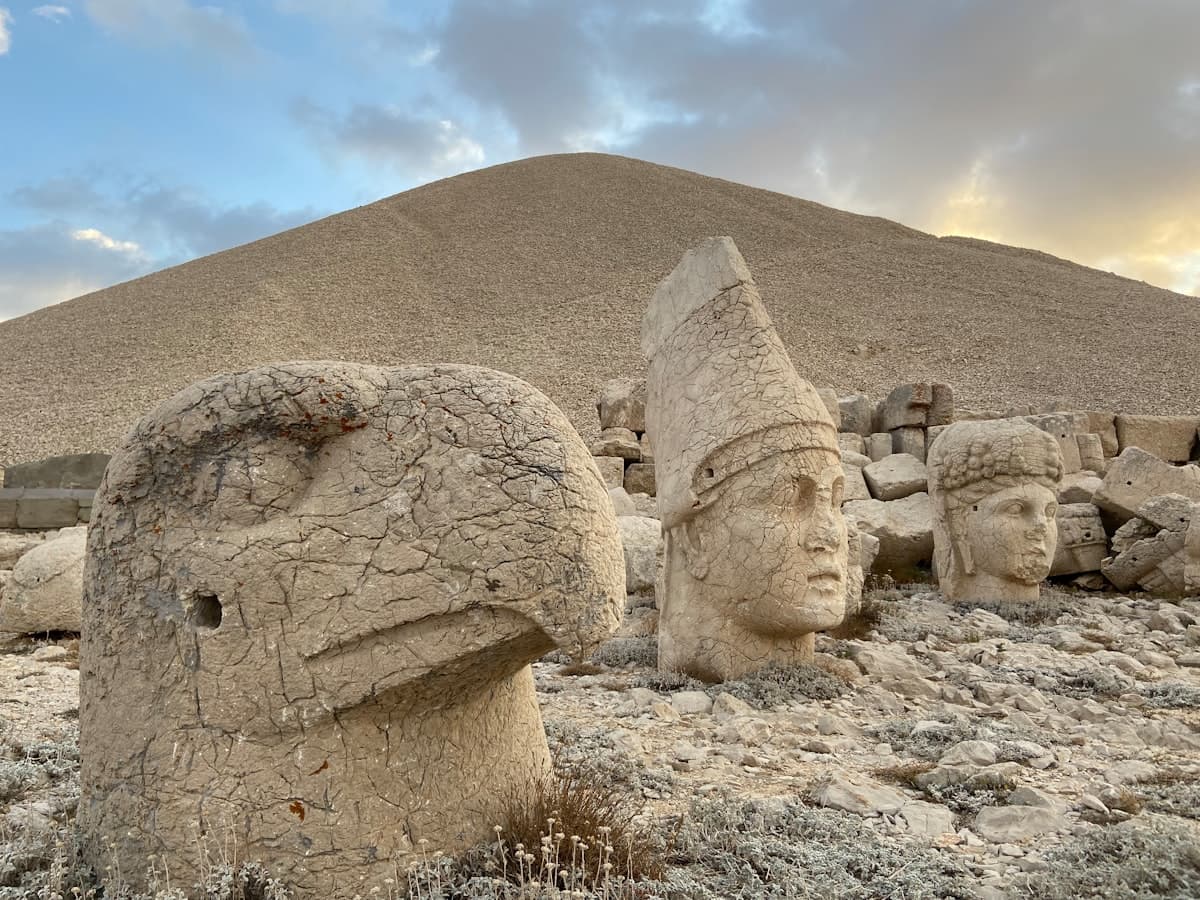
Alexander the Great chose the site of Alexandria in a single afternoon in 331 BC, reportedly tracing the city's outline in barley flour when his surveyors ran out of chalk. He never saw the city completed. He died in Babylon eight years later and his body was brought to Alexandria and placed in a golden sarcophagus somewhere beneath the city center, a location that has not been found despite over a century of searching.
What Alexander started, the Ptolemaic dynasty built into something genuinely unprecedented. The Ptolemies were Macedonian Greeks who ruled Egypt for nearly three centuries, from 305 BC until Cleopatra VII's death in 30 BC. Their political genius was a kind of calculated cultural fusion: they presented themselves to Egyptians as pharaohs, worshipped Egyptian gods, built Egyptian temples, and simultaneously ran a Greek-speaking intellectual capital that drew Euclid, Eratosthenes, and Archimedes. Eratosthenes calculated the circumference of the earth in Alexandria in the 3rd century BC and was accurate to within 2 percent. He did it using a stick, the sun, and a well in Aswan.
The Greek heritage Alexandria Egypt travelers seek is not a single monument. It is a layered argument that Greek, Egyptian, Roman, Jewish, Coptic, and Islamic civilizations were never cleanly separate in this city. They overlapped violently, traded constantly, and produced something that had no name until much later: Mediterranean pluralism.
What Survives: Reading the City Correctly
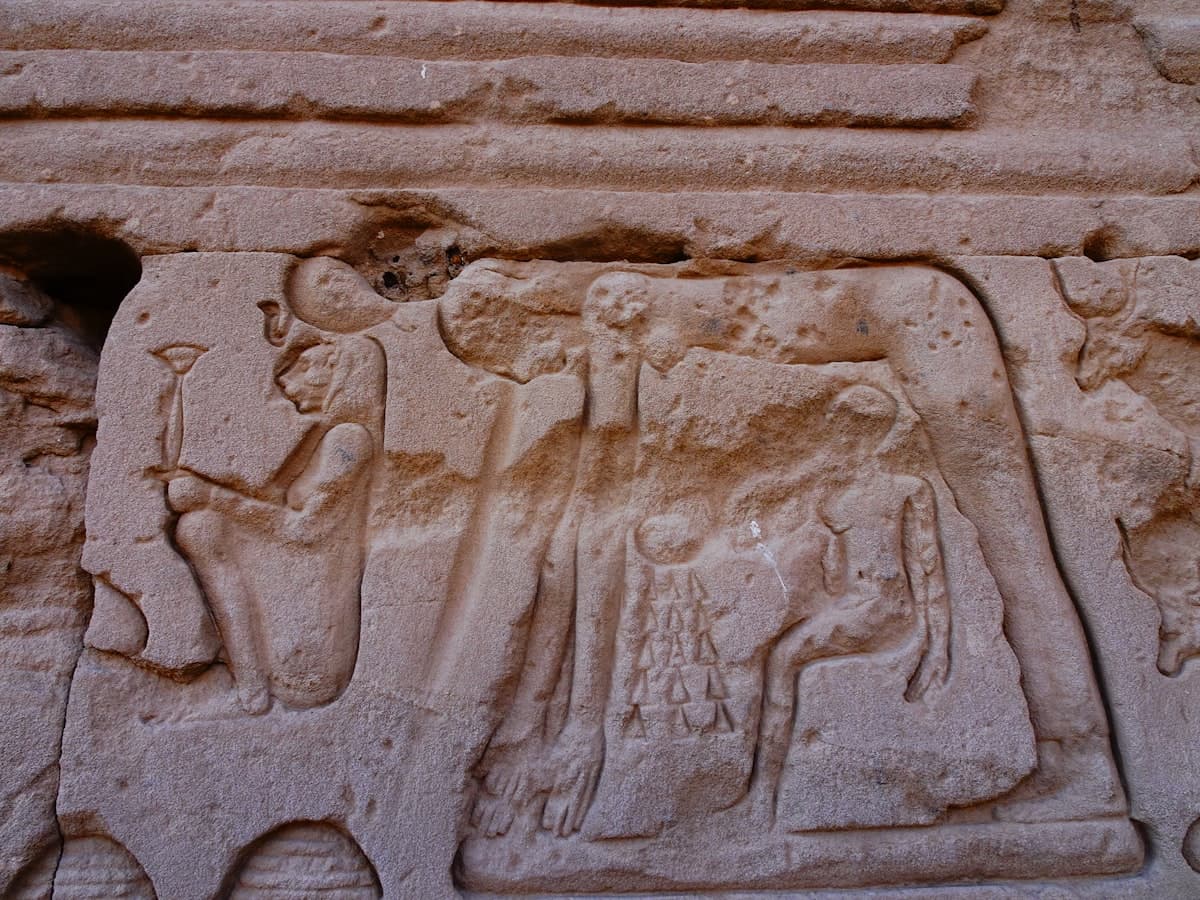
The Greco-Roman Museum, recently reopened after a renovation that began in 2005 and stretched across seventeen years of funding crises and political upheaval, holds the best single collection of Ptolemaic material in existence. The objects that matter most are not the large sculptures. They are the small ones: the syncretic figures that fuse Greek and Egyptian religious iconography into something entirely new. Harpocrates, the child version of Horus, rendered in pure Greek sculptural style. Serapis, a deity invented by Ptolemy I from whole cloth by combining Osiris, Apis the sacred bull, and the Greek god Zeus, specifically designed to be worshipped by both Egyptians and Greeks simultaneously. The statue of Serapis became one of the most replicated images in the ancient Mediterranean world. The concept of a government-designed composite deity is stranger, and more modern-feeling, than almost anything else in the ancient world.
Pompey's Pillar, the 30-meter red Aswan granite column that dominates the Serapeum hill, has nothing to do with Pompey. It was erected in 297 AD in honor of the Roman Emperor Diocletian. Crusader sailors named it for Pompey in the medieval period based on no evidence whatsoever, and the name stuck. The column stands on the remains of the Serapeum, the temple complex dedicated to Serapis that once housed a secondary branch of the Great Library. Around its base you can walk the outlines of the underground passages and library vaults. The sphinx statues flanking the approach are not Ptolemaic; they were brought from earlier Egyptian sites, which itself tells you something about how the Ptolemies legitimized their rule through the visual vocabulary of older pharaonic power.
The Catacombs: Where the Three Traditions Meet
The Catacombs of Kom el-Shoqafa, discovered in 1900 when a donkey fell through the ground, are the most important single site for understanding Alexandrian Greek heritage and almost nobody treats them that way. They are routinely described as a Roman burial site. They are, more precisely, a 2nd century AD burial complex created by a wealthy Alexandrian family that could not decide whether it was Greek, Egyptian, or Roman, so it chose all three simultaneously.
Descend the spiral staircase past the carved reliefs and you reach a burial chamber where the figures of Anubis and Thoth, Egyptian gods of the dead, are rendered wearing Roman military armor. The sarcophagi are carved in pure Greco-Roman style but surrounded by hieroglyphic inscriptions. The triclinium, the banquet room where families gathered to eat with their dead in the Roman tradition, features pillars in the Egyptian style. This is not confusion or artistic incompetence. This is what Alexandria actually was: a city where a family buried its dead in three religious idioms at once because all three were simultaneously true.
The catacombs expand on lower levels that are currently flooded and not open to visitors. Archaeologists believe they extend significantly further than the accessible sections. Budget 90 minutes here and bring a light layer; the underground temperature is noticeably cool.
The Bibliotheca and the Waterfront: The Ptolemaic Quarter
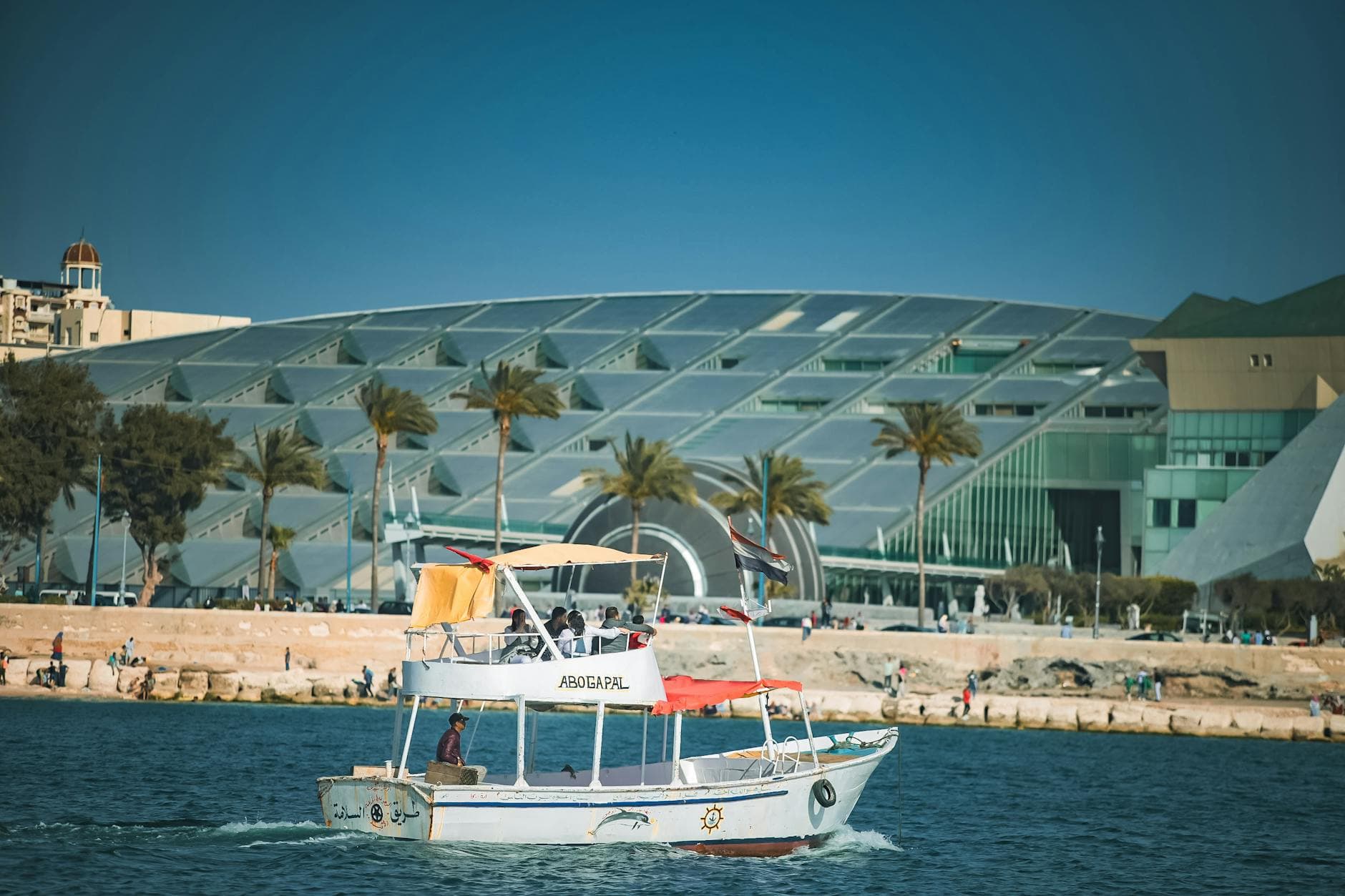
The modern Bibliotheca Alexandrina, opened in 2002, was built on the approximate site of the ancient Mouseion, the research institution associated with the Great Library. The relationship between the modern library and the ancient one is symbolic, not literal: no ancient materials survived, no physical continuity exists. What does exist, in the Bibliotheca's basement, is a genuine antiquities museum containing Ptolemaic-era objects excavated from the immediate vicinity, including underwater finds from the submerged royal quarter offshore.
That underwater context matters. The eastern harbor of Alexandria contains the remains of the Ptolemaic royal quarter, including what are believed to be the palace foundations, sunken by a combination of earthquakes and subsidence over the centuries. French underwater archaeologists led by Franck Goddio have been mapping the submerged city since 1996. Thousands of objects have been recovered, including colossal statues, sphinxes, and columns. Most of what they found is now in the Egyptian Museum in Cairo or temporarily exhibited internationally, which means the submerged city is simultaneously the best-preserved and least-accessible part of Ptolemaic Alexandria. Standing on the Corniche near the Bibliotheca and looking east into the harbor, you are looking at a sunken city that contained, among other things, Cleopatra's palace.
The Connections: Nothing Here Is Isolated
The Greek heritage Alexandria Egypt visitors come to trace does not end with the Ptolemies. It runs directly into what came after. The Coptic Orthodox Church traces its founding to Saint Mark, who arrived in Alexandria around 42 AD, roughly eighty years after Cleopatra's death, into a city still entirely Greek in its intellectual character. Early Christian theology was written in Greek and argued in Alexandrian philosophical terms. The great theological controversies of the 4th and 5th centuries, including the Council of Nicaea in 325 AD, were essentially arguments conducted in Greek between people trained in Alexandrian philosophical schools.
The city's Islamic history carries the same continuity. When the Arab general Amr ibn al-As took Alexandria in 641 AD, he wrote to Caliph Omar that he had captured a city containing 4,000 palaces, 4,000 baths, and 400 theaters. He was probably exaggerating, but the underlying point holds: he was describing a living city, not a ruin. The Islamic city built on top of the Greek and Roman city, reusing materials, reoccupying sites, and absorbing Alexandrian intellectual traditions including medical knowledge and philosophy through translation movements that eventually fed into the European Renaissance.
The 9th century Arab polymath al-Kindi, who worked in Baghdad, was building directly on Ptolemaic astronomical and mathematical work that had been preserved, translated, and transmitted through Alexandria's intellectual networks. The chain from Eratosthenes to Copernicus runs through this city.
Common Mistakes
Spending your first morning at the Corniche. The waterfront walk is pleasant, but it is a 20th century construction. Start at the Greco-Roman Museum on the first morning when your energy is high and the crowds are thinner. The museum requires genuine attention to yield what it contains.
Skipping the Greco-Roman Museum because it was closed on your last trip. It was closed for seventeen years. It is now open. This is the single most important collection of Ptolemaic material in any museum and the renovation has presented it well. Go.
Treating Pompey's Pillar as a five-minute stop. The column itself is photographed in under a minute. What takes time, and repays it, is walking the Serapeum hill systematically: the underground passages, the sphinx rows, the foundation outlines of the ancient precinct. Budget 45 minutes minimum.
Taking the sound and light show at any Alexandria site. They exist. They cost EGP 250 to 300 and deliver generic narration over colored lights. The Catacombs of Kom el-Shoqafa already have atmosphere without theatrical assistance. Spend that money on dinner at a fish restaurant in Anfushi instead.
Reading Alexandria's Greek heritage as separate from its Egyptian heritage. This is the central mistake that most Ptolemaic guides, including otherwise serious ones, make. The Ptolemies were not Greeks ruling Egypt. They were Greco-Egyptians who invented something new. Reading their monuments as Greek exports misses the entire point of what made their civilization functional and interesting.
Going in July or August. The heat is manageable. The humidity is not. Underground sites like the catacombs become physically unpleasant and the city's general atmosphere suffers. October through April is genuinely different in quality.
Relying on a single day. Cairo day-trippers arrive around 11am and leave by 4pm. They see Pompey's Pillar and the catacombs. They miss the Greco-Roman Museum, the underwater archaeology story, the Coptic connections in the old quarter, and the particular experience of Alexandria at 7am when the city belongs entirely to itself.
Practical Tips
The Greco-Roman Museum does not allow large bags inside; there is a bag check at the entrance. Photography is permitted in most sections but verify at each room.
The neighborhood around Pompey's Pillar is working-class and entirely uninterested in tourism, which is a feature. The food stalls on the approach road are good and cheap. Eat there rather than hunting for something tourist-adjacent.
For the underwater archaeology story specifically, the Bibliotheca Alexandrina's antiquities museum in the basement is the most accessible introduction. The museum is small, focused, and serious. It costs EGP 100 and takes about 45 minutes. It is also almost always quiet, even when the library's upper floors are busy with students.
Alexandria's taxi drivers will quote high for tourists. Agree on a price before entering the cab or use a ride-hailing app. The distance from the city center to the catacombs is short; EGP 40 to 60 is a fair fare.
If you have a specific interest in Ptolemaic numismatics or small objects, ask at the Greco-Roman Museum about the study collection. The museum has considerably more material than it displays in the permanent galleries.
Frequently Asked Questions
The Weekly Dispatch
More on Egypt, every Friday.
Cultural depth and places most guides never mention.
No spam. Unsubscribe anytime.