Greeks in Egypt: Alexandria's Greek History Guide
Alexandria was founded by a Macedonian who never saw it finished. For 300 years, its Greek rulers married their sisters and built the ancient world's only research university. The city they made still exists beneath your feet.

Quick Facts
- Best time to visit
- October to April. Mediterranean humidity is manageable, light is good, and the city is not packed with Egyptian summer vacationers from Cairo.
- Entrance fee
- Graeco-Roman Museum: EGP 200 (approx $4 USD). Pompey's Pillar and Serapeum: EGP 180 (approx $3.50 USD). Catacombs of Kom el Shoqafa: EGP 180 (approx $3.50 USD). Alexandria National Museum: EGP 100 (approx $2 USD).
- Opening hours
- Most sites daily 9am to 5pm. Graeco-Roman Museum closed Mondays. Hours subject to change: confirm before visiting.
- How to get there
- From Cairo: Spanish Train from Ramses Station (EGP 120 to 200, 2.5 hours). Within Alexandria: microbuses EGP 5 to 10 per trip. Taxis from main station to Pompey's Pillar approximately EGP 50 to 80.
- Time needed
- Two days for the full Greek Alexandria story. One focused day if limiting to Catacombs, Pompey's Pillar, and the Graeco-Roman Museum.
- Cost range
- Budget EGP 600 to 900 per day including basic accommodation. Mid-range EGP 1,800 to 2,800 per day.
Quick Facts
Best time to visit: October to April, when Mediterranean humidity drops and the light turns the color of old honey. Summer (June to August) is survivable but the Corniche becomes a wall of noise and bodies.
Entrance fees: Graeco-Roman Museum: EGP 200 (approx $4 USD), students EGP 100 Pompey's Pillar and Serapeum: EGP 180 (approx $3.50 USD) Catacombs of Kom el Shoqafa: EGP 180 (approx $3.50 USD) Alexandria National Museum: EGP 100 (approx $2 USD) Bibliotheca Alexandrina (antiquities museum within): EGP 100 (approx $2 USD)
Opening hours: Most sites open daily 9am to 5pm. The Graeco-Roman Museum closes Monday. Confirm hours before visiting, as renovation closures happen without warning in Alexandria.
How to get there: From Cairo, the best option is the Spanish Train (al-Qitar al-Isbaani) from Ramses Station: EGP 120 to 200 depending on class, roughly 2.5 hours. A private taxi from Cairo costs EGP 1,200 to 1,800. Within Alexandria, blue-and-white microbuses cost EGP 5 to 10 per trip. Taxis from Mahattat Misr (Alexandria's main station) to Pompey's Pillar run about EGP 50 to 80.
Time needed: Two days minimum to do the Greek Alexandria story justice. One day if you are choosing between the Catacombs, Pompey's Pillar, and the Graeco-Roman Museum only.
Cost range: Budget EGP 600 to 900 per day including accommodation in the center. Mid-range EGP 1,800 to 2,800 per day.
---
Why Alexandria's Greek History Actually Matters
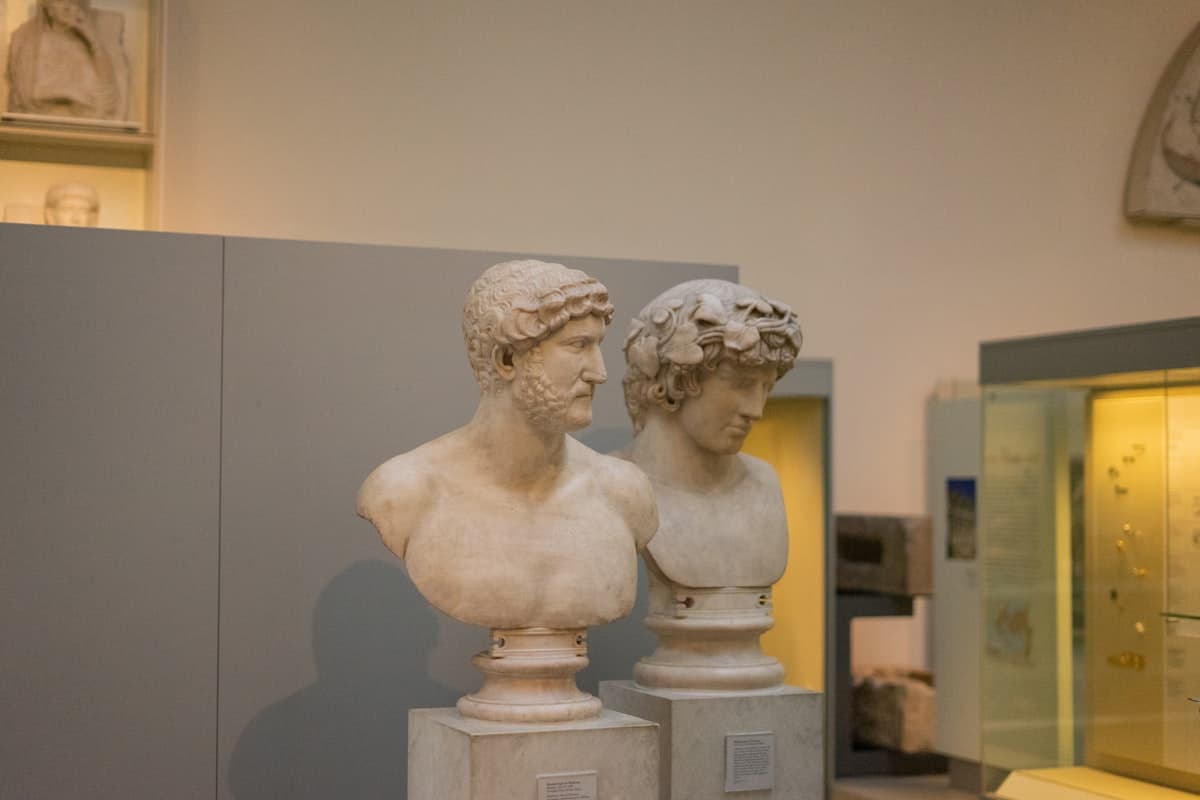
Alexander the Great visited Alexandria once, in 331 BC, for a few months. He never came back. He died in Babylon eight years later, aged thirty-two, before a single significant building in his city was complete. The civilization that made Alexandria the intellectual capital of the ancient world was built entirely by his successors, the Ptolemies, a dynasty of Macedonians who ruled Egypt for nearly three centuries, spoke Greek as their court language, and yet became so thoroughly entangled with Egyptian religion that their kings were mummified and worshipped as pharaohs.
This is the central paradox that makes the Greeks in Egypt Alexandria history story genuinely strange. The Ptolemies were not Greeks playing at being Egyptian. They were something the ancient world had not seen before: a ruling class that held two complete religious identities simultaneously, using each one strategically. Ptolemy III rebuilt the temple at Edfu in the full pharaonic style, with hieroglyphic texts that present him as the heir of Horus. Back in Alexandria, the same king funded the Library and the Mouseion, the world's first state-funded research institution, where Eratosthenes of Cyrene calculated the circumference of the earth to within 240 kilometers of the correct answer, using shadow lengths and the distance between Aswan and Alexandria.
The city they built no longer exists above ground. Ancient Alexandria sits under the modern city, under the sea (earthquakes and subsidence dropped much of the royal quarter into the harbor in the 4th and 8th centuries AD), and under three thousand years of continuous occupation. What remains is fragmentary, sometimes brilliant, and requires some imagination to read correctly.
---
What You Will Actually Find: The Sites
Pompey's Pillar and the Serapeum
The pillar has nothing to do with Pompey. The Roman general's head was brought to Alexandria after his murder in 48 BC, but the 27-meter red Aswan granite column standing in the Serapeum district was erected in 298 AD, three and a half centuries later, in honor of the Emperor Diocletian. Crusader sailors, unfamiliar with the city's history, assumed anything that large must mark the grave of a famous Roman and the name stuck.
What the pillar actually marks is more interesting. The Serapeum was Alexandria's most important temple complex, dedicated to Serapis, a deity that Ptolemy I invented around 300 BC as a deliberate theological hybrid: Greek in form (depicted bearded, like Zeus or Hades), Egyptian in function (associated with Osiris and the Apis bull), and designed specifically to give Greeks and Egyptians a shared object of worship. It was one of the most calculated acts of political religion in the ancient world, and it worked for six centuries. The cult of Serapis spread across the Mediterranean. A Serapeum existed in Rome. The god was worshipped in Gaul.
The complex was destroyed by a Christian mob in 391 AD, on orders from the Patriarch Theophilus, after the Emperor Theodosius declared pagan worship illegal. What you see now is the foundation platform, some column bases, two sphinxes that survived because they were buried, and the solitary pillar. Beneath the platform, accessible by stairs, are the underground passages where the sacred Apis bulls were kept. These are genuinely worth the descent: cool, stone-cut, smelling of old rock and something older, with niches carved into the walls that once held golden statues.
The Catacombs of Kom el Shoqafa
These are the most important Greco-Roman site in Egypt that most visitors either skip or spend twenty minutes in. Do not make this mistake. The catacombs were cut in the 1st or 2nd century AD and discovered in 1900 when a donkey fell through the roof. They are the largest Roman funerary complex in Egypt and contain something you will not find anywhere else: a fully realized fusion of Egyptian, Greek, and Roman religious imagery carved into the same walls, within the same tomb chambers, without apparent contradiction.
The central burial chamber is the specific thing to stand in front of and think about. The doorway is framed by Greek columns. The doorway flanking figures wear Roman armor. But their faces are Egyptian, their headdresses are Osirian, and the funeral scenes on the walls follow the Book of the Dead format that Egyptian priests had used for two thousand years. The family buried here saw no inconsistency. They were Alexandrians. All three traditions were theirs.
The Graeco-Roman Museum
Reopened after years of renovation, this is where the objects live: the tanagra figurines, the bronze portraits, the mummy masks that show Greek faces wrapped in pharaonic cartonnage, the coins bearing Ptolemaic profiles, and a section of sculpture that demonstrates exactly how Egyptian gods were reinterpreted through a Greek visual language. The crocodile mummies alone justify an hour.
---
The Connections: Nothing Here Exists in Isolation
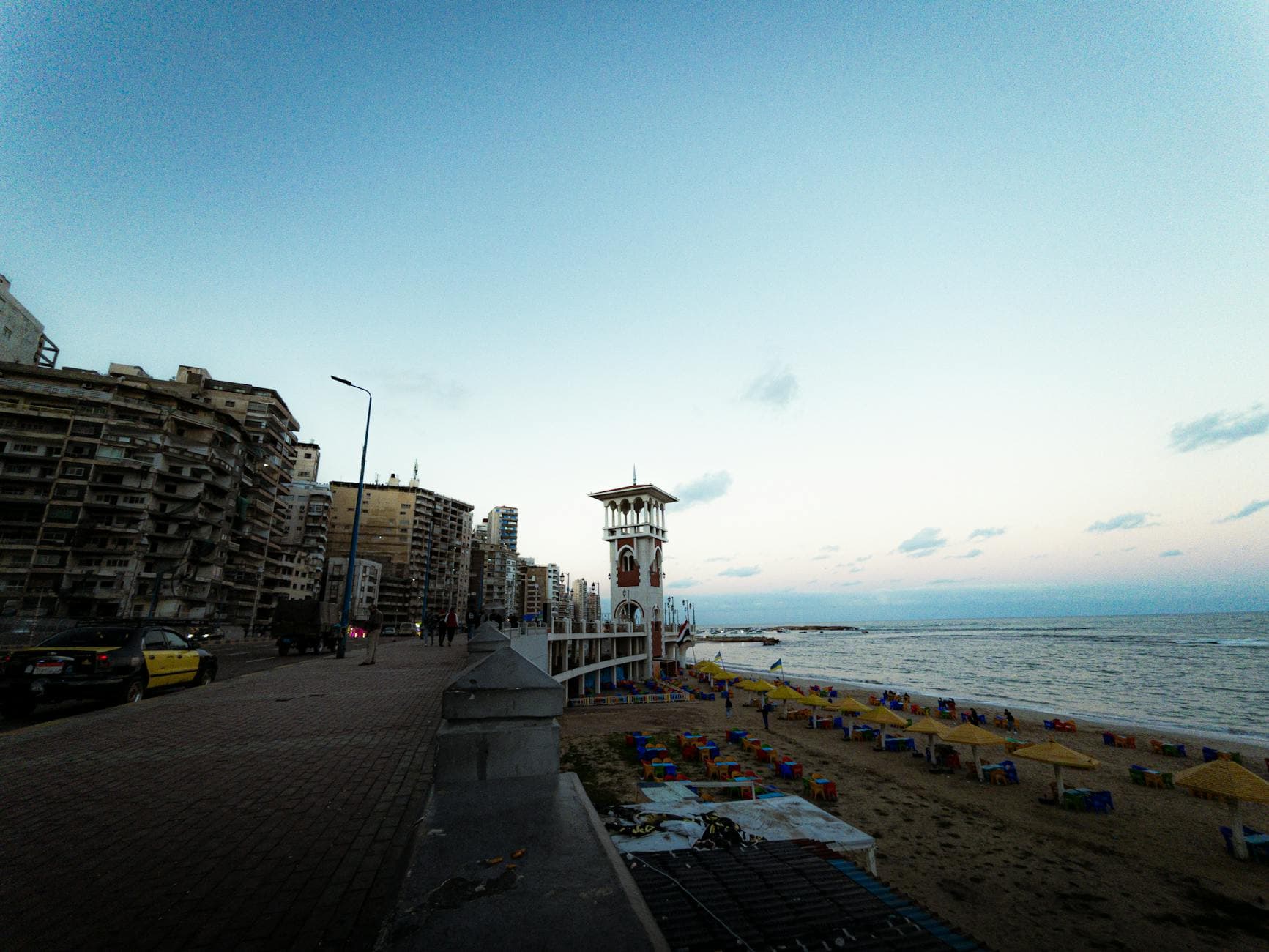
The Library of Alexandria is the thing every visitor asks about. The honest answer is that the original Mouseion and Library complex is gone entirely, its site disputed (probably somewhere in the Brucheion, the royal quarter, now under the eastern harbor). The Bibliotheca Alexandrina opened in 2002 as a cultural institution and archive on the approximate site. It is architecturally serious, the slanted disc of gray granite is one of the better pieces of contemporary architecture in Egypt, and its antiquities museum contains objects worth seeing. But visitors who come expecting to feel the ancient library are going to feel nothing except modern concrete. Manage expectations accordingly.
The connection most visitors miss: the Ptolemaic rulers who built Greek Alexandria are the same dynasty that built or expanded nearly every major temple in Upper Egypt. When you stand in Edfu, Kom Ombo, or Dendera, you are standing in a Ptolemaic building. The Ptolemies ruled from Alexandria but projected their pharaonic legitimacy through temple construction five hundred kilometers south. The Greek rulers in their cosmopolitan Mediterranean city and the hieroglyph-carved pharaohs on temple walls are the same people, presenting different versions of themselves to different audiences. This is perhaps the most Egyptian thing about them.
The catacombs also connect forward. The Christian community that grew in Alexandria during the 1st century AD, a community that eventually destroyed the Serapeum, was itself shaped by Greek Alexandria. The Septuagint, the Greek translation of the Hebrew scriptures that early Christians read, was produced in Alexandria in the 3rd century BC, commissioned by Ptolemy II, who wanted every important text in the world translated for the Library. Christianity reached Egypt speaking Greek partly because Alexandria's Jews had been writing in Greek for generations.
---
Common Mistakes
Skipping the Catacombs because they look minor on maps. They are not minor. They are the single most intellectually dense site in the Greek Alexandria story and they take forty-five minutes well spent.
Going to Pompey's Pillar and leaving. The underground Apis bull galleries are included in the ticket. Walk down. Most visitors do not.
Spending a half-day at the Bibliotheca Alexandrina expecting to encounter the ancient library. The modern institution is worth an hour for its architecture and its manuscripts section. It is not a historical site. It is a contemporary cultural center built near a historical site. These are different things.
The Alexandria National Museum, not the Graeco-Roman Museum, as your first stop. The National Museum is fine but covers all periods in a compressed way. The Graeco-Roman Museum focuses specifically on the Hellenistic and Roman periods and gives you the depth you need before the broader survey.
The horse-drawn carriage rides around the Corniche. Operators quote EGP 400 to 600 for a thirty-minute loop. This is priced for tourists who have not asked a local. You will see nothing you cannot see on foot and the horses are not in good condition. Walk the Corniche yourself.
Skipping Abu Qir. The bay fifteen kilometers east of Alexandria is where Napoleon's fleet was destroyed by Admiral Nelson in 1798, but more relevantly for the Greek Alexandria story, it is where excavations by Franck Goddio have recovered submerged sections of the ancient cities of Herakleion and Canopus: temples, statues, coins, and the actual port infrastructure of ancient Alexandria's satellite towns. You cannot dive the site without a permit, but the National Museum of Egyptian Civilization in Cairo has significant finds from the excavation. It changes your sense of what was lost.
Underestimating distances. Alexandria's Greek-era sites are not clustered. Pompey's Pillar is in the southwest. The Catacombs are nearby. The Graeco-Roman Museum is in central Mansheya. The Bibliotheca is on the eastern Corniche. Budget transit time between them.
---
Practical Tips
Arrive at the Catacombs when they open at 9am. By 11am, tour groups fill the underground chambers and the experience of standing alone in the fusion burial room becomes impossible.
The Graeco-Roman Museum's renovation has improved lighting significantly but the labeling is still inconsistent. Download a basic map of the collection before you go. The museum's own printed guide, available at the ticket desk for EGP 20, is worth buying.
Alexandria's taxi drivers around the Corniche tourist areas will quote prices three to five times the local rate. Agree on a fare before getting in. A cross-city trip should cost EGP 60 to 100. Anything above EGP 150 is negotiation territory.
The city's humidity, even in October, can make afternoon visits to the Serapeum site feel exhausting. The outdoor ruins at Pompey's Pillar have no shade. Go early or go in late afternoon light, which is also photographically better.
For accommodation near the sites: the area around Raml Station puts you within walking distance of the Graeco-Roman Museum and easy taxi range of everything else. Hotels in this area run EGP 800 to 1,500 per night for a clean, mid-range room.
One restaurant worth knowing: Zephyrion in Abu Qir, which has been serving grilled fish on the Mediterranean since 1929. A meal for two with seafood, bread, and drinks runs EGP 600 to 900. The view is across the same bay where Cleopatra's palace district is believed to have stood before the earthquakes dropped it into the sea.
Frequently Asked Questions
The Weekly Dispatch
More on Egypt, every Friday.
Cultural depth and places most guides never mention.
No spam. Unsubscribe anytime.