Greeks in Egypt: Alexandria's Living Hellenistic History Guide
Alexandria was founded in 331 BC and within 80 years held a million people, making it the largest city on earth. Most of it is underwater. Here is what survives.

Audio Guide: Greeks in Egypt: Alexandria's Living Hellenistic History Guide
Quick Facts
- Best time to visit
- October to April for clear Mediterranean light, lower humidity, and fewer Egyptian domestic vacationers on the Corniche. March and November offer the best balance of weather and manageable visitor numbers.
- Entrance fee
- Graeco-Roman Museum EGP 200 (approx $4 USD), Catacombs of Kom el-Shoqafa EGP 180 (approx $3.50 USD), Pompey's Pillar EGP 100 (approx $2 USD), Bibliotheca Alexandrina main building EGP 70 plus separate museum fees
- Opening hours
- Most sites daily 9am to 5pm. Graeco-Roman Museum closed Tuesdays. Catacombs closed Friday 12pm to 1pm. Bibliotheca Alexandrina open Saturday to Thursday 10am to 7pm.
- How to get there
- From Cairo: Egyptian National Railways express train from Ramses Station, EGP 95 to 250, approximately 2.5 hours. Within Alexandria: trams along the Corniche cost EGP 2, taxis between sites EGP 40 to 80, Uber available at similar prices.
- Time needed
- Two full days for the Greek and Hellenistic history thread. Add a third day if combining with the Bibliotheca Alexandrina archaeology museum and a trip to Abu Qir bay.
- Cost range
- Budget EGP 600 to 900 per day including accommodation in a local guesthouse, all site entries, and street food. Mid-range EGP 1,800 to 2,800 per day with a seafront hotel and restaurant meals.
Quick Facts
Best time to visit: October through April, when Mediterranean humidity drops and the light is clear rather than hazy. Summer in Alexandria is gentler than Cairo but the coastal crowds are Egyptian vacationers, not tourists, which changes the texture of everything.
Entrance fees: Graeco-Roman Museum: EGP 200 (approx $4 USD), students EGP 100 Catacombs of Kom el-Shoqafa: EGP 180 (approx $3.50 USD), students EGP 90 Pompey's Pillar site: EGP 100 (approx $2 USD) Royal Jewelry Museum (housed in a Hellenistic-era quarter): EGP 150 (approx $3 USD)
Opening hours: Most sites open daily 9am to 5pm. The Graeco-Roman Museum closes Tuesdays. The Catacombs close Fridays from 12pm to 1pm.
Getting there from Cairo: The Egyptian National Railways express train from Ramses Station costs EGP 95 to 250 depending on class and takes roughly 2.5 hours. The Superjet bus from Turgoman terminal runs EGP 100 to 160 and takes 3 hours with traffic. Flying is unnecessary and expensive relative to the train.
Within Alexandria: Green-and-white trams still run along the Corniche for EGP 2 per journey, a price that has been kept deliberately low for working Alexandrians. Taxis within the city rarely exceed EGP 50 for historical sites. Uber operates and is usually EGP 40 to 80 between sites.
Time needed: Two full days for the Greek history thread specifically. Three if you extend into Coptic and Islamic Alexandria, which you should, because they grew from the same soil.
---
Why This Place Matters
Alexander the Great spent perhaps four months in the city he founded before leaving for Persia and never returning. He died in Babylon in 323 BC at thirty-two, and his body was eventually brought back to Alexandria, where it was displayed in a golden sarcophagus in a mausoleum that later rulers turned into a pilgrimage site. Julius Caesar visited the tomb. Augustus visited. Caligula reportedly stole the breastplate. Then, sometime in the third or fourth century AD, the tomb was lost. Nobody has found it. This is not metaphor. The burial site of one of history's most consequential people is somewhere under a modern city of five million, and nobody knows where.
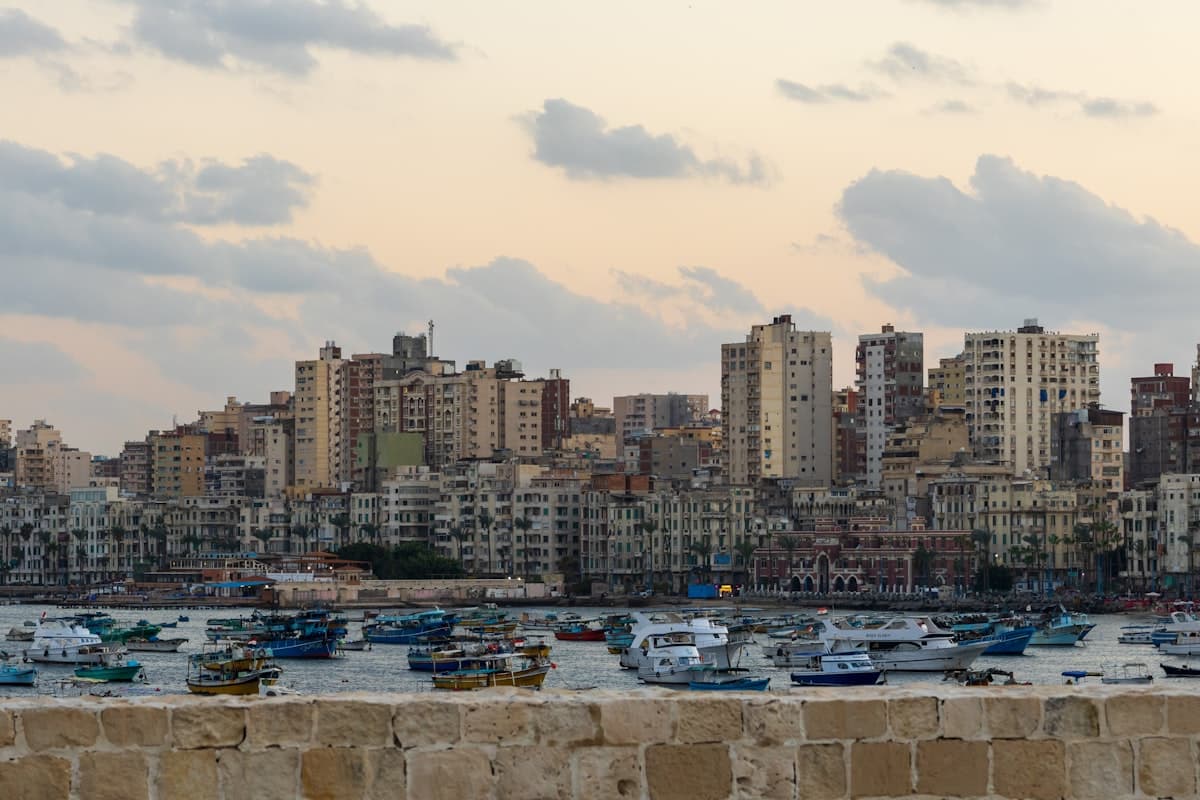
That is Alexandria's essential character: the most important things are missing, underground, or underwater. A series of earthquakes between the fourth and eighth centuries AD sank the ancient royal quarter into the harbor. In 1996, French archaeologist Franck Goddio began mapping it and found palace walls, sphinxes, columns, and statues at depths of 6 to 8 meters below the Mediterranean surface. The objects are still down there. You can dive with authorized operators to see some of them, or you can look at photographs in the Bibliotheca Alexandrina's exhibition and understand that you are walking over a ghost city.
The Greeks who built ancient Alexandria were not tourists or colonizers in the modern sense. Under the Ptolemaic dynasty, which ruled Egypt for nearly three centuries from 305 to 30 BC, Alexandria became simultaneously the world's largest library, its most significant center of scientific research, and its most lucrative trading port. Euclid wrote his Elements here. Eratosthenes calculated the circumference of the earth here with an error margin of less than 2 percent. Hypatia, the last great mathematician of the classical world, taught here until she was murdered by a Christian mob in 415 AD. The city's intellectual tradition runs deeper and longer than any single guide can hold.
---
The Graeco-Roman Museum: What Survives and What It Tells You
The Graeco-Roman Museum on El-Mathaf El-Romani Street reopened after a sixteen-year renovation in 2023. Before you go, know this: it holds approximately forty thousand objects and displays a fraction of them. What is on display has been curated to show the specific mixture that made Alexandria unusual, which was not Greek culture transplanted to Africa, but Greek, Egyptian, Jewish, and eventually Roman culture fused into something that had no direct precedent.
The object that stops most informed visitors is a statue of Serapis, the syncretic deity invented by Ptolemy I specifically to bridge Greek and Egyptian religious practice. Serapis combined Osiris, the Egyptian god of the dead, with Apis, the sacred bull, and dressed the result in Greek sculptural conventions: a bearded, robed figure resembling Zeus. The Serapeum, the temple complex dedicated to him, was one of the ancient world's most visited pilgrimage sites until it was destroyed by a Christian mob in 391 AD on orders from the Bishop of Alexandria. Pompey's Pillar, which you can still visit, is the only standing remnant of that complex.
In the museum, look for the terracotta figures from everyday Alexandrian households. They show domestic religious practice: small offerings, figures of household gods, amulets combining hieroglyphs with Greek letters. These are not royal objects. They are the material culture of ordinary people navigating a city where three or four religious systems operated simultaneously and most households hedged their bets across all of them.
---
The Catacombs of Kom el-Shoqafa: Where Three Religions Meet Underground
The Catacombs of Kom el-Shoqafa were discovered in 1900 when a donkey fell through the ground. What the donkey found was one of the most remarkable religious hybrids in the ancient world: a three-level funerary complex carved from rock in the second century AD, where the same burial chamber contains Egyptian gods carved in the style of Roman sculpture wearing Greek decorative borders.
The main tomb chamber shows Anubis, the jackal-headed Egyptian god of embalming, wearing Roman armor. Thoth, the ibis-headed god of writing, appears in a toga. The funerary scenes follow Egyptian ritual exactly, including the weighing of the heart against the feather of Ma'at, but every figure is rendered in a sculptural style learned from Roman workshops. This is not confusion or syncretism by accident. This was a community of Alexandrians in the second century AD who were simultaneously Roman citizens, Greek-speaking, and Egyptian in their understanding of death and the afterlife. They chose all three vocabularies for the most important statement a person makes, which is how they wish to be remembered after dying.
The catacombs descend three levels. Only the first two are open to visitors. The lowest level is partially flooded and has been since antiquity. Bring a jacket: the temperature drops sharply underground and the humidity is different from the city above.
Skip the son et lumière show at the nearby Pompey's Pillar site. It costs EGP 250 and runs for forty minutes and tells you nothing you will not learn from standing at the pillar itself for ten minutes with this article in hand. The sound effects are theatrical, the historical content is thin, and the experience of watching colored lights projected onto a Roman column while a voice describes the burning of the Library of Alexandria is not the same as understanding what actually happened there.
---
The Connections: Alexandria as an Unbroken Thread
The city Alexander founded in 331 BC did not stop being itself when the Romans arrived, or when the Arabs arrived in 641 AD, or when the Ottomans absorbed it in 1517. What changed was the language of power. The intellectual infrastructure, the cosmopolitan commercial logic, the willingness to absorb and adapt, these persisted.
The Arab geographer al-Idrisi, writing in 1154 AD, described a city with a functioning lighthouse, the Pharos, which had been built by Ptolemy II in approximately 280 BC and stood for over fifteen centuries before earthquakes finally brought it down between 1303 and 1480. The lighthouse's stones were eventually used to build the Citadel of Qaitbay, which stands at the tip of the Eastern Harbour today. When you stand in a fifteenth-century Mamluk fortress looking at the Mediterranean, you are standing on the memory of one of the Seven Wonders of the Ancient World.
The Coptic community of Alexandria traces its founding to Saint Mark, who arrived in approximately 42 AD and was martyred in 68 AD. His relics were taken to Venice in 828 AD by Venetian merchants who bribed Alexandrian customs officials with pork, which Muslim inspectors would not touch, to smuggle the bones out. The Coptic Pope still carries the title Patriarch of Alexandria. The Greek Orthodox Patriarch of Alexandria also maintains his seat in the city. These are not historical footnotes. These are living institutions operating in a city founded by a Macedonian king who thought he was divine.
The Bibliotheca Alexandrina, built in 2002 on what most scholars believe is the approximate site of the ancient Library, contains an archaeology museum in its basement where you can see objects recovered from the ancient city. The roof of the modern building, designed by a Norwegian architectural firm, angles toward the Mediterranean and is meant to recall a rising sun. It is a deliberate act of cultural memory by a government that understood, correctly, that the Library's destruction is one of the great traumas in the history of human knowledge.
---
Common Mistakes
Spending your first morning at the Catacombs. Go to the Corniche first, before the city fills with traffic. Walk east from the Cecil Hotel toward the Silsileh promontory and understand the geography: the ancient royal quarter is out there in the water, the Pharos stood where the Citadel of Qaitbay now stands, and the grid of the Greek city is still partially legible in the street plan beneath your feet. Without the spatial orientation, the sites make less sense.
Treating the Graeco-Roman Museum as a bonus stop. It is the interpretive frame for everything else. Go there first, on day one, before any other site. Two hours there will make every subsequent visit more legible.
Booking a guided tour that packages Alexandria into one day from Cairo. This itinerary, which typically includes the Catacombs, Pompey's Pillar, a seafood lunch, and the Library, gives you a photograph of each site and the understanding of none of them. The train from Cairo is cheap and easy. Stay two nights.
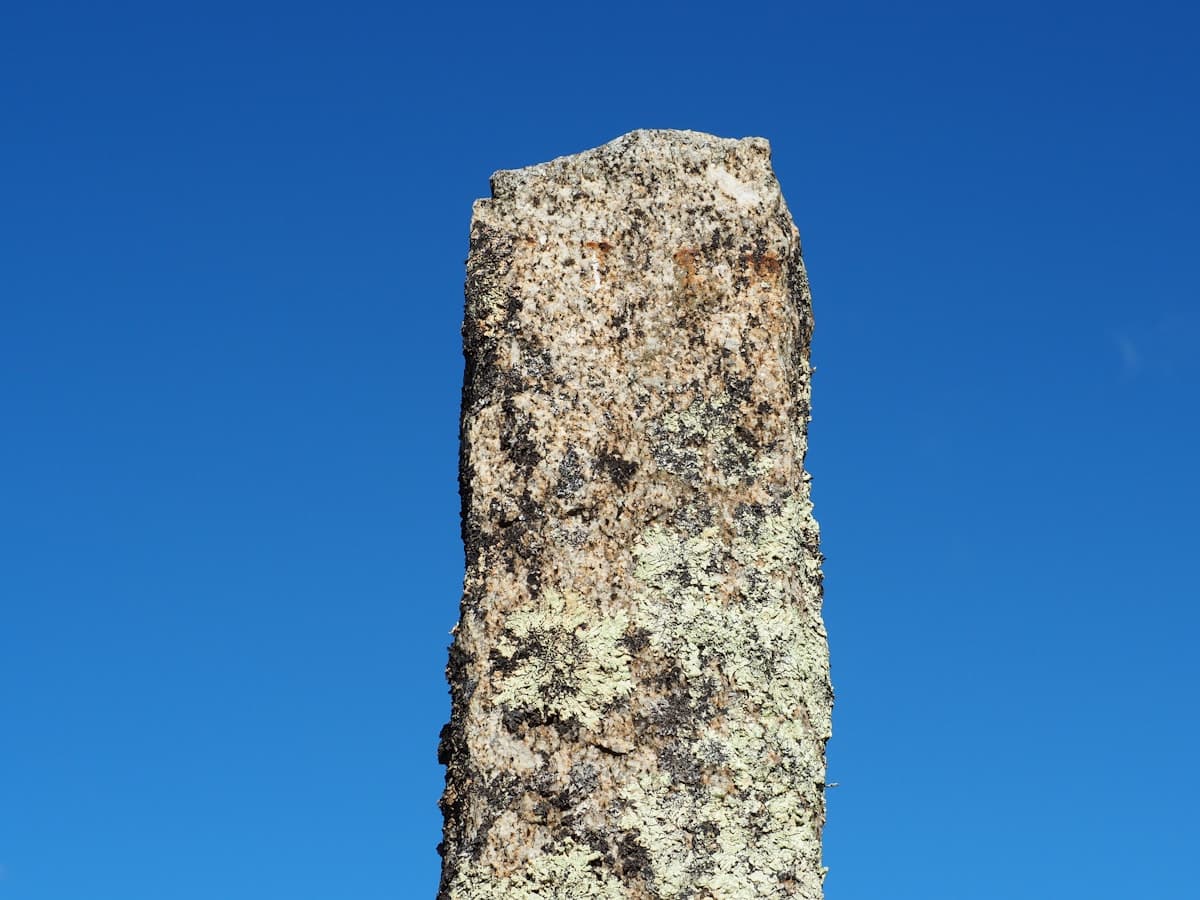
Assuming Pompey's Pillar is about Pompey. It is not. The pillar, a single red granite column standing 27 meters tall and weighing approximately 285 metric tons, was erected in 297 AD in honor of the Roman Emperor Diocletian, who sent grain to Alexandria during a famine. It was misnamed by medieval European travelers who assumed any impressive Roman column in Alexandria must commemorate the general who was assassinated there in 48 BC. The actual tomb of Pompey, if it existed, has never been found.
Skipping the Jewish history thread entirely. At its height under the Ptolemies, Alexandria's Jewish population may have constituted a third of the city's total. The Septuagint, the Greek translation of the Hebrew Bible that most early Christians used, was produced in Alexandria, according to tradition by seventy-two Jewish scholars working simultaneously and arriving at identical translations. Almost nothing physically survives of ancient Alexandrian Jewish life, but understanding its scale changes how you read the early Christian history of the same city.
Eating lunch at a restaurant within sight of any major site. Walk three blocks in any direction. The price drops by half and the food is cooked for Alexandrians, not for people who just exited the Catacombs. The grilled liver sandwiches from street carts near Attarine Market cost EGP 25 and are better than anything available at tourist-adjacent restaurants for EGP 200.
Diving into the submerged ruins without reading the Goddio Foundation's published maps first. The underwater archaeology is genuinely remarkable, but without context the objects are just shapes. The Bibliotheca Alexandrina bookshop sells the Goddio expedition catalogs. Buy one the evening before you dive.
---
Practical Tips
Alexandria's historical sites are spread across a city of five million people. The triangle of Graeco-Roman Museum, Catacombs of Kom el-Shoqafa, and Pompey's Pillar forms a walkable cluster in the central district if you are comfortable with forty-minute walks on urban streets. Taxis are cheap enough that there is no reason to walk in summer heat.
The Bibliotheca Alexandrina charges EGP 70 for entry to the main building and has separate fees for its four internal museums. The archaeology museum in the basement is the essential one for Greeks in Egypt history; budget EGP 120 for that combination.
Dress conservatively for the Catacombs: the cool temperature underground makes it uncomfortable in summer clothing, and the site is still considered sacred by some communities.
Photography is permitted at most sites for a personal camera. At the Graeco-Roman Museum, confirm current rules on arrival as they have changed periodically since the renovation.
For a guide who specializes in the Hellenistic and Roman periods specifically, the Bibliotheca Alexandrina maintains a list of accredited archaeologist-guides who offer private tours at approximately EGP 800 to 1,200 for a half-day. This is worth the cost for anyone serious about the Greeks in Egypt Alexandria history thread, because the officially licensed general guides at the site entrances vary enormously in their knowledge of this specific period.
If you have a third day, take a microbus or taxi to Abu Qir, 24 kilometers east of the city center. The bay at Abu Qir is where Franck Goddio's team found the ancient cities of Thonis-Heracleion and Canopus, both of which sank between the sixth and eighth centuries AD. There is nothing to see above water. That is precisely the point.
Frequently Asked Questions
The Weekly Dispatch
More on Egypt, every Friday.
Cultural depth and places most guides never mention.
No spam. Unsubscribe anytime.