Greeks in Egypt: Alexandria's Lost Greek World Guide
Alexandria was founded by a Macedonian who never saw it finished. For three centuries it was the largest Greek city on earth, bigger than Athens. Most of that city is underwater.

Quick Facts
- Best time to visit
- October to April. Mediterranean climate means mild temperatures, good light, and manageable crowds. July and August are hot and humid with Egyptian domestic tourism at its peak.
- Entrance fee
- Greco-Roman Museum: EGP 200 (approx $4 USD), students EGP 100. Kom el-Dikka: EGP 180 (approx $3.50 USD). Pompey's Pillar and Serapeum: EGP 180 (approx $3.50 USD). Catacombs of Kom el-Shoqafa: EGP 200 (approx $4 USD). Cavafy Museum: EGP 20.
- Opening hours
- Most sites daily 8am to 4pm (winter) and 8am to 5pm (summer). Greco-Roman Museum closed Mondays. Cavafy Museum open Saturday to Thursday 10am to 3pm.
- How to get there
- From Cairo: Talgo or Spanish train from Ramses Station, EGP 150 to 300 each way, journey 2 to 2.5 hours. Within Alexandria: taxis between major sites cost EGP 30 to 60 per journey. A half-day hired driver costs EGP 400 to 600.
- Time needed
- Two full days minimum to cover the main Ptolemaic and Greco-Roman sites with adequate time at each. Three days if combining with the Cavafy Museum, Greek Orthodox Cathedral, and harbor access.
- Cost range
- Budget EGP 600 to 900 per day including entry fees, local transport, and street food. Mid-range EGP 1,800 to 3,000 per day including a comfortable hotel and restaurant meals.
Quick Facts
Best time to visit: October to April, when Mediterranean winds keep temperatures below 25°C and the light on the Corniche turns the sea a particular shade of grey-green that the ancient Greeks would have recognized.
Key sites and entrance fees: Greco-Roman Museum: EGP 200 (approx $4 USD), students EGP 100. Reopened after two decades of renovation. Kom el-Dikka Roman Odeon: EGP 180 (approx $3.50 USD), students EGP 90. Includes the villa and baths. Pompey's Pillar and Serapeum: EGP 180 (approx $3.50 USD), students EGP 90. Catacombs of Kom el-Shoqafa: EGP 200 (approx $4 USD), students EGP 100. Underwater Antiquities Museum (eastern harbor tours): contact the Egyptian Ministry of Antiquities for current dive/glass-bottom boat access. Pricing varies by operator.
Opening hours: Most sites daily 8am to 4pm in winter, 8am to 5pm in summer. The Greco-Roman Museum closes on Mondays.
How to get there: Minibuses and tuk-tuks connect the main sites. From Raml Station in central Alexandria, a taxi to Kom el-Dikka costs EGP 30 to 50. Pompey's Pillar is EGP 40 to 60 by taxi from the Corniche. Walking between Kom el-Dikka, the Greco-Roman Museum, and the Catacombs is feasible but takes the better part of a day.
Time needed: Two full days minimum. Three if you want to sit with things.
Cost range: Budget EGP 600 to 900 per day including entry fees, local food, and transport. Mid-range EGP 1,800 to 3,000 per day.
---
Why This Place Matters
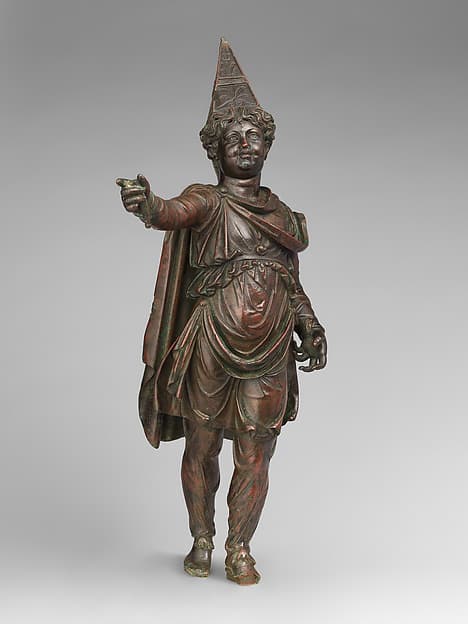
Alexander the Great founded Alexandria in 331 BC and left for Persia four months later. He never came back alive. The city that bears his name was designed by his architect Dinocrates of Rhodes and grew under his general Ptolemy into something Alexander never imagined: a city larger, richer, and more intellectually ambitious than Athens itself. At its peak in the second century BC, Alexandria had a population of roughly 500,000, making it the largest city in the Mediterranean world. The Great Library held an estimated 700,000 scrolls. The Lighthouse of Pharos stood 137 meters tall and was visible 47 kilometers out to sea. For three centuries, this was the center of Greek civilization, not Greece.
The Greeks in Egypt Alexandria history is not a story of conquerors replacing a culture. It is something stranger and more interesting: a deliberate, politically calculated fusion. The Ptolemies, Macedonian kings who ruled Egypt for 275 years, understood that they needed Egyptian priests, Egyptian gods, and Egyptian legitimacy to hold the country. So they built temples in the pharaonic style in Upper Egypt while living in a thoroughly Greek city on the coast. They invented Serapis, a god who fused Osiris and Apis with the Greek Zeus, and installed him in a temple complex so large that its destruction in 391 AD, ordered by the Christian emperor Theodosius, required a full military operation.
Almost none of the ancient Greek city survives above ground. This is not a Pompeii situation, where you walk through intact streets. It is something more like an archaeological detective story, and for that reason it rewards a particular kind of traveler: one who is willing to stand in front of an unremarkable column and understand what it represents.
---
What the Ptolemies Actually Built, and Where It Went
The ancient city of Alexandria was laid out on a grid planned by Dinocrates, with two main boulevards crossing at right angles. The north-south axis, the Canopic Way, ran roughly where the modern El-Horreya Road now runs. Beneath the current city, at depths of one to eight meters, lie the foundations of Greek Alexandria: streets, cisterns, temples, and residential quarters that have never been excavated because people are still living above them.
What did not sink into the soil fell into the sea. The eastern harbor of Alexandria holds the submerged remains of the royal quarter, the palace complex where Cleopatra VII received Julius Caesar and Mark Antony, where she kept her private menagerie, where she died in 30 BC. French underwater archaeologist Franck Goddio has spent decades mapping this site and has recovered thousands of objects including a colossal statue of a Ptolemaic queen that stood at the entrance to the royal harbor. The statue is intact. It has not been moved. It is still underwater.
The Greco-Roman Museum on El-Mathaf El-Romani Street is the best place to begin making sense of what once existed. Its collection includes a rare Apis bull sarcophagus, a polychrome mosaic floor from a Ptolemaic villa, and a series of tanagra figurines, terracotta statuettes of women in everyday poses that tell you more about ordinary Greek life in Alexandria than any inscription. The museum's coin collection contains Ptolemaic currency from every reign, each face a political statement about how much or how little the king wanted to look Egyptian. Ptolemy I looks Greek. Ptolemy XII, Cleopatra's father, looks both.
---
Kom el-Dikka and the Catacombs: Two Ways to Read the City
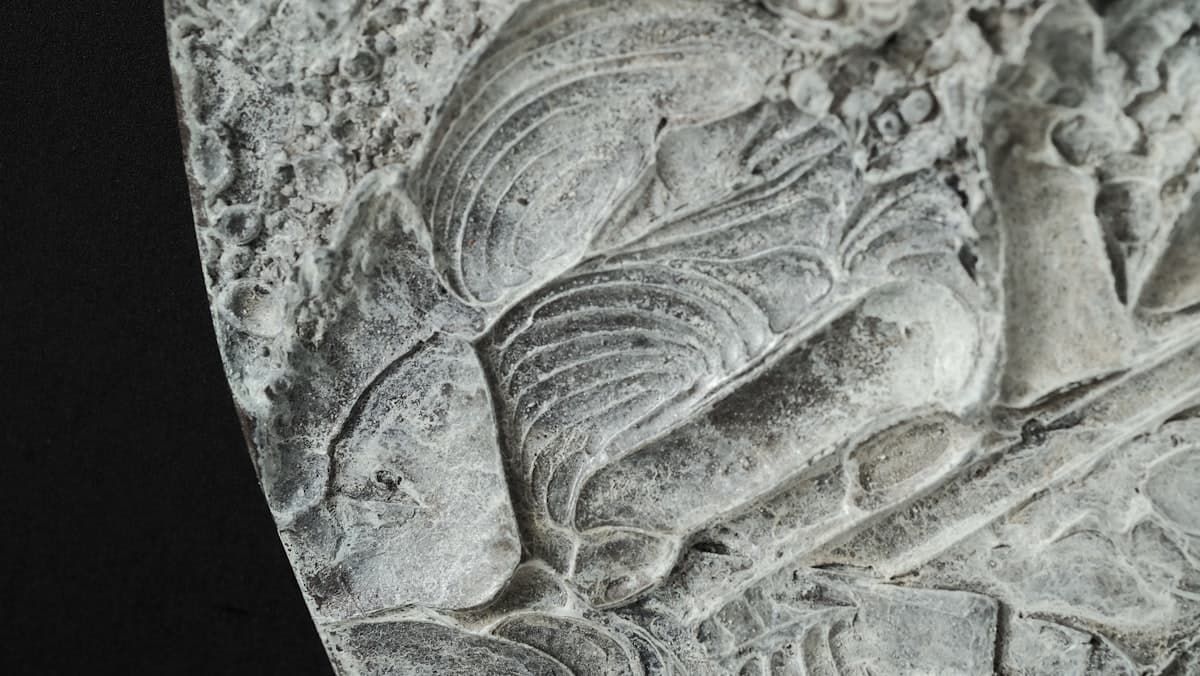
Kom el-Dikka is the only excavated urban site from ancient Alexandria visible above ground. What you see is Roman-era, not Ptolemaic, but Romans built on Greek foundations and the site contains layers that span six centuries. The odeon, a small theater with thirteen rows of marble seating, was built in the second century AD and is one of the best-preserved Roman theaters in the world. It seated about 700 people. For scale: the Great Theater of Epidaurus in Greece, the one everyone photographs, seated 14,000. This was not a civic showpiece. It was a neighborhood venue, which makes it more interesting, not less.
The adjacent excavations include a Roman-era lecture hall complex, the only one ever found in Egypt, with rows of stone benches arranged like a classroom. There were thirteen such halls here. Scholars believe this was part of the late antique university culture that made Alexandria still academically significant even after the Library's decline. Students came here to study Neoplatonist philosophy in the fourth and fifth centuries AD, which means people sat in these rooms arguing about Plato while Christianity was reorganizing the empire around them.
The Catacombs of Kom el-Shoqafa, discovered by accident in 1900 when a donkey fell through the ground, are the most explicit visual record of what the Greeks in Egypt Alexandria history actually looked like at its end. Built in the first and second centuries AD for a wealthy family and later expanded for community use, the catacombs present Egyptian funerary iconography rendered in Greek sculptural style. Anubis, the jackal-headed god of embalming, stands at the entrance to the main burial chamber wearing Roman armor. This is not syncretism as an abstract concept. This is syncretism as a specific artistic decision made by a specific craftsman whose name we do not know, in a city where three civilizations had been sharing space for three hundred years.
---
Pompey's Pillar, Which Has Nothing to Do With Pompey
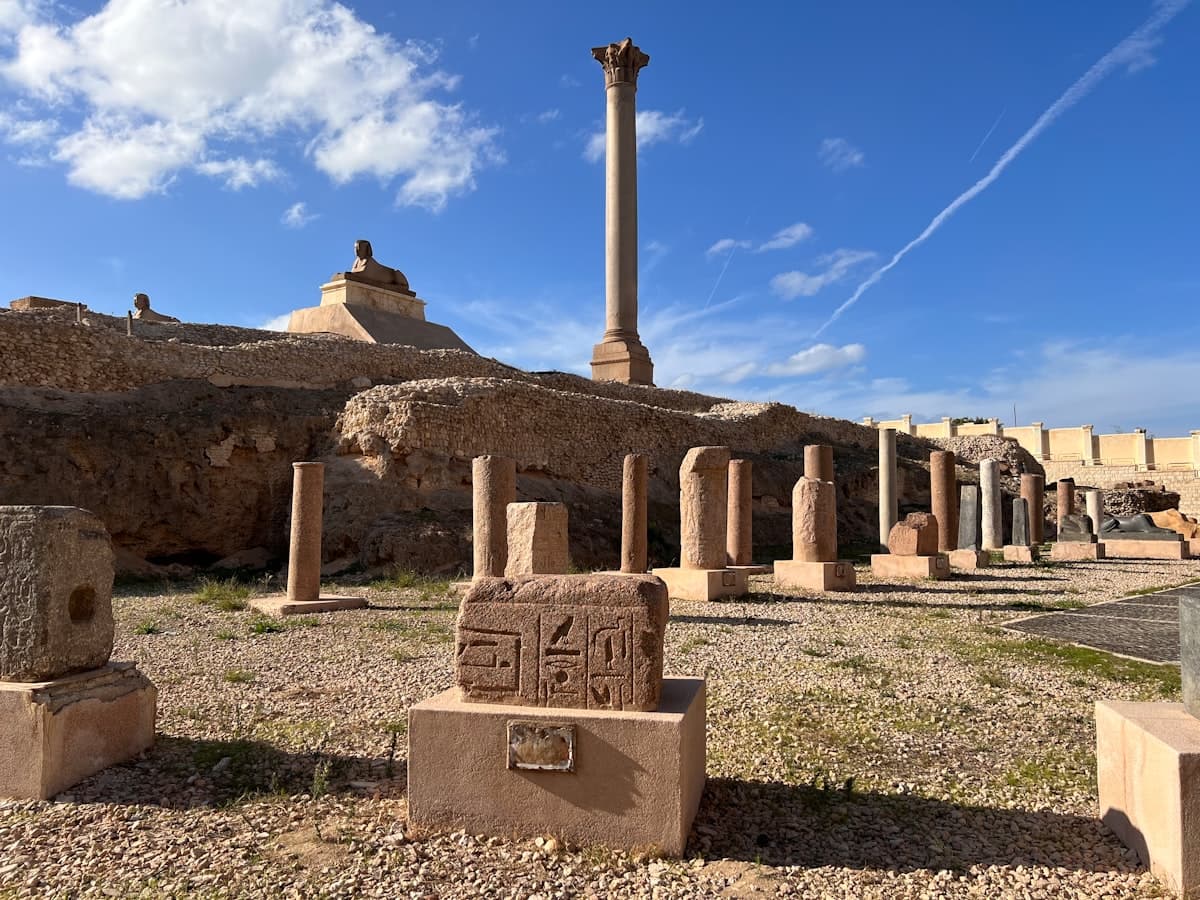
The single most visible Greek-Egyptian monument in Alexandria is misnamed. The 27-meter red granite column standing on a hill in the Karmouz district has been called Pompey's Pillar since medieval European travelers assumed it was erected to honor Pompey the Great, who was indeed murdered on Egyptian shores in 48 BC. It was not. An inscription on the base, which those same travelers failed to read, clearly states it was erected in honor of the emperor Diocletian, around 297 AD, by the prefect Publius. It is the largest ancient monolith in Egypt outside of Luxor and Karnak. The sphinx statues flanking its base were brought from a Ptolemaic temple elsewhere in the city.
The hill itself is the mound of the Serapeum, the temple complex dedicated to Serapis that was one of the wonders of the ancient world. When the Christian mob destroyed it in 391 AD, led by Bishop Theophilus acting on imperial orders, they found the cult statue of Serapis, a seated figure of gold and ivory so large it touched both walls of the inner sanctuary, and burned it in the forum. The complex underneath the hill, accessible via excavated tunnels, contains niches that once held scrolls from a branch of the Great Library. These are the catacombs of ideas rather than bodies.
---
The Connections
Alexandria's Greek history does not end with the Roman conquest in 30 BC. It continues through Byzantine Alexandria, where Greek remained the language of administration and philosophy until the Arab conquest in 641 AD. It continues through Coptic Alexandria, where the Coptic language itself is Greek-alphabet Egyptian, a direct linguistic consequence of three centuries of Ptolemaic rule. The Coptic Museum in Cairo holds papyri written in a script that would not exist without the Greeks.
The Arab city built over Greek Alexandria was not ignorant of what lay beneath. Arab geographers of the ninth and tenth centuries wrote detailed accounts of ancient monuments they could still see. The lighthouse at Pharos was still partially standing and being used as a navigational reference in the twelfth century. When it finally collapsed after earthquakes in 1375, Sultan Qaitbay built a fortress on its foundations using the fallen stones. That fortress still stands. You can walk its ramparts and look at the harbor where Cleopatra's palace lies under thirty feet of water.
The modern city's Greek community, which numbered 100,000 as recently as the 1950s, was largely expelled following the 1956 Suez Crisis and the subsequent nationalization policies of Nasser. The Greek Orthodox Patriarchate of Alexandria, one of the oldest Christian institutions on earth, still operates from the city. The Pastroudis café on El-Horreya Road, opened by a Greek family in 1923 and frequented by Constantine Cavafy, Alexandria's greatest poet and a Greek-Egyptian himself, closed in 2018. Cavafy wrote his poems about Greek kings in Egypt from an apartment two streets away. The apartment is now a museum. Go there.
---
Common Mistakes
Spending too much time on Pompey's Pillar and not enough on Kom el-Dikka. The pillar is dramatic but contextless. Kom el-Dikka has the excavated streets, the lecture halls, the human scale. Give it twice the time.
Skipping the Cavafy Museum. This is not a typical archaeological site but it is essential to understanding Greeks in Egypt as a living, twentieth-century story, not just an ancient one. The poet's apartment, preserved nearly intact, connects you to the last generation of Alexandrian Greeks. Entry is minimal and it is almost never crowded.
Doing the harbor glass-bottom boat tour without research. The quality of operators varies extremely. Some boats go over genuinely significant submerged sites with decent commentary. Others are glorified fishing trips. Ask at your hotel specifically about the operators who work with the Franck Goddio Foundation's mapping data.
The Alexandria National Museum over the Greco-Roman Museum. The National Museum in the Italian-style palazzo on Tariq al-Horreya is often recommended for first-timers. It is fine, well-organized, and covers a broad sweep. But if your interest is specifically Greeks in Egypt, the Greco-Roman Museum's depth of collection on Ptolemaic and Roman-era material has no equivalent. Now that it has reopened after renovation, it is the right choice.
Coming for only one day from Cairo. The overnight train from Cairo drops you in Alexandria in the morning. Most tour groups allow six hours. This is enough to see Pompey's Pillar and feel vaguely aware that Alexander founded something here. It is not enough to understand anything. Stay two nights minimum.
The sound and light show at Kom el-Dikka, when it operates seasonally, costs EGP 280 and tells you less than thirty minutes with a good guidebook. The odeon is more interesting in daylight when you can see the marble grain and the construction joins. Skip the show.
Ignoring the living Greek Orthodox churches. The Cathedral of St. Mark in Shatby, the seat of the Greek Orthodox Patriarchate, is an active religious institution with architecture and frescoes that make the continuity of Greek Alexandria visceral. It costs nothing to visit during non-service hours and almost no tourists go.
---
Practical Tips
Alexandria's sites are spread across the city and there is no single archaeological zone. Budget for taxis or negotiate a half-day driver, EGP 400 to 600, who knows the locations. Many drivers do not.
The Greco-Roman Museum closes on Mondays. Do not arrive on a Monday.
The catacombs are genuinely dark and cool, around 18°C year-round, so bring a light layer regardless of outside temperature. They are also partially flooded at the lowest level, which is not accessible but creates humidity throughout.
For the underwater sites, contact the Alexandria Underwater Museum project through the Egyptian Ministry of Tourism and Antiquities website before your trip. Glass-bottom boat access to the eastern harbor archaeological zone requires coordination and the schedule is inconsistent.
The best falafel and liver sandwiches in Alexandria are on Mohamed Ahmed Street near Raml Station, EGP 15 to 25 per sandwich. Eat there before or after the Greco-Roman Museum. The distance is walkable.
Alexandria in December and January has real rain and real cold by Egyptian standards. The Corniche walk is atmospheric in this weather but the sites can be slippery. Bring shoes with grip.
The Cavafy Museum, at 4 Sharm El-Sheikh Street in the Greek quarter (Attarine district), is open Saturday through Thursday 10am to 3pm. Entry is EGP 20. It is run by the Greek consulate and operates on irregular funding, so confirm before going.
Frequently Asked Questions
The Weekly Dispatch
More on Egypt, every Friday.
Cultural depth and places most guides never mention.
No spam. Unsubscribe anytime.