Greeks in Egypt: The Alexandria History Guide You Actually Need
Alexandria was Greek before it was Egyptian. For 300 years, the city's official language was Greek, its kings were Macedonian, and its greatest library burned twice. Here is what survives.
Quick Facts
- Best time to visit
- October through April; Mediterranean temperatures drop to 15-22°C, light is excellent, and sites are not at peak heat. November and March are ideal for low crowds combined with good weather.
- Entrance fee
- Graeco-Roman Museum EGP 200 (approx $4 USD); Catacombs of Kom el-Shoqafa EGP 180 (approx $3.75 USD); Pompey's Pillar site EGP 100 (approx $2 USD); Bibliotheca Alexandrina EGP 100 (approx $2 USD) plus EGP 60 for Antiquities Museum inside
- Opening hours
- Most state sites 9am to 4pm daily; Bibliotheca Alexandrina 10am to 7pm Saturday to Thursday, closed Friday
- How to get there
- Train Cairo to Alexandria Sidi Gaber station: EGP 55 to 180 depending on class, 2 to 2.5 hours. Within Alexandria: tram EGP 2, taxis between sites EGP 25 to 40.
- Time needed
- Minimum two full days to cover the Graeco-Roman Museum, Catacombs, Serapeum site, and Bibliotheca Alexandrina properly. One-day visits leave major gaps.
- Cost range
- Budget EGP 600 to 900 per day including transport and all entrance fees; mid-range EGP 1,800 to 2,800 per day including accommodation and a seafood lunch on the Corniche
Greeks in Egypt: The Alexandria History Guide You Actually Need
Alexander the Great spent exactly one winter in Egypt. He never saw the city that bears his name completed, never walked its colonnaded streets, never visited the library that would make it the intellectual capital of the ancient world. He died in Babylon in 323 BC, age 32, and was buried, according to most ancient sources, in the city he had sketched in the sand on the Mediterranean coast before riding east to conquer Persia. His tomb has never been found.
This is the defining fact of Greek Alexandria: it was built as a monument to a man who was already dead, by a general who had stolen his body mid-funeral procession. Ptolemy I hijacked Alexander's funeral cortege in Syria, brought the corpse to Egypt, and used proximity to Alexander's remains to legitimize three centuries of Macedonian rule over one of the most ancient civilizations on earth. Cynical, brilliant, and entirely Greek.
Quick Facts
Best time to visit: October through April, when Mediterranean heat drops to 15-22°C and the city's particular blue light is at its best. Alexandria in August is 35°C and crushingly humid.
Key sites and entrance fees: Bibliotheca Alexandrina: EGP 100 (approx $2 USD) for the main library and exhibitions; additional fees for specific museums inside (the Antiquities Museum costs EGP 60 extra, approx $1.25 USD) Catacombs of Kom el-Shoqafa: EGP 180 (approx $3.75 USD); no student discount currently available Graeco-Roman Museum: EGP 200 (approx $4 USD); reopened after extensive renovation in 2023 Pompey's Pillar site: EGP 100 (approx $2 USD) Royal Jewelry Museum (tangential but relevant): EGP 100 (approx $2 USD)
Opening hours: Most state-run sites open 9am to 4pm daily; Bibliotheca Alexandrina opens 10am to 7pm Saturday through Thursday, closed Friday.
How to get there: Trains from Cairo Ramses Station to Sidi Gaber (Alexandria) cost EGP 55 to 180 depending on class and take 2 to 2.5 hours. From Cairo by car or microbus, budget EGP 80 to 120 one way. Within Alexandria, the tram costs EGP 2 and connects most major sites along the Corniche. Taxis between sites rarely exceed EGP 40.
Time needed: A serious engagement with Greek Alexandria requires two full days minimum. One day done fast leaves you with surface impressions and photographs of labels you did not have time to read.
Cost range: Budget EGP 600 to 900 per day including transport and entrance fees; mid-range EGP 1,800 to 2,800 per day including a decent seafood lunch on the Corniche.
Why This Place Matters
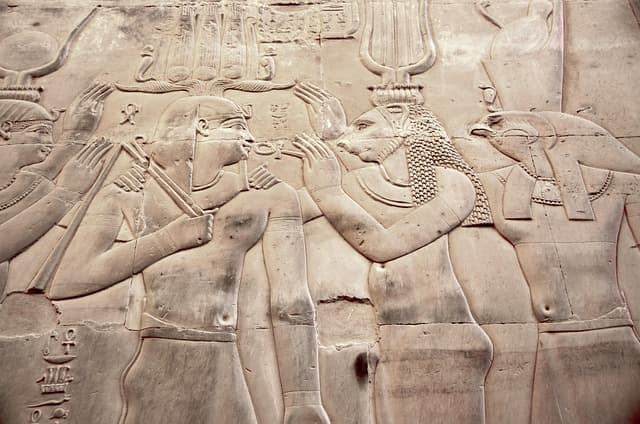
The question most visitors do not ask is why Egypt tolerated Greek rule at all. The answer is that by 332 BC, Egypt had already spent a century under Persian occupation, which the Egyptians considered genuinely catastrophic. Alexander arrived as a liberator, performed the correct rituals at Memphis, was declared Pharaoh by Egyptian priests, and was recognized as the son of Amun at the Siwa Oasis oracle. He understood that legitimacy in Egypt required Egyptian costume, not Greek imposition. His successors, the Ptolemies, understood this even better: they built temples to Egyptian gods in Egyptian style, at Edfu, at Dendera, at Philae, all constructed during the Ptolemaic period, all covered in hieroglyphs, all orthodox in their Egyptian theology. The Greeks did not replace Egyptian civilization. They wore it.
But Alexandria itself was a different project. Designed by the architect Dinocrates of Rhodes, it was explicitly a Greek city: a grid plan, a gymnasium, temples to Olympian gods, a royal quarter that occupied one-third of the city's total area. The indigenous Egyptian population was largely excluded from the central districts. The city had three official populations: Greeks, Jews, and Egyptians, each with distinct legal status, distinct neighborhoods, and distinct rights. This internal hierarchy would generate three centuries of tension, two major Jewish revolts, and eventually a Christian community that developed in the Egyptian neighborhoods before spreading everywhere else.
The Greeks in Egypt left behind a problem that still shapes the country: a city whose identity was cosmopolitan by design, pluralist by necessity, and perpetually contested by everyone who claimed it.
The Graeco-Roman Museum: What Survived and Why
The Graeco-Roman Museum on El-Mathaf El-Romani Street is where this historical complexity becomes physical. Reopened after seventeen years of renovation, it holds roughly 40,000 objects spanning the period from 331 BC to 395 AD, meaning everything from Alexander's arrival to the moment Christianity became the Roman Empire's official religion.
The piece that stops most people, and that most guides fail to explain properly, is the Serapis head. Serapis was an entirely invented deity, created by Ptolemy I around 300 BC as a deliberate theological fusion: the Egyptian gods Osiris and Apis combined with Greek gods Zeus and Hades, given a Greek face with Egyptian attributes. The plan was to give Greeks and Egyptians a shared god. It mostly worked. Serapis worship spread across the Mediterranean and lasted six centuries. The philosopher Julian wrote about Serapis temples in Antioch, in Rome, in Athens. The Serapeum of Alexandria, built to house the cult statue, was one of the largest temple complexes in the ancient world.
The museum's collection of funerary portraits from the Fayum, the painted wooden panels inserted into mummies during the Roman period, are among the most haunting objects in Egyptian art. They are essentially Roman-style portraits on Egyptian mummies, showing subjects in Roman dress with Egyptian afterlife theology applied to their bodies. They are a precise visual record of a culture that had stopped choosing between identities.
Spend at least 90 minutes here. The new display design after the renovation is genuinely clear and the labels, unusually for Egyptian state museums, are specific and informative.
The Catacombs of Kom el-Shoqafa: Where Three Religions Shared a Tomb
The catacombs were discovered in 1900 when a donkey fell through the ground. What it fell into was a three-tiered funerary complex carved from the rock in the second century AD, designed for a single wealthy Alexandrian family and eventually expanded to hold an estimated 300 bodies.
The architecture is the reason to visit. The main burial chamber is built in Roman architectural style, covered in Egyptian religious imagery, with Greek mythological figures incorporated into the decorative program. Specifically: the figure of Anubis, the Egyptian god of the dead, is depicted wearing Roman military armor. The god Thoth appears in Roman dress. The god Set is shown with a Greek serpent body. This is not artistic confusion. This is a family that had absorbed three hundred years of multicultural Alexandria into a single tomb and saw no contradiction in it.
The so-called Hall of Caracalla nearby contains the bones of horses and humans, likely the victims of a massacre ordered by the Emperor Caracalla in 215 AD, who killed an unknown number of young Alexandrian men after the city's population mocked him in their famous satirical street theater. Alexandria's Greeks were not diplomatically cautious.
Descend all three levels. The lowest level, flooded periodically in the past, is now pumped dry and accessible. Most tour groups stop at the first chamber. The third tier, the actual burial loculi carved into the rock, gives you the clearest sense of scale.
Pompey's Pillar: A Corrected Misunderstanding
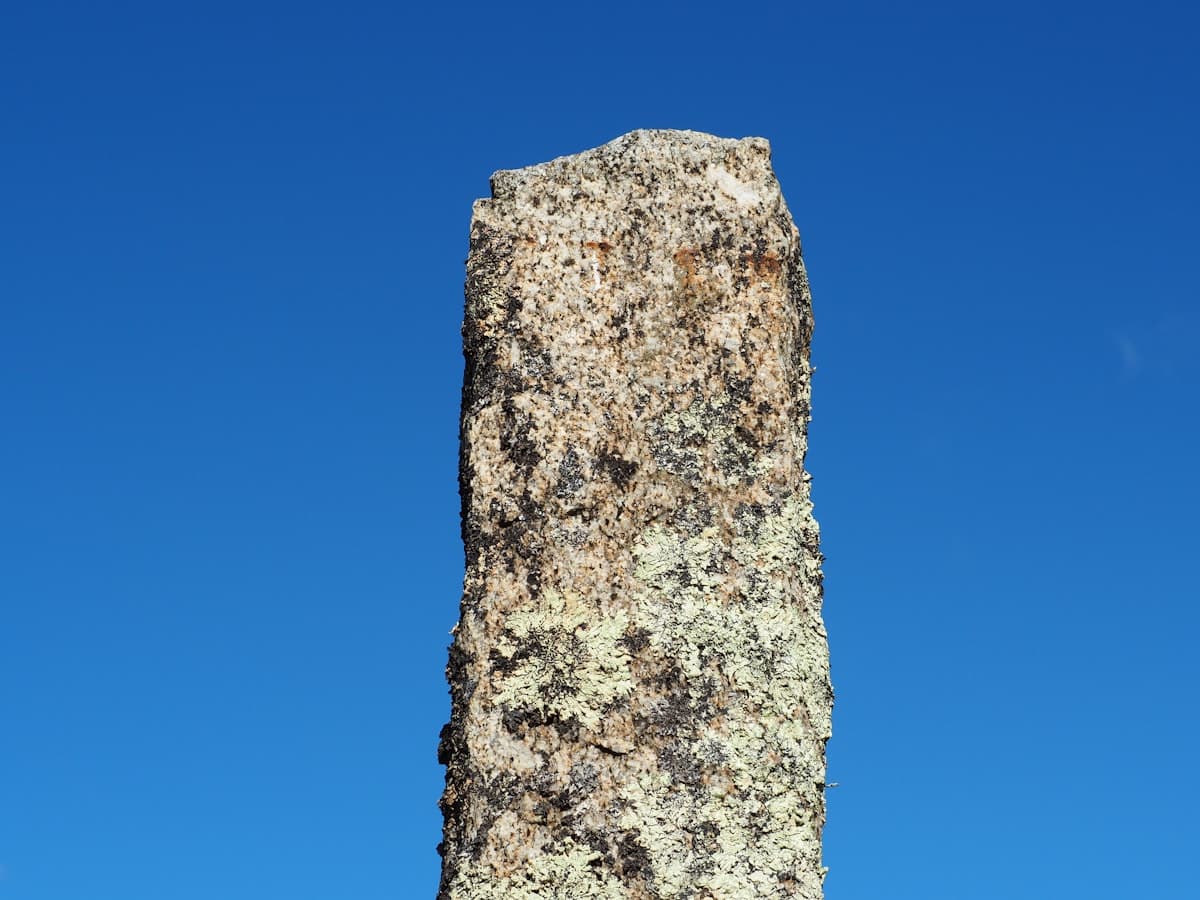
Pompey's Pillar has nothing to do with Pompey. The Roman general Pompey was indeed killed in Egypt in 48 BC, stabbed on the beach by agents of Ptolemy XIII as Julius Caesar was pursuing him, but the 27-meter red Aswan granite column you can see at the Serapeum site was erected in 297 AD to honor the Emperor Diocletian, who brought grain to a starving Alexandria after putting down a revolt. Medieval Crusaders who visited Alexandria assumed the nearby tomb contained Pompey's head, and the name stuck for centuries despite being entirely wrong.
The column itself is worth noting for structural reasons: it is the largest single-piece column standing in Egypt, cut from a single piece of Aswan granite and transported 900 kilometers north. Two sphinxes from Ptolemaic-era temples flank its base. The site around it was the Serapeum, destroyed by a Christian mob in 391 AD under the direction of the Bishop Theophilus, who had obtained an imperial edict to demolish pagan temples. The destruction of the Serapeum is sometimes, incorrectly, conflated with the burning of the Library of Alexandria. They are different events separated by decades, and the Library's actual end is still debated by historians.
The site is honest about what it is: ruins, some sculpture, a single extraordinary column, and a view of a neighborhood that has grown up entirely around the ancient footprint. The underground galleries beneath the Serapeum, accessible from the site, are cool and well-preserved. Go there. The surface is less interesting.
The Connections: Greek Alexandria Inside Islamic and Coptic Egypt
The Library of Alexandria burned at least twice: once, partially, when Julius Caesar set fire to ships in the harbor in 48 BC and flames spread to waterfront buildings, and once more substantially in the civil war of 270s AD during the reign of Aurelian. By the time the Arab general Amr ibn al-As conquered Alexandria in 641 AD, the library as a functioning institution had already been in decline for two centuries. The Arab-burned-the-library story, traced to a single twelfth-century source, is almost certainly false. This matters because the story is still used, in Egypt, to generate a specific kind of sectarian historical grievance. The actual history is more complicated and more interesting.
The Coptic Orthodox Church traces its founding to Saint Mark the Evangelist, who arrived in Alexandria around 49 AD, meaning Christianity took root in the same city where Ptolemaic Greek theology was still at its height. The theological school of Alexandria, which shaped the doctrines of the entire early Christian church, including the Council of Nicaea in 325 AD, emerged from a specifically Greek intellectual tradition. Clement of Alexandria and Origen, the school's most important figures, wrote in Greek, thought in Greek philosophical categories, and applied them to Christian theology. The Coptic church is in this sense a direct descendant of Greek Alexandria, which most Coptic Christians and most tourists are entirely unaware of.
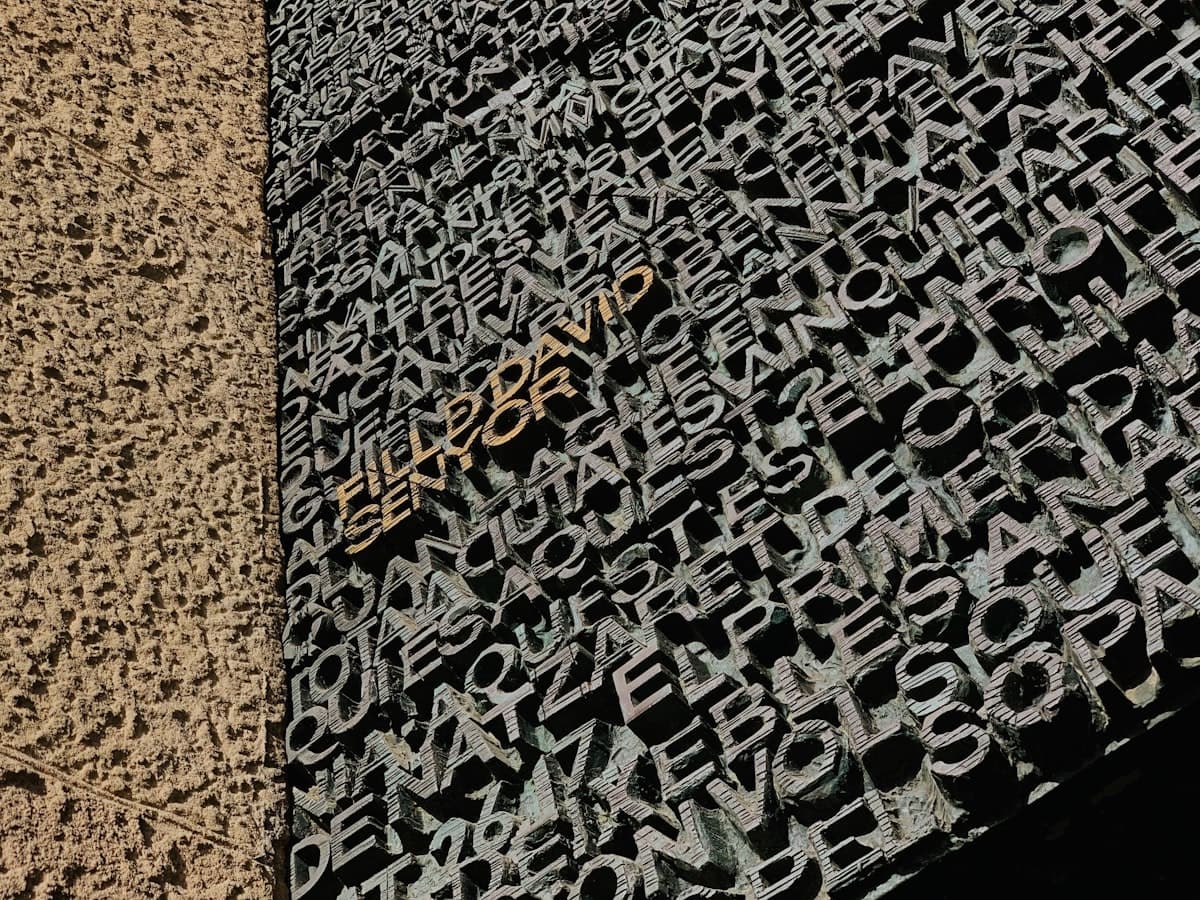
The modern Bibliotheca Alexandrina, opened in 2002, was built on what archaeologists believe is the approximate site of the ancient library's annex, the Brucheion. Its construction required excavating through Roman, Byzantine, and Arab-era layers simultaneously. Artifacts from all three periods are displayed in the on-site Archaeological Museum. The building itself, designed by the Norwegian firm Snohetta, is worth an hour regardless of your interest in the exhibitions. Its exterior disc, covered in 4,500 square meters of Aswan granite carved with characters from 120 different writing systems, is a deliberate statement about Alexandria's identity as a place where alphabets collide.
Common Mistakes
Skipping the Graeco-Roman Museum because it looks like a regional museum. It is not. It is one of the five most important collections of Hellenistic-period artifacts in the world, and it was closed so long that many guides still omit it from their itineraries out of habit. The reopened building is genuinely good.
Taking a guided tour of the catacombs without asking your guide specifically about the syncretic iconography. Generic guides describe the layout. The theological complexity of the decorative program, Roman armor on Anubis, is the entire point. If your guide cannot discuss it, you are paying for directions, not interpretation.
Spending money on the Alexandria Sound and Light Show at the Citadel of Qaitbay. It costs EGP 250, tells you nothing specific, and the citadel itself, built in 1477 by the Mamluk Sultan Qaitbay on the exact site of the ancient Pharos lighthouse using stones from the collapsed lighthouse as building material, is far more interesting to walk in daylight. Visit the citadel in the morning instead.
Confusing the ancient city's geography with the modern city. Ancient Alexandria extended significantly further east than the current city center and sat on a different shoreline. The royal quarter, the Soma where Alexander was buried, and the main harbors are all now either underwater or built over. The Alexandria that survives above ground is Roman-era and later. The Greek city is largely beneath you.
Rushing Alexandria as a day trip from Cairo. The train journey each way takes two and a half hours, which leaves you five hours maximum, and the Graeco-Roman Museum alone warrants ninety minutes. Stay at least one night. The city changes completely after dark, and the seafood restaurants along Bahri and in the Anfushi neighborhood serve the best fried calamari in Egypt.
Missing the underground galleries beneath Pompey's Pillar. The surface of the Serapeum site is underwhelming. The rock-cut galleries below it, used for sacred animal burials during the Ptolemaic period, show the Egyptian religious substrate beneath the Greek institutional overlay. Most visitors photograph the column and leave without descending.
Assuming the Bibliotheca Alexandrina is primarily for tourists. It functions as a working research library with 500,000 volumes and a serious digital archive. The exhibitions on any given day reflect genuine curatorial decisions about Egyptian and Mediterranean intellectual history, not tourist-facing content. Treat it as a library, not a monument.
Practical Tips
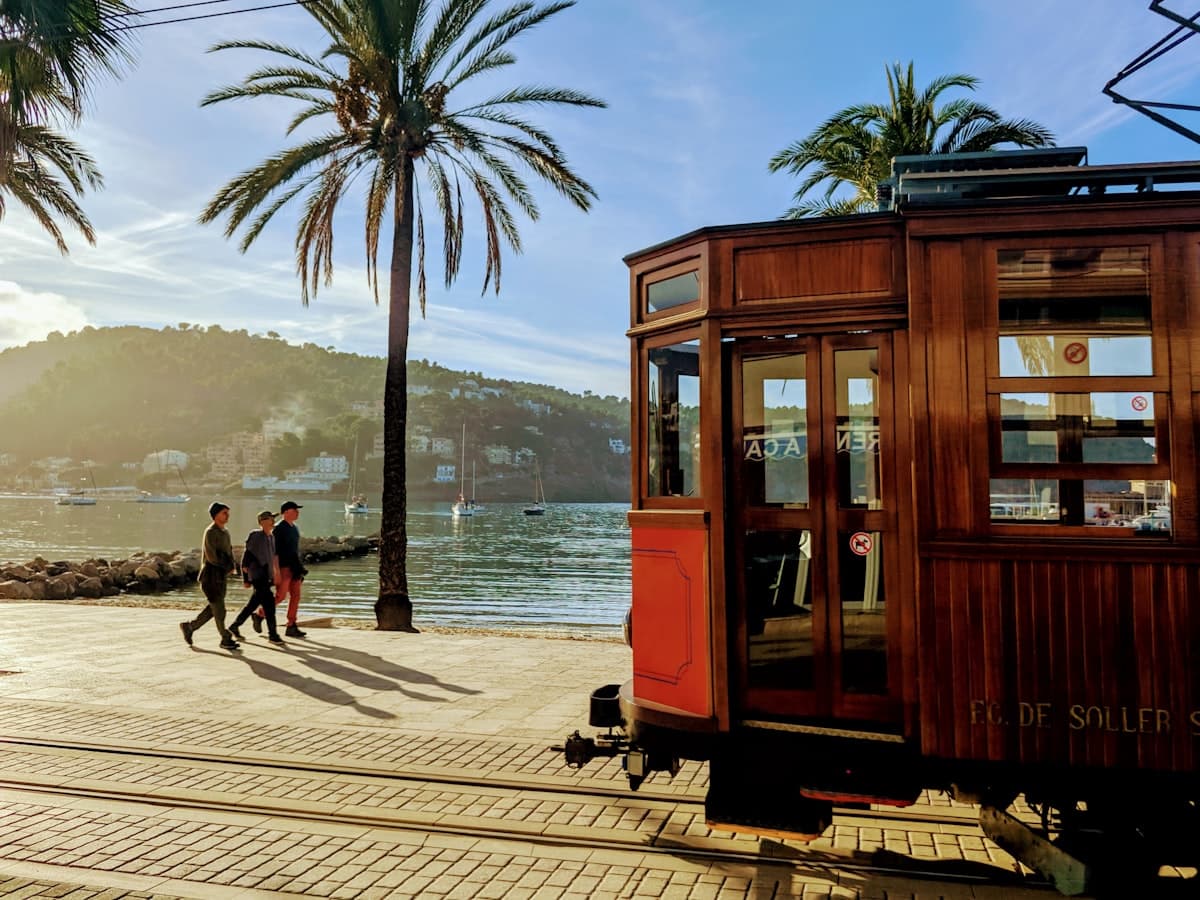
Alexandria's Mediterranean climate means morning fog is common from October through February. The fog typically burns off by 10am and reveals a particular quality of diffused light that the city's stone, a pale cream limestone in most of the older neighborhoods, reflects remarkably well. Photograph the Corniche and the older buildings of Raml Station before noon.
The tram system, one of the oldest operating tram networks in Africa, dating to 1863, connects Raml Station to Sidi Gaber and runs parallel to most of the sites. It costs EGP 2 and runs regularly. It is slow, which is useful: the route gives you a genuine cross-section of Alexandrian street life that no taxi ride replicates.
Book Bibliotheca Alexandrina entrance online if visiting during Egyptian school holiday periods, which cluster around October, January, and March. The library becomes genuinely crowded with school groups and the exhibitions feel cramped. A weekday morning in November is close to ideal.
For food near the sites: Kadoura restaurant on the Corniche near Raml Station has been serving fried fish and mezze since 1967. It is not a tourist restaurant. Order the gambari and the torly. Expect to spend EGP 300 to 500 per person including drinks.
If your interest is specifically in the archaeological layers of Greco-Roman Alexandria rather than the sites themselves, the Alexandria National Museum on Tariq el-Horreya Street holds artifacts organized chronologically from Pharaonic through Islamic periods and gives the most complete picture of the city's stratigraphic identity. Its Greek and Roman rooms are less celebrated than the Graeco-Roman Museum but often less crowded and worth an additional two hours.
Frequently Asked Questions
The Weekly Dispatch
More on Egypt, every Friday.
Cultural depth and places most guides never mention.
No spam. Unsubscribe anytime.