Italian Community Alexandria Egypt: A History and Cultural Guide
At its peak, Alexandria had 60,000 Italians. They built the city's tramways, bakeries, and hospitals. Almost none remain. Here is where to find what they left behind.

Quick Facts
- Best time to visit
- October through April. Mediterranean humidity drops, crowds are Egyptian domestic tourists rather than summer beach-goers, and the archival institutions run full hours. March is particularly good for light.
- Entrance fee
- Latin Cemetery Chatby: free. Cathedral of Saint Catherine: free. Catacombs of Kom el-Shoqafa (broader context): EGP 180 approx $6 USD. Bibliotheca Alexandrina: EGP 70 approx $2.30 USD (skip for this specific itinerary).
- Opening hours
- Churches: generally 8am to 12pm and 3pm to 6pm, closed during active services. Cemetery: nominally 9am to 4pm but gate access variable. Consulate cultural programs: by schedule, check ahead.
- How to get there
- From Cairo: air-conditioned express train from Ramses Station, 2 hours 15 minutes, EGP 85 to 120 second class. From Borg El Arab Airport: private taxi to central Alexandria EGP 250 to 350. Within Alexandria: tram along Corniche EGP 3, taxis metered or negotiated at roughly EGP 20 to 50 for short city trips.
- Time needed
- Two full days to cover the Italian heritage sites meaningfully. One focused day for the Cathedral, the Italian Consulate building, and Chatby Cemetery.
- Cost range
- Budget EGP 600 to 900 per day including accommodation, food, and transport. Mid-range EGP 1,800 to 3,000 per day.
Quick Facts
Best time to visit: October through April, when Mediterranean light is soft and the city is not baking.
Entrance fees: The Greek Orthodox Patriarchate museum costs approximately EGP 50 (under $2 USD). Most churches listed here are free but expect a small donation request. The catacombs of Kom el-Shoqafa, relevant to the broader cosmopolitan story, cost EGP 180 (approx $6 USD) for foreigners.
Opening hours: Churches are generally open 8am to 12pm and 3pm to 6pm. The Italian Consulate cultural events are by appointment or scheduled programming. Verify before visiting as hours shift seasonally.
How to get there: Fly into Borg El Arab Airport, then take a private taxi to central Alexandria for approximately EGP 250 to 350. From Cairo, the Spanish train (air-conditioned express) departs Ramses Station and arrives in two hours and fifteen minutes for roughly EGP 85 to 120 second class. Within Alexandria, trams still run along the Corniche for EGP 3 a ride, which is precisely the kind of Italian-engineered absurdity we will get to shortly.
Time needed: Two full days to cover the main sites meaningfully. One day if you are only tracing the Italian quarter and the Catholic institutions.
Cost range: Budget EGP 600 to 900 per day. Mid-range EGP 1,800 to 3,000 per day including a decent hotel in the Ramleh Station area, meals at old-school Alexandrian restaurants, and transport.
---
Why This Place Matters
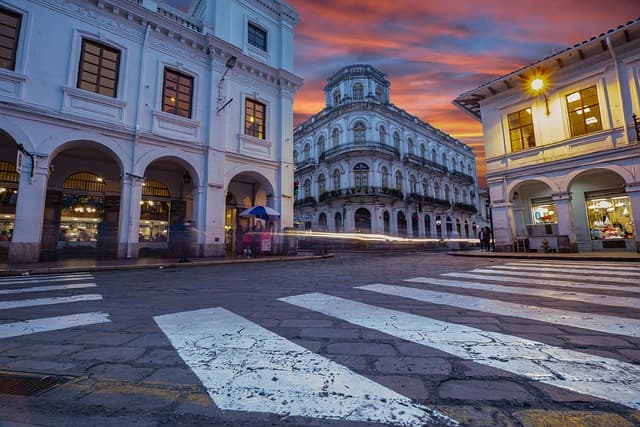
At the moment the Italian community of Alexandria reached its numerical peak in the 1920s, there were roughly 60,000 Italians living in the city. They were the largest single European group, outnumbering the Greeks, the British, and the French. They ran the bakeries and the pastry shops, the tram network, the hospitals, the banks, and the construction firms that built the boulevards you still walk today. The Italians were not colonial administrators in the British sense. They were workers, merchants, and craftsmen who arrived and simply never left, for three and four and sometimes five generations.
By 1971, after Nasser's nationalizations and the expulsions of foreign nationals that began in 1956 and continued through the 1960s, fewer than a few hundred remained. The community that had taken a century to build dissolved in fifteen years.
What makes the Italian community Alexandria Egypt history so specifically strange and poignant is that almost nothing about it was planned. Italy did not colonize Egypt. There was no systematic imperial project. Individual Italians from Trieste, from Livorno, from Calabria, from Sicily arrived following the cotton boom of the mid-nineteenth century and discovered that Alexandria was one of the most cosmopolitan cities on earth, a place where you could conduct business in six languages, marry across religious lines with relative ease, and die in a Catholic hospital attended by an Egyptian doctor trained in Rome. They built a parallel city inside the city. Its bones are still visible if you know where to look.
---
The Cosmopolitan Quarter: What You Will Actually See
Begin at Ramleh Station, Alexandria's central tram terminus, and understand that you are standing inside an Italian engineering project. The Alexandria tramway system was designed and built in 1860 by a Belgian-Italian consortium and remained the primary intraurban transit system for over 150 years. The cars that rattle past you today are not the original rolling stock, but the routes have barely changed. The tracks themselves were relaid multiple times on the original Italian survey lines.
Walk south from Ramleh along Nabi Daniel Street. The street is named for a mosque that local legend insists marks the tomb of Alexander the Great, which is almost certainly wrong but has generated serious archaeological excavations nonetheless. Halfway down, you will find the Italian Consulate General, housed in a building that dates to the early twentieth century and whose interior courtyard contains ironwork done by Alexandrian craftsmen trained in workshops established by Italian immigrants in the 1880s. The Consulate runs occasional cultural programming and houses archival photographs of the community at its height. These are not widely publicized. Ask at the desk.
Continue to the Catholic Cathedral of Saint Catherine on Gharb el-Batateekh Square, completed in 1833 and rebuilt and expanded through the 1890s. This was the spiritual center of the Italian community. The masses were in Italian. The confessions were in Italian. The priests came from Rome and from Milan and from Naples and they stayed until the expulsions made staying impossible. Inside, the ceiling frescoes show a distinctive combination of Roman Catholic iconography and Alexandrian light: pale gold backgrounds that look nothing like European church painting and everything like the particular color of the Mediterranean sky in October. The building is still active, still Catholic, and still holds mass. Sit in it for twenty minutes and pay attention to the faces in the pews.
The Cemeteries: Where the Full Story Is Told
The Latin Cemetery at Chatby is one of the least visited and most important sites in all of Alexandria. It sits adjacent to the Greek and Jewish cemeteries in the Chatby district, and together these three burial grounds are the physical record of what cosmopolitan Alexandria actually was. The Latin Cemetery contains Italian family tombs dating from the 1820s onward. The names on the stones are a directory of the community: Schiavoni, Tomasini, Morpurgo, Bolognesi, Comino. Many of the inscriptions are bilingual, Italian and Arabic. A significant number include Arabic epithets that are indistinguishable in tone and phrasing from the Islamic funerary inscriptions on the walls of any Mamluk tomb in Cairo. People who lived in Alexandria for three generations absorbed the city's rhythms of mourning and remembrance regardless of which God they prayed to.
The cemetery is officially open but the gate is not always unlocked. Knock on the adjacent building and someone will generally let you in. There is no entrance fee. Budget ninety minutes. The light there in the late afternoon comes through mature eucalyptus trees in long horizontal shafts and makes the white marble look briefly like bone.
---
The Institutions They Built and What Became of Them
The Italian Hospital, built in 1898 on what is now Port Said Street, operated as a functioning medical institution serving the entire Alexandrian population regardless of nationality or religion until its nationalization in 1961. It is now a general public hospital under Egyptian state administration. The original facade is partially intact. The Italian inscription above the main entrance, "Ospedale Italiano di Alessandria d'Egitto", was plastered over at some point after nationalization and has partially reappeared as the plaster erodes. You can read fragments of it if you know to look.
The Italian schools are a different story. At its peak, the Italian community operated three separate school systems in Alexandria: one for workers' children, one for middle-class families, and a liceo that prepared students for university admission in Italy. The liceo building on Fouad Street still stands and still functions as a school, now under Egyptian administration, teaching an entirely Egyptian curriculum. The wrought iron gate with the Italian royal crest, installed in 1912, is still in place. It has not been removed. It has simply been repainted so many times that the crest is now more impression than image.
The Italian community also established the Club Alessandrino Italiano, a social institution that served as the primary gathering point for community events from its founding in 1861 until the 1960s. The building was requisitioned after 1956 and its current status as a partly private, partly institutional space makes interior access complicated. The exterior on Mohamed Ahmed Street is intact and worth seeing for its cast iron balconies.
---
The Connections
The cosmopolitan Alexandria that the Italians inhabited was itself built on layers that went back considerably further than the nineteenth century. The grid of streets that Italian engineers surveyed in the 1850s followed, in several cases, the Ptolemaic street plan of the original city. The canal that supplied water to the Italian Hospital district followed a channel that Roman engineers had cut in the first century CE. Alexandria does not allow clean historical breaks.
The Italian presence in Alexandria also connects directly to the broader story of Egyptian modernization under Mohammed Ali and his successors. Mohammed Ali, who ruled Egypt from 1805 to 1848 and who was himself Albanian-born and Ottoman-appointed, deliberately recruited European technical expertise to build Egyptian infrastructure. Italians came early and in large numbers because the Mediterranean trade routes between Italian ports and Alexandria were old and well-established. The same ships that had carried Crusader pilgrims and Venetian merchants and Genoese bankers were carrying, by the 1830s, Sicilian masons and Livornese cotton brokers.
The Italian Jewish community within Alexandria deserves specific mention. Many of the most prominent Italian families in the city were Sephardic Jews whose ancestors had been expelled from Spain in 1492, settled in Livorno, and then followed the cotton trade to Egypt in the early nineteenth century. They occupied an unusual position: Italian nationals, Jewish by religion, Arabic-speaking in daily commerce, and Catholic in their schools because the Italian Catholic schools were the best available. The interweaving was total.
---
Common Mistakes
Spending your Alexandria time at the Bibliotheca Alexandrina instead of the neighborhoods. The Bibliotheca is a fine building and a real research institution, but it was completed in 2002 and tells you almost nothing about the cosmopolitan city this article covers. The EGP 70 entrance fee and the two hours you would spend inside are better used at Chatby Cemetery and the Cathedral of Saint Catherine combined.
Going to Montaza Palace and calling it a day. Montaza was a royal retreat. It is pleasant and the gardens are large, but it existed at the periphery of the Italian community's world, not at its center. It will not help you understand what you came to understand.
Assuming the churches are purely tourist sites. The Cathedral of Saint Catherine holds active masses. Show up dressed appropriately, which means shoulders and knees covered regardless of gender. Arriving in beach clothes and then being turned away is entirely avoidable.
Skipping the food thread. The Alexandrian pastry tradition, specifically the shops selling feteer and the European-style patisseries still operating in the Ramleh area, is a direct inheritance from the Italian and Greek communities. Trianon on Sa'ad Zaghloul Square has been operating since 1905, first under Italian management, then under Greek, then under Egyptian. Order the millefeuille. It is not a tourist confection. It is a surviving artifact.
Hiring a standard tour guide for this subject. The Italian community Alexandria Egypt history is not part of the standard Alexandrian tour narrative, which focuses on the Bibliotheca, Qaitbay Citadel, and the Catacombs. Most licensed guides do not know this material. Find instead an academic guide through the Alexandria and Mediterranean Research Center at the Bibliotheca Alexandrina, which maintains a roster of researchers who do walking tours on specific historical subjects.
Missing the Jewish Cemetery as a comparison point. The Jewish community's burial ground at the Chatby complex, adjacent to the Latin Cemetery, contains tombs of Italian Jewish families interred alongside Greek Jewish and Egyptian Jewish families. The funerary architecture is nearly identical across all three sections. Borders were porous in death as in life.
Arriving in summer. July and August in Alexandria are humid, crowded with Egyptian domestic tourists, and the archival and cultural institutions often run reduced hours. The city you want to experience, the layered, quiet, slightly melancholy Mediterranean city, requires cooler weather and emptier streets.
---
Practical Tips
The best base is the area around Ramleh Station in the Ibrahimeya district, which puts you within walking distance of most sites covered here. Hotels in this range from budget (EGP 600 to 800 per night) to mid-range (EGP 1,500 to 2,500). Avoid the resort strip toward Montaza unless you are specifically there for the beach.
The Alexandria and Mediterranean Research Center at the Bibliotheca Alexandrina maintains archives on the cosmopolitan city including Italian community records. Researchers can request access in advance by email. This is not a tourist service and should not be approached as one. Come with specific questions.
For street food, Alexandria's fuul and falafel stands are not Italian heritage but they are how you will eat between sites. Budget EGP 25 to 50 for a full breakfast at a street stand near Ramleh.
Photography inside active churches requires permission and sensitivity. The Cathedral of Saint Catherine generally permits discreet photography when services are not in progress. Ask.
If you read Italian or are researching seriously, the Italian Cultural Institute in Cairo holds documentation on the Alexandrian Italian community that is not available in Alexandria itself. A day trip from Cairo or a stop on the way is worth planning.
Frequently Asked Questions
The Weekly Dispatch
More on Egypt, every Friday.
Cultural depth and places most guides never mention.
No spam. Unsubscribe anytime.