Italian Community Alexandria Egypt: A History and Travel Guide
At its peak, Alexandria had 100,000 Italians. They built the opera house, named the streets, and left before anyone noticed. Their city is still here.

Quick Facts
- Best time to visit
- October to April. Mediterranean humidity drops, the light on limestone is cleaner, and the city is not flooded with Cairo summer visitors.
- Entrance fee
- Cavafy Museum EGP 50 (approx $1 USD). Royal Jewelry Museum EGP 200 (approx $4 USD). Cathedral of Saint Catherine and most street-level sites free.
- Opening hours
- Cavafy Museum Tuesday to Sunday 10am to 3pm. Royal Jewelry Museum daily 9am to 5pm. Cathedral of Saint Catherine open during morning and evening services, generally accessible 8am to 6pm.
- How to get there
- From Cairo: express train from Ramses Station EGP 85 to 200, approximately 2 hours. Within Alexandria: Raml Tram Line 1 EGP 2 per ride covers most downtown sites. Taxis within downtown EGP 30 to 60.
- Time needed
- Half day for the architectural walking circuit. Full day if adding the Cavafy Museum, Moharrem Bey residential district, and a proper lunch.
- Cost range
- Budget EGP 400 to 700 per day. Mid-range EGP 1,200 to 2,000 per day including lunch at a cosmopolitan-era restaurant.
Quick Facts
Best time to visit: October through April, when Mediterranean humidity drops and the light on limestone facades turns soft and legible.
Entrance fees: Most sites mentioned here are free to enter or accessible by walking. The Royal Jewelry Museum charges EGP 200 (approx $4 USD). The Cavafy Museum charges EGP 50 (approx $1 USD). The Greek Orthodox Patriarchate is free but requires modest dress.
Opening hours: Cavafy Museum, Tuesday through Sunday 10am to 3pm. Royal Jewelry Museum daily 9am to 5pm. Most churches and neighborhood sites are accessible during daylight hours.
How to get there: From Cairo, the Thalys express train from Ramses Station takes approximately 2 hours and costs EGP 85 to 200 depending on class. From Alexandria's Sidi Gaber or Mahattat Misr stations, the downtown Raml Tram Line 1 drops you near most Italian-era sites for EGP 2 per ride. Taxis within downtown run EGP 30 to 60.
Time needed: A focused half-day covers the architectural circuit. A full day with the Cavafy Museum, a long lunch in the old Italian quarter, and a walk along the Corniche is more honest to what this experience demands.
Cost range: Budget EGP 400 to 700 per day. Mid-range EGP 1,200 to 2,000 per day including lunch at a surviving cosmopolitan-era restaurant like Mohamed Ahmed or Taverna.
---
Why This Place Matters
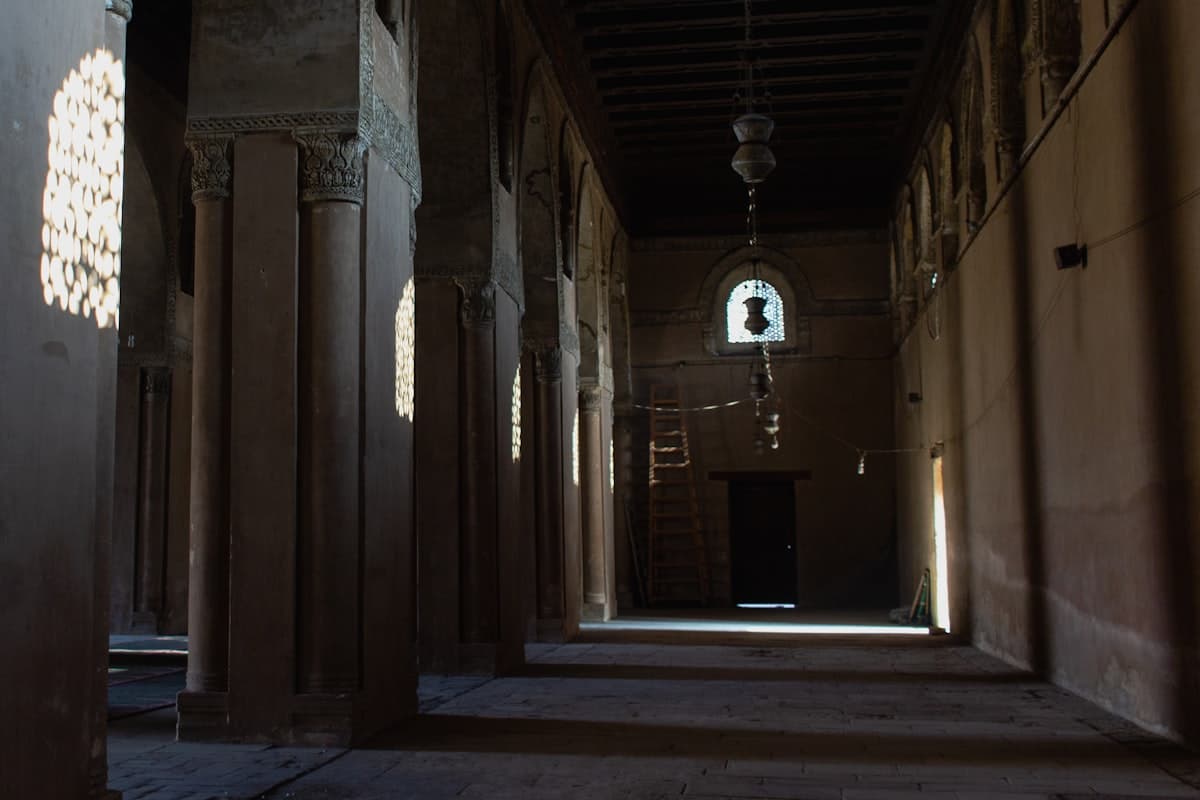
At its height in the 1920s and 1930s, Alexandria's Italian community numbered close to 100,000 people. They were not diplomats or colonial administrators. They were bakers, architects, photographers, doctors, stationers, and circus performers. They arrived in waves beginning after Italian unification in 1861, finding in Alexandria a city that already spoke six languages and worshipped in a dozen faiths, and they simply added their own layer to it.
The Italians built what Alexandria looked like. Giuseppe Garozzo designed the Bourse, the commercial exchange building on Mohamed Ali Square, later renamed Tahrir Square, which opened in 1883 and set the architectural grammar for the entire downtown grid. Antonio Lasciac, an Italian architect from Gorizia who served as chief architect to the Khedival court, designed dozens of buildings across Cairo and Alexandria between 1882 and 1924, blending Ottoman detailing with Italianate facades in a style that has no clean name but is immediately recognizable to anyone who has spent time in both cities.
What is less known is that this Italian presence predates the modern colonial era by centuries. Genoese and Venetian merchants maintained trading posts in Alexandria from the 12th century onward, and the city's commercial geography, its fondacos, its warehouse districts near the eastern harbor, follows patterns established when Italian merchant families were negotiating grain prices with Mamluk sultans. The 19th-century arrivals were, in a sense, returning to a city their predecessors had already helped to shape.
Understanding the Italian community Alexandria Egypt history means understanding that Alexandria was never a colonial imposition in the way that Nairobi or Algiers was. It was a genuinely cosmopolitan port city, where foreigners lived under the Ottoman Capitulations system, which granted them legal immunity from Egyptian courts and separate community institutions. This arrangement made the city extraordinarily open to outsiders and extraordinarily fragile, because it meant the entire cosmopolitan structure depended on political arrangements that could be dissolved. They were, in 1956, when Nasser nationalized the Suez Canal and the legal and financial protections that held the foreign communities in place collapsed almost overnight.
---
The Neighborhoods: Reading the City as a Palimpsest
Walk from the Alexandria Cecil Hotel, which opened in 1929 and hosted Winston Churchill, Somerset Maugham, and Al Capone's brother according to varying degrees of reliable local memory, west along the Corniche toward the old Attarine district, and you are walking through geological strata of Italian presence.
The streets of downtown Alexandria were named in Italian and French until the 1952 revolution and the subsequent renaming campaigns of the 1960s. Via Rosette became Sharia Port Said. Rue Cherif Pasha, named for an Egyptian prime minister, had previously been called Rue de France. The street grid itself, the one you are navigating now on your phone, was laid out in the 1830s under Mohamed Ali, who hired primarily European engineers and surveyors, a significant proportion of them Italian.
In the Moharrem Bey district, a residential neighborhood about 3 kilometers south of the waterfront, entire blocks of apartment buildings survive from the 1910s and 1920s in varying states of integrity. The construction quality matters here: Italian builders used a particular combination of local limestone and imported cement that has aged differently than the reinforced concrete that replaced it after the 1960s. The older buildings breathe; the newer ones crack. Stand in front of any building with wrought-iron balconies and check the cornice line: if the decorative plasterwork includes wheat sheaves or maritime motifs, you are almost certainly looking at Italian craftwork.
The Cavafy Museum is the essential stop on any Italian community Alexandria Egypt history walk, even though Constantine Cavafy was Greek, not Italian. This is precisely the point. The apartment at 10 Lepsius Street, now renamed Sharia Sharm el-Sheikh, where Cavafy lived from 1907 until his death in 1933, sits above what was then a brothel and opposite a Greek Orthodox church. He called it the house of sin and shame opposite and adjacent to the church. The apartment has been reconstructed with period furniture and manuscripts. The real value is spatial: standing in his study, you understand that the Alexandria of Lawrence Durrell's Quartet, of Forster, of Ungaretti, the Italian Futurist poet who lived in Alexandria from 1912 to 1915 and wrote some of his most important work here, was not a literary invention. It was three rooms above a street where six languages were spoken simultaneously.
Giuseppe Ungaretti's connection to the city is almost entirely unknown to visitors. He was born in Alexandria in 1888 to parents from Lucca. He spent his childhood in the Italian quarter, attended the Swiss-run Ecole Suisse Jacot, and did not move to Paris and then Italy until he was in his twenties. The poems that made him famous, collected in L'Allegria, are saturated with desert light and Mediterranean restlessness. Alexandria made him a poet. Italy got the credit.
---
What Survived and What Didn't: The Architecture of Departure
The single most useful map for understanding the Italian legacy in Alexandria is one that shows not what still stands, but the sequence of demolitions. After 1956, the nationalization of foreign-owned property accelerated through the early 1960s. Italian community members who had lived in Alexandria for three generations found their assets frozen and their apartments subject to sequestration. Many left with a single suitcase. The city they left behind was physically intact but institutionally emptied: the Italian schools, the social clubs, the Unione Italiana, the Italian hospital on Sharia Hurriya, all of it either closed, converted, or absorbed into state institutions.
The Italian Chamber of Commerce building on Sharia Salah Salem still stands. So does the former Italian consulate building near the Corniche, now repurposed. The more poignant survivals are domestic: apartment buildings in Kafr Abdu and Stanley where Italian families lived for decades, now occupied by Egyptian families who sometimes preserve the original tiled floors and wrought-iron staircases without knowing their provenance.
The Catholic Cathedral of Saint Catherine on Nabi Daniel Street, which dates in its current form to 1836, was the spiritual center of the Latin community in Alexandria for over a century. The Italian community held masses here alongside Maltese, French, and Greek Catholic congregations. The cathedral still operates. The congregation is a fraction of what it was. The building itself, with its neoclassical facade and interior frescoes, is in reasonable condition and freely accessible during services. Stand in the nave on a weekday morning when almost no one is there and the light comes through the clerestory windows and you will have one of the quietest, most layered experiences Alexandria offers.
---
The Connections: What Alexandria Was, and What It Left Behind
The Italian community did not exist in isolation from Egypt's other overlapping histories. The Attarine Mosque, one of Alexandria's oldest Islamic monuments, was built on the site of a church that had itself been built on the remains of the Ptolemaic Serapeum. Medieval Italian merchants would have navigated by that mosque's minaret when approaching the harbor. The cosmopolitan-era street grid overlaid a much older city: Napoleonic surveyors who mapped Alexandria in 1798 found streets whose alignments corresponded to Strabo's first-century description of the Ptolemaic city.
The relationship between the Italian community and Egypt's Jewish community is another thread most guides ignore. The two communities overlapped significantly in commercial life, in the cotton and real estate sectors especially, and shared architectural contractors and legal professionals. The Eliyahu Hanavi Synagogue on Nabi Daniel Street, currently undergoing restoration, is three blocks from the Cathedral of Saint Catherine. For most of the 20th century, the street contained a functioning synagogue, a Catholic cathedral, a mosque, and a Greek Orthodox church within 400 meters of each other. That density is not accidental. It reflects a deliberate Ottoman urban logic in which different communities occupied adjacent but distinct institutional spaces.
For readers of Durrell or Forster, the practical insight is this: the Alexandria they wrote about was not a golden age that existed and then ended. It was a specific legal and demographic arrangement that was always fragile and that ended in a specific political moment. The buildings are real. The streets are real. What is gone is the administrative fiction that made the whole thing possible.
---
Common Mistakes
Spending your first morning at Kom el-Shoqafa instead of downtown. The Roman catacombs are genuinely impressive, but they tell you nothing about the cosmopolitan Alexandria that is this city's specific and irreplaceable contribution to Mediterranean history. Go to Kom el-Shoqafa on your second day. Spend your first morning walking from Raml Station to the Cavafy Museum.
Treating the Cecil Hotel as a photo opportunity rather than a document. The Cecil's interior, particularly the lobby and the original bar, is one of the last largely intact examples of cosmopolitan-era hospitality design in the city. A coffee there costs EGP 120 and buys you an hour in a room where the architectural decisions are primary sources.
Taking the sound and light show at any Alexandria site. None of them add information you cannot find in a good book, and all of them subtract the experience of being in a space at night without amplified narration. Skip them unconditionally.
Skipping Moharrem Bey because it is not on the tourist circuit. This is where the residential Italian Alexandria actually existed. It is a 15-minute tram ride from downtown and requires no special access. Bring your eyes.
Assuming the Cavafy Museum is only for poetry readers. The museum is the best spatial argument for the reality of cosmopolitan Alexandria. You do not need to have read a single Cavafy poem to understand what the apartment is telling you about how this city worked.
Going in August. Mediterranean humidity in Alexandria in August is not pleasant. The city is also full of Egyptian summer tourists from Cairo, which changes the texture of the experience significantly. October is better in every respect.
Hiring a standard city tour guide for this subject. Most licensed guides in Alexandria are trained in Pharaonic and Greco-Roman history. The Italian community history is specialist knowledge. The Alexandria Preservation Trust and some hotel concierges at the Four Seasons can connect you with guides who know this material. The difference is not marginal.
---
Practical Tips
The Cavafy Museum requires advance checking of opening hours, as it has closed unexpectedly for restoration periods. Call ahead or check with your hotel the morning you plan to visit.
The best walking sequence for covering Italian community Alexandria Egypt history efficiently: start at Raml Tram Station, walk to Tahrir Square and examine the Bourse building exterior, continue to Nabi Daniel Street for the Cathedral of Saint Catherine, walk east to the Cavafy Museum on the renamed Lepsius Street, then take the tram south to Moharrem Bey for the residential quarter. Budget 4 to 5 hours.
For lunch, Taverna on the Corniche is one of the few restaurants that consciously preserves the cosmopolitan-era menu tradition. The calamari and the pasta are both honest. Budget EGP 300 to 500 per person.
Bring a notebook rather than relying entirely on your phone camera. The most important things to record here are inscriptions, building details, and the names on old apartment buildings, some of which still carry their original Italian surname plaques. These are the primary sources. The photographs come second.
Frequently Asked Questions
The Weekly Dispatch
More on Egypt, every Friday.
Cultural depth and places most guides never mention.
No spam. Unsubscribe anytime.