Italian Community Alexandria Egypt: A History Guide
At its peak, Alexandria had 40,000 Italian residents who built their own hospitals, schools, and newspapers. Almost none of their descendants remain. The city still carries their fingerprints.

Audio Guide: Italian Community Alexandria Egypt: A History Guide
Quick Facts
- Best time to visit
- October through April. Mediterranean winter light is better for exploring architectural details, café culture is more comfortable, and the city is not overwhelmed by domestic beach tourism.
- Entrance fee
- Most sites free or donation-based. Alexandria National Museum EGP 150 (approx $3 USD), students EGP 75. Bibliotheca Alexandrina EGP 70 (approx $1.50 USD). Latin Cemetery free during opening hours.
- Opening hours
- Latin Cemetery Chatby: Saturday to Thursday 8am to 4pm. Church of St. Catherine: approximately 9am to noon and 4pm to 7pm. Bibliotheca Alexandrina: Monday to Saturday 10am to 7pm.
- How to get there
- Spanish express train Cairo to Alexandria: EGP 120 to 200, approximately 2 hours. City tram within Alexandria: EGP 3 flat fare. Taxi from Misr Station to Raml area: EGP 40 to 60.
- Time needed
- Two full days minimum: one day for city center churches, architecture, and commercial streets; one day for Chatby Cemetery, Ibrahimiya neighborhood, and the Bibliotheca Alexandrina.
- Cost range
- Budget EGP 400 to 700 per day using public transport and local restaurants. Mid-range EGP 1,500 to 2,500 per day with seafront hotel and European-era restaurants.
At its peak in the 1920s, Alexandria held more than 40,000 Italian residents. They ran competing newspapers, operated their own hospital, maintained a consulate that rivaled the British one in prestige, and built churches whose bells you can still hear on certain mornings in the old quarters of the city. Today, fewer than a few dozen Italians live here permanently. The community that shaped the very grammar of Alexandrian modernity dissolved in less than three decades, expelled by a combination of postwar nationalism, Nasser's sequestration laws, and a political logic that had no room for cosmopolitan minorities. What remains is architectural, culinary, linguistic, and almost entirely unmarked.
This is a guide to finding what survived.
Quick Facts
Best time to visit: October through April. Alexandria's Mediterranean climate means summer humidity and beach crowds overwhelm the city. Winter light is better for photography, the streets in the old European quarters are quieter, and café culture, which is central to understanding the Italian legacy here, is more pleasant at 18°C than 35°C.
Entrance fees: Most Italian-legacy sites are churches, cemeteries, or neighborhoods explored on foot. The Latin Cemetery (Chatby) is free to enter during opening hours. The Greek Orthodox Patriarchate and nearby churches typically request a small donation of EGP 20 to 50. The Alexandria National Museum, which contextualizes the cosmopolitan era well, charges EGP 150 (approximately $3 USD); students pay EGP 75.
Opening hours: The Latin Cemetery at Chatby opens Saturday through Thursday, roughly 8am to 4pm. Individual churches vary. The Church of St. Catherine, the main Catholic landmark, holds masses and is generally open 9am to noon and 4pm to 7pm. Confirm locally before visiting.
How to get there: From Cairo, the Spanish train (air-conditioned express) costs EGP 120 to 200 and takes approximately 2 hours to Misr Station. Within Alexandria, the old European quarters of Raml, Mansheya, and the Corniche stretch are walkable or accessible by tram (EGP 3 flat fare, one of the last functioning urban trams in Egypt) or microbus (EGP 5 to 10 depending on distance).
Time needed: Two full days minimum to do this properly. One day for the historic center (Mansheya, Raml Station area, the churches, the old commercial streets). One day for Chatby Cemetery, Ibrahimiya, and the seafront architecture toward San Stefano.
Cost range: Budget EGP 400 to 700 per day if you eat at local fuul and koshary spots and use public transport. Mid-range EGP 1,500 to 2,500 if you stay in a seafront hotel and eat at the older European-style restaurants like Elite or Trianon.
Why This Place Matters
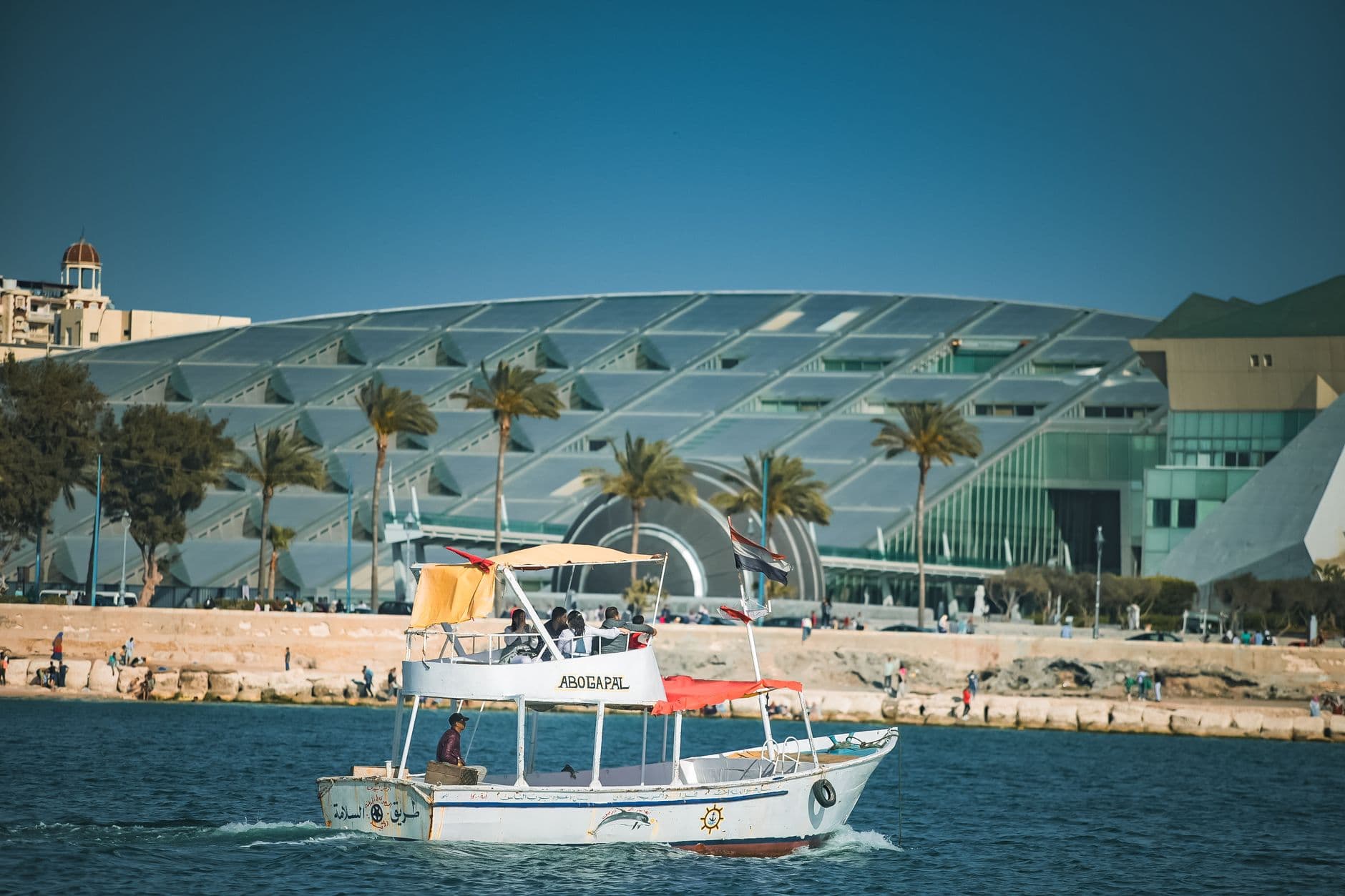
The Italian presence in Alexandria was not incidental. It was structural. When Muhammad Ali Pasha began modernizing Egypt in the early nineteenth century, he recruited European technicians, merchants, and professionals to staff his new institutions. Italians arrived in significant numbers from the 1830s onward, many from Livorno, Genoa, and later from Southern Italy, drawn by trade opportunities in cotton, which was then the most valuable commodity Egypt produced.
By the 1880s, Alexandria had an Italian quarter, an Italian school system, and an Italian-language press. The newspaper La Riforma, founded in 1882, ran for decades and covered Alexandrian affairs from an explicitly Italian perspective. The community built the Ospedale Italiano in 1893, a functioning hospital that served not only Italians but Alexandrians of all backgrounds until the mid-twentieth century. The building on Mohamed Farid Street still stands, now repurposed but architecturally intact.
What makes the Italian community in Alexandria historically unusual is its class composition. Unlike the British, who tended to arrive as administrators, or the Greeks, who dominated certain trades with near-monopoly intensity, the Italian community spanned the full social spectrum: aristocratic merchants who lived in villas in Ibrahimiya sat alongside Sicilian laborers who worked the docks and lived in tenements near the port. This internal diversity created a community that was genuinely embedded in city life rather than floating above it.
The Alexandrian Italian community also produced writers and intellectuals whose work shaped twentieth-century literature in ways that are rarely credited. Giuseppe Ungaretti, one of the founders of Italian modernist poetry and a key figure in the Hermetic movement, was born in Alexandria in 1888 to Lucchese parents. He spent his formative years here before moving to Paris and then Rome. His poetry carries the specific weight of Alexandrian light and dislocation in ways that become obvious once you know to look for them.
What You Will Actually See: The Architecture and Its Layers
The European quarters of Alexandria were not built on neutral ground. The streets around Mansheya Square, now called Tahrir Square in Alexandria, occupy land that was Ottoman-era marshland and older Arab city fabric, which was itself built over Hellenistic and Roman Alexandria. When Italian and other European developers built their palazzos and commercial blocks from the 1860s through the 1930s, they were laying a new grid over a city that had already been layered and relayered for two thousand years.
The most concentrated evidence of Italian architectural influence runs along the streets between Raml Station and the Corniche. Look for the decorative ironwork balconies, the Liberty-style facades with their floral moldings, and the ground-floor commercial arcades that echo northern Italian arcade architecture. These were not imported Italian buildings; they were built by local contractors using Italian design conventions, which is why they feel simultaneously European and Alexandrian, slightly too warm in their proportions, slightly too worn in their materials.
The Church of St. Catherine on Nebi Daniel Street is the center of Alexandrian Catholic life and was the social and ceremonial heart of the Italian community. The current building dates from 1829 but was significantly renovated in the early twentieth century. The interior holds memorials to prominent Italian Alexandrians, and the side chapels contain some genuinely interesting neoclassical painting that nobody pays attention to because the guidebooks do not mention it. Sit in the church for twenty minutes on a weekday morning and you will share it with perhaps three Coptic women who have stopped in out of habit and an elderly Alexandrian man who comes for the quiet. The cosmopolitanism that defined this city persists in unexpected forms.
The Chatby Latin Cemetery is one of the most remarkable and least visited sites in Egypt. It holds the graves of Italian, French, Greek, and other European Alexandrians from the mid-nineteenth century through the 1960s. The tombstone inscriptions are a compressed social history: Livornese merchants from the 1840s, Italian doctors from the 1890s, children who died of cholera in the epidemics that swept the city before proper sewerage was built, women who came from Naples and died in Alexandria having never returned to Italy. The cemetery is not maintained to any high standard, which gives it an honesty that polished heritage sites lack. Bring water and a willingness to spend an hour reading stone.
The Human Stories: Who They Were and What Happened to Them
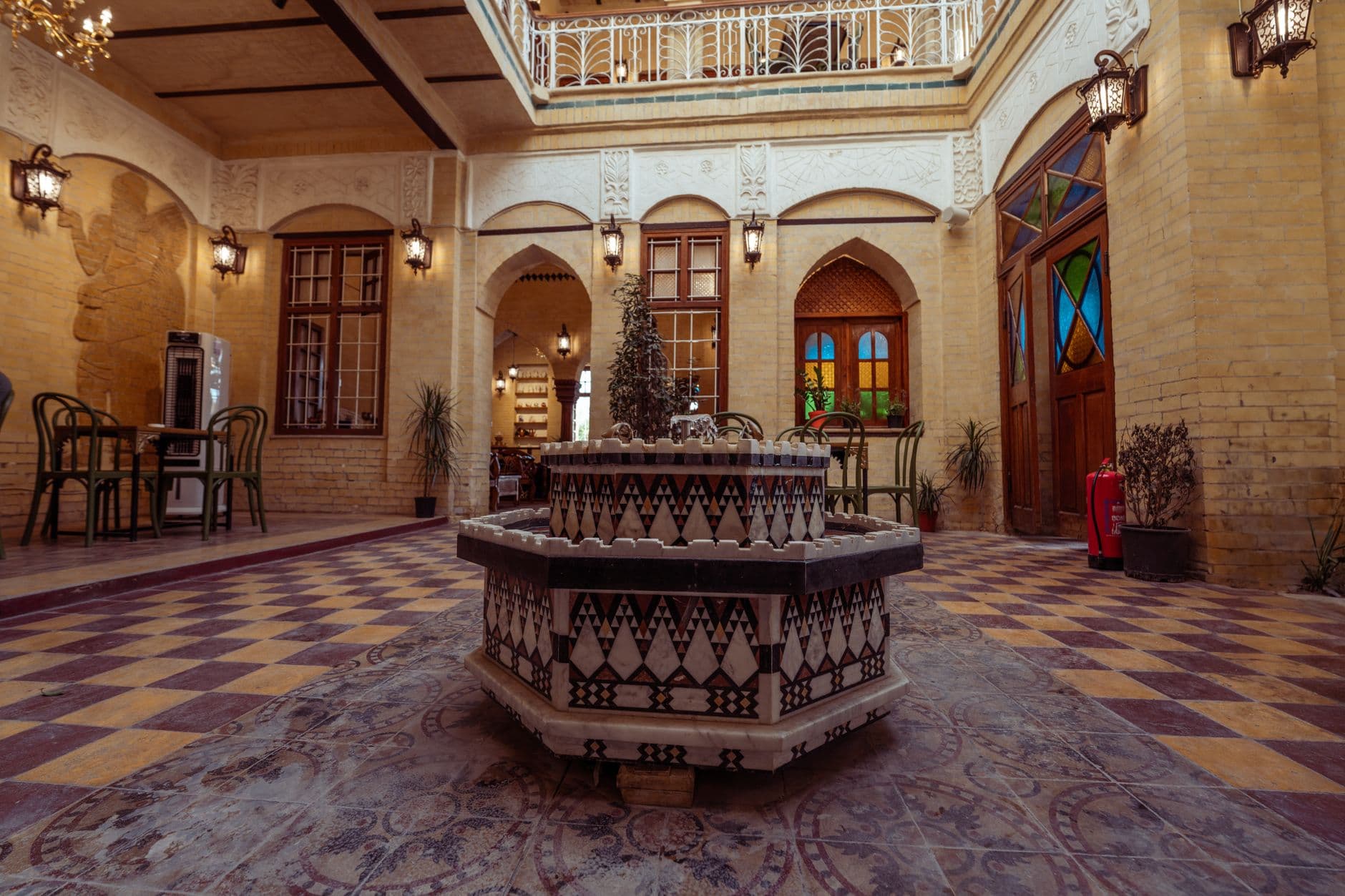
The dissolution of the Italian community happened in stages, each one pushing more families toward the exit. The first wave left after the Italian military campaign in Libya in 1911, which created political tensions in Egypt between Italian residents and their Arab neighbors. The second and larger wave came after World War II, when Italy's wartime alliance with Germany had made Italian nationality politically complicated in a country still under British influence. The third and decisive wave came after 1956, when Nasser's nationalization decrees and the sequestration of foreign-owned property made it economically impossible for most European minorities to remain.
By 1961, when the most comprehensive sequestrations occurred, an Italian family that had been in Alexandria for four generations might find their business nationalized, their bank accounts frozen, and their property transferred to the state, all within a few months. Most left with what they could carry. Some families split: older members stayed, younger ones emigrated to Italy, Australia, Canada, or Brazil. The community of 40,000 contracted to a few thousand within a decade, and to a few dozen within another generation.
What complicates the story is that many Italian Alexandrians did not consider themselves fully Italian. They were Alexandrians who happened to hold Italian passports. Some families had not set foot in Italy for two or three generations. When they arrived in Rome or Milan as refugees in the late 1950s, they were treated as foreigners in a country that was nominally theirs. Several Italian Alexandrian memoirists describe the experience of arrival in Italy as a second exile, a displacement from the displacement.
The writer and filmmaker Edoardo Malagamba, less well known than he should be, documented this experience in interviews conducted in the 1970s with elderly Italian Alexandrians living in Rome. His recordings, partially archived and partially lost, are the closest thing to an oral history of the community's final years that exists.
The Connections: Alexandria as a City of Accumulated Communities
The Italian story in Alexandria cannot be read without understanding the broader cosmopolitan ecology the city sustained for roughly a century. At the same period that the Italian community was at its peak, Alexandria also held substantial Greek, Jewish, Maltese, Syrian Lebanese, and Armenian communities. These groups overlapped commercially, socially, and sometimes romantically in ways that produced a hybrid Alexandrian culture that was genuinely sui generis.
Constantine Cavafy, the Greek Alexandrian poet whose work is now recognized as among the most significant of the twentieth century, lived his entire adult life in a second-floor apartment on what is now Sharm el-Sheikh Street in the Attarine quarter. His downstairs neighbor for many years was a brothel, which he mentioned in correspondence without apparent distress. Cavafy and Ungaretti, the Greek and Italian voices of Alexandrian modernism, almost certainly crossed paths in the city's cafés and literary circles, though no documented meeting exists.
The Italians built on Greek foundations in a literal sense. The street grid of the old European quarters follows approximately the lines of the Hellenistic city plan, which was itself laid over an older Egyptian settlement at Rhakotis. The Ospedale Italiano occupied a site near the ancient Brucheion quarter where the Ptolemaic royal palaces once stood. Alexandria has always been a city of palimpsests, and the Italian chapter is simply the most recent clearly legible layer.
Common Mistakes
Expecting a defined Italian quarter to still exist. There is no Quartiere Italiano with signs and a clear boundary. The Italian legacy is threaded through the whole city center, and finding it requires attention and some knowledge of what to look for. Going with a generic city tour will miss almost all of it.
Skipping the Latin Cemetery at Chatby. Most visitors skip it because it is not on standard itineraries. This is a mistake. The cemetery contains more concentrated information about who actually lived in Alexandria than any museum currently operating in the city.
Visiting the Montaza Palace grounds instead of the old city. The Montaza gardens are pleasant enough and were a royal retreat, but they have nothing to do with the Italian community history and relatively little to do with Alexandrian cosmopolitanism. The EGP 35 entry fee buys you a walk in a garden. The old European streets are free and more interesting.
The sound and light show at Qaitbay Citadel costs EGP 250 and tells you nothing specific about Alexandria's layered history. It is a generic production that could describe any Mediterranean port city. Skip it and use the evening to eat at one of the old European-era restaurants on Saad Zaghloul Square instead.
Assuming the café culture is just nostalgia theater. Places like the Trianon Patisserie and the Elite Restaurant are sometimes dismissed as tourist traps catering to a vanished past. In fact, the Trianon, which has operated since 1928, is still used by Alexandrian professionals and older families as a genuine social space. Sitting there at 10am on a Thursday morning, you are participating in an unbroken social practice, not performing heritage tourism.
Relying on English-language sources alone. The best scholarship on the Italian community in Alexandria is in Italian and French. Roberto Mazza's work and the archives of the Istituto Italiano di Cultura in Cairo are the serious entry points. The Alexandria and Mediterranean Research Center (Alex Med) at the Bibliotheca Alexandrina has relevant materials in multiple languages.
Not crossing between the religious spaces. The Catholic Church of St. Catherine, the Greek Orthodox Patriarchate two streets away, and the nearby Eliyahu Hanavi Synagogue (currently undergoing restoration) together tell the full story of what Alexandria was. Visiting only one of them gives you a fragment.
Practical Tips
The Bibliotheca Alexandrina is the essential institutional stop for anyone serious about this history. Its permanent exhibitions on the ancient city are well done, and its archives and research center hold materials on the cosmopolitan period that are not accessible anywhere else in Egypt. Admission is EGP 70 for foreigners, approximately $1.50 USD. The cafe inside is decent and air-conditioned.
Hire a local guide who specifically knows the cosmopolitan history, not a general Alexandria guide. The difference in experience is substantial. Ask at the Alex Med center or the Bibliotheca for recommendations. Expect to pay EGP 500 to 800 for a half-day private walk.
The best time to walk the old European streets is early morning, between 7am and 9am, before traffic builds. The quality of light on the Liberty-style facades at that hour is particular to Alexandria: white, slightly diffused by sea moisture, and very good for seeing architectural detail.
Bring a notebook. This is a city that rewards the habit of writing things down: names on shop fronts that are still Italian, phrases in the local Arabic dialect that are corrupted Italian loanwords (the Alexandrian word for "ice cream" is a direct corruption of "gelato"), and architectural details that will not mean anything until you see the fourth example and recognize the pattern.
Frequently Asked Questions
The Weekly Dispatch
More on Egypt, every Friday.
Cultural depth and places most guides never mention.
No spam. Unsubscribe anytime.