Italian Community Alexandria Egypt: History, Streets & Surviving Traces
At its peak, Alexandria had 40,000 Italian residents who built its opera house, ran its hospitals, and named its streets. Almost none remain. Here is what they left behind.

Quick Facts
- Best time to visit
- October to April. The Mediterranean climate is mild, walking is comfortable, and the winter light on the old European facades is particularly clear. Avoid July and August when humidity makes extended outdoor exploration exhausting.
- Entrance fee
- Most Italian community sites are public streets or open cemeteries with no entry charge. Alexandria National Museum: EGP 180 (approx $3.60 USD), students EGP 90. Latin Cemetery at Chatby: free entry. Church of Santa Caterina: free, donations appreciated.
- Opening hours
- Latin Cemetery at Chatby: approximately 8am to 4pm daily, hours inconsistently observed, arrive before noon. Alexandria National Museum: daily 9am to 4:30pm. Church of Santa Caterina: open for Mass and generally accessible during daylight hours.
- How to get there
- From Cairo: first-class Spanish Train from Ramses Station to Alexandria Misr Station, EGP 85 to 120 (approx $1.70 to $2.40 USD). From Misr Station: city tram to Raml Station approximately EGP 5. Taxi from Misr Station to Chatby Cemetery approximately EGP 30 to 50.
- Time needed
- Two full days minimum for a serious exploration of Italian community history sites. Three days recommended if combining with the Bibliotheca Alexandrina archive and slower neighborhood walking.
- Cost range
- Budget EGP 400 to 700 per day including transport, food at local restaurants, and entry fees. Mid-range EGP 1,200 to 2,000 per day with historic center accommodation. Exclude Cecil Hotel stays which start around EGP 2,800 per night.
Quick Facts
Best time to visit: October to April, when Mediterranean humidity drops and walking the old European quarters is bearable. July and August are oppressive for street-level exploration.
Entrance fees: Most sites connected to the Italian community are public streets, cemeteries, or working churches. The Latin Cemetery charges no entry. The Greek Orthodox Patriarchate and some private palaces are not open to visitors. Attarine Mosque (built on the site of a church Napoleon's troops stripped of its granite column) charges no entry for the building exterior. Alexandria National Museum, which contextualizes the cosmopolitan era, charges EGP 180 (approx $3.60 USD), students EGP 90.
Opening hours: The Latin Cemetery at Chatby opens roughly 8am to 4pm daily, though hours are inconsistently observed. Go before noon. The Alexandria National Museum is open daily 9am to 4:30pm.
Getting there: From Cairo, the best option is a first-class seat on the Spanish Train (EGP 85 to 120 from Ramses Station, roughly $1.70 to $2.40 USD). From Alexandria's Misr Station, the key neighborhoods are reachable by taxi or the city tram. A tram ride from the station toward Raml Station costs around EGP 5. Taxi from Misr Station to Chatby Cemetery is EGP 30 to 50 depending on negotiation.
Time needed: A serious walking exploration of the Italian-era streets, cemetery at Chatby, and the Cecil Hotel district takes a full day. The Alexandria National Museum alone deserves two to three hours.
Cost range: Budget EGP 400 to 700 per day including transport, food, and entry fees. Mid-range EGP 1,200 to 2,000 if you are staying in the historic center and eating at restaurants that occupy former European social clubs.
---
Why This Matters: A City Built by People Who Were Then Erased
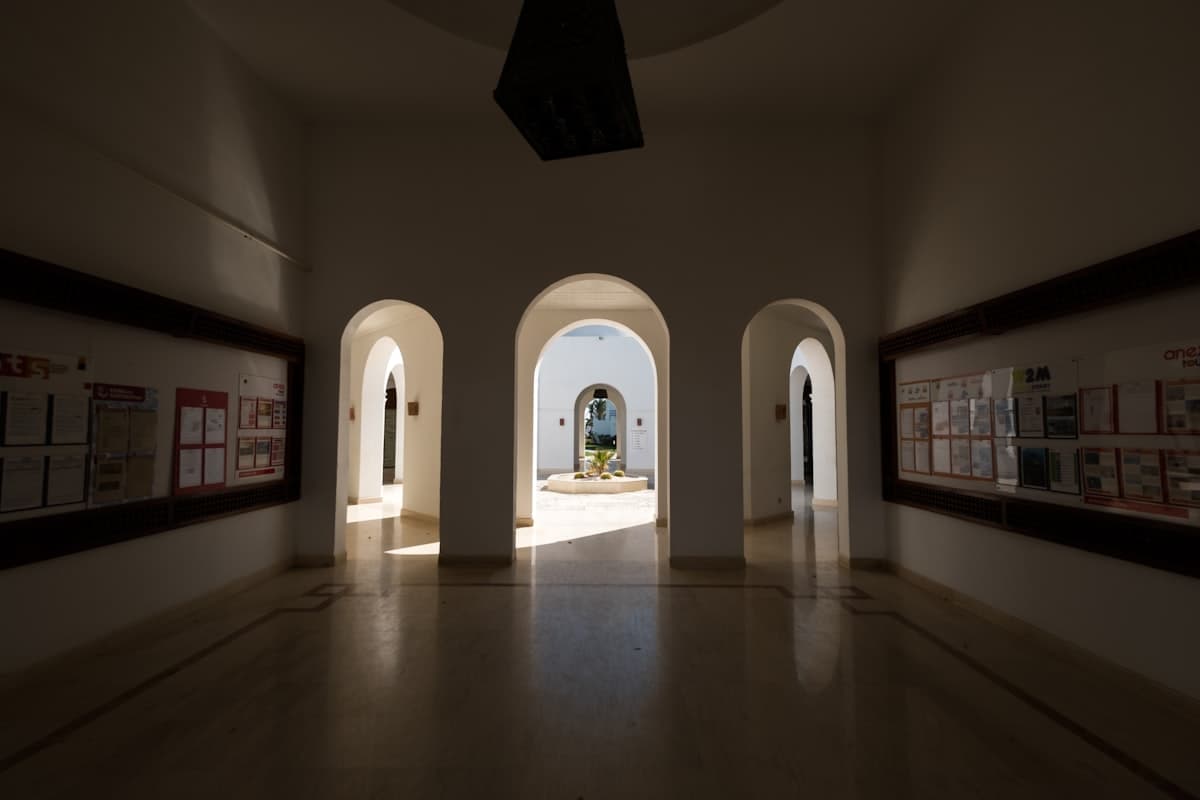
At the 1927 census, Alexandria's population was 37 percent foreign-born. Among those foreigners, Italians numbered close to 40,000, making them the single largest European community in a city that also contained Greeks, Maltese, French, Syrians, Jews, Armenians, and Bedouin traders. They were not tourists or diplomats. They were pharmacists, architects, opera singers, surgeons, priests, and builders of sewers.
The Italian presence in Alexandria was not colonial in the formal sense, which is precisely what makes it strange and difficult to categorize. Egypt was under British occupation until 1952, not Italian. Italian Alexandrians occupied a peculiar middle position: European enough to enjoy legal protections under the Capitulations system (a treaty arrangement that exempted foreigners from Egyptian courts until 1949), but not the imperial power. They ran hospitals and built cathedrals while remaining technically guests. That ambiguity explains both why they flourished for so long and why they disappeared so completely.
The story ends with a specific date: July 26, 1956. Gamal Abdel Nasser nationalized the Suez Canal from a balcony in Alexandria, and the atmosphere in the city shifted permanently. The Suez Crisis that followed brought British and French military action and an Egyptian government that had no patience for communities whose loyalties were elsewhere. Within a decade, the majority of Alexandria's Italian community had left, most to Italy, some to Australia, some to South America. By 1970, fewer than 5,000 of all European communities combined remained in a city that had once been the Mediterranean's most polyglot port.
What they left behind is still here. You just have to know where to look, and you have to be willing to look past the surface, because Alexandria has not, for the most part, preserved these traces as heritage. It has simply lived on top of them.
---
The Neighborhoods: Walking What Remains
Raml Station and the European Quarter
The area around Raml Station, Alexandria's historic tram hub, was once so densely European that the Egyptian residents called it simply "the Frank quarter," from the Arabic corruption of "French" that came to mean all Western Europeans. The buildings you see now, the ones still standing with their wrought-iron balconies and crumbling neoclassical facades, were largely constructed between 1880 and 1930. Italian architects designed a significant portion of them. The firm of Antonio Lasciac, a Gorizia-born architect who eventually became Egyptian State Architect and designed the Cairo Stock Exchange, left a particular stamp on Alexandria's civic buildings.
The Bourse building on the Corniche, now largely derelict, was designed with the kind of confidence that assumes permanence. So was the old Savoy Hotel on Zaghloul Square, which operated continuously until the early 2000s. The Cecil Hotel, which still operates on the Corniche (rooms from EGP 2,800 per night), was built in 1929 and hosted Somerset Maugham, Winston Churchill, and Noel Coward. What fewer people know is that during World War Two it housed British Intelligence, and Rommel had a specific plan to use its rooftop to announce the fall of Alexandria to Africa Korps forces, a plan that became redundant when the Eighth Army stopped him at El Alamein in October 1942, roughly 106 kilometers to the west.
The Latin Cemetery at Chatby
The most honest record of who actually lived in Alexandria is not in any museum. It is in the Latin Cemetery at Chatby, which contains the graves of Italians, Maltese, French, Greeks, and Armenians buried between roughly 1840 and the 1970s. You can walk the inscriptions for hours. There are entire family plots where the same surname appears across four generations, proof that these were not sojourners but settlers who intended to stay forever.
The inscriptions shift over time. In the 1880s and 1890s, the Italian is confident and ornate, full of classical references. By the 1950s and 1960s, the inscriptions often appear in both Italian and Arabic, a quiet record of a community trying to hold two identities simultaneously. Some graves were never maintained after their families left and are now unreadable, the stone dissolved by salt air. The cemetery is not a formal tourist site. There is no signage in any language. You walk in, and it is simply there.
The Church of Santa Caterina and the Catholic Quarter
The Church of Santa Caterina on Azarita Square has been a Catholic church since 1833, though the current neoclassical building dates to the late nineteenth century. What the plaques outside do not mention is that the surrounding neighborhood was once so thoroughly Italian that the streets had informal Italian names used in parallel with their Arabic ones. The pharmacies, bakeries, and social clubs that occupied the ground floors of adjacent buildings were almost entirely Italian-owned by 1900.
The church still holds Mass in multiple languages, though the congregation is now primarily Egyptian Catholic and Filipino domestic workers rather than Italian families. The building's interior holds a specific detail worth finding: a series of memorial tablets to Italian families donated between 1890 and 1940, some of which record professions. Architects. Merchants. A surgeon who died in 1923. A child who lived eleven days. The abstraction of "community" becomes specific when it has individual names attached to it.
---
What the Italians Built That Alexandria Uses Differently Now
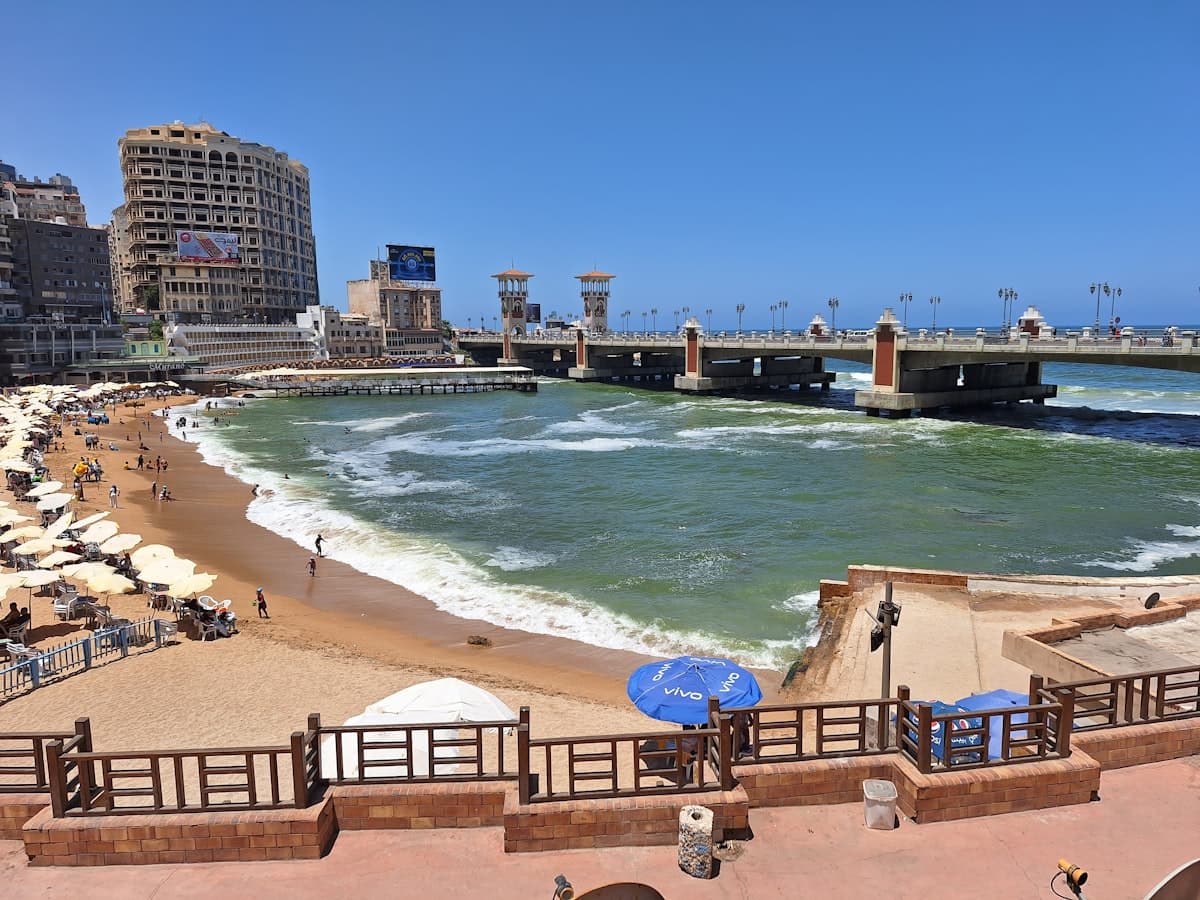
The relationship between the Italian community's physical legacy and what Alexandria has done with it since 1956 is the most interesting architectural story in the city. Almost nothing was demolished out of hostility. It was simply repurposed without acknowledgment.
The Italian Hospital, founded in 1893 on what is now Al-Pharaana Street, operated until the nationalizations of the 1960s and is now a public hospital under Egyptian management. The building still stands. The Italian School, which educated both Italian children and a significant number of Egyptian children from wealthy families who wanted a European curriculum, was nationalized in 1963 and is now a state school. Italian is no longer taught there.
The Teatro Mohammed Ali, Alexandria's opera house and the center of the Italian community's cultural life, was built in 1921 and held performances until it was damaged by fire in 1954. The fire came two years before Nasser's Suez speech, technically unrelated to the political upheaval, but the timing meant it was never seriously considered for restoration. The site now holds a government building. This is the detail most guides to the Italian community in Alexandria skip: the opera house that hosted touring companies from Rome and Milan, that premiered works for an audience that dressed formally and argued about tenors, is entirely gone. Not transformed. Gone.
---
The Connections: Alexandria as a Palimpsest
The Italian community history does not sit in isolation from the longer story of Alexandria. The city was cosmopolitan before it was Egyptian in the modern sense, founded by Alexander the Great in 331 BC as a deliberately international project, designed to be a meeting point rather than a stronghold. The Library of Alexandria operated in seven languages. Cleopatra was reportedly the first member of the Ptolemaic dynasty, a Greek-Macedonian line that ruled for 275 years, who actually learned to speak Egyptian.
What the Italian Alexandrians were doing in the nineteenth century was, in a strange sense, continuing something very old: occupying a city that has always been defined by people who came from somewhere else. The Fatimid caliphs who built medieval Alexandria arrived from Tunisia. The Mamluk sultans who fortified the harbor came originally from the Caucasus region, enslaved as children and trained as soldiers. The Ottoman governors who followed them came from Constantinople. The British who ultimately ran the place from 1882 to 1952 came from London.
Every layer used the previous layer's infrastructure and then insisted it had always been there. The Italian community both benefited from this tradition and was eventually absorbed by it, their buildings becoming simply "Alexandrian" buildings the moment they left.
The Alexandria National Museum on Tariq Al-Horreya Street, housed in a former Italian palace (the Cicurel family were Jewish merchants, not Italian, but the building's architect was Italian-trained), tells this layered story better than anywhere else in the city. The Greco-Roman room, the Coptic room, the Islamic room, and the modern room are presented sequentially, but the real argument the museum is making is that these categories were always porous. Visit it after the cemetery and before the waterfront walk. The sequence matters.
---
Common Mistakes
Expecting formal heritage infrastructure. There is no "Italian Alexandria" walking tour with proper signage, no dedicated museum wing, no preserved neighborhood. The traces are embedded in a working city. If you come expecting the kind of preserved European quarter you find in Valletta or Trieste, you will be frustrated. Come expecting fragments.
Visiting Chatby Cemetery without research. The Latin Cemetery is genuinely moving and historically specific, but it is not a curated experience. Bring a list of family names or historical figures you want to find, bring water, and do not go on a Friday afternoon when the surrounding neighborhood is at its busiest and access can be complicated.
Spending money on the Montazah Palace gardens as the centerpiece of your visit. The gardens are pleasant and the palace's exterior is architecturally interesting (it was built by Khedive Abbas II in 1892 and later became a royal summer residence), but it tells you almost nothing about the Italian community or the cosmopolitan city. It is a royal property, not a civilian one. The EGP 35 entry fee is not the issue. The opportunity cost is.
Skipping the Corniche on foot. The obvious way to see the waterfront is from a taxi. The correct way is to walk a 2-kilometer stretch between the Cecil Hotel and the old eastern harbor on foot, in the morning, before 9am. The light on the Mediterranean at that hour is unlike anything else in Egypt, and the building facades you are passing were designed to face that light deliberately. You will not understand their scale or their ambition from a car window.
Assuming the people who know most about this history are academics. Some of the best historians of the Italian Alexandrian community are elderly descendants living in Rome or Turin who correspond with Alexandrian researchers by email. The Bibliotheca Alexandrina has an archive on cosmopolitan Alexandria that is accessible to the public and contains oral history recordings. This is worth an hour of your time before your visit, not after.
Eating lunch in the tourist-oriented fish restaurants on the Corniche. They are expensive by Egyptian standards (EGP 400 to 800 per person), the fish is often frozen, and the experience is performed rather than genuine. Walk one block inland from any point on the Corniche and find a fuul and tameya counter for EGP 30 to 50 per person. Alexandria's street food is categorically better than its tourist restaurants.
Over-scheduling. Alexandria punishes itineraries. The city moves at a specific Mediterranean pace that has nothing to do with efficiency, and the most interesting discoveries in the Italian-history context happen when you follow a street because a building caught your eye, stop because a doorway has an inscription you want to read, and ask the person sitting outside what they know about who used to live there. Allow at least one completely unscheduled afternoon.
---
Practical Tips
The best single resource before your visit is the Bibliotheca Alexandrina's Center for Alexandrian Studies, which has published several volumes on the city's cosmopolitan era available in their reading room. You do not need a formal research credential to access the reading room; you need to ask at the front desk.
For the neighborhood walking, comfortable shoes are essential. The old European quarter streets are uneven, the sidewalks are narrow and often occupied by parked motorcycles or market stalls, and the distances between significant buildings are longer than they appear on a map because the streets themselves curve and double back.
Photography of building exteriors is generally unproblematic. Photographing inside private buildings or churches requires asking permission, which is almost always granted if you ask in Arabic or even just gesture respectfully. The word "mumkin" (meaning "is it possible") will take you a long way.
Stay in the historic center if your budget allows. The Four Seasons Alexandrie at San Stefano is the luxury option (outside most budgets at EGP 8,000 plus per night). The Cecil Hotel is more historically resonant and costs significantly less. Budget travelers should look at guesthouses in the Raml Station area, which put you within walking distance of everything relevant to the Italian community history without requiring a taxi for every movement.
If your interest in the Italian community Alexandria history extends to genealogy or family research, the Church of Santa Caterina maintains partial records of Italian Catholic baptisms and marriages from the nineteenth century onward. The records are incomplete due to transfers and the upheavals of the 1950s and 1960s, but they are accessible and the current parish priest has been consistently helpful to researchers who contact the church in advance.
Frequently Asked Questions
The Weekly Dispatch
More on Egypt, every Friday.
Cultural depth and places most guides never mention.
No spam. Unsubscribe anytime.