Jewish Alexandria Egypt: History, Synagogues, and a Vanished World
At its peak, Alexandria's Jewish community numbered 80,000. Today, fewer than a dozen remain. The synagogues are still there. So is everything they left behind.

Quick Facts
- Best time to visit
- October to April for mild Mediterranean weather and fewer tourists. Summer months bring Egyptian domestic tourism that crowds Corniche hotels and transport.
- Entrance fee
- Eliyahu Hanavi Synagogue: free, but requires advance arrangement. Alexandria National Museum: EGP 80 (approx $2.50 USD). Bibliotheca Alexandrina permanent exhibitions: EGP 70 to 150 depending on which galleries (approx $2 to $5 USD).
- Opening hours
- Eliyahu Hanavi Synagogue: by appointment, sometimes open Friday mornings. Alexandria National Museum: Tuesday to Sunday 9am to 4pm. Bibliotheca Alexandrina: Monday to Saturday 10am to 7pm, Friday 3pm to 7pm.
- How to get there
- Train from Cairo Ramses Station to Alexandria Misr Station: EGP 100 to 200 second class, EGP 300 to 500 first class, approximately 2 to 2.5 hours. From Misr Station, taxi to Nabi Daniel Street costs EGP 30 to 50. Tuk-tuk costs EGP 15 to 25.
- Time needed
- Synagogue alone: 1 to 2 hours. Full Jewish Alexandria itinerary including Jewish quarter streets, Attarine, and Bibliotheca: full day. Cemetery visit adds an additional 2 to 3 hours and requires separate arrangement.
- Cost range
- Budget EGP 600 to 900 per day including food and local transport. Mid-range with Corniche hotel EGP 1,800 to 2,800 per day. Private guide for half-day EGP 800 to 1,500 extra.
At its peak in the 1940s, Alexandria's Jewish community numbered around 80,000 people. They ran cotton exchanges, published newspapers in French and Arabic, built the finest apartment blocks on the Corniche, and filled synagogues that rivaled anything in Cairo or Beirut. Today, fewer than a dozen Jewish residents remain in the entire city. The synagogues are still standing. The community is almost entirely gone. What happened in the space of a single generation, and what survives, is one of the most significant and least-visited stories in Egypt.
Quick Facts
Best time to visit: October to April, when Alexandria's Mediterranean climate is cool and the city is not flooded with Egyptian summer tourists. The synagogues require advance coordination, so any season works logistically.
Entrance fees: The Eliyahu Hanavi Synagogue is free to enter but requires prior permission from the Egyptian Jewish Community organization in Cairo. Expect to arrange this at least one week in advance. There is no formal ticket price.
Opening hours: The Eliyahu Hanavi Synagogue at 69 Nabi Daniel Street opens irregularly. It is staffed and sometimes open to visitors Friday mornings and by appointment. Do not arrive unannounced and expect entry.
How to get there: Alexandria is two hours from Cairo by train. The Thalys-equivalent Spanish Talgo train from Ramses Station costs EGP 100 to 200 (approximately $3 to $6 USD) for second class, EGP 300 to 500 for first class. From Alexandria's Misr Station, the synagogue on Nabi Daniel Street is a 15-minute walk or a EGP 20 to 30 tuk-tuk ride.
Time needed: The synagogue itself takes one to two hours. A serious walk through Jewish Alexandria, including the former Jewish quarter around Attarine and the cemeteries, takes a full day.
Cost range: Budget EGP 600 to 900 per day in Alexandria including food and local transport. Mid-range EGP 1,800 to 2,800 with a decent hotel on or near the Corniche.
Why This Place Matters
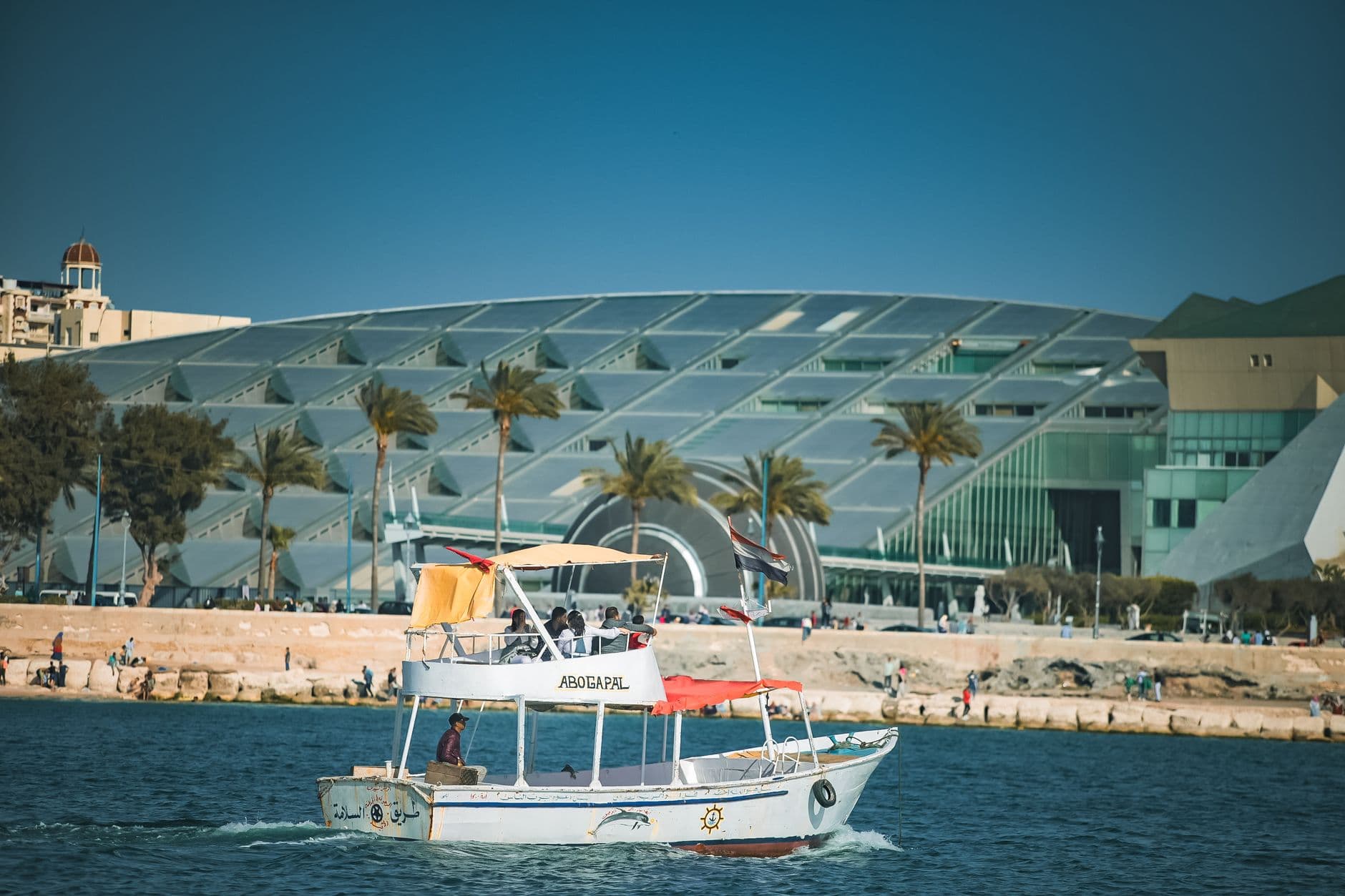
The Jewish presence in Alexandria is not a footnote to Egyptian history. It is one of the oldest chapters. Jews have lived in Alexandria almost since the city was founded by Alexander the Great in 331 BCE. By the first century CE, the Jewish population of Alexandria was estimated at one million, representing perhaps 40 percent of the total population. The great philosopher Philo of Alexandria, who attempted to reconcile Jewish theology with Greek philosophy and whose writings influenced early Christianity, lived and worked here around 20 BCE to 50 CE. The Septuagint, the Greek translation of the Hebrew Bible that became the scriptural foundation for early Christianity and remains in use in Eastern Orthodox churches today, was produced in Alexandria, according to tradition, by seventy-two Jewish scholars working in parallel on the island of Pharos.
What most visitors to Alexandria do not know is that the city's Jewish history is inseparable from its Greek, Roman, Coptic, Arab, and Ottoman histories. The street where the Eliyahu Hanavi Synagogue stands, Nabi Daniel Street, is named for the prophet Daniel, whose supposed tomb was venerated in Alexandria for centuries by Muslims, Jews, and Christians alike. The site of the ancient Jewish quarter overlapped with the neighborhood that later became the center of Coptic Christian life, which later became one of the city's main commercial arteries under Ottoman rule. These communities did not exist in separate bubbles. They argued, traded, intermarried occasionally, borrowed from each other's architecture, and buried their dead in cemeteries that still sit, often ignored, on the edges of the city.
The more recent disappearance of Alexandria's Jews is a story of twentieth-century politics: the 1948 Arab-Israeli war, the 1952 revolution that ended the monarchy, Nasser's nationalization campaigns after the 1956 Suez Crisis, and the 1967 war each drove waves of departure. Families that had been Alexandrian for a hundred, two hundred, or in some cases two thousand years packed what they could carry and left for Israel, France, Brazil, Italy, and the United States. Egyptian law at the time effectively prevented them from returning.
The Eliyahu Hanavi Synagogue: What You Will Actually See
The Eliyahu Hanavi Synagogue, built in its current form in 1850 on the site of an earlier eighteenth-century structure, is one of the largest synagogues in the Middle East. Its interior can hold approximately 700 worshippers. When you walk in, assuming you have made the necessary arrangements, what strikes you first is not decay but preservation. The marble floors, the carved wooden ark housing Torah scrolls, the brass chandeliers, the women's gallery above the main hall: all are intact. The Egyptian government has maintained the building since the community lost the critical mass to maintain it themselves, which is a genuinely complicated act of cultural stewardship that deserves to be stated plainly.
The synagogue is Sephardic in tradition, meaning its community descended primarily from Jews expelled from Spain in 1492 who settled across the Ottoman Empire, including Egypt. The liturgical rite, the architectural style, and the community's internal languages (Ladino, a form of medieval Spanish written in Hebrew script, alongside Arabic and French) all reflect this Iberian origin. There is something particular about standing in a synagogue in an Arab city and realizing that the community's ancestral language was Spanish, carried across the Mediterranean five centuries ago.
Look at the memorial plaques along the walls. The names are French, Italian, Spanish, Arabic, and occasionally British. The Aghion family, the Menasce family, the Tilche family: these were not just congregants but the cotton merchants, financiers, and civic figures who shaped the physical city you are walking through. The Menasce family alone built three significant buildings in Alexandria, including a palace that still stands and has been repurposed as a government building on Fouad Street.
The Jewish Cemeteries of Alexandria
If the synagogue is the more visited point of call, the Jewish cemeteries on the eastern edge of the city are where the full weight of what was lost becomes concrete. The Chatby necropolis contains both one of the oldest Greek cemeteries in the world, dating to the third century BCE, and adjacent Jewish burial grounds from multiple periods. The more recent Jewish cemetery on Abou Quer Road contains thousands of graves, most of them untended now, with inscriptions in Hebrew, French, Italian, Arabic, and Ladino. Some graves have photographs of the deceased set into the stone, a Mediterranean Jewish custom, and those photographs, often from the 1920s and 1930s, show young men in suits and women in European dresses who look completely of their place and time.
Access to the cemetery requires coordination. The Egyptian Jewish Community in Cairo holds the key contacts. It is not a tourist site in any managed sense. You will need to go with someone who can arrange entry. It is worth the effort. The cemetery is perhaps the most honest record of what Alexandria's Jewish community actually was: not an abstraction, not a political symbol, but specific people with specific faces who built a life in this city and then left or died before they had to decide whether to leave.
The Connections: What Jewish Alexandria Links To
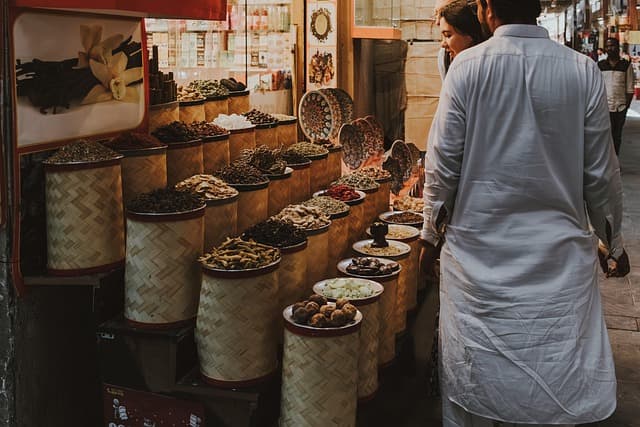
The story of Jewish Alexandria connects directly to several other sites and histories that most visitors treat as entirely separate.
The Bibliotheca Alexandrina, the modern library built in 2002 on or near the site of the ancient Library of Alexandria, sits approximately 800 meters from the Eliyahu Hanavi Synagogue. The ancient library was the intellectual center of a world in which Alexandrian Jewish scholars were major figures. Philo of Alexandria wrote his commentaries on the Torah in Greek here. The translation of the Septuagint happened in this city. The modern Bibliotheca contains a permanent exhibition on the history of Alexandria that includes material on its Jewish community, and it is worth visiting in combination with the synagogue to see how contemporary Egypt officially frames this history: with genuine scholarly care and occasionally with the careful omissions that politically sensitive histories invite everywhere.
The Attarine neighborhood, now famous for its antique market, was historically at the edge of the Jewish quarter. Several of the objects sold in Attarine's shops came, during the mass departures of the 1950s and 1960s, from Jewish households whose owners could not take large items with them. This is not a comfortable fact, but it is a real one. When you see silver Hanukkah lamps or Hebrew-inscribed objects in the antique stalls, they got there somehow.
The Coptic community of Alexandria, centered on the ancient neighborhood of Kom el-Dikka and around the Cathedral of Saint Mark, shared the city with the Jewish community for nearly two thousand years. Both communities trace their Alexandrian presence to the first century CE. The first-century conflict between Alexandria's Jewish and Greek populations, which resulted in a massacre of Jews under the Emperor Caligula, is described by the Roman historian Josephus. The early Christian community in Alexandria emerged partly from within the Jewish community and partly in tension with it. This layered coexistence across two millennia is what makes Alexandria's religious history genuinely unlike anything in Cairo.
Common Mistakes
Arriving without advance arrangements. The Eliyahu Hanavi Synagogue is not a museum with posted hours. Showing up unannounced will get you a locked gate or a brief view of the exterior courtyard. Contact the Egyptian Jewish Community in Cairo at least one week before your visit, ideally two. The effort is minimal and the payoff is access to one of the most remarkable interiors in the city.
Treating this as a single-site visit. The synagogue alone, without context, is an impressive building. With context, meaning a walk through the surrounding streets, a stop at the former Jewish quarter in Attarine, a look at the cemeteries if you can arrange it, it becomes something closer to understanding a civilization. Budget a full day.
Skipping the Bibliotheca Alexandrina's permanent exhibitions. Most visitors treat the Bibliotheca as a day trip to a modern architecture project. Its permanent historical exhibitions, including materials on the ancient library, the Jewish intellectual tradition in Alexandria, and the city's multicultural twentieth century, are genuinely serious and often contain information you will not find in any guidebook.
The Montaza Palace gardens as a Jewish Alexandria activity. They are not related. Several tour operators bundle Montaza with "historic Alexandria" visits in ways that eat half your day. Montaza is pleasant. It has no connection to the history you came to understand.
Trusting the official tour operator version of this history. Most organized Alexandria day tours from Cairo spend forty minutes at Pompey's Pillar and ninety minutes at a papyrus shop. None of them include the Jewish sites at all. Book a private guide specifically, or do it yourself using the logistics in this article.
Photographing the synagogue interior without explicit permission. You will be asked not to. Respect this. The community that remains has strong feelings about images being taken of their sacred space without consent. Ask first, and accept the answer.
Assuming the story ends in tragedy. It is tempting to frame the departure of Alexandria's Jews entirely as loss, and the loss is real. But the community that left built substantial lives in Tel Aviv, Paris, São Paulo, and New York, and many of their descendants have returned to Alexandria as researchers, documentary filmmakers, and writers. The story is not finished. It is continuing in a different form.
Practical Tips
Alexandria's Jewish history requires more preparation than most Egypt travel, but less than you might think. The Egyptian government has, since the early 2000s, made significant efforts to restore and maintain Jewish sites as part of a broader cultural heritage program. This is not purely altruistic: it is also diplomatic signaling. But the practical result is that the Eliyahu Hanavi Synagogue is in better condition than many synagogues in cities where active Jewish communities still exist.
For the most coherent experience, contact the Bassatine Society or similar diaspora organizations that specialize in Egyptian Jewish genealogy and heritage. They maintain contact lists for guides who know this history specifically and can arrange access to sites that are not publicly open.
Wear modest clothing. The synagogue is an active religious site, not a museum. Women should bring a scarf. Men should bring a kippah or be prepared to use one provided at the entrance.
Alexandria's Alexandria National Museum on Tariq al-Hurriya Road (the former Fouad Street, itself renamed after the 1952 revolution) has a floor dedicated to the modern and Ottoman periods that includes material on the city's multicultural communities. It costs EGP 80 (approximately $2.50 USD) and takes about ninety minutes. It provides useful visual context before you walk the streets.
The best single book to read before visiting is André Aciman's memoir "Out of Egypt," which describes his Jewish Alexandrian family's life and departure in the 1960s. It will make every street you walk feel inhabited by specific ghosts rather than generic history.
Frequently Asked Questions
The Weekly Dispatch
More on Egypt, every Friday.
Cultural depth and places most guides never mention.
No spam. Unsubscribe anytime.