Jewish Alexandria: Egypt's Forgotten Mediterranean Community
At its peak, Alexandria's Jewish community numbered 80,000. Today, fewer than a dozen remain. The synagogues are still standing. Most visitors never find them.

Quick Facts
- Best time to visit
- October to April, when Mediterranean humidity drops and temperatures are manageable. Alexandria in July and August is crowded with Egyptian summer visitors and uncomfortably humid.
- Entrance fee
- Free entry to Eliyahu Hanavi Synagogue. Courtesy donation of EGP 20 to 50 (under $2 USD) for the caretaker is customary. Chatby Cemetery: small caretaker tip of EGP 50 to 100 (around $2 USD).
- Opening hours
- Eliyahu Hanavi: Saturday mornings for services (irregular), weekdays by appointment. Contact the Egyptian Jewish Community Foundation at least one week in advance. No fixed public visiting hours.
- How to get there
- Train from Cairo Ramses to Alexandria Misr Station: EGP 80 to 250 depending on class, approximately 2.5 hours. Taxi from Misr Station to Nabi Daniel Street: EGP 40 to 70. Private car from Cairo: EGP 800 to 1,200 one way.
- Time needed
- 45 to 60 minutes for the synagogue alone. Full day recommended to include the neighborhood walk, former Jewish quarter streets, and Chatby cemetery.
- Cost range
- Budget EGP 300 to 600 per day in Alexandria. The Jewish heritage circuit has minimal entrance costs. Train and local transport add EGP 200 to 300 for a day trip from Cairo.
At its peak in the 1940s, Alexandria's Jewish community numbered roughly 80,000 people. They owned department stores on Rue Fouad, ran cotton trading houses near the old bourse, wrote poetry in French, and prayed in synagogues that could seat a thousand. Today, fewer than twelve Jewish residents remain in the entire city. The synagogues are still standing. Most visitors walk past them without knowing what they are.
This is not a story about ruins. It is a story about a civilization that existed, flourished, and was then unmade with extraordinary speed. Understanding what happened to Alexandria's Jews tells you more about twentieth-century Egypt than almost any museum in the country.
Quick Facts
Best time to visit: October to April, when Alexandria's Mediterranean humidity drops and the light on its limestone facades is cleaner. Avoid July and August unless you enjoy sharing every pavement with half of Cairo.
Eliyahu Hanavi Synagogue entrance fee: Free entry, though a donation is welcomed. The caretaker may request a small courtesy fee of EGP 20 to 50 (under $2 USD). The synagogue is managed by a small foundation and receives no significant state funding.
Opening hours: Generally Saturday mornings for services (when a minyan can be assembled, which is rare), and by appointment on other days. Contact the Egyptian Jewish Community Foundation in advance. Do not simply arrive and knock.
How to get there: From Raml Station tram stop, walk west along the Corniche for roughly ten minutes, then turn inland on Rue Nabi Daniel. The synagogue is at 69 Nabi Daniel Street. A taxi from Misr Station costs around EGP 40 to 70 (under $2 USD). The Greco-Roman Museum, currently under renovation, is five minutes on foot.
Time needed: The synagogue itself takes 45 minutes to an hour. A serious exploration of Jewish Alexandria, including the neighborhoods, the former Jewish hospital site, and the Chatby cemeteries, takes a full day.
Cost range: Budget EGP 300 to 600 per day for transport and food in Alexandria. The Jewish history circuit involves almost no entrance fees, so costs are low.
Why This Place Matters

Alexandria has always been a city of minorities who were also, briefly, majorities. The Greeks founded it. The Jews made it their intellectual capital for centuries before Jerusalem reclaimed that role. The Romans garrisoned it. The Arabs transformed it. The Ottomans taxed it. The Europeans rebuilt its waterfront in the nineteenth century, turning it into something that looked, from certain angles, more like Marseille than Cairo.
The Jewish presence in Alexandria is not a footnote to this history. It is a central chapter. In the third century BCE, Ptolemy II commissioned seventy-two Jewish scholars to translate the Hebrew scriptures into Greek. The resulting text, the Septuagint, became the Old Testament of Christianity. It was produced here, in this city, at the royal library or its associated institutions. When you stand in what remains of Jewish Alexandria, you are standing at a point where three of the world's major religions crossed paths and reshaped each other.
Philo of Alexandria, born around 20 BCE, spent his life in this city synthesizing Jewish theology with Greek philosophy. His concept of the Logos influenced the Gospel of John. He is one of the most consequential thinkers of the ancient world, and he grew up a few hundred meters from where the Eliyahu Hanavi Synagogue now stands.
The community that existed by the mid-twentieth century was not ancient in its composition. It was largely the product of nineteenth-century migration: Sephardic Jews from Iberia and the Levant, Ashkenazi Jews from central Europe, Karaite Jews with roots reaching back to medieval Egypt. They were Egyptian nationals, Ottoman subjects turned British-protected persons, holders of multiple passports, speakers of Arabic, French, Italian, and Ladino. The community was cosmopolitan in the precise sense of that word: it belonged to the world before it belonged to one nation.
Between 1948 and 1967, almost all of them left.
The Synagogue on Nabi Daniel Street
Eliyahu Hanavi, the Prophet Elijah Synagogue, was built in its current form in 1354, making it one of the oldest continuously used religious structures in Alexandria. The building you see today reflects a major renovation completed in 1850, funded primarily by the Menasce family, one of the great Sephardic dynasties of Egypt whose banking and cotton interests touched every part of Alexandrian commercial life.
The interior is a study in Mediterranean Jewish architecture of the nineteenth century: white marble floors, carved wooden bimah at the center, ornate brass chandeliers that have witnessed a century and a half of diminishing congregations. The women's gallery runs along three walls upstairs. On high holidays before 1948, every seat was full. The synagogue held services until the late 1990s, when the community had contracted to the point where assembling a minyan, the quorum of ten Jewish adults required for certain prayers, became an irregular event.
What strikes most visitors is the quality of the silence inside. Not the silence of abandonment, which has a particular quality of dust and neglect, but the silence of careful maintenance without use. The Egyptian government, to its credit, has overseen the building's restoration more than once. The caretaker, Mohamed, is not Jewish. He has been looking after this building for decades and will explain its history to you in a mixture of Arabic and gestures that communicates more than most formal guides manage.
Look at the plaques on the walls. They record donations from families whose names once meant something in every business district of the Mediterranean: Cattaui, Aghion, Rolo, Cicurel. These were not merely wealthy families. They were the architecture of a city. The Cicurel department store on Rue Fouad was the Harrods of interwar Cairo. The Cattaui family produced Egypt's first Jewish cabinet minister in the 1920s.
The Smaller Synagogues: What Has Been Lost
Eliyahu Hanavi is the survivor. At its peak, Alexandria had perhaps a dozen functioning synagogues serving different communities: the Sephardim, the Ashkenazim, the Karaites, who constitute a distinct branch of Judaism that rejects the Talmud and whose Egyptian lineage goes back to the ninth century.
The Great Synagogue on Rue des Ptolémées, which could accommodate 700 worshippers, is now converted to other uses. The Menasce Synagogue, built in 1885, was demolished. The Mosseeri Synagogue survives in partial form, its fate uncertain. Walking the streets between Raml Station and Attarine, you are passing through the outline of a community that has almost entirely dematerialized, leaving behind a few stone buildings and a great many unanswered questions.
The Karaite synagogue on Rue de l'Ancienne Bourse deserves particular attention. The Karaite Jews of Egypt are among the most historically distinctive communities in the entire Jewish diaspora. They read the Torah in a direct, unmediated way that has kept their liturgical practice essentially unchanged for over a thousand years. Most of Egypt's Karaite community emigrated to Israel in the 1950s and 1960s, where they now number around 40,000. The building that once housed their Alexandrian prayers is difficult to access but findable with persistence.
The Cemeteries: Where the Story Becomes Personal
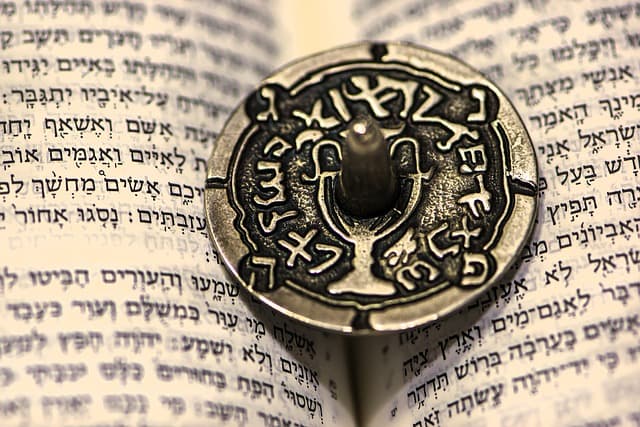
If the synagogues tell you what the community built, the cemeteries at Chatby tell you who they were.
The Jewish section of the Chatby necropolis, east of the city center along the Corniche, contains graves with inscriptions in Hebrew, French, Arabic, Italian, and Ladino. The dates run from the mid-nineteenth century to the 1960s. After that, the burials stop, not because the dead stopped dying but because there was no community left in Alexandria to bury them here.
Chatby is technically open to visitors, though access to the Jewish section requires either persistence with the caretaker or an introduction through the Egyptian Jewish Community Foundation. It is worth the effort. The graves of the Menasce, Aghion, and Suares families are here, along with hundreds of ordinary Alexandrians whose names are now known only to their grandchildren in Paris, Tel Aviv, São Paulo, and Sydney.
One headstone, which requires finding, belongs to a woman who died in 1964 and whose epitaph reads, in French: "She loved Alexandria until the end." She was one of the last. By that point, the community she had known was already scattered across three continents.
The Connections: Alexandria's Layers
Nothing in Alexandria sits on a single historical layer, and Jewish Alexandria is no exception.
Nabi Daniel Street, where the main synagogue stands, is also the street where, according to a tradition with real archaeological weight, the tomb of Alexander the Great may be located. Excavations have found Ptolemaic-period structures beneath several buildings on this street. Alexander was buried in Alexandria by Ptolemy I, and his tomb was a site of pilgrimage for Julius Caesar and Mark Antony. It then disappeared from the historical record in the fourth century CE. The greatest unsolved archaeological mystery in the Mediterranean world may sit beneath the same neighborhood where the Jewish community prayed for six centuries.
Four blocks from Eliyahu Hanavi is the Mosque of the Prophet Daniel, built in the nineteenth century but incorporating elements of a much older structure, possibly a medieval Islamic shrine. The street is named for the Prophet Daniel of the Hebrew Bible. The mosque is named for him too. The Jewish community prayed on a street named for a figure they shared with Islam. This is not coincidence. It is Alexandria.
The Greco-Roman Museum, currently closed for renovation but expected to reopen within a year or two, holds artifacts from the period when Alexandria's Jewish community was one of the largest in the ancient world, perhaps 200,000 people in a city of a million. Their presence shaped the Septuagint, shaped early Christianity, and shaped the Neoplatonist philosophy that eventually shaped medieval Islamic thought. The connections do not end. They fold back on each other.
Common Mistakes
Arriving without an appointment. Eliyahu Hanavi is not a standard tourist site with posted hours. The caretaker is present most days, but access is smoother if you contact the Egyptian Jewish Community Foundation beforehand. An email a week in advance is sufficient.
Skipping the neighborhood walk. The synagogue in isolation is interesting. The synagogue understood as the surviving center of a community that once occupied the streets around it is something else entirely. Walk from Raml Station to Nabi Daniel Street slowly. Read the building names. Look at the architectural styles. The Mediterranean cosmopolitan city is still legible if you know how to look.
Taking the Jewish Alexandria tour offered by most Alexandria guides. Most local guides received their knowledge of this community secondhand and will tell you that the Jews left because of Nasser's nationalization policies. This is partially true and mostly incomplete. The departures began in 1948, accelerated after the 1952 revolution, and were largely complete by 1967. Each wave had different causes: anti-Zionist violence after the founding of Israel, citizenship revocations, asset sequestrations, and eventually outright expulsion orders. A guide who summarizes this as "they left because of Nasser" is giving you a quarter of the story.
Overlooking the Chatby cemeteries in favor of more photogenic sites. Most Alexandria itineraries skip the cemeteries entirely. This is a mistake. The Jewish cemetery at Chatby, alongside the Greek Orthodox and Catholic sections nearby, is where Alexandria's twentieth-century cosmopolitan identity is most concentrated and most legible.
Spending money on the guided Jewish heritage tours sold by some Cairo operators. They cost between $80 and $150 USD per person, cover material available in any good book on the subject, and often do not include the cemetery visit. This is EGP 2,500 to 4,500 for a two-hour walk that you can do independently for the cost of a taxi. Skip it. Read Lucette Lagnado's memoir "The Man in the White Sharkskin Suit" before you come instead. It will give you more than any tour guide.
Conflating the Jewish history of Alexandria with the Jewish history of Cairo. The two communities were distinct in origin, class composition, language, and fate. Cairo's Haret el-Yahud, the old Jewish quarter in Fustat, represents a different strand of Egyptian Jewish history, largely Arabic-speaking and oriented toward the Egyptian interior rather than the Mediterranean. If you visit both cities, resist the temptation to merge them into a single narrative.
Practical Tips
Dress conservatively for the synagogue visit out of respect, and for the same reason you would in any house of worship. There is no strict dress code, but the community foundation appreciates the gesture.
Bring cash. There are no card readers at any of the Jewish heritage sites in Alexandria, and the amounts involved are small enough that it does not matter.
The best single English-language guide to the material history of this community is "Alexandria: The Last Years of the Cosmopolitan City" by Michael Haag. It is out of print but findable. Read it before you arrive.
For Arabic readers or those with patient translation tools, the memoir literature of Egyptian Jews who left is voluminous and largely unavailable in translation. André Aciman's "Out of Egypt", written in English, is set partly in Alexandria and partly in Cairo and gives a precise texture to the world that existed before 1967.
Alexandria's general tourist infrastructure is thin compared to Cairo. Hotels in the useful midrange are clustered around Raml Station and San Stefano. The train from Cairo Ramses Station takes approximately two and a half hours and costs EGP 80 to 250 depending on class. A private car costs around EGP 800 to 1,200 one way.
Do not come expecting an intact Jewish quarter in the manner of Krakow's Kazimierz or Istanbul's Balat. What remains is fragments: one functioning synagogue, several buildings whose Jewish origins require explanation, a cemetery, and the faint geometry of streets that once had a different meaning. That fragmentation is itself the lesson. The most significant Jewish community in the ancient world and one of the most significant in the modern Arab world did not disappear slowly. It vanished within twenty years. The traces are real. You have to want to find them.
Frequently Asked Questions
The Weekly Dispatch
More on Egypt, every Friday.
Cultural depth and places most guides never mention.
No spam. Unsubscribe anytime.