Jewish Alexandria: Egypt's Forgotten Synagogues and Their Stories
At its peak, Alexandria had 40,000 Jews and 14 synagogues. Today there are no permanent Jewish residents. The buildings that remain tell the whole story.

Quick Facts
- Best time to visit
- October to April. Alexandria's Mediterranean climate makes summer visits uncomfortable for sustained walking. October and March offer the best balance of mild weather and manageable crowds.
- Entrance fee
- No formal admission fee at Eliyahu Hanavi. A donation to the restoration fund of EGP 100 to 200 (approx $2 to $4 USD) is appropriate. Access to the Chatby cemetery may involve a small informal fee to the caretaker of approximately EGP 50 ($1 USD).
- Opening hours
- Eliyahu Hanavi: Saturday approximately 10am to 1pm with caretaker present. Weekday visits by prior arrangement with the Jewish Community of Alexandria office. Hours subject to change and religious calendar.
- How to get there
- Egyptian National Railways from Cairo Ramses Station to Alexandria Misr Station, EGP 150 to 250 first class (approx $3 to $5 USD), journey time approximately 2 to 2.5 hours. Taxi or Uber from Misr Station to Nabi Daniel Street approximately EGP 50 to 80 ($1 to $2 USD). Private car from Cairo approximately EGP 1,500 to 2,000 ($30 to $40 USD) round trip.
- Time needed
- 2 hours minimum for Eliyahu Hanavi with a guide. Full day to combine with Chatby cemetery, surrounding Jewish quarter walk, and Kom el-Dikka Roman theatre. Two days recommended for a thorough exploration of Alexandria's minority community heritage.
- Cost range
- Budget EGP 400 to 700 per day including transport and food. Mid-range EGP 1,200 to 2,000 per day adding a private specialist guide (EGP 600 to 900 for a half-day). Overnight accommodation in a reasonable hotel adds EGP 800 to 2,500 per night depending on standard.
At its peak in the early twentieth century, Alexandria was home to roughly 40,000 Jews. They ran cotton exchanges, published Arabic-language newspapers, sat in Parliament, and built synagogues that could seat thousands. By 1967, most were gone. By 2023, there were no permanent Jewish residents left in the city. The buildings remain. Some are locked. One is a UNESCO project. One became a warehouse. Walking among them is one of the more quietly devastating things you can do in Egypt.
Quick Facts
Best time to visit: October to April, when Alexandria's Mediterranean humidity drops and the city is navigable on foot without wilting. Avoid midsummer unless you enjoy sweating through your notes.
Entrance fees: The Eliyahu Hanavi Synagogue (also spelled Eliahou HaNabi) charges no formal admission but requires coordination through the Jewish Community of Alexandria office. There is no ticket window. A small donation to the restoration fund is appropriate and welcomed. Most other synagogue buildings are not publicly accessible.
Opening hours: Eliyahu Hanavi is typically open to visitors Saturday mornings when a caretaker is present, and on pre-arranged weekday visits. Contact the community office at least a week in advance. Hours are roughly 10am to 1pm on open days, subject to change.
How to get there: From Cairo, the Egyptian National Railways runs regular trains to Alexandria's Misr Station. A first-class seat costs approximately EGP 150 to 250 (roughly $3 to $5 USD) and takes two to two and a half hours. From Misr Station, a metered taxi to the Eliyahu Hanavi Synagogue on Nabi Daniel Street costs around EGP 50 to 80 ($1 to $2 USD). Uber and Careem operate in Alexandria and are often more reliable for non-Arabic speakers.
Time needed: The synagogue itself takes one to two hours if you have a guide or have done background reading. Combining it with a walk through the surrounding Jewish quarter, the Kom el-Dikka Roman theatre nearby, and a stop at the Greek Orthodox Patriarchate makes for a full half-day. A serious exploration of all surviving Jewish sites across the city requires a full day and advance planning.
Cost range: Budget EGP 400 to 700 per day including transport and food. Mid-range EGP 1,200 to 2,000 per day if you add a private guide, which is strongly recommended here.
Why This Place Matters
The Jews of Alexandria were not a marginal community quietly enduring at the edge of Egyptian life. They were, for several centuries, central to it. The Greek-speaking Jewish philosopher Philo of Alexandria, born around 25 BCE, produced a body of work that shaped early Christian theology more than most Christians know. The Septuagint, the Greek translation of the Hebrew Bible that became the Old Testament used by most of the Christian world for over a millennium, was produced in Alexandria, according to tradition by seventy-two Jewish scholars working on the island of Pharos.
That is the ancient layer. The modern layer is equally consequential and less discussed. When Egypt's cotton economy boomed in the late nineteenth and early twentieth centuries, Alexandrian Jewish families like the Menasces, the Mosseris, and the Cattauis were not peripheral actors. They were directors of the Egyptian Stock Exchange, founders of major banks, and philanthropists who built schools and hospitals that served Muslim and Christian Egyptians alongside Jewish ones. The Cattaui family produced Egypt's first Jewish government minister, Youssef Aslan Cattaui, who served as Finance Minister in the 1920s. His son, René Cattaui, was a senator.
This history was not erased by time. It was compressed into about fifteen years. The 1948 Arab-Israeli war, the 1952 revolution, the 1956 Suez Crisis and its aftermath, and the 1967 war each produced a wave of expulsions, asset seizures, and departures. What took four hundred years to build was effectively dismantled in two decades.
The Eliyahu Hanavi Synagogue: What You Will Actually See
The synagogue on Nabi Daniel Street, consecrated in 1354 and rebuilt substantially in 1850, is the oldest functioning Jewish house of worship in Egypt and one of the oldest in the Arab world. When you step inside, the first thing you notice is the scale: the central hall seats over seven hundred people, with women's galleries running along the upper level on three sides. On a Saturday morning when the caretaker opens it, you are almost certainly the only visitor. This is not a tourist attraction with infrastructure. It is a building waiting.
The interior holds a number of Torah scrolls in wooden cases inlaid with silver, donated by families whose descendants now live in Paris, São Paulo, and New York. The Hebrew inscriptions on memorial plaques along the walls read like a directory of vanished Alexandria: Moshe ben Yitzhak, died 1923. The Aghion family, in memoriam. Rachel Levy, beloved wife and mother. The names are in Hebrew, French, Arabic, and occasionally all three on the same plaque, which tells you something about who these people were.
The building's caretaker, a Muslim Egyptian, has maintained the synagogue for decades. His family has done this work across two generations. He will show you the ark, explain the positioning of the bimah, and describe the last time the synagogue held a proper service with a minyan, the ten Jewish adults required for communal prayer. Getting that date from him is worth more than any guidebook entry.
The Other Synagogues: A Partial Inventory of Loss
Eliyahu Hanavi is the one that gets mentioned. The others form a quieter geography of absence.
The Mosseiri Synagogue, built by the banking family in the early twentieth century in the Ibrahimiya district, has been repurposed and is not accessible to visitors. The Green Synagogue (Kenis el-Khadra) in the old Jewish quarter near Kom el-Dikka was partially demolished. The synagogue at Chatby, Alexandria's Jewish cemetery district, still stands but access requires navigation through a residential area and the cooperation of neighbors who serve as informal gatekeepers.
The Jewish cemetery at Chatby is worth more than a passing mention. It contains approximately fifteen thousand graves, ranging from simple sandstone markers to elaborate marble mausoleums. The Mosseri family vault, the Aghion plots, and the grave of Giuseppe Balsamo, better known as Count Cagliostro, are all here. Cagliostro, the eighteenth-century Italian occultist and Freemason who features in Dumas and Mozart, is buried in an Alexandrian Jewish cemetery. His connection to Alexandria is long and complicated, and the grave is both a historical document and a small absurdity that feels exactly right for this city.
The Connections: Alexandria as a Palimpsest
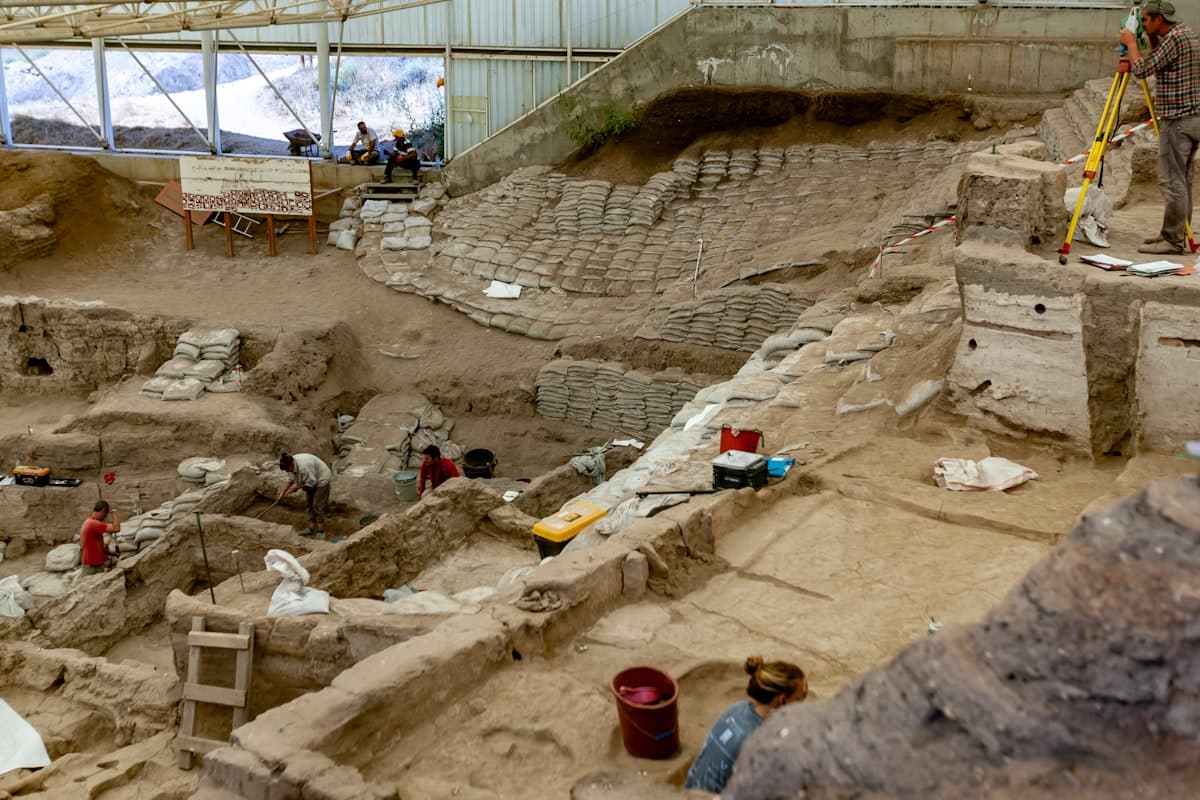
Nabi Daniel Street, where Eliyahu Hanavi sits, is itself a document. The street is named for a Sufi saint whose mosque stands a few hundred meters away. Local tradition long held that Alexander the Great was buried somewhere beneath the street, a claim that has never been confirmed but has never quite been dismissed either. The Kom el-Dikka Roman theatre, excavated in the 1960s and 1970s by Polish archaeologists who found it while clearing land for an apartment block, is a fifteen-minute walk away. The Greco-Roman Museum, which holds artifacts from the Ptolemaic period when Alexandria's Jewish community first rose to prominence, is nearby, though it has spent much of the past decade under restoration.
The Ptolemaic rulers who invited Jewish settlers to Alexandria in the third and second centuries BCE were the same dynasty that built the Serapeum, the Library, and the Pharos lighthouse. Alexandria was a deliberately multicultural city from its founding: Ptolemy I settled Jews, Greeks, and Macedonians in separate but adjacent quarters, each with their own legal status. The Jewish community's quarter was in the eastern part of the ancient city, near the royal palaces. They were not at the margin. They were next door to power.
The Islamic Cairo connection is closer than it looks. When the Fatimid dynasty conquered Egypt in 969 CE and founded Cairo, they brought with them a cosmopolitan tradition that had governed Alexandria's Jewish community under their predecessors. Documents from the Cairo Geniza, the extraordinary archive of medieval Jewish manuscripts discovered in a Cairo synagogue in the 1890s, contain hundreds of letters from Alexandrian Jews describing trade, family disputes, religious questions, and daily life. The Geniza documents, now held in Cambridge and New York and Cairo, are the most complete record of medieval Mediterranean Jewish life that exists anywhere, and a significant portion of them were written by people who lived in Alexandria.
Common Mistakes
Arriving without an introduction. Eliyahu Hanavi does not function like a museum. Showing up without advance contact will often result in a locked gate. Email the Jewish Community of Alexandria office at least a week ahead. A letter of introduction from a cultural organization or journalist helps considerably.
Expecting a preserved ghetto. There is no Jewish quarter in the sense of a coherent neighborhood with marked streets and converted buildings. What survives is distributed across a city of five million people. You need a map, a plan, and ideally a guide who knows the city's interwar geography.
Skipping the Chatby cemetery. Most guides mention Eliyahu Hanavi and stop. The Chatby cemetery is arguably more moving and more historically dense. It requires a bit of effort to access but is reachable and worth every minute of that effort.
Taking the official Alexandria Jewish history walking tour operated by some hotels. The version of this history sold to package tourists compresses four hundred years into forty-five minutes and skips everything complicated. The 1956 expulsions, the asset seizures, the confiscations under Nasser: none of it appears. You end up with a nostalgic postcard instead of a history. Find a private guide or do the reading yourself.
Visiting in July or August. Alexandria in high summer is humid in a way that makes sustained walking and concentration difficult. The sites require attention. Give yourself the conditions to pay it.
Overlooking the Greco-Roman Museum if it has reopened during your visit. It holds artifacts directly relevant to the Ptolemaic-era Jewish community: dedicatory inscriptions, coins, fragments of administrative documents. Check its status before your trip, as restoration timelines have shifted repeatedly.
Assuming the community is entirely gone. A handful of elderly Jewish Alexandrians remain, and the community maintains formal legal existence. The current president of the Jewish Community of Alexandria has been instrumental in the UNESCO-supported restoration work at Eliyahu Hanavi. This is not a dead archive. It is a living legal entity with people making decisions about what survives.
Practical Tips
Hire a private guide who specializes in Alexandria's minority communities rather than a standard historical tour guide. The distinction matters: a Pharaonic specialist will know Kom el-Dikka but may not know which building on a residential street was once the Mosseri family's private synagogue. Ask specifically about experience with Jewish, Greek, and Armenian Alexandria.
Bring a notebook rather than relying entirely on photographs. Many of the interiors have restrictions on photography, and in any case the details that matter here, the inscriptions, the names on plaques, the caretaker's account of the last service, are better captured in writing than in images.
The best secondary reading before you go is Lawrence Durrell's Alexandria Quartet, not for historical accuracy (it has little) but for atmosphere. For actual history, Robert Ilbert and Ilios Yannakakis's edited volume on Alexandria 1860 to 1960 is the serious option. André Aciman's memoir Out of Egypt, written by an Alexandrian Jew who left as a child, is the personal document that puts flesh on the institutional history.
If you read French, the archives of the Communauté Israélite d'Alexandrie contain materials not available in English translation. The Alliance Israélite Universelle in Paris holds correspondence from Alexandria's Jewish schools going back to the 1880s.
Alexandria is a day trip from Cairo but deserves at least two nights. The Jewish sites alone justify one full day. Add the Catacombs of Kom el-Shoqafa, a Roman-era burial complex that contains Jewish, Greek, and Egyptian iconographic elements on the same walls, and you have a second full day organized around the same theme of Mediterranean cultural layering that defines this city.
Frequently Asked Questions
The Weekly Dispatch
More on Egypt, every Friday.
Cultural depth and places most guides never mention.
No spam. Unsubscribe anytime.