Jewish Alexandria: Egypt's History, Synagogues, and What Survives
At its peak, Alexandria's Jewish community numbered 80,000. Today, fewer than a dozen remain. The synagogues are still standing. Barely.

Quick Facts
- Best time to visit
- October to April. Mediterranean winters are mild at 15-22°C, the light is clear, and tourist numbers are low. Summer is humid and the sea haze dulls everything.
- Entrance fee
- Free entry at Eliyahu Hanavi Synagogue. Donation of EGP 100-200 per person is customary. Bibliotheca Alexandrina general admission EGP 70 (approx $1.50 USD).
- Opening hours
- Eliyahu Hanavi: Saturdays 10am-1pm officially. Other days by appointment only. Jewish cemetery: generally accessible during daylight hours but confirm with taxi driver. Bibliotheca Alexandrina: Monday-Saturday 11am-7pm.
- How to get there
- Express train from Cairo Ramses to Alexandria Sidi Gaber: EGP 45-95 depending on class (approx $1-3 USD). From Alexandria Raml Station, the synagogue on Nabi Daniel Street is a 10-minute walk or EGP 20-30 microbus. Taxi to Jewish cemetery from downtown: EGP 80-120 each way.
- Time needed
- 2-3 hours for synagogue and immediate area. Half a day including the Jewish cemetery and Attarine district. Full day if adding Bibliotheca Alexandrina.
- Cost range
- Budget EGP 300-600 per day covering transport, food, and sites. Mid-range EGP 1,200-2,000 per day with Corniche area hotel.
Quick Facts
Best time to visit: October to April, when Mediterranean temperatures stay below 25°C and the sea light is clear rather than hazy.
Eliyahu Hanavi Synagogue entrance: Free entry for visitors, though a donation is customary and genuinely appreciated. The caretaker sometimes requests advance notice.
Opening hours: Officially Saturday 10am-1pm for Shabbat services (which rarely happen, given the congregation size), and by appointment for non-Jewish visitors on other days. Contact the Jewish Community of Alexandria through the Egyptian Jewish community liaison in Cairo to arrange a visit. Expect flexibility, not punctuality.
How to get there: From Cairo, take the Egyptian National Railways express to Alexandria Sidi Gaber or Ramses station (from EGP 45 second class, EGP 95 first class, approximately $1-3 USD). From Alexandria's downtown Raml Station tram hub, the Eliyahu Hanavi Synagogue on Nabi Daniel Street is a 10-minute walk or a EGP 20-30 microbus ride.
Time needed: Two to three hours for the synagogue and immediate area, half a day if you include the Jewish cemetery on Abou Quer Road and a walk through the Attarine district where much of the old Sephardic merchant quarter stood.
Cost range: Budget EGP 300-600 per day in Alexandria covering transport, food, and sites. Mid-range EGP 1,200-2,000 per day with a decent hotel near the Corniche.
---
Why This Place Matters
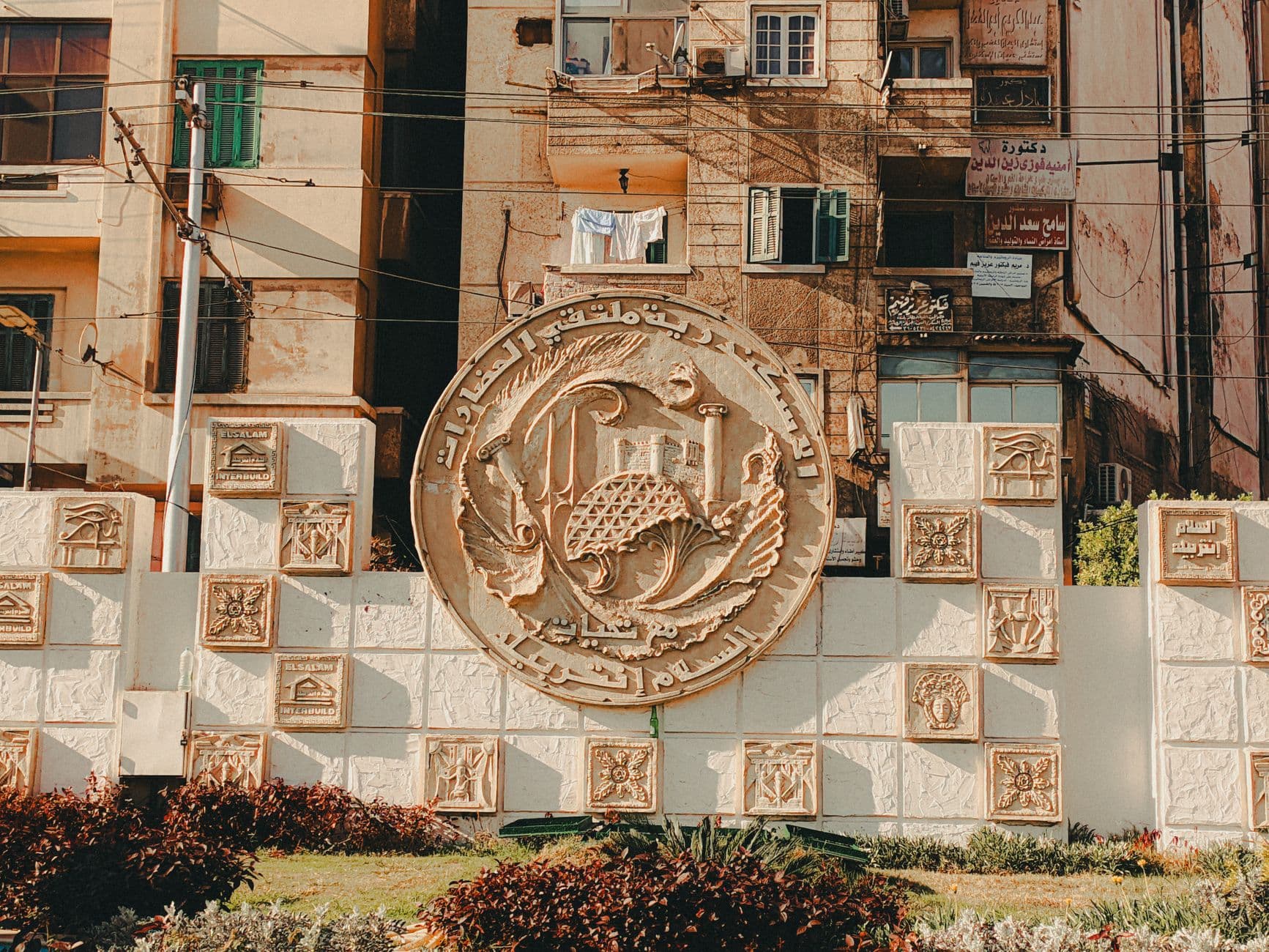
At its absolute height in the 1940s, Alexandria's Jewish community numbered somewhere between 70,000 and 80,000 people. They had been there for more than two thousand years. When Alexander the Great founded this city in 331 BC, he invited Jews to settle from the beginning, granting them a dedicated quarter and equal rights with Macedonian colonists, which was not something he did everywhere. By the first century AD, Jews made up perhaps a third of Alexandria's population. The philosopher Philo of Alexandria, who tried to reconcile Jewish theology with Greek philosophy a full century before the Christian Gospels were written, lived and worked here. He probably walked the same streets you are walking now.
What happened after 1948 is a compressed tragedy. In the two decades following the founding of Israel and especially after the 1956 Suez Crisis, virtually the entire community left or was expelled. By 1967, the number was in the hundreds. Today, the Jewish community of Alexandria consists of fewer than fifteen people, all elderly women. The men are gone. The children are gone. The last rabbi left decades ago.
What survives is the architecture, and understanding it tells you more about Alexandria's cosmopolitan character than almost any other thread you could pull.
---
Eliyahu Hanavi: A Synagogue That Outlasted Its Congregation
The Eliyahu Hanavi Synagogue on Nabi Daniel Street is the primary surviving site, and it is worth the visit not despite its emptiness but because of it. The current structure dates to 1850, but a synagogue has existed on approximately this site since at least the third century AD, which means it may be among the oldest continuously consecrated Jewish sites in the world outside of Israel, though the physical building has been rebuilt multiple times.
The interior is Sephardic in its layout, which reflects who built it. The majority of Alexandria's Jewish population in the nineteenth and early twentieth centuries were Sephardim, descendants of Jews expelled from Spain in 1492 who migrated through the Ottoman Empire and settled in Egypt under Ottoman rule. They brought Ladino, a Spanish-Hebrew hybrid language, which you can still find traces of in the community's archival records. The Ashkenazi community was smaller and arrived later, primarily from Eastern Europe in the late nineteenth century, fleeing the Russian pogroms.
Inside, the Torah ark is still intact, the Hebrew inscriptions are still legible, and the women's gallery overhead is still structurally sound, though access to it is restricted. The Egyptian government renovated the synagogue in 2020 at a cost of around 20 million Egyptian pounds, which is either a gesture of cultural preservation or an acknowledgment that this building is now a monument rather than a place of worship. It is probably both. The chandeliers are enormous and European, donated by a Levantine Jewish family whose name is still engraved on a plaque inside.
The caretaker, when you meet him, will likely tell you that he is Muslim. He will say this matter-of-factly, as though it requires no explanation, and it doesn't. Someone has to look after the building.
---
The Quarter That No Longer Exists and the Records That Do
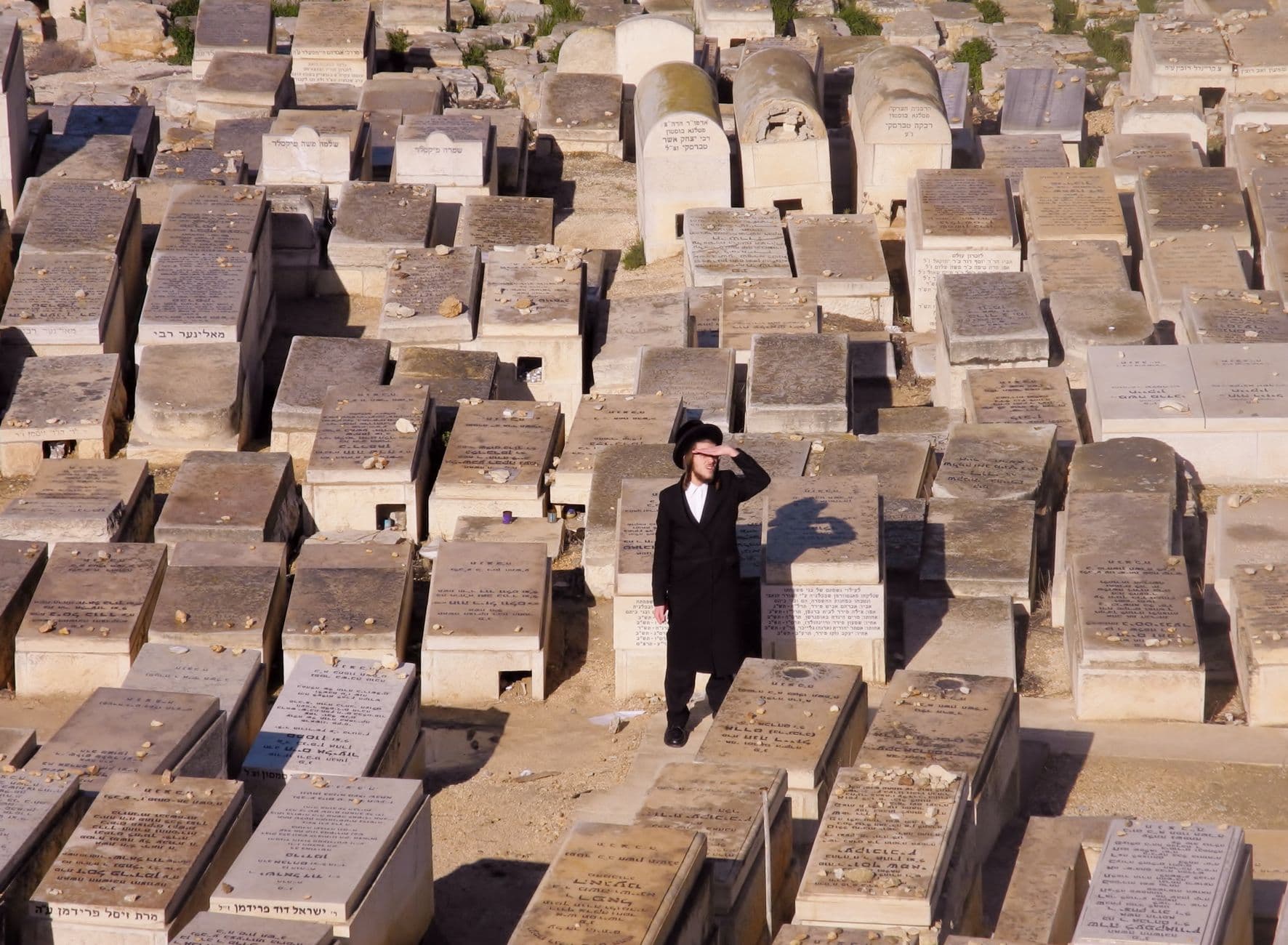
The Sephardic Jewish quarter of Alexandria was concentrated in the area now roughly bounded by Nabi Daniel Street, Salah Salem Street, and the neighborhoods behind the current Attarine antique market. Physically, almost nothing identifiable remains. The buildings were sold, repurposed, or demolished. The synagogues became warehouses or were quietly absorbed into other structures. The schools closed.
But the records survived in ways that were not supposed to happen. The Archives of the Jewish Community of Alexandria, comprising birth registers, marriage contracts, property deeds, and rabbinical correspondence dating back to the eighteenth century, were deposited at the Bibliotheca Alexandrina after the community could no longer maintain them. This is, in its way, a remarkable act of Egyptian institutional memory: a national library preserving the records of a community that the country's politics effectively expelled.
The Bibliotheca Alexandrina is worth visiting separately from any Jewish history itinerary, but if you are researching a family connection to Alexandrian Jewry, the archive department there is the correct place to contact. The collection is indexed, partially digitized, and accessible to researchers.
The Jewish cemetery on Abou Quer Road (also spelled Abu Qir) is still maintained and still operating, technically, as one of the few functioning Jewish cemeteries in Egypt. The oldest legible headstones date to the early nineteenth century, and the names on them constitute a directory of Alexandria's old merchant class: Mosseri, Cattaui, Goar, Harari, Aghion. The Cattaui family, to give one example, produced Egypt's first Jewish finance minister, Yusuf Aslan Cattaui Pasha, appointed in 1924. His family also funded significant Coptic Christian charitable institutions. This is the kind of overlap that Alexandria, at its most functional, produced constantly.
---
The Connections: Alexandria as a City of Layered Communities
The Jewish history of Alexandria cannot be understood in isolation from its Greek history, its Coptic history, and its Islamic history, because those histories are not parallel tracks. They are the same track.
Nabi Daniel Street, where the Eliyahu Hanavi Synagogue stands, takes its name from a mosque dedicated to the prophet Daniel, which itself stands at a location that medieval Arab geographers identified as the tomb of Alexander the Great. Whether Alexander is actually buried there is one of archaeology's great open questions, but the resonance is exact: a street named for a Jewish prophet by Arab Muslims, home to an ancient synagogue, at the probable location of the Macedonian conqueror who invited Jewish settlers to the city in the first place.
The Coptic Orthodox community of Alexandria has its own parallel story of demographic collapse, though less total than the Jewish experience. The Attarine Mosque, a few blocks away, was the Church of Saint Athanasius before the Arab conquest of 641 AD, and Saint Athanasius was bishop of Alexandria during the Council of Nicaea in 325 AD, where the foundational creed of Christianity was debated. This is a city where a mosque, a synagogue, and a ghost of Hellenistic civilization are all within a kilometer of each other, and all of them are directly connected.
For visitors coming from Cairo, the Jewish history of Alexandria rhymes with the Haret el-Yahud in Cairo's Fustat district, where Ben Ezra Synagogue still stands. Ben Ezra, according to its own tradition, stands on the site where the infant Moses was hidden in the rushes. Cairo's Jewish quarter is more accessible and better documented than Alexandria's, but Alexandria's is the older and, at its peak, far larger community.
---
Common Mistakes

Arriving without contact. The Eliyahu Hanavi Synagogue is not reliably open on a walk-up basis outside of Saturday mornings. Showing up unannounced on a Tuesday and finding the gate locked is entirely possible. Email the Egyptian Jewish community network before your trip, or ask your Alexandria hotel concierge to make a call ahead.
Treating this as a day trip from Cairo without time to breathe. Cairo to Alexandria is two hours by express train, but the Jewish history sites require slow walking and attention. Combining Eliyahu Hanavi, the Jewish cemetery, a pass through Attarine, and a visit to the Bibliotheca Alexandrina archives is a full day, not a morning.
Skipping the Jewish cemetery in favor of only visiting the synagogue. The cemetery is where you understand the scale of what was lost. The headstones are multilingual: Hebrew, French, Italian, Arabic, Greek. That multilingualism is itself the story. The synagogue has been restored and looks cared for. The cemetery is honest about the situation.
The contrarian take: ignore the organized Jewish heritage tours. Several Cairo-based tour operators sell day tours of Jewish Alexandria packaged with the Catacombs of Kom el-Shoqafa and the Bibliotheca Alexandrina. These tours spend approximately forty minutes at Eliyahu Hanavi and give you a guide whose main language is promotional. You will learn more from arriving independently, reading this article beforehand, and spending two hours in the synagogue quietly, than you will learn in a guided group of fourteen people with a time limit.
Photographing the caretaker without asking. He will probably say yes. Ask first.
Confusing Alexandria's Jewish history with Israeli political history. These are related but distinct subjects, and conflating them in conversation with locals will shut down the conversation. The Alexandrian Jewish community predates the state of Israel by over two thousand years. Egyptians who are warm toward discussing local Jewish history may not be warm toward discussions of contemporary geopolitics. Read the room.
Expecting the Attarine antique market to contain Jewish artifacts. Some dealers will tell you they have Judaica for sale. Most of it is reproduction, recently aged. The genuine artifacts from Alexandria's Jewish households were either taken by families when they left, lost, or absorbed into private collections long ago.
---
Practical Tips
The best morning for a visit is Saturday, when Eliyahu Hanavi officially opens and the small remaining community sometimes gathers. You will not attend a full service in any meaningful liturgical sense, but you may meet some of the remaining community members, which is an encounter worth more than any guidebook entry.
Dress conservatively. The synagogue is an active place of worship for the people who remain, even if those people number in single digits on most Saturdays. Women should cover shoulders and knees. Men may be offered a kippah at the door.
Bring cash. There are no card readers, no entry fees in the formal sense, and the donation box near the exit is the primary means by which the caretaker is compensated for his time and access. EGP 100 to 200 per person is appropriate.
The Bibliotheca Alexandrina archive department requires an appointment and researcher credentials to access the Jewish community records directly, but the main library and its Jewish heritage exhibition materials are open to the public. The library is on the Corniche, about 25 minutes' walk from Eliyahu Hanavi along the seafront. The walk is worth doing: the smell of salt air off the Mediterranean, the particular flatness of Alexandria's winter light, the vendors selling sweet potato from carts on the Corniche promenade. This is a working-class Egyptian city that happens to contain some of the deepest Jewish roots in the world.
If you are visiting the Jewish cemetery, take a licensed taxi from central Alexandria rather than a microbus. The cemetery is in the eastern suburbs near Abou Quer, and navigation without Arabic is difficult. Agree on the fare before you get in: expect EGP 80 to 120 for the trip from downtown. Tell the driver you want the Jewish cemetery specifically, not a church or a mosque, because "cemetery on Abou Quer Road" without context will confuse the route.
Frequently Asked Questions
The Weekly Dispatch
More on Egypt, every Friday.
Cultural depth and places most guides never mention.
No spam. Unsubscribe anytime.